
The Youngest Regiment
The Royal Air Force Regiment — the RAF’s own ground defence force — is one of the least known but most continuously deployed elements of British military power. Formed on 1 February 1942 in response to the catastrophic loss of airfields in Crete, Malaya, and the Western Desert, the RAF Regiment exists to defend air assets on the ground, a mission it has carried out from the jungles of Burma to the deserts of Afghanistan. For collectors, RAF Regiment militaria is a niche but growing area, combining air force aesthetics with army-style combat kit.
Historical Overview
Formation and WWII
The humiliating loss of Malayan airfields to Japanese ground forces in late 1941 — often without serious resistance — exposed a critical gap in British air power. Airfields were defended by army units with no particular training or interest in air-base defence. King George VI personally authorised the formation of the RAF Regiment, and the first squadrons formed in early 1942.
During WWII, RAF Regiment squadrons served in:
- North Africa and the Mediterranean: Defending forward airstrips in the desert, Italy, and the Balkans. Light anti-aircraft (LAA) squadrons provided vital point defence against the Luftwaffe.
- Normandy and North-West Europe (1944–45): Regiment squadrons landed on D-Day and D+1 to secure captured airstrips. They fought a ground war alongside the Army, sometimes in fierce actions — notably the defence of Grave airstrip during Operation Market Garden.
- Burma: Defending remote jungle airstrips against Japanese infiltration. Regiment field squadrons undertook offensive jungle patrols.
By 1945, the RAF Regiment comprised over 85,000 personnel in 240+ squadrons — a substantial force by any measure.
Post-War and Cold War
After 1945, the Regiment was drastically cut but retained a vital role:
- Palestine (1945–48): Airfield security during the emergency.
- Malaya (1948–60): Deep jungle patrols against communist terrorists — some of the most demanding ground operations the RAF has ever undertaken.
- Suez (1956): Securing captured El Gamil airfield by parachute assault — 3 Squadron RAF Regiment parachuted onto the airfield in the face of Egyptian fire.
- Aden (1960s): Urban and desert operations.
- Cold War Germany: Defending RAF bases and the Harrier dispersal sites in the British Army of the Rhine area.
- Falklands (1982): 63 Squadron RAF Regiment deployed with Rapier SAM systems to defend San Carlos, shooting down several Argentine aircraft during Bomb Alley.
21st Century Operations
- Iraq (2003): Securing Ali Al Salem and other airfields. Regiment snipers and patrols operated in Basra.
- Afghanistan (2001–2014): The regiment’s most intensive sustained deployment. Regiment gunners manned the force protection at Camp Bastion, and field squadrons conducted foot patrols, vehicle checkpoints, and mentoring operations alongside Afghan forces. Several RAF Regiment personnel were killed in action in Helmand.
Organisation
The RAF Regiment today comprises:
- 1 Squadron RAF Regiment: Equipped with Short-Range Air Defence (SHORAD) — currently transitioning to new ground-based air defence systems.
- 2 Squadron RAF Regiment: Field squadron — infantry-role ground defence.
- 3 Squadron RAF Regiment: Field squadron.
- 15 Squadron RAF Regiment: Field squadron.
- 34 Squadron RAF Regiment: Field squadron.
- 51 Squadron RAF Regiment: CBRN (Chemical, Biological, Radiological, Nuclear) defence.
- RAF Regiment Training Wing: Based at RAF Honington, Suffolk — the Regiment Depot.
All RAF Regiment officers and gunners undergo specialist training at the RAF Regiment Training Wing at Honington, including the demanding 20-week basic course for gunners. Officers complete 36 weeks of training.
Collecting RAF Regiment Militaria
Cap Badges and Insignia
| Badge Type | Approximate Price Range (2026) |
|---|---|
| WWII RAF Regiment cap badge (KC) | £30–£80 |
| Post-war KC badge (1942–1952) | £20–£50 |
| QC badge (1952–2022) | £10–£30 |
| KC badge (2022–present) | £10–£25 |
| WWII shoulder title (cloth “RAF REGIMENT”) | £20–£50 |
| Squadron patches/formation signs | £10–£40 |
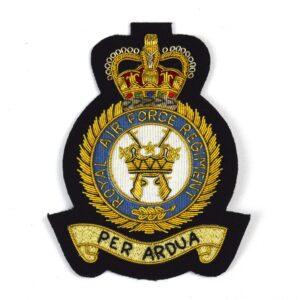
| Officers’ beret badge (bullion wire) | £30–£80 |
Medals
- WWII groups to RAF Regiment: Groups to Regiment personnel are identified by the service number prefix (beginning with a 29xx series or distinctive RAF numbering). A standard WWII group to an RAF Regiment gunner: £80–£200. Groups confirmed to D-Day or specific actions command a premium.
- Falklands SAM to 63 Sqn RAF Regt: Particularly desirable as a small, identifiable unit — £4,000–£8,000.
- Afghanistan OSM groups to RAF Regt: £200–£500, more with MiD or gallantry.
- Gallantry awards: DFCs and DFMs are theoretically air-crew awards, but RAF Regiment personnel received AFCs, MBEs, and MCs/MMs (the latter for ground action). Any gallantry award to the Regiment is uncommon.
Equipment
- Rapier missile system memorabilia: The Regiment operated Rapier SAMs for decades. Training manuals, sighting units, and launcher components occasionally surface.
- Bofors LAA equipment: WWII-era light anti-aircraft items from LAA squadrons — gunsights, fuze setters, training aids.
- Field equipment: Standard British Army webbing and field kit, but marked or associated with named RAF Regiment personnel or units.
Authentication Tips
RAF Regiment items are sometimes confused with general RAF tradesman items. Key authentication points:
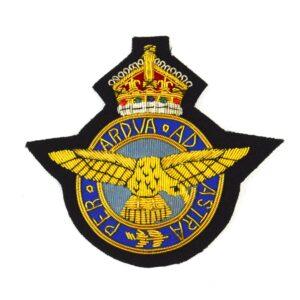
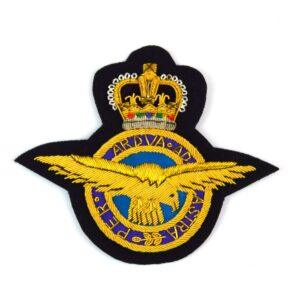
- The RAF Regiment cap badge features crossed Lee-Enfield rifles with fixed bayonets beneath an astral crown — distinct from the standard RAF eagle badge.
- Service numbers and records can be checked against RAF Regiment rolls at the National Archives (AIR 78/79 series).
- The Regiment’s distinctive blue-grey beret (shared with all RAF personnel) contrasts with the Army’s khaki and the Marines’ green — but the badge is the identifier.
Building a Collection
RAF Regiment collecting is still relatively affordable compared to Army or Navy equivalents, partly because the Regiment is less well-known to the general collecting community. This represents an opportunity — particularly for WWII items, which are likely to appreciate as awareness of the Regiment’s war record grows. Squadron-specific collections (e.g., all items from a particular numbered squadron) are an excellent way to build a coherent and researchable collection.
Frequently Asked Questions
What is the RAF Regiment?
The RAF Regiment is the Royal Air Force's own ground defence force, formed in 1942 to protect airfields and air assets. It operates as infantry and ground-based air defence, making it unique among air force units worldwide.
How do I identify RAF Regiment items?
The RAF Regiment cap badge features crossed Lee-Enfield rifles beneath an astral crown, distinct from the standard RAF eagle badge. Service numbers follow RAF numbering sequences. Shoulder titles read RAF REGIMENT.
Sources & References
- Brookes, A., The History of the Royal Air Force Regiment
- Oliver, K., Through Adversity: The History of the RAF Regiment
- RAF Regiment Heritage Committee archives

Related Items in Our Collection8 items

Continue Reading
 Featured