
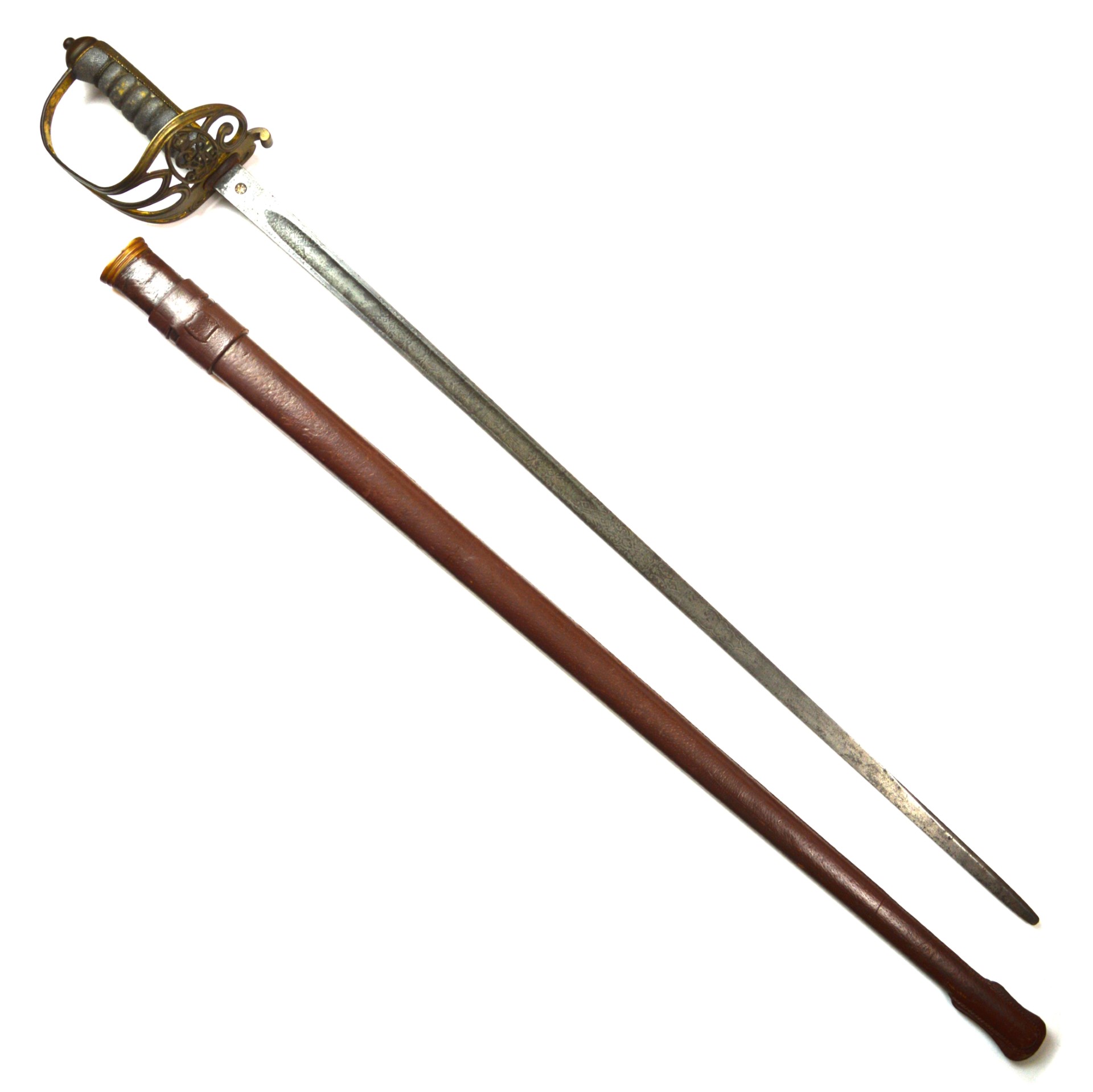
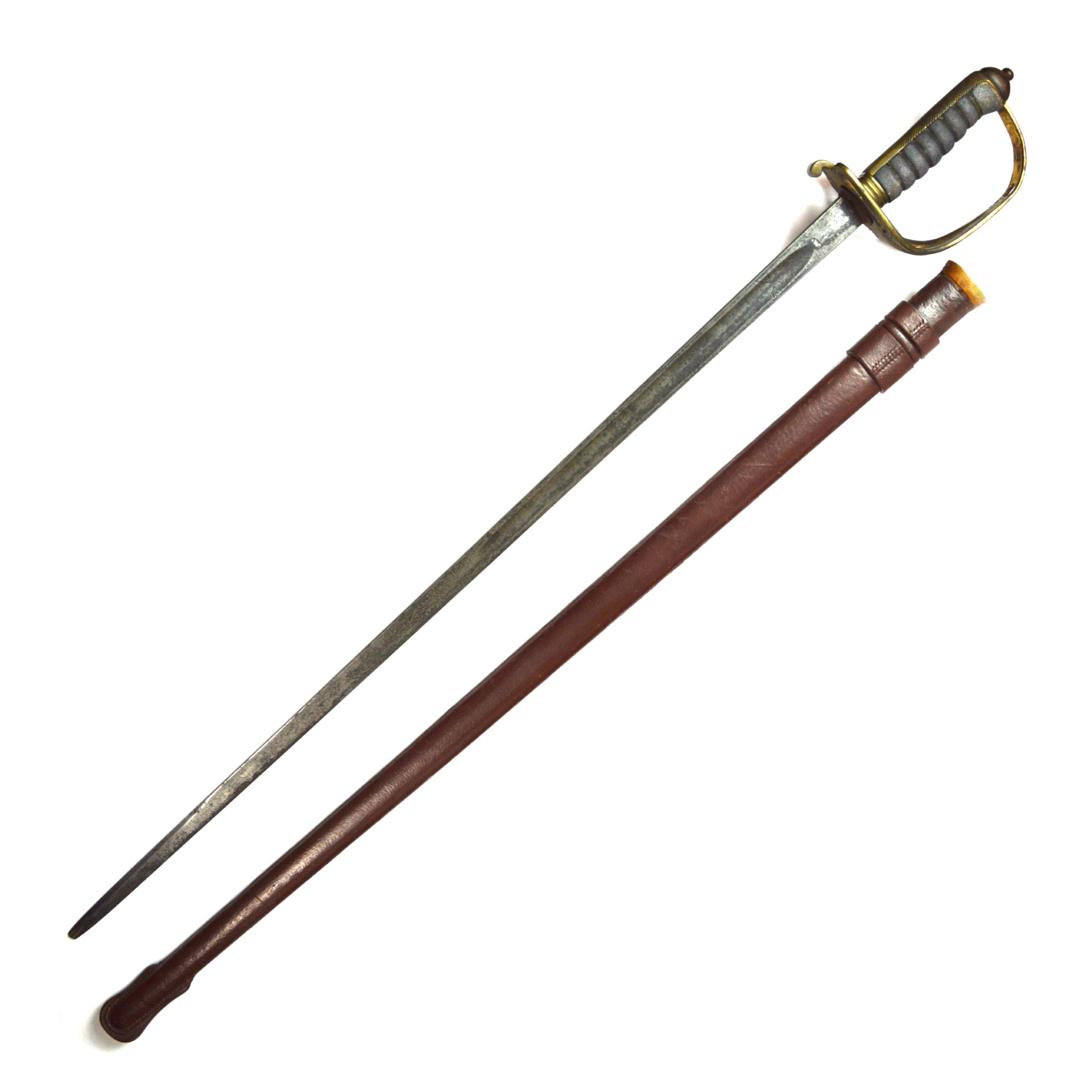
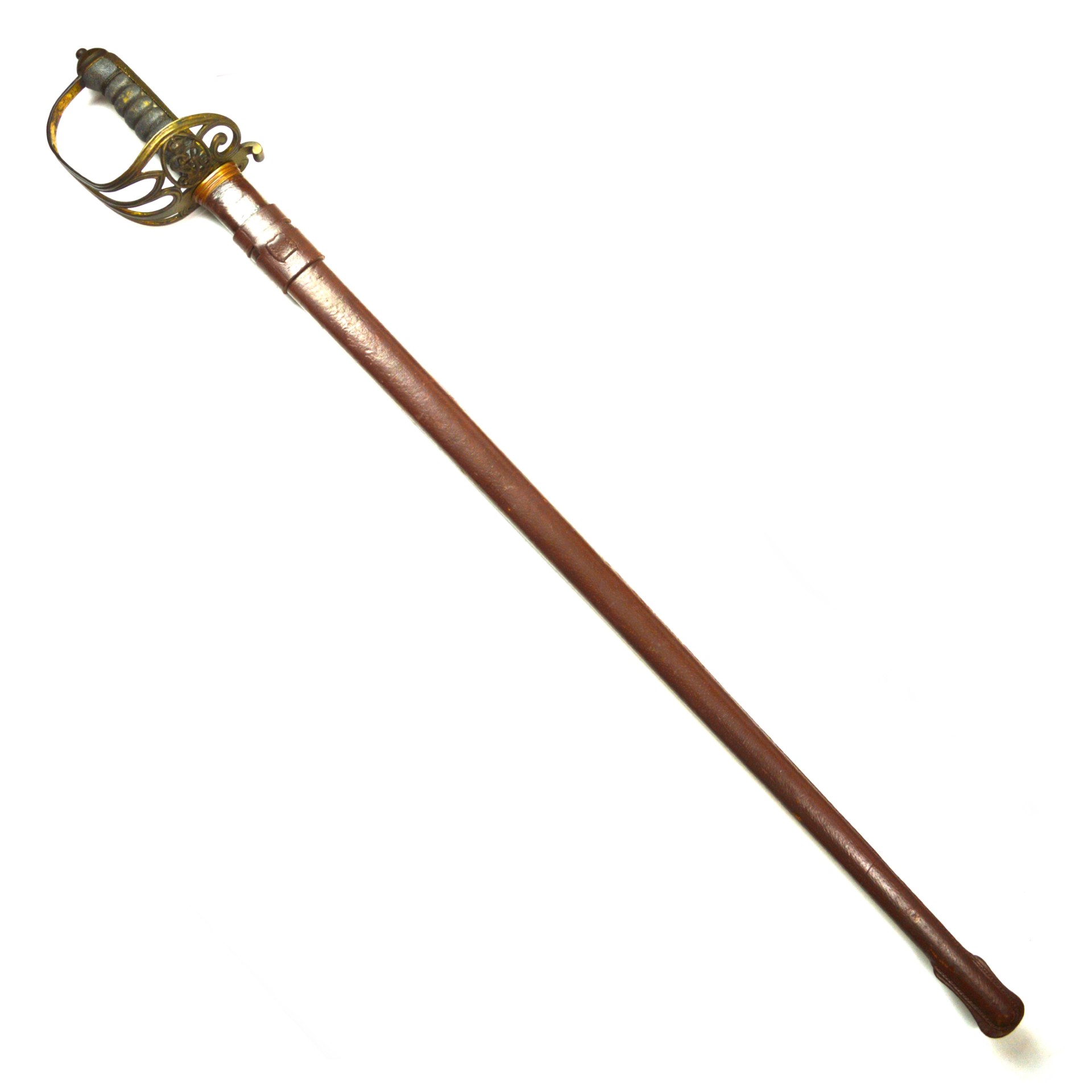
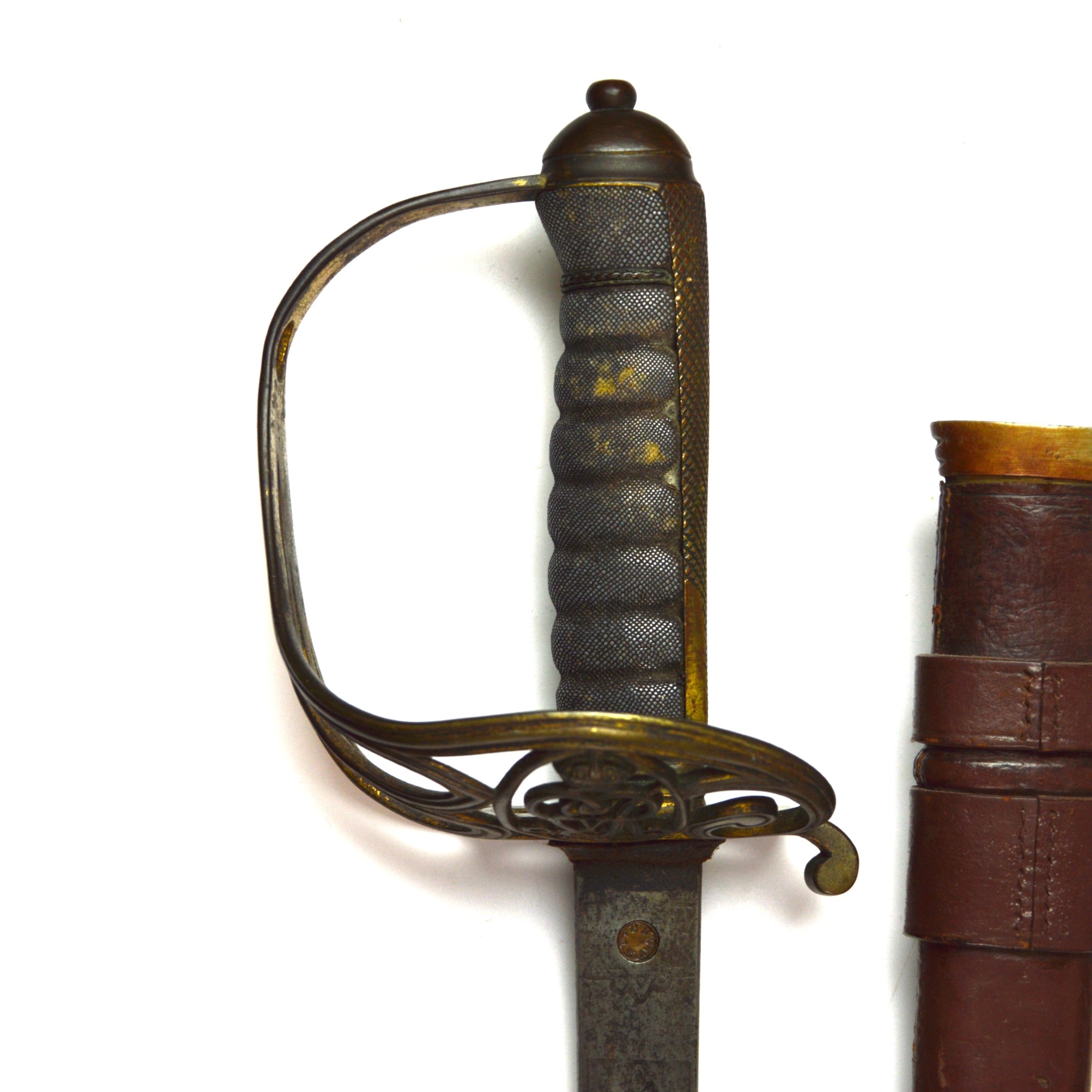
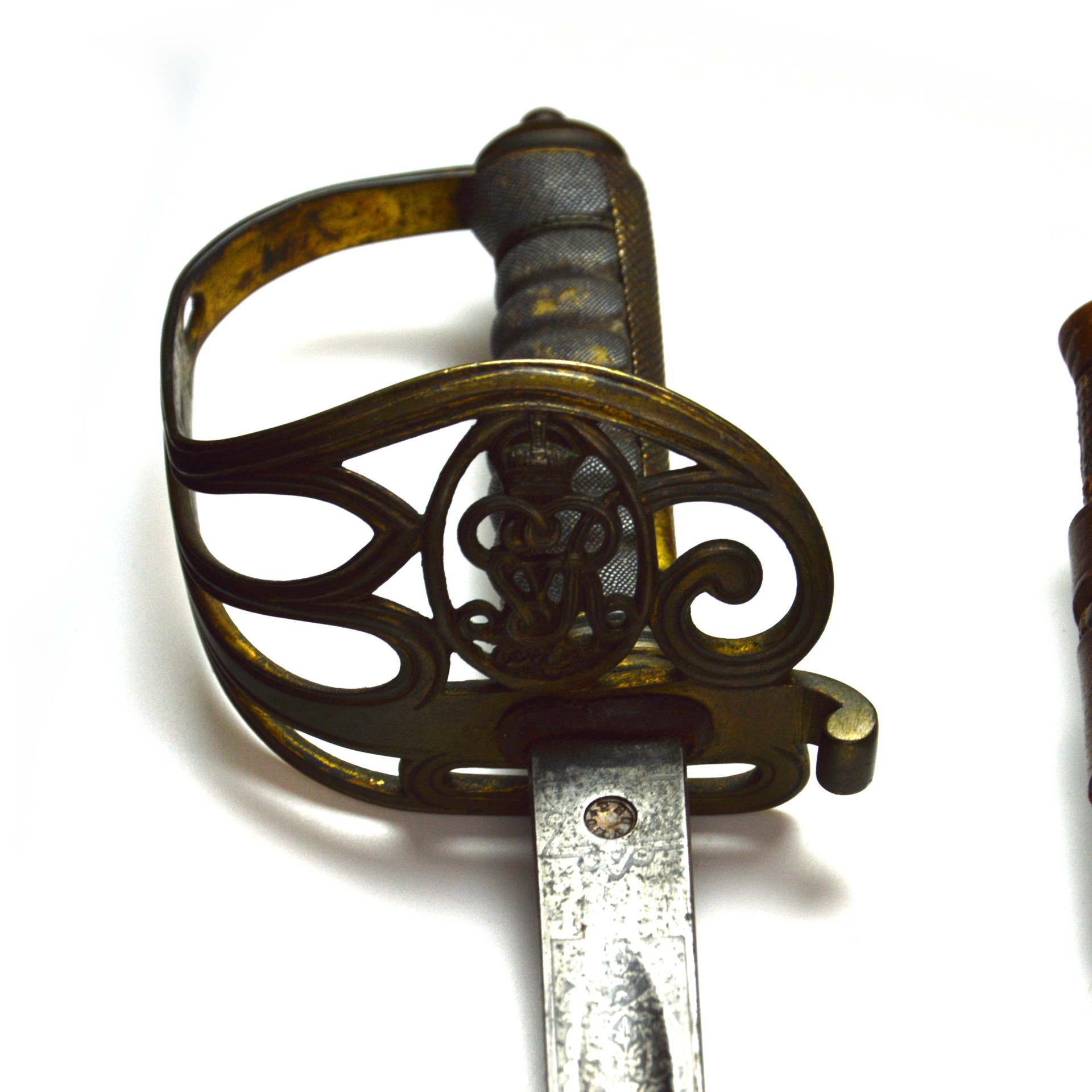
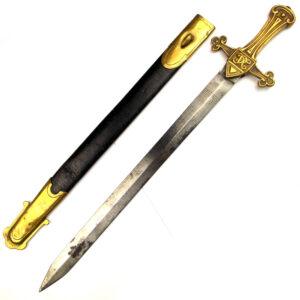
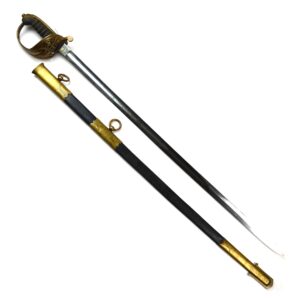
British 1892 Pattern Royal Army Medical Corps (RAMC) Infantry Officer’s Sword, complete with Sam Browne leather field service scabbard, bearing the “GRV” royal cypher of George V, dating its period of use to circa 1910–1936. This example follows the regulation pattern adopted for medical officers of the Royal Army Medical Corps, reflecting the distinctive requirements and status of non-combatant commissioned officers within the British Army.
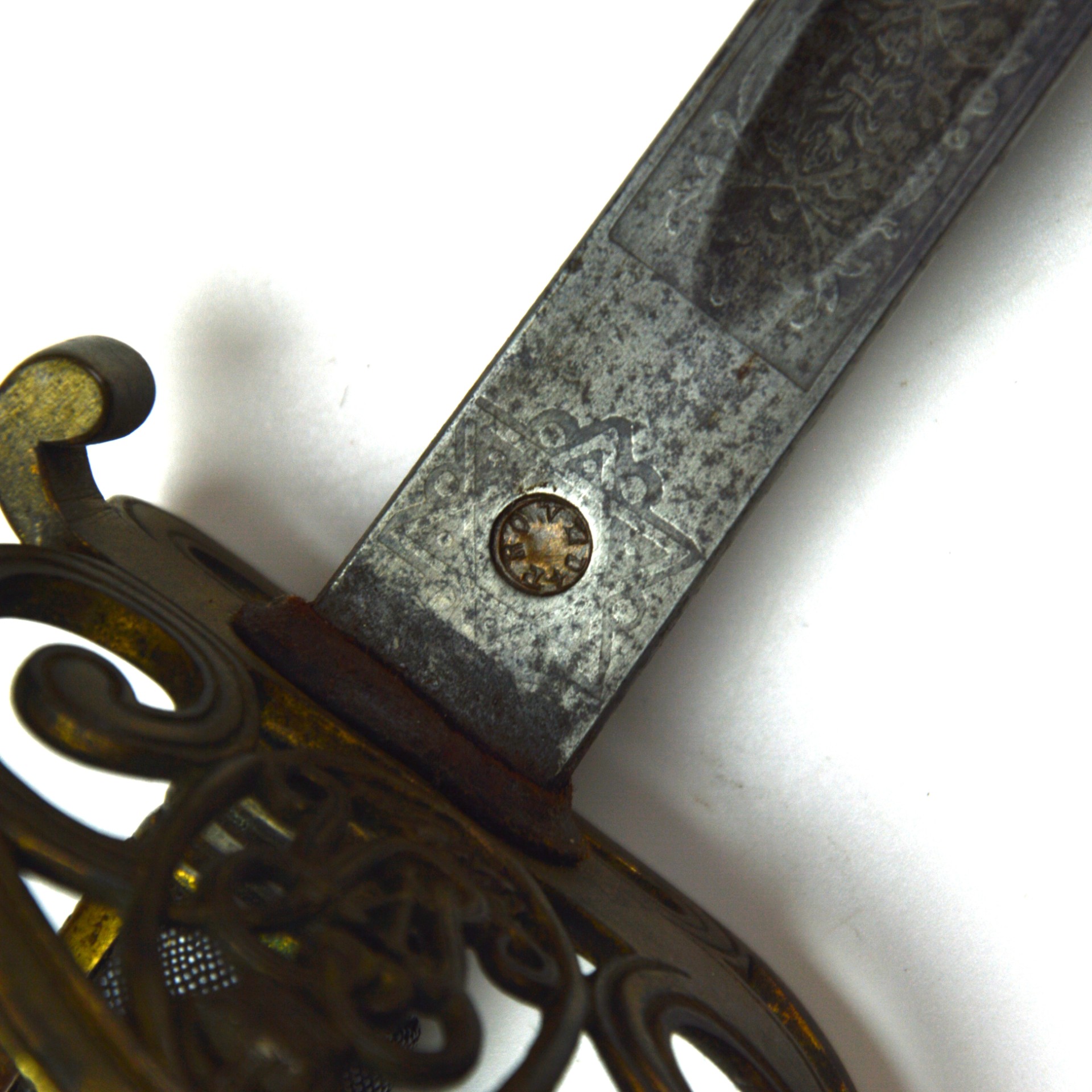
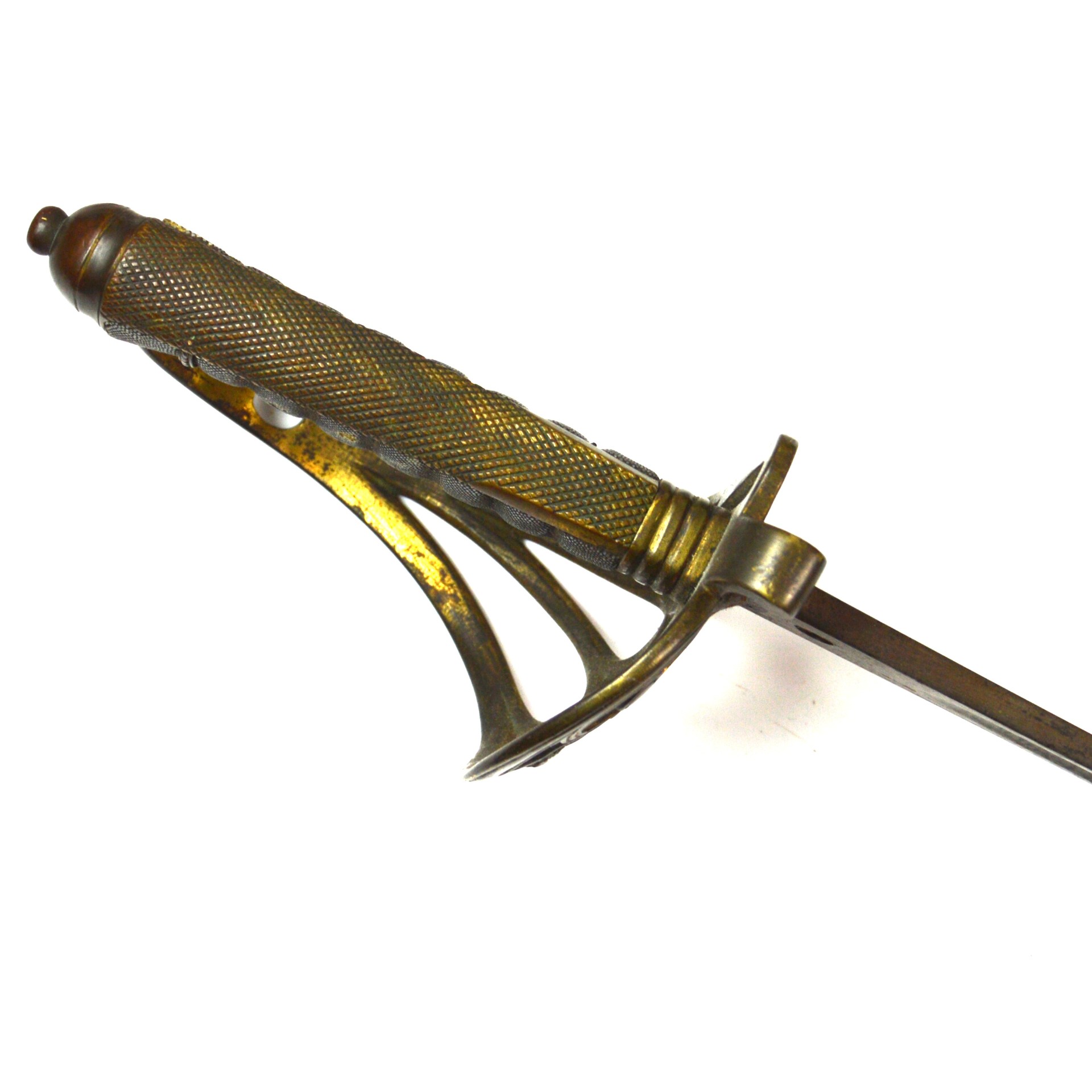
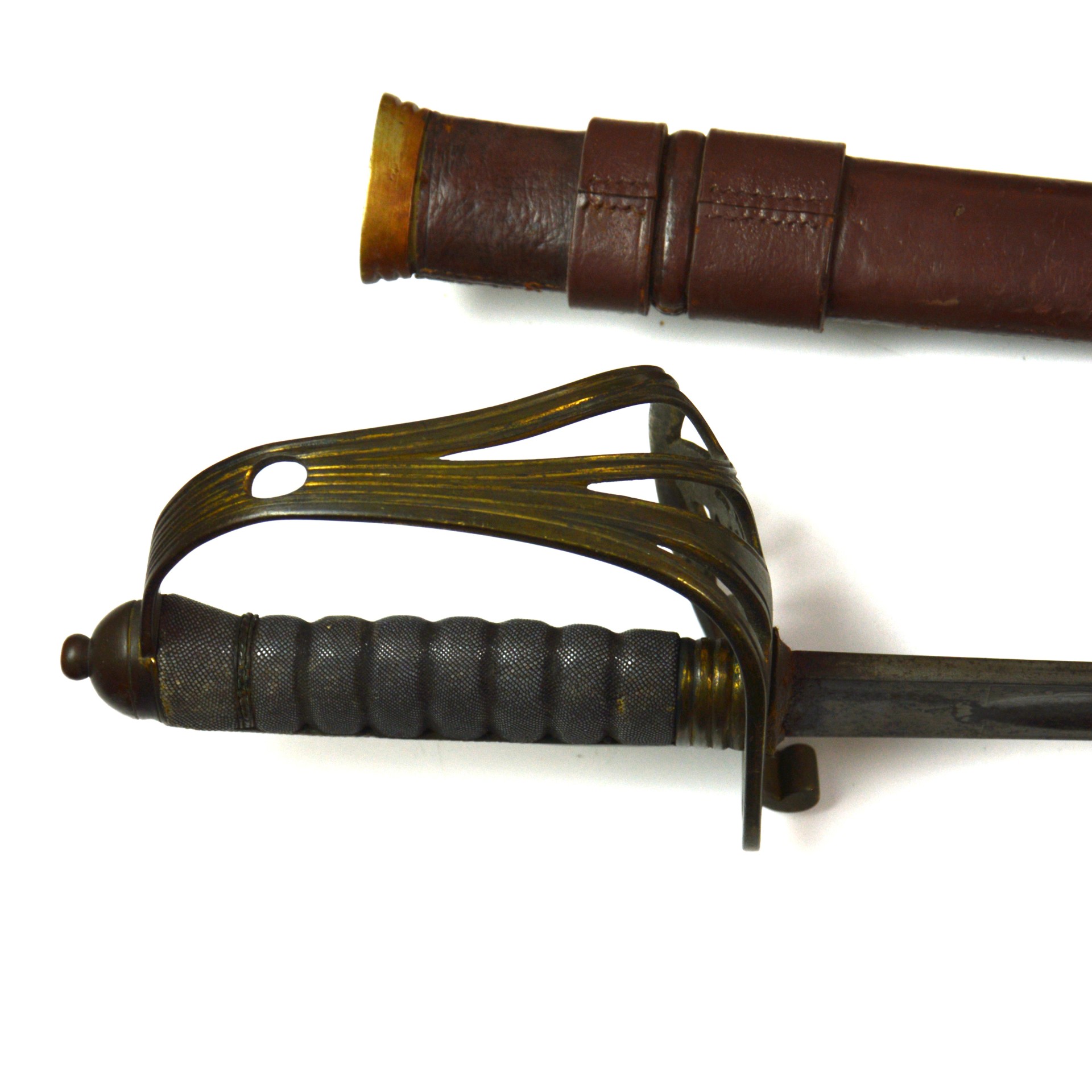
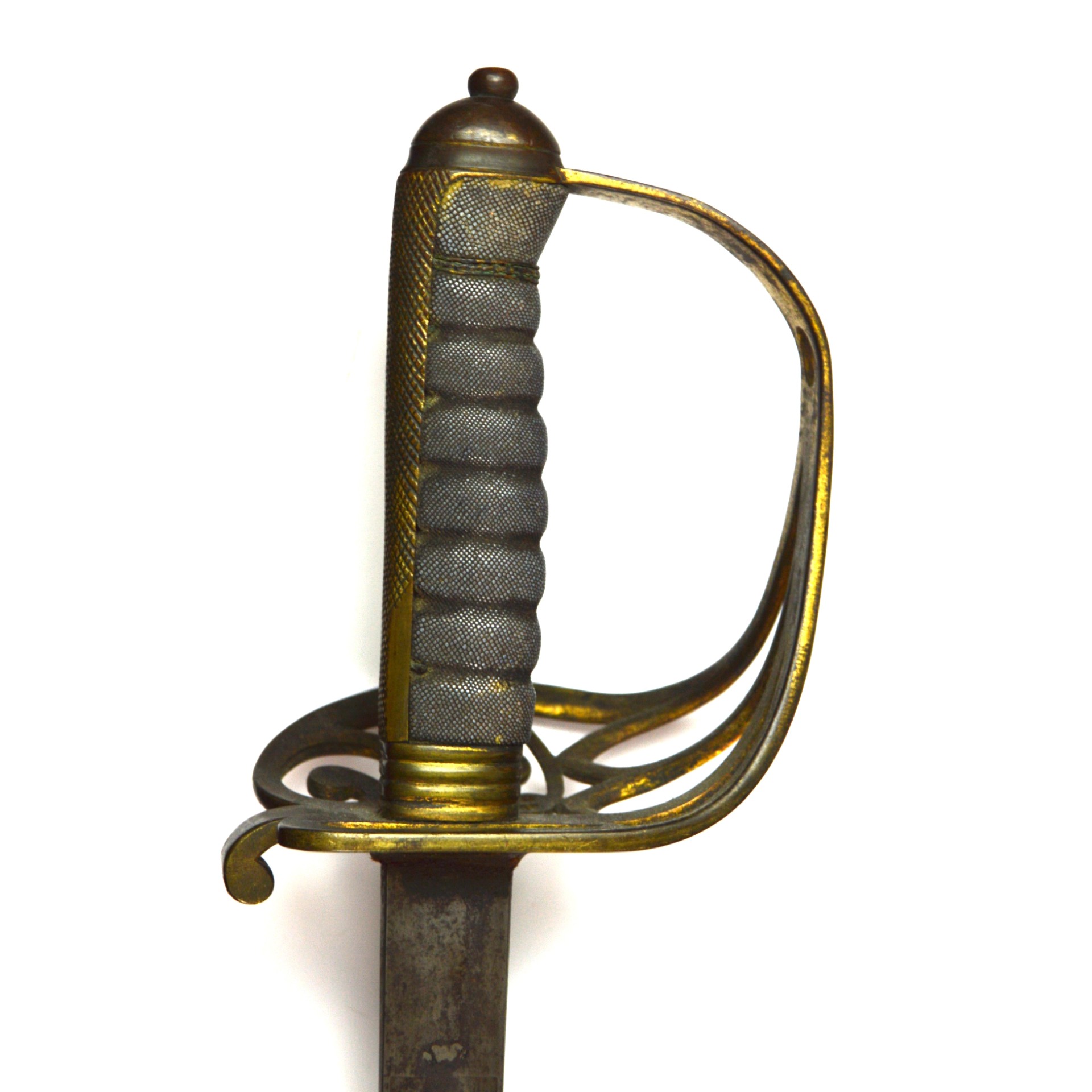
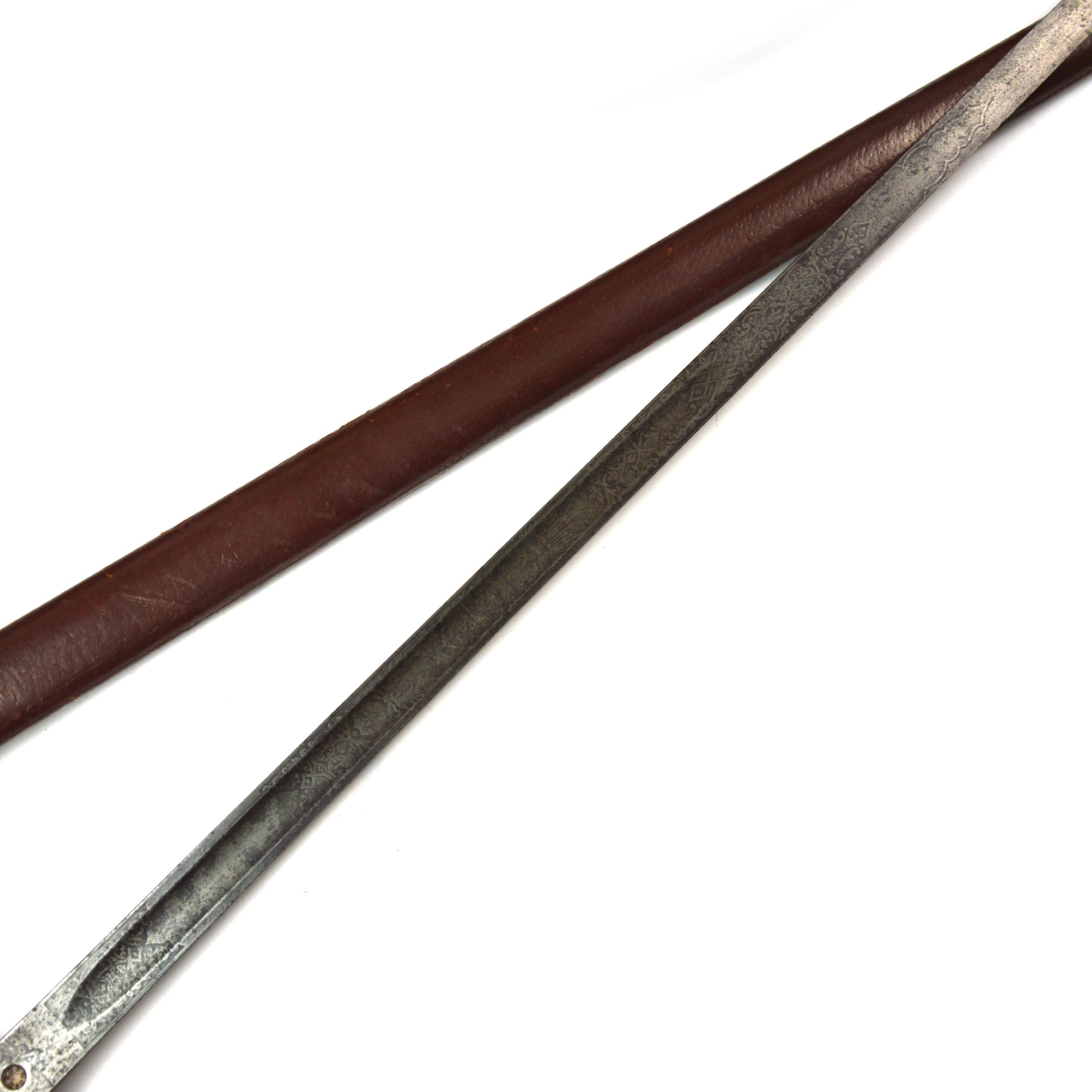
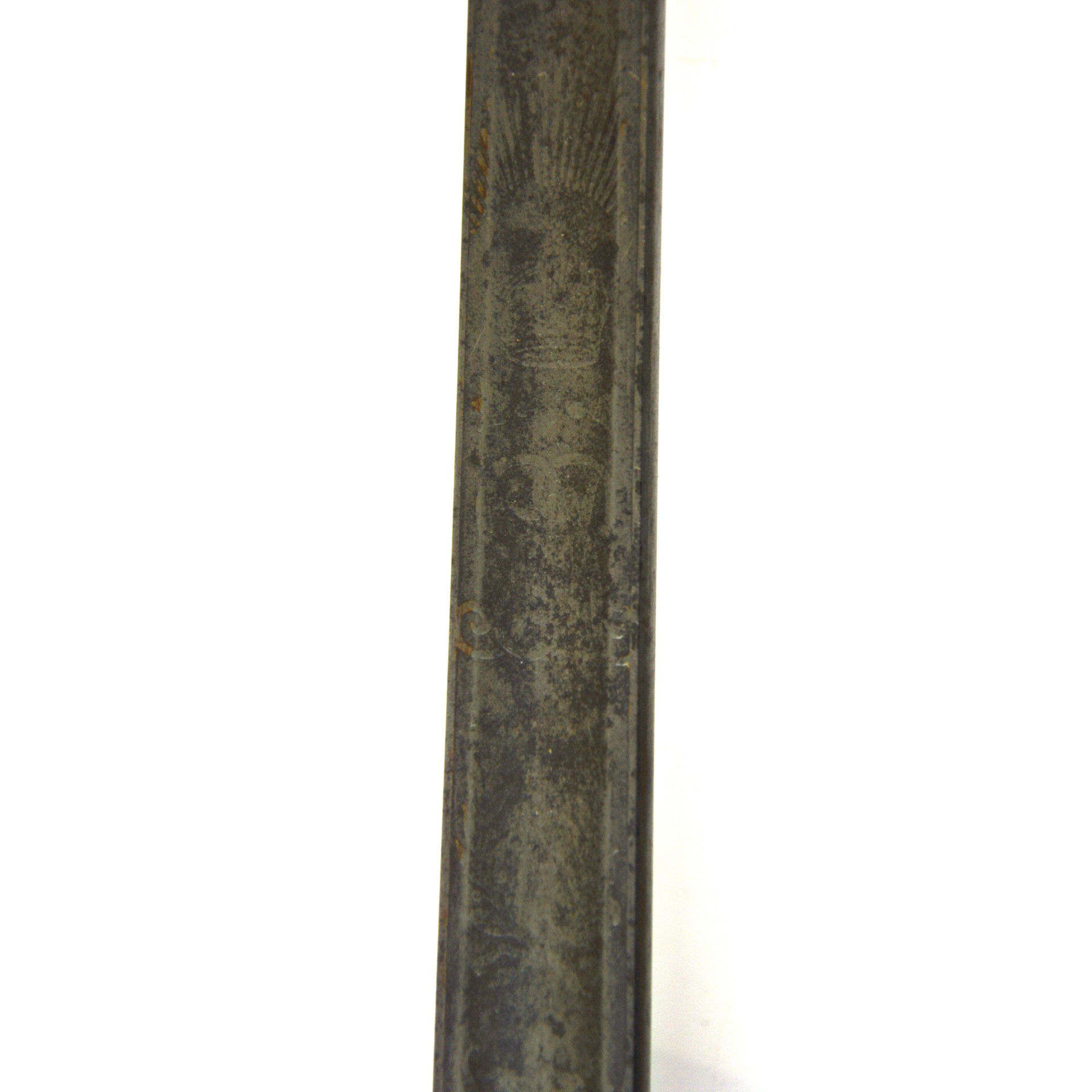
The sword features a straight, fullered blade, typically etched with decorative panels, including the royal cypher and crowned motifs, alongside a brass “Proved” disc. The hilt is of the Gothic style, incorporating a pierced brass guard with the royal cypher of George V, paired with a shagreen grip bound with twisted wire. The blade form is consistent with infantry officer patterns, designed primarily for thrusting, while retaining the ceremonial elegance associated with British officer swords.
The 1892 Pattern sword was introduced for officers and retained by the Royal Army Medical Corps specifically following its formation, distinguishing it from standard infantry patterns, which typically have a steel handguard after 1895, while maintaining a similar overall form. Examples bearing the GRV cypher are closely associated with the First World War and interwar period, when RAMC officers served extensively in field hospitals, casualty clearing stations, and frontline medical support roles.
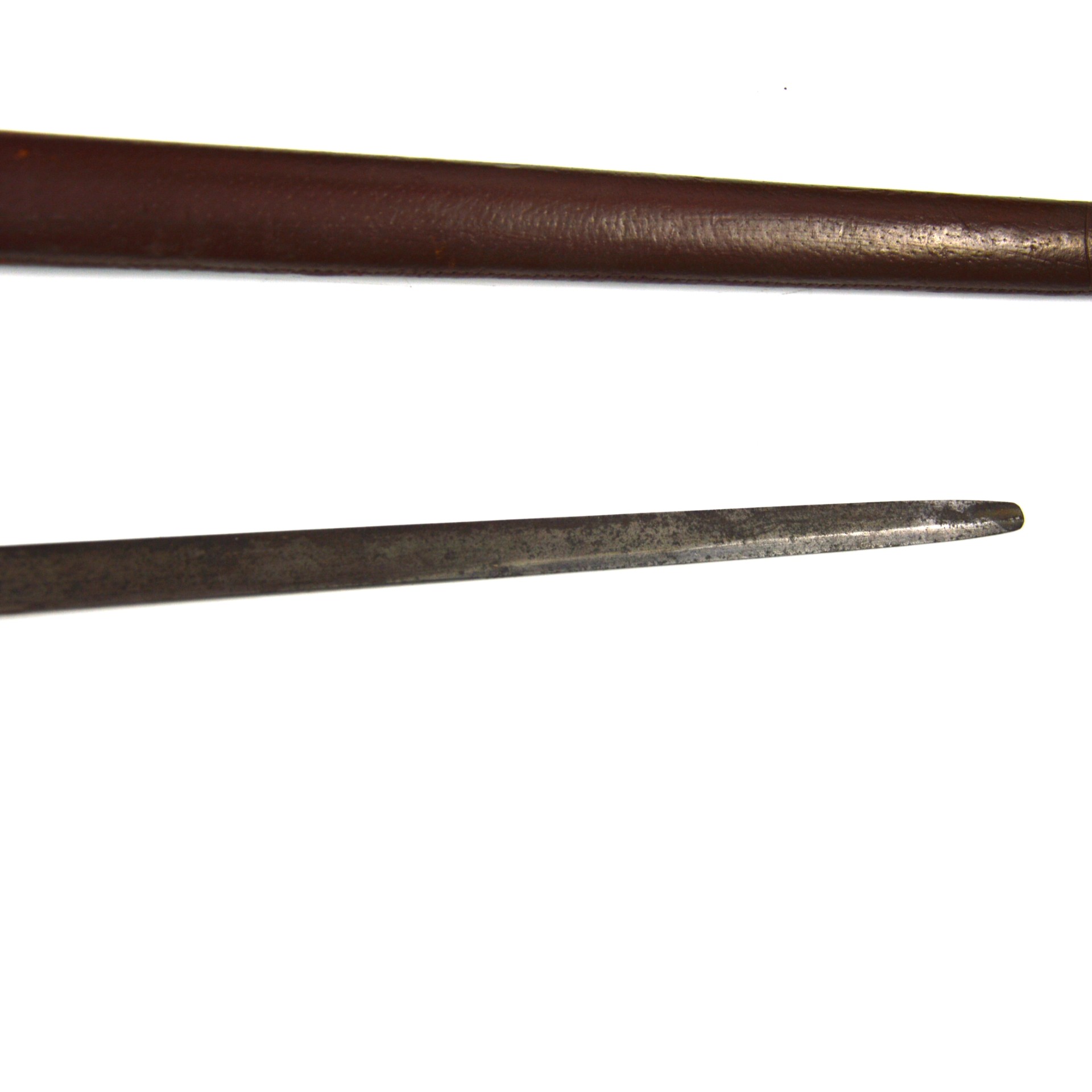
This example is accompanied by a Sam Browne leather field service scabbard, intended for active service conditions. The leather construction provided a practical and subdued alternative to steel dress scabbards, suited to operational environments where durability and reduced noise were important considerations.
Manufactured in steel with traditional materials, this sword represents a specialised branch of the British Army’s edged weapons. Swords of this type are collected for their association with military medical services, the First World War, and the broader history of British Army officer accoutrements.
Dimensions
Approx. 96.5cm overall length out of scabbard
Approx. 81cm blade length
Condition
Acceptable overall condition for its age, with relatively clear blade etching but a “pokerised” (snapped) point. Age-related wear, light surface marks, and signs of service use are present on the hilt. The leather scabbard shows expected wear consistent with field use but remains intact and functional. No other significant damage or repairs are evident.
Reviews
There are no reviews yet.