
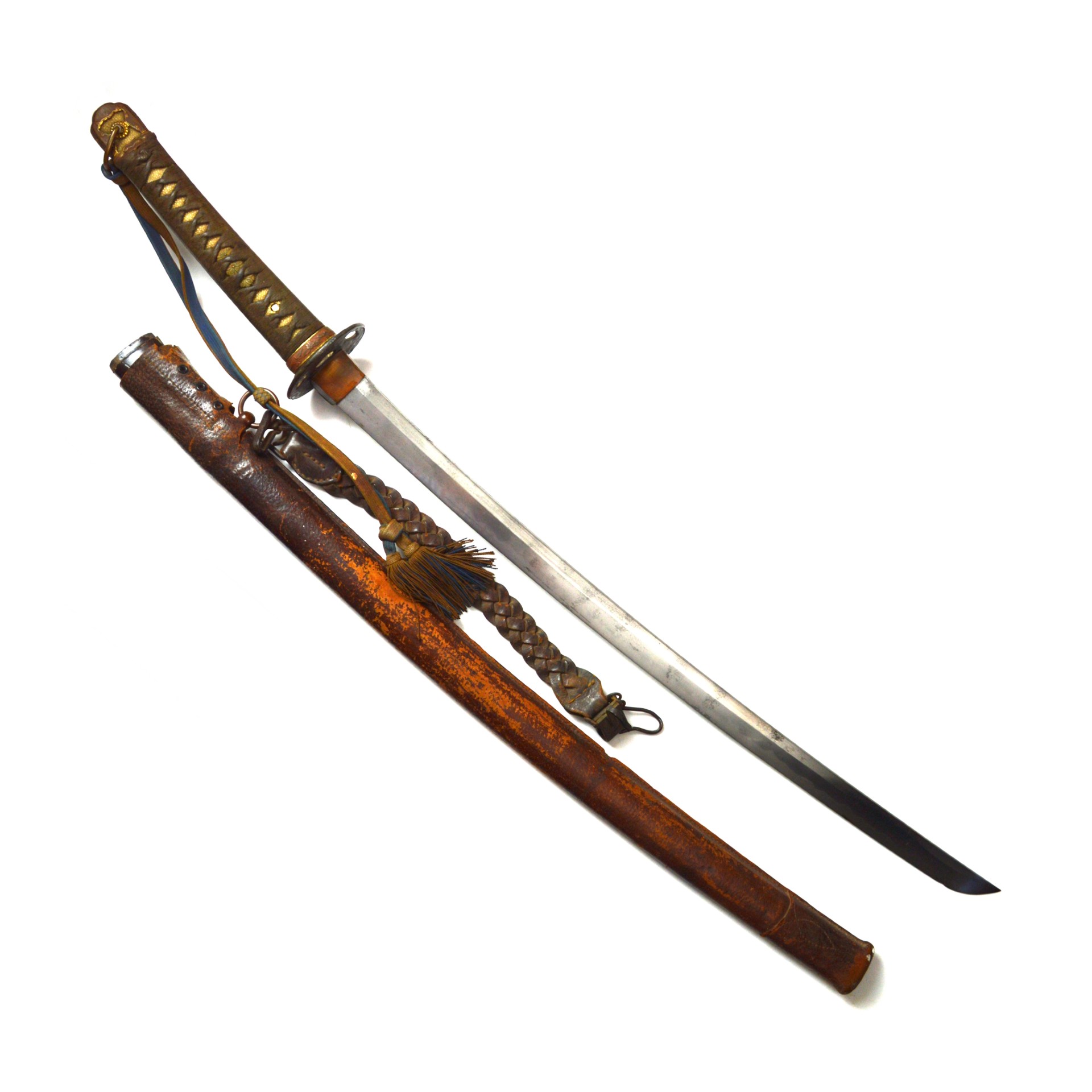
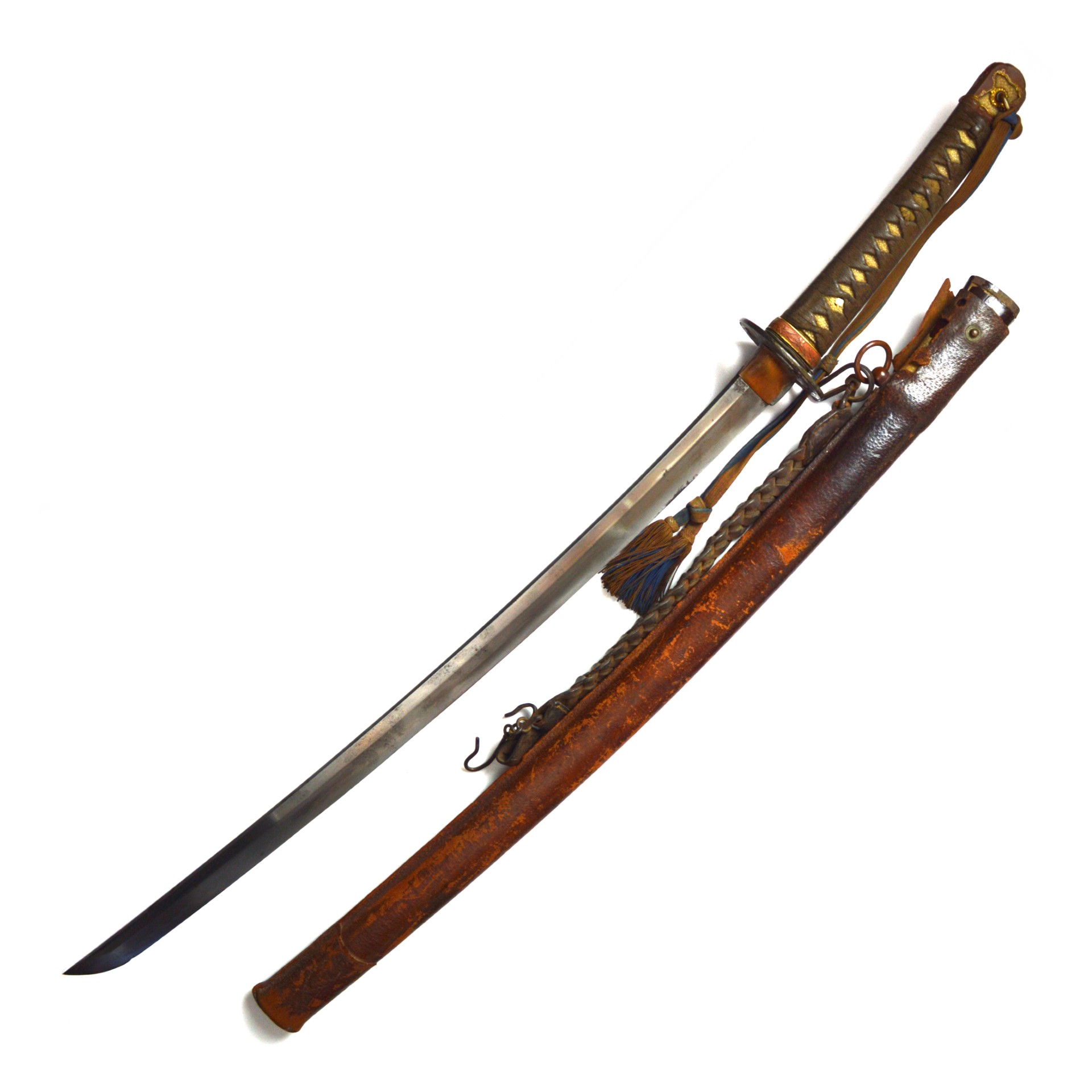
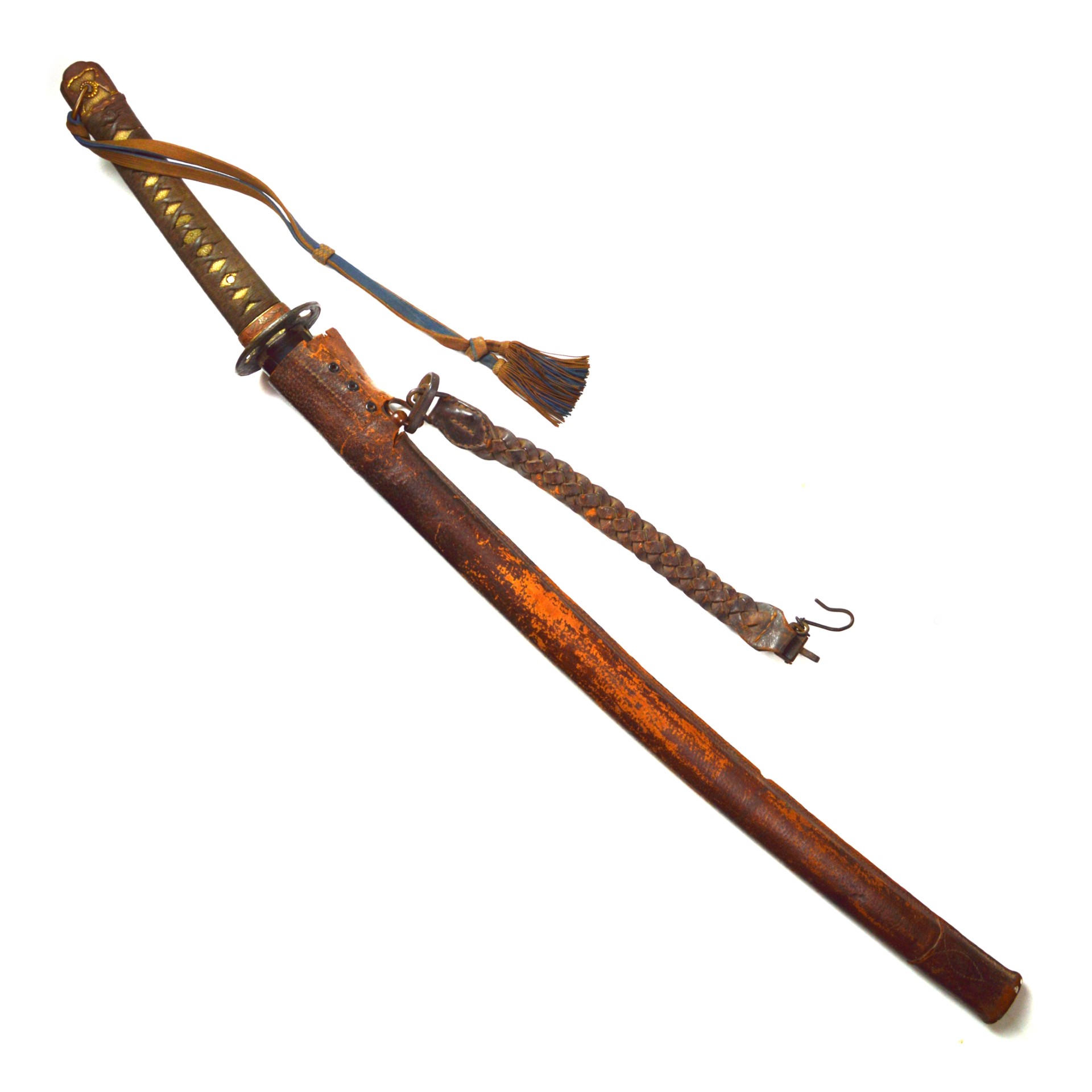
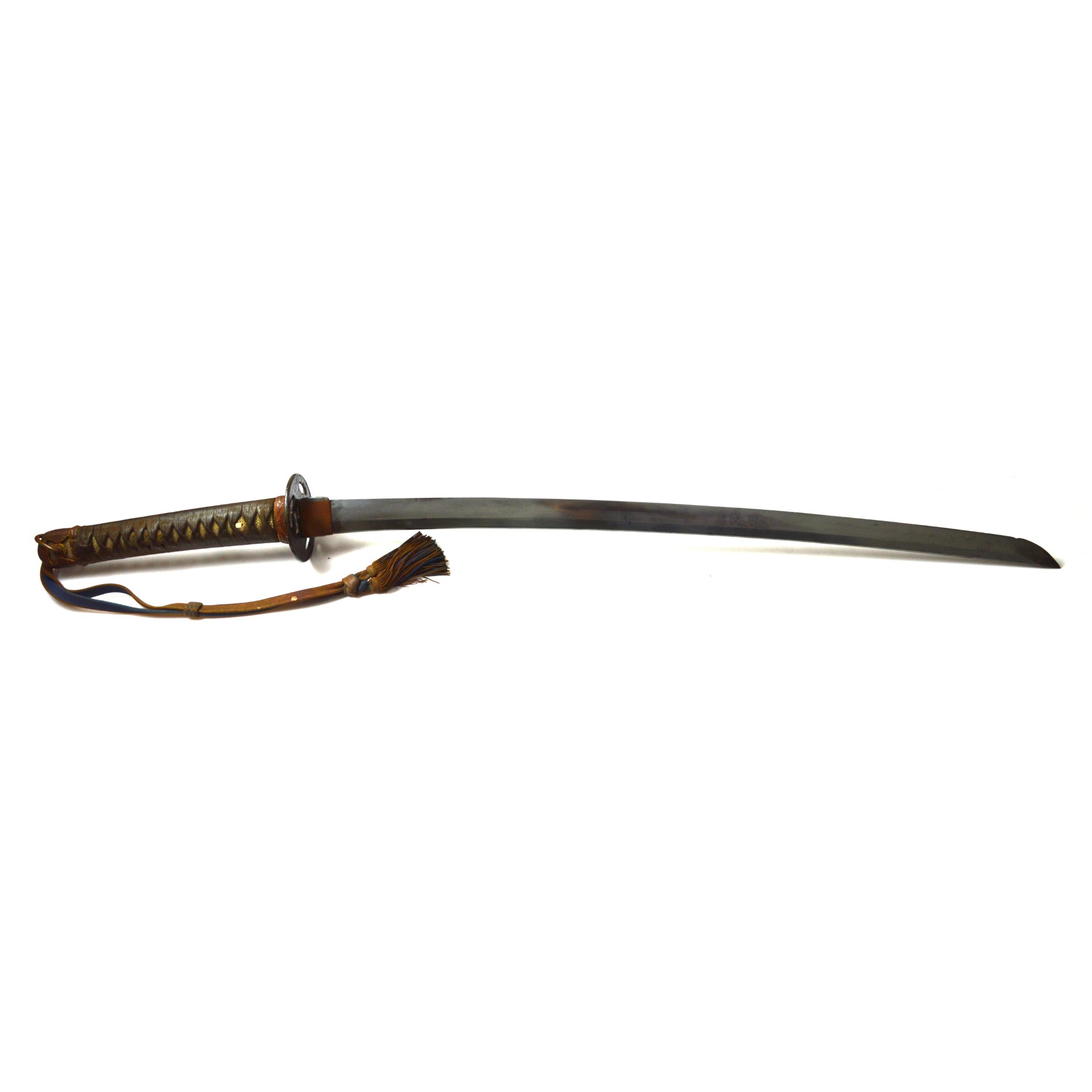
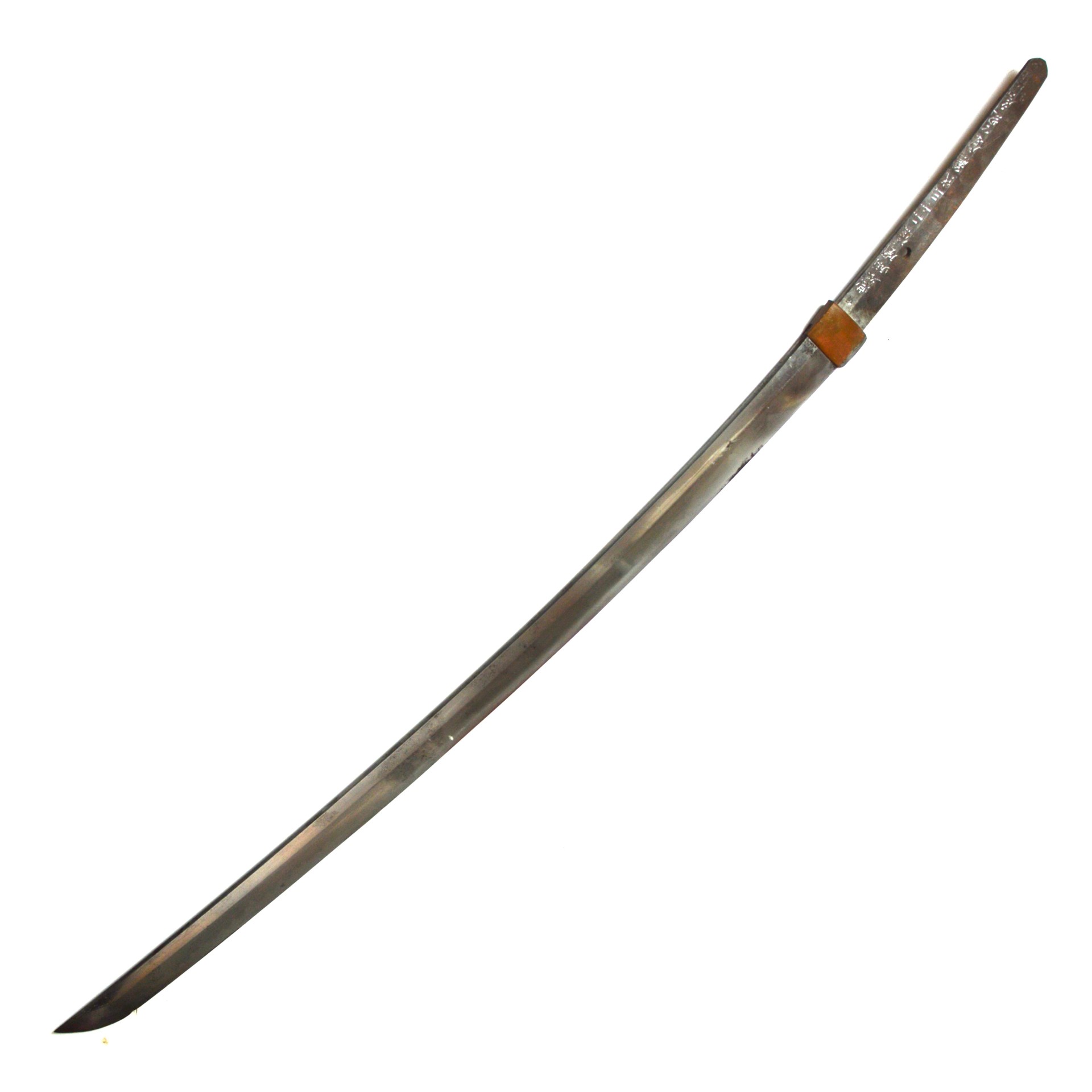
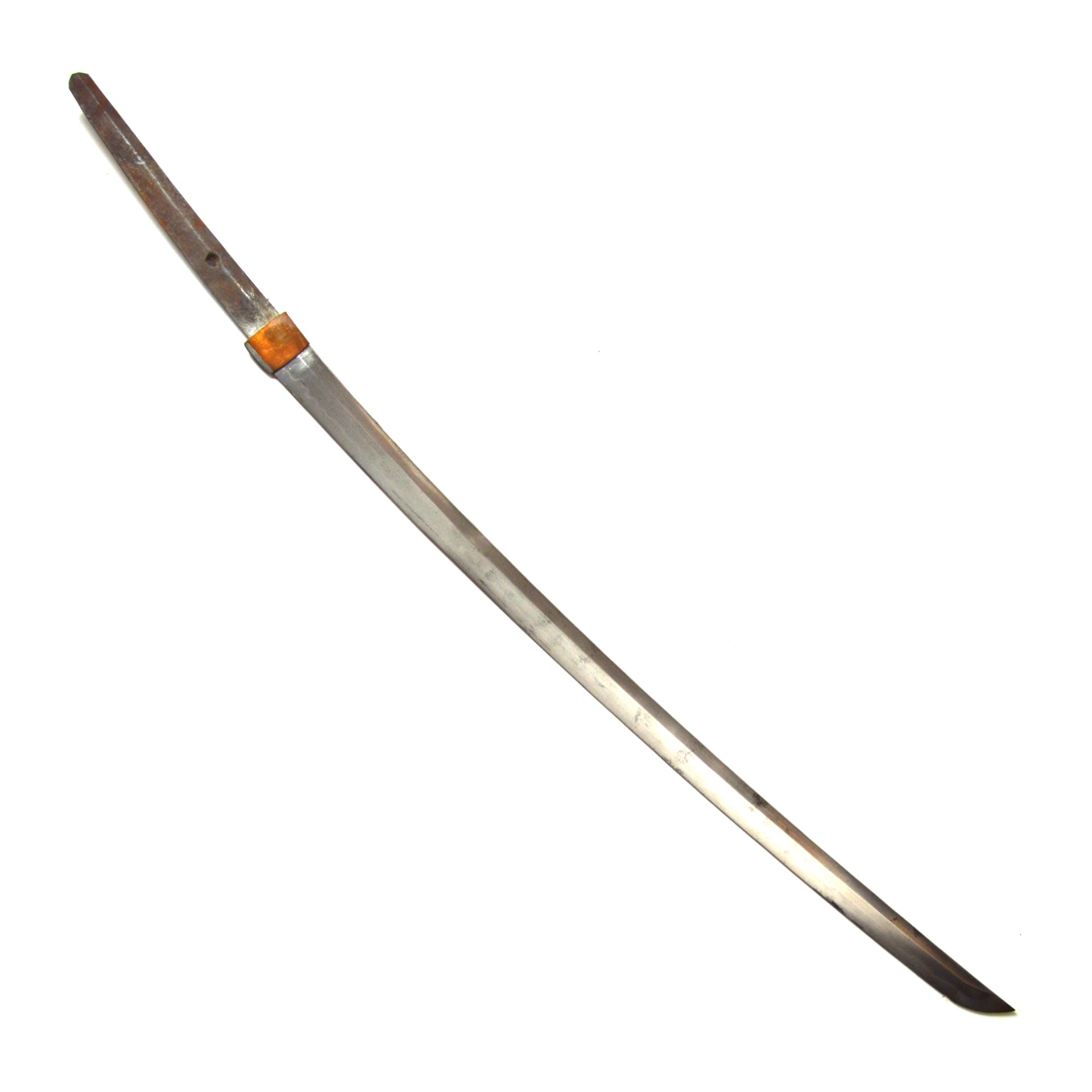
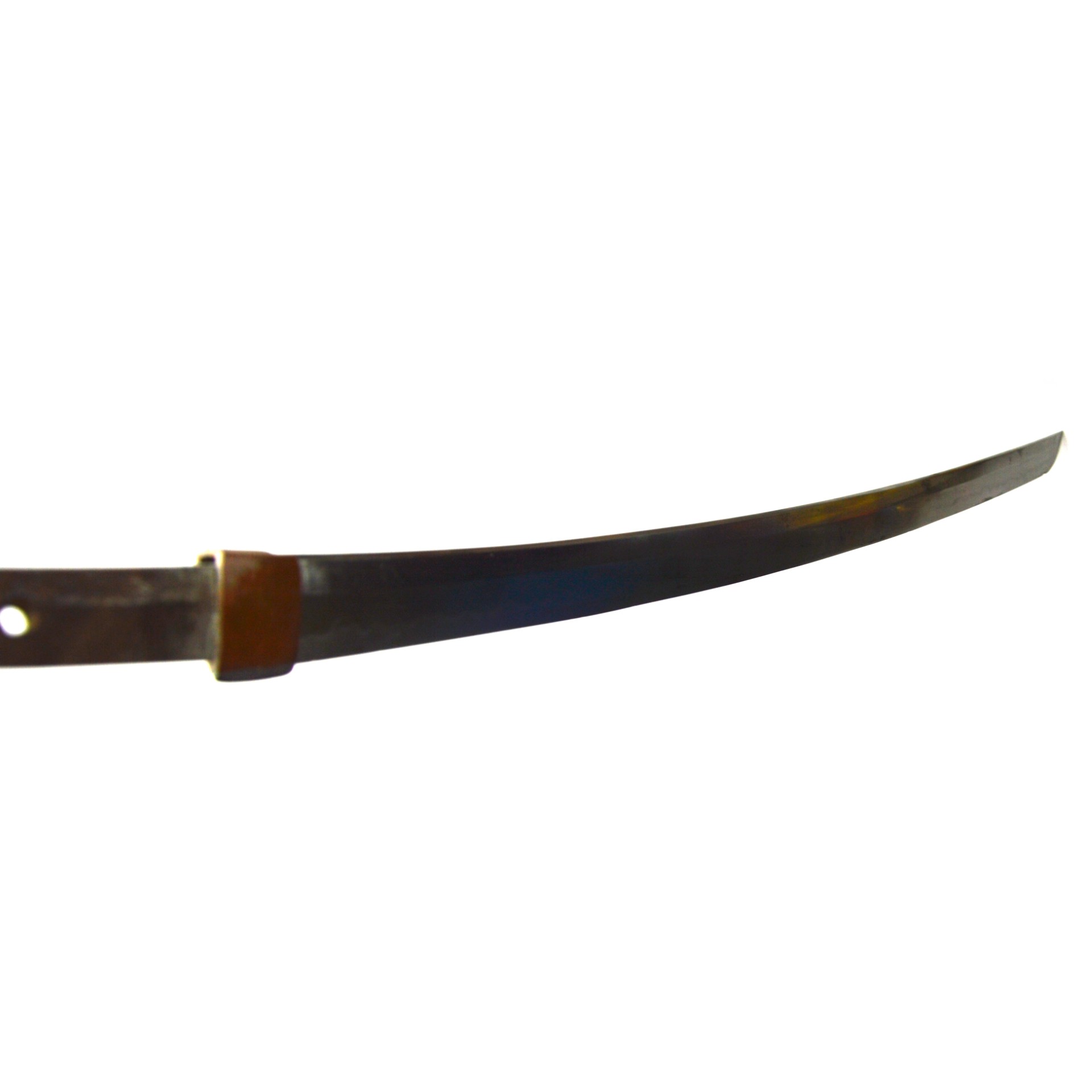
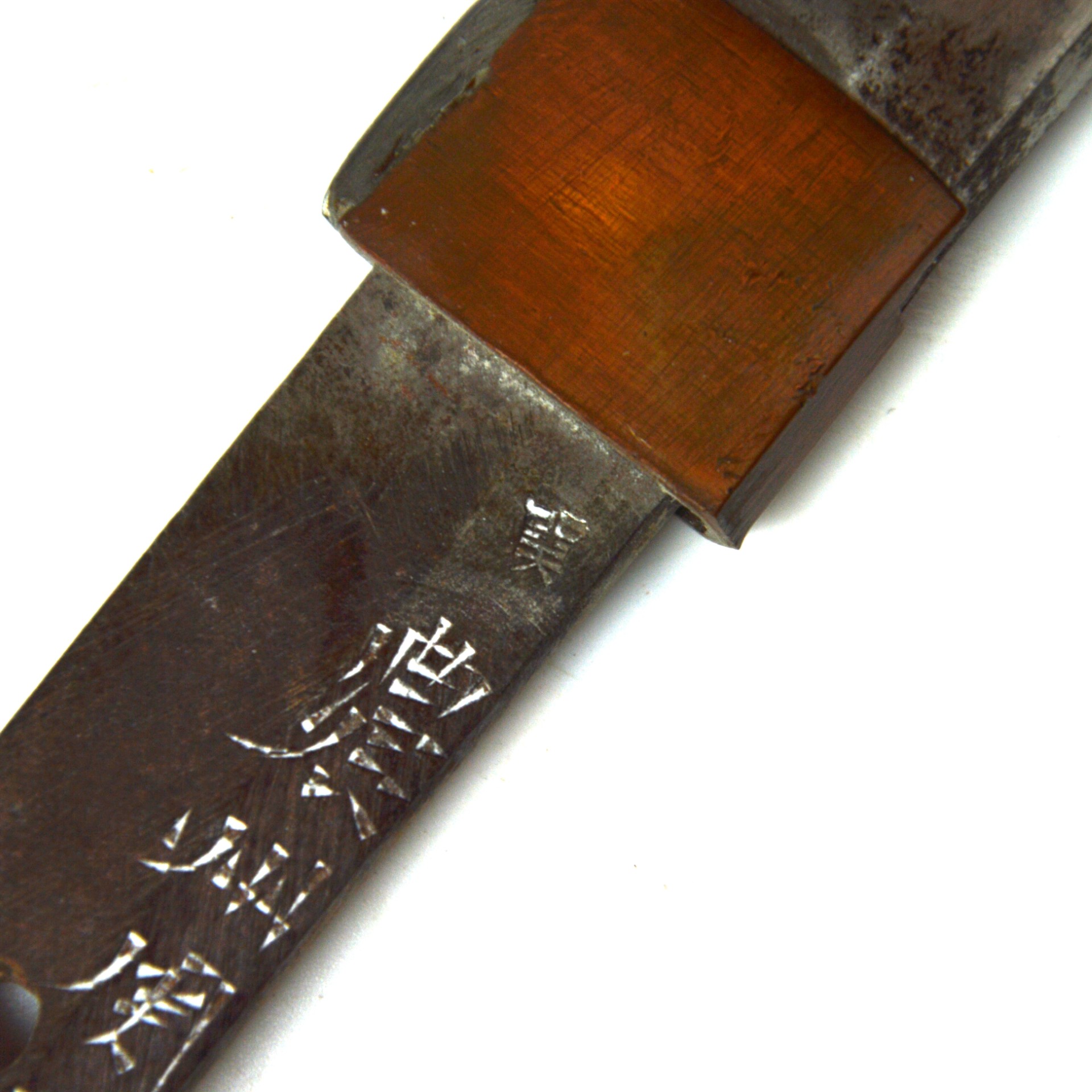
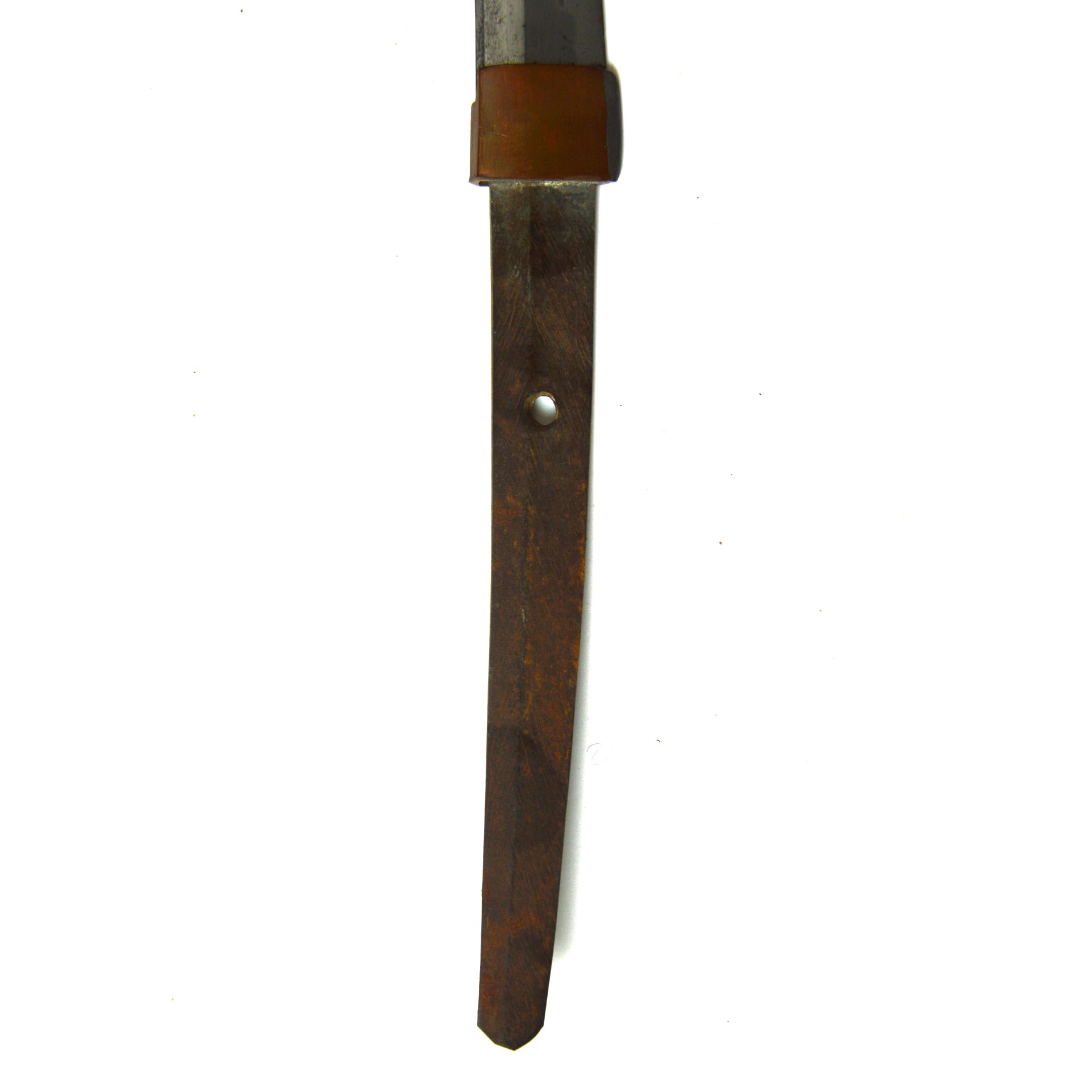
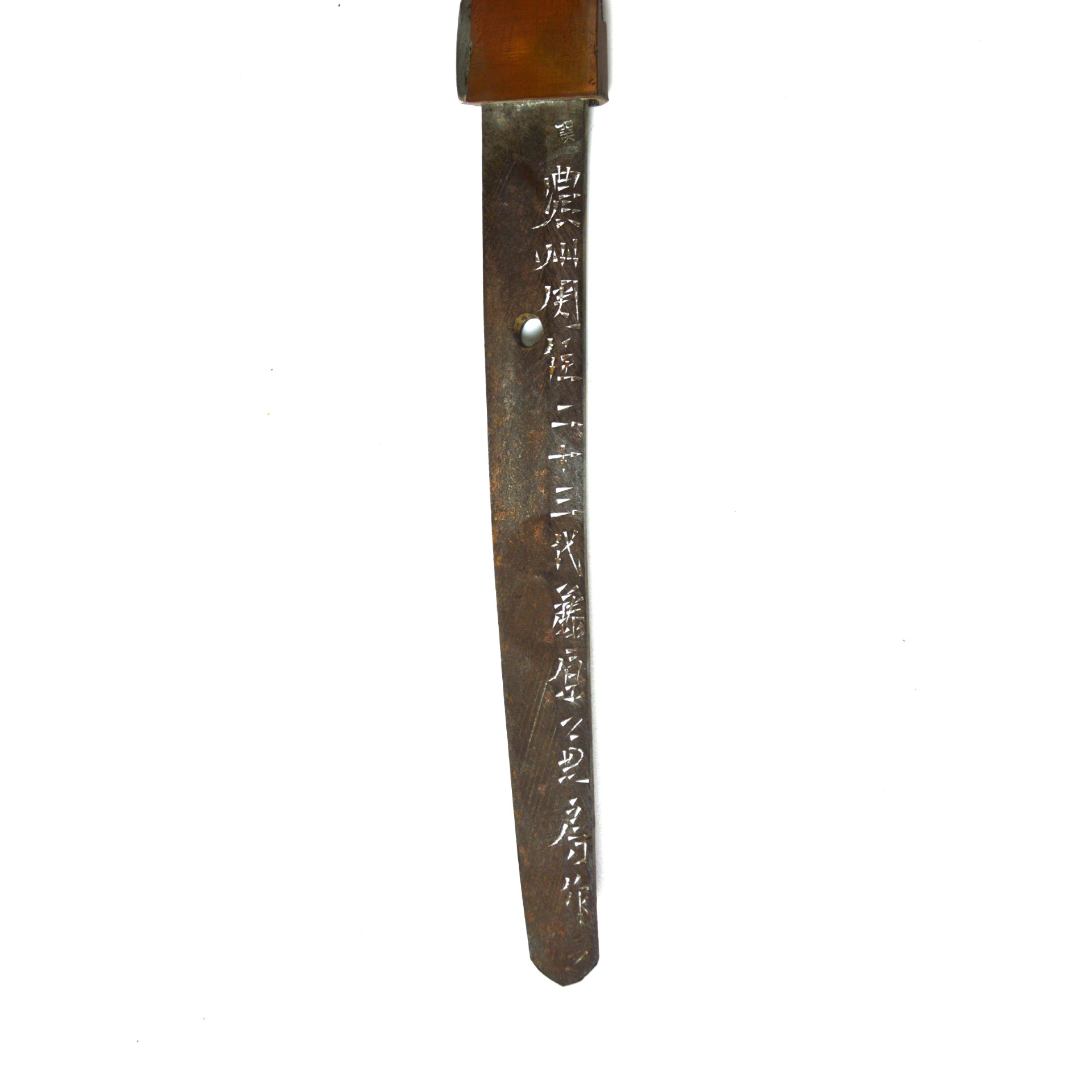
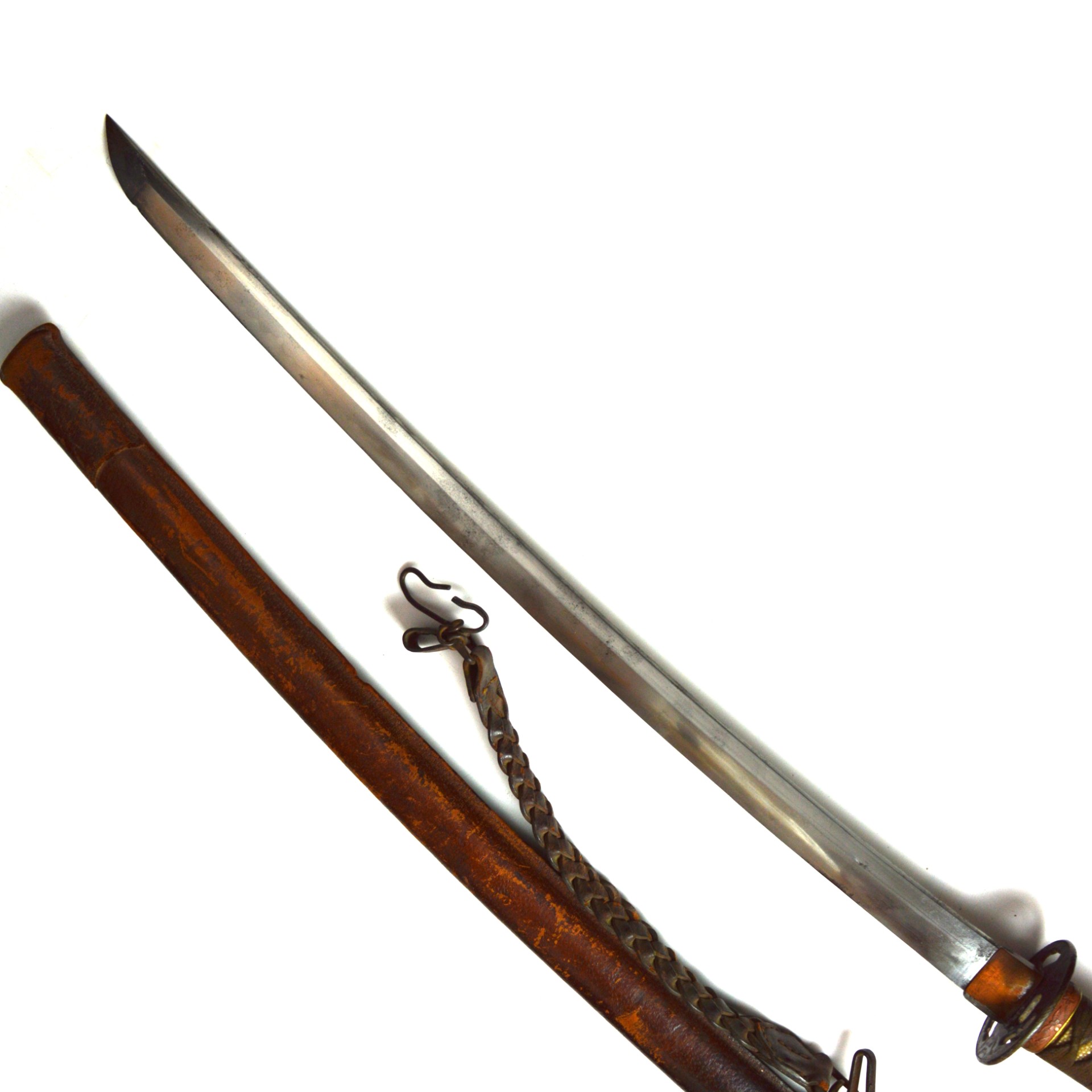
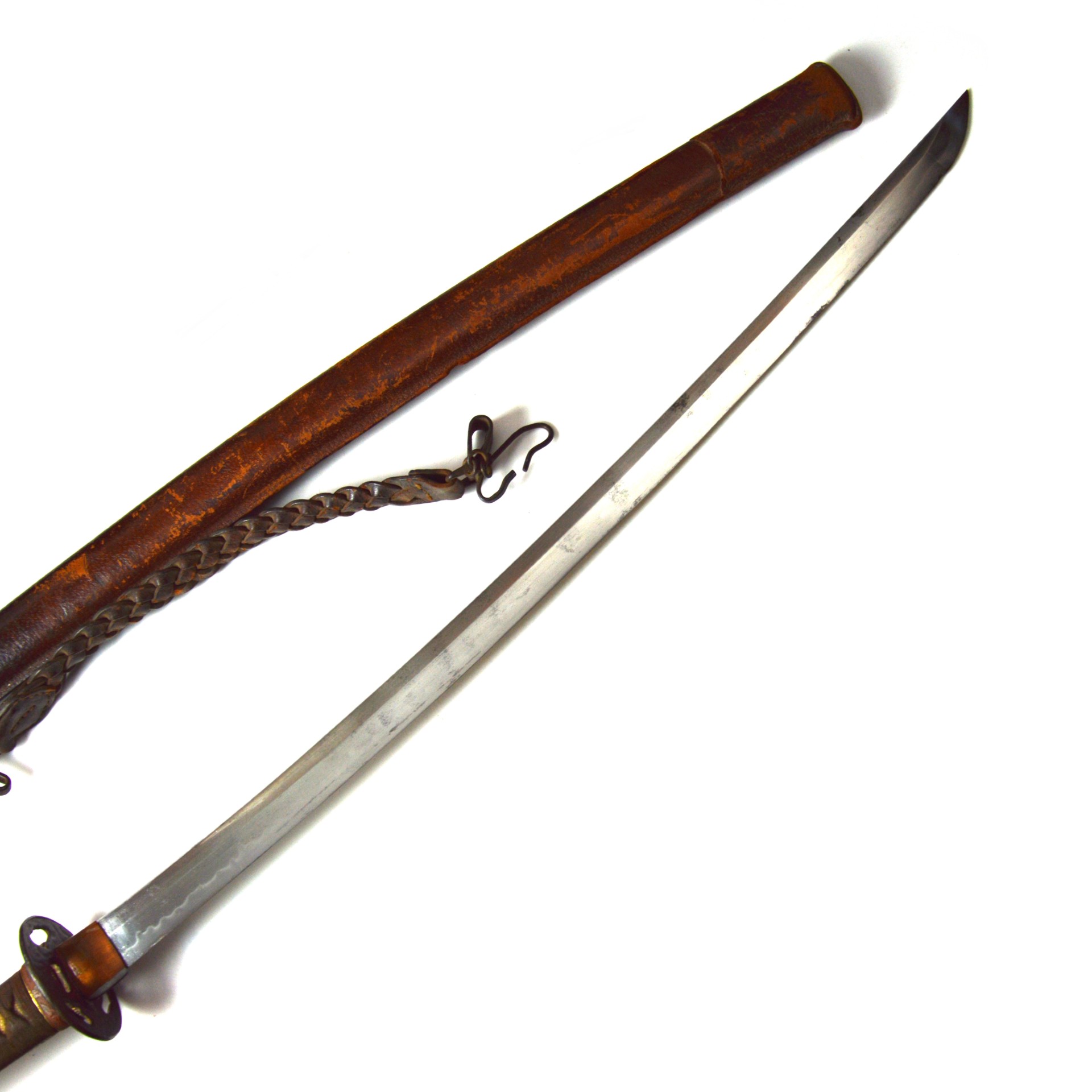
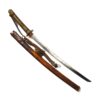
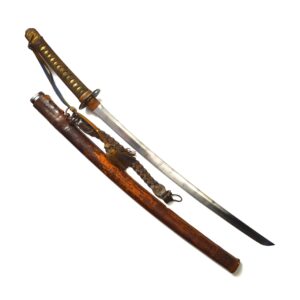
Japanese Shin Guntō Type 98 Army Officer’s Sword in combat scabbard, a World War II period example of an Imperial Japanese military sword, signed by the 23rd generation Fujiwara Kanefusa of Noshu Seki. This pattern, formally adopted in 1938, represents the standard officer’s sword of the Imperial Japanese Army during the Second World War.
The Type 98 shin guntō follows traditional Japanese sword aesthetics while incorporating military mounting styles. It features a curved, single-edged blade (katana form), often signed on the tang (known as a “nakago”), as in this example, which is signed “濃州関住二十三代藤原兼房作之” (“nōshū seki ju ni ju san dai fujiwara kanefusa saku kore”) or “Made by the 23rd Generation Fujiwara Kanefusa in Noshu Seki”.
Blades produced by the Kanefusa lineage were historically known for their skilful traditional forging techniques, changing to mass production with wartime demands. Kato Koichi, born in 1900 and the head of the Fujiwara Kanefusa, was well-renowned for his skills in traditional and non-traditional sword blade making before and during the Second World War.
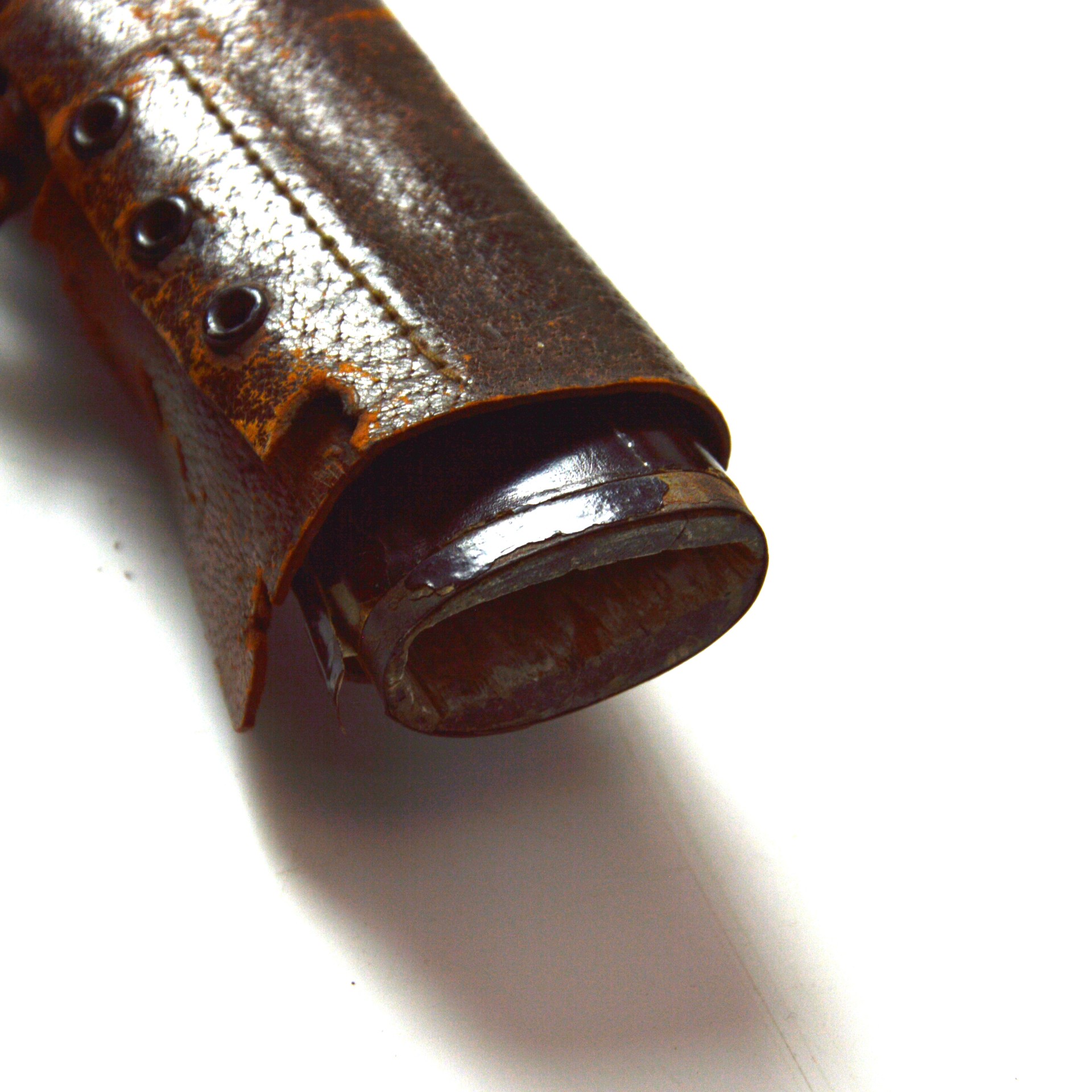
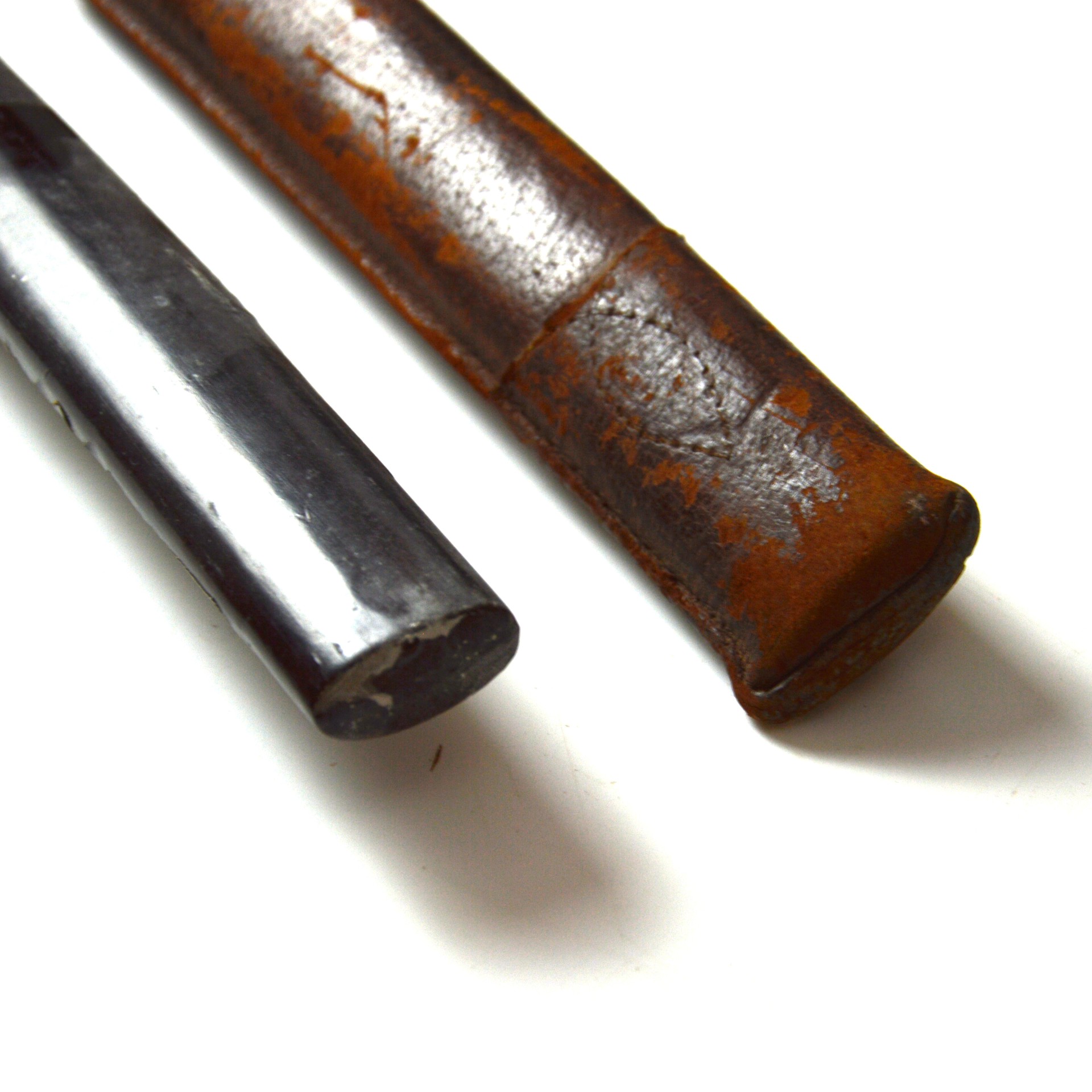
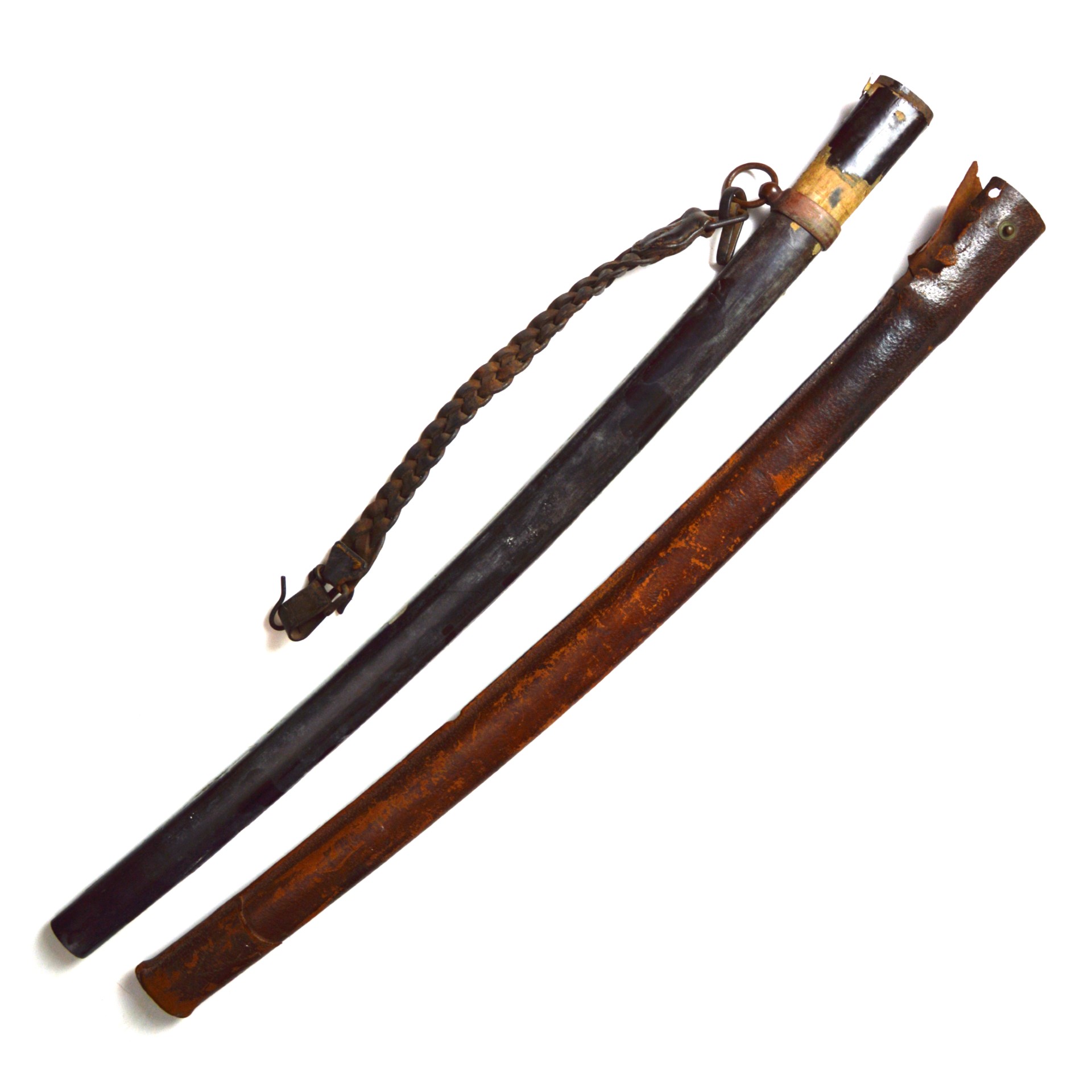
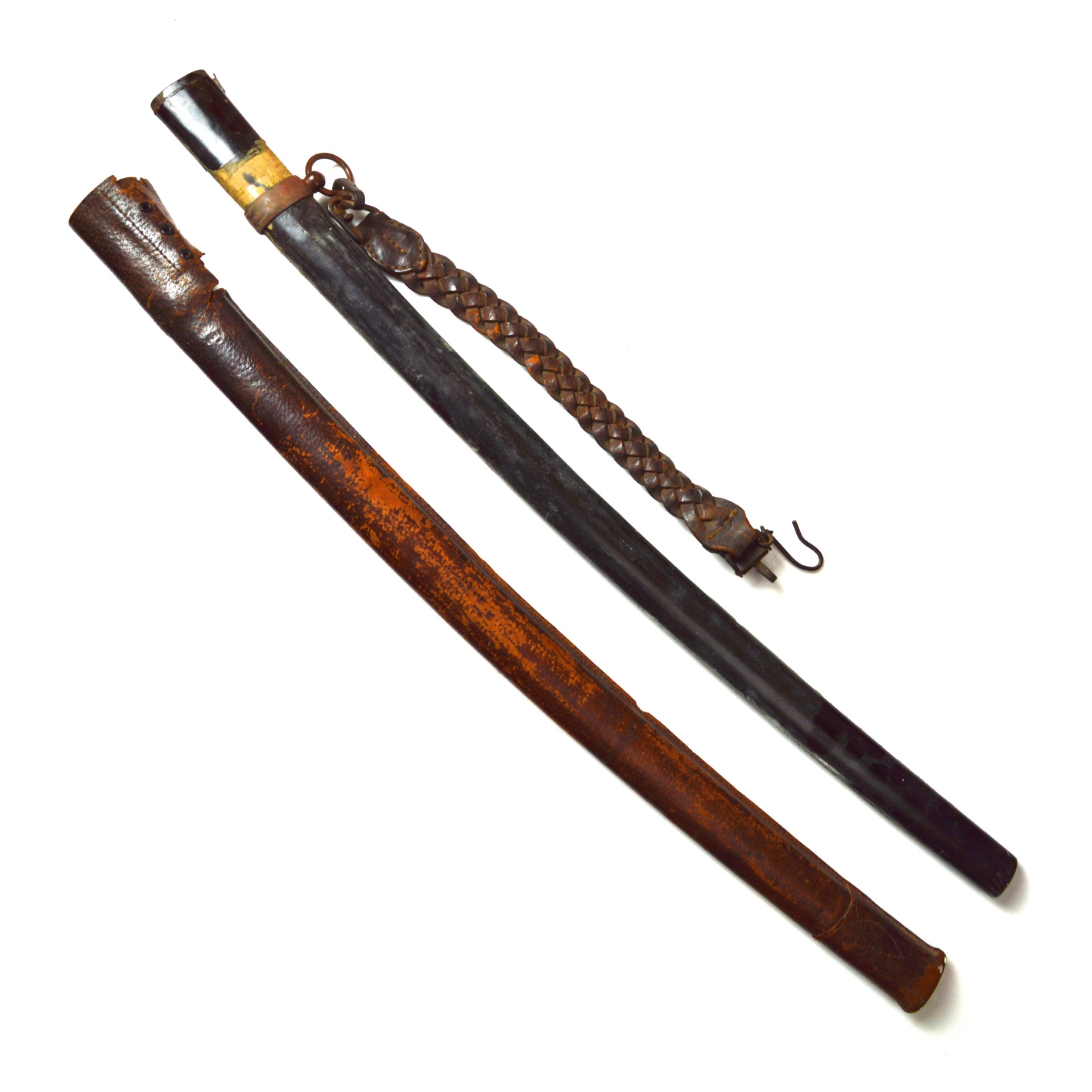
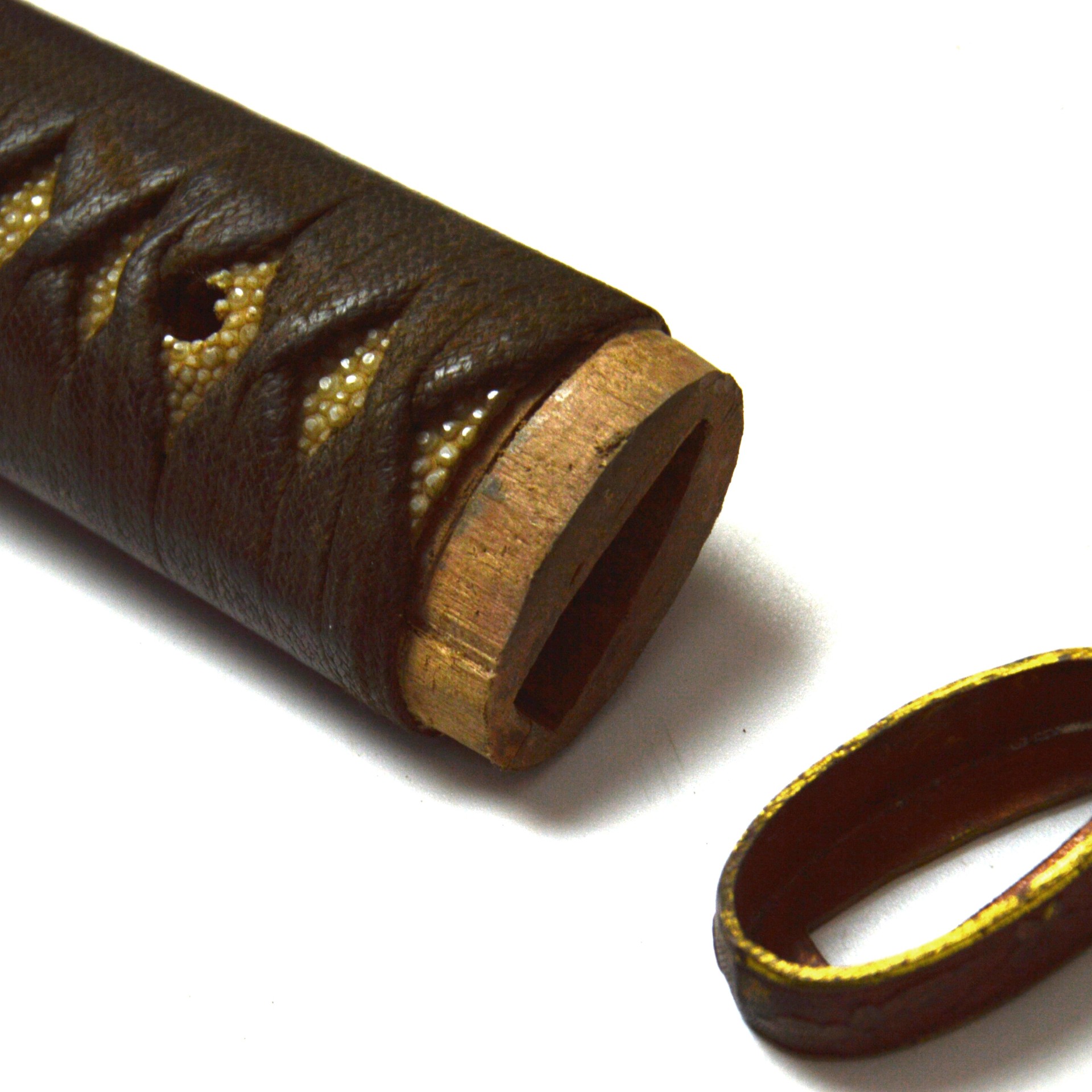
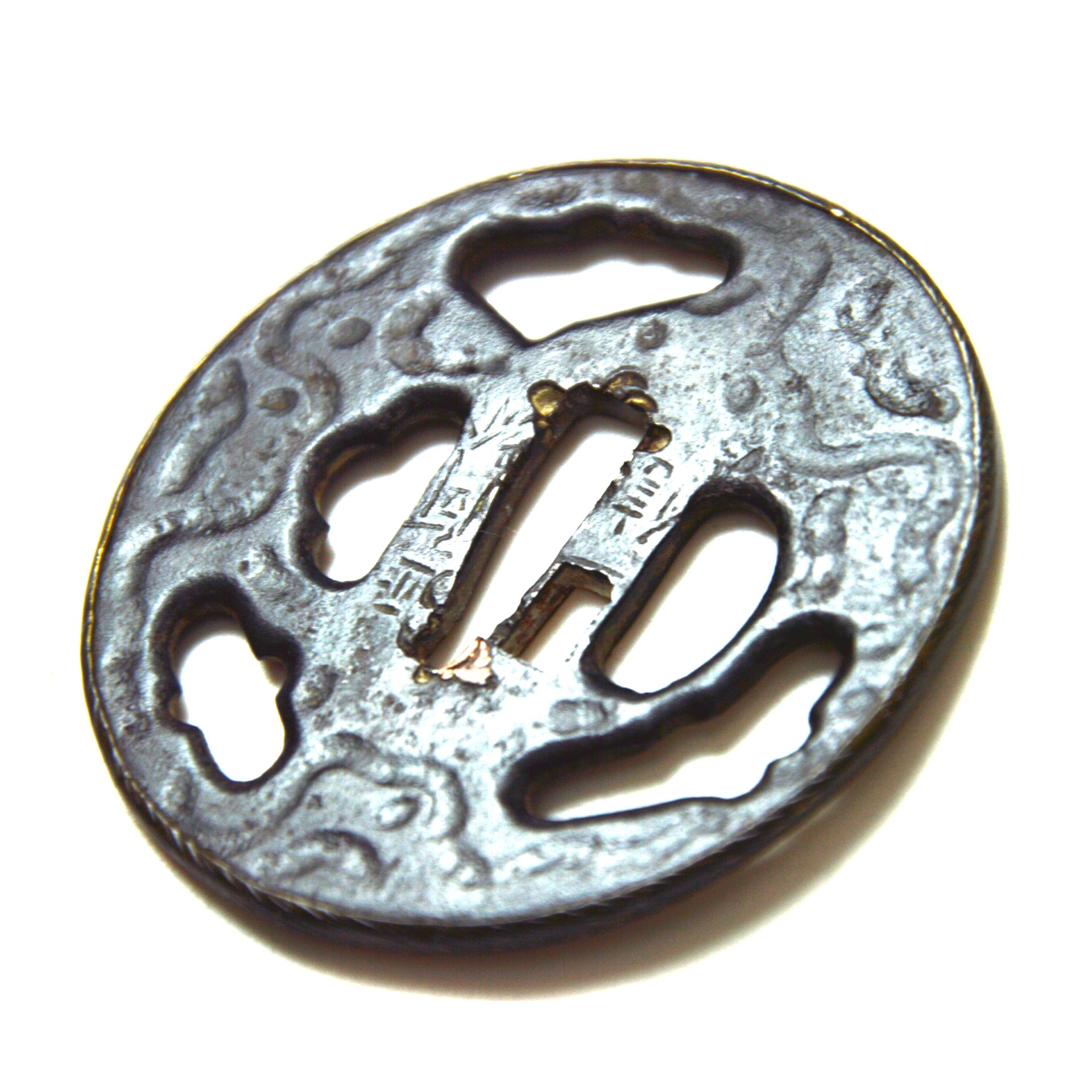
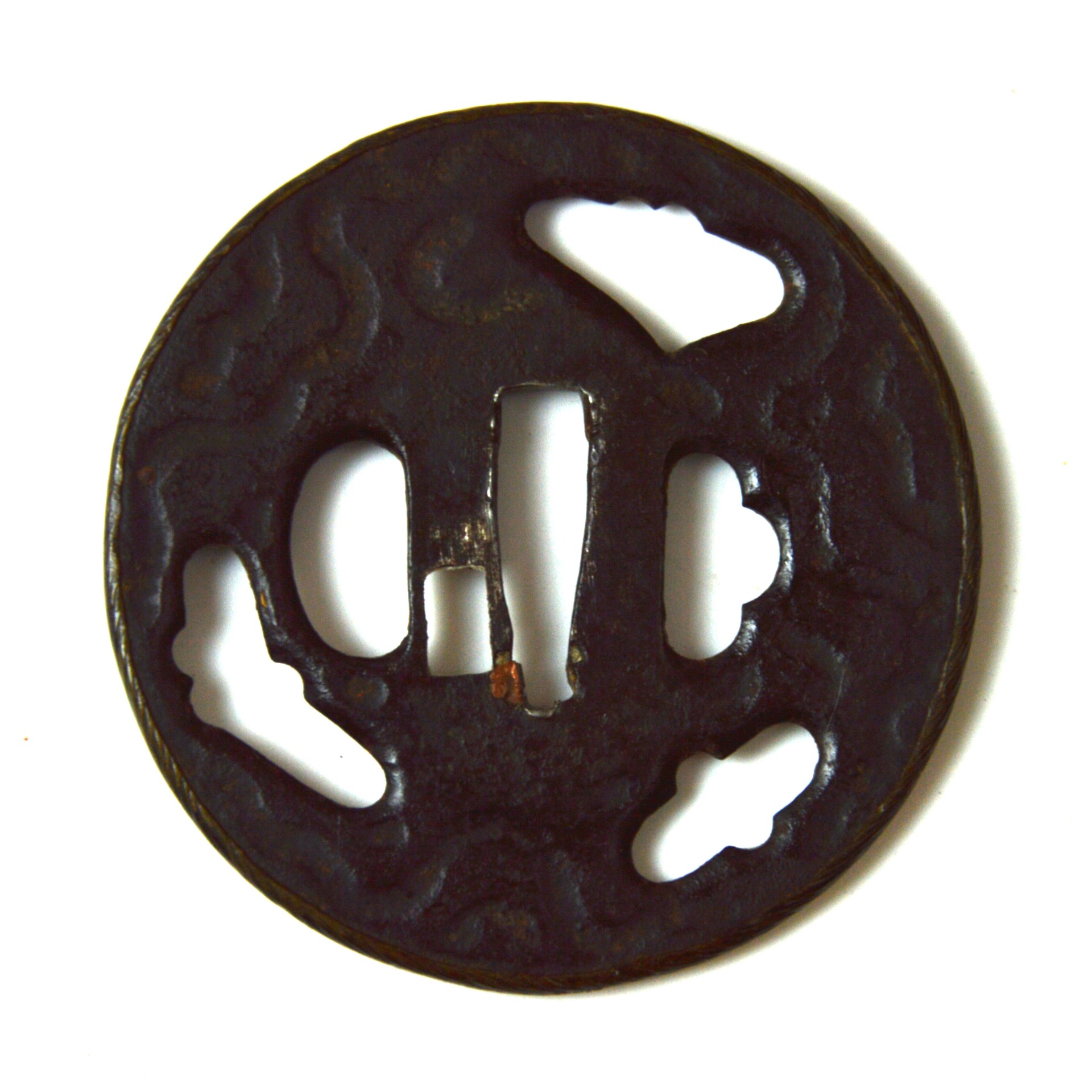
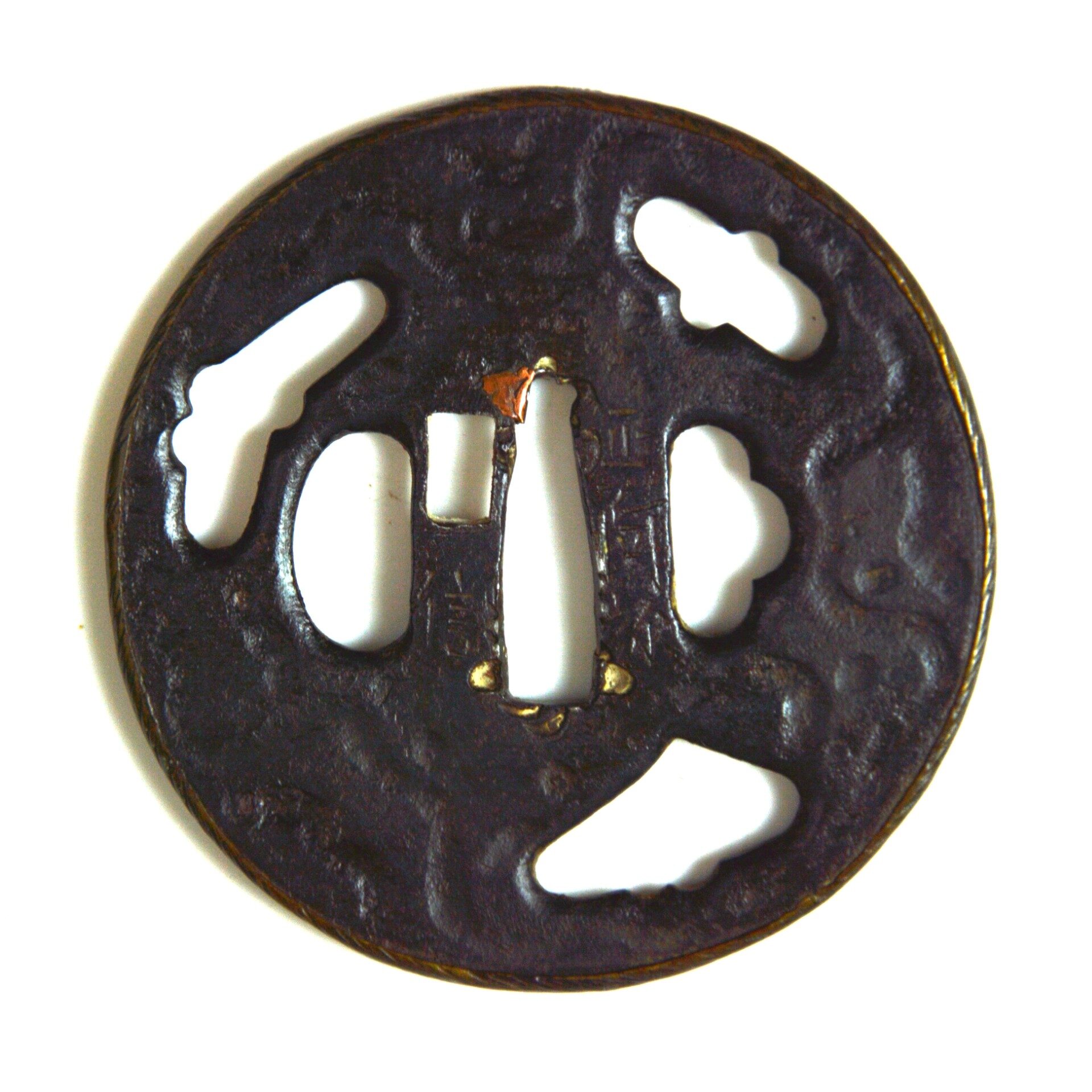
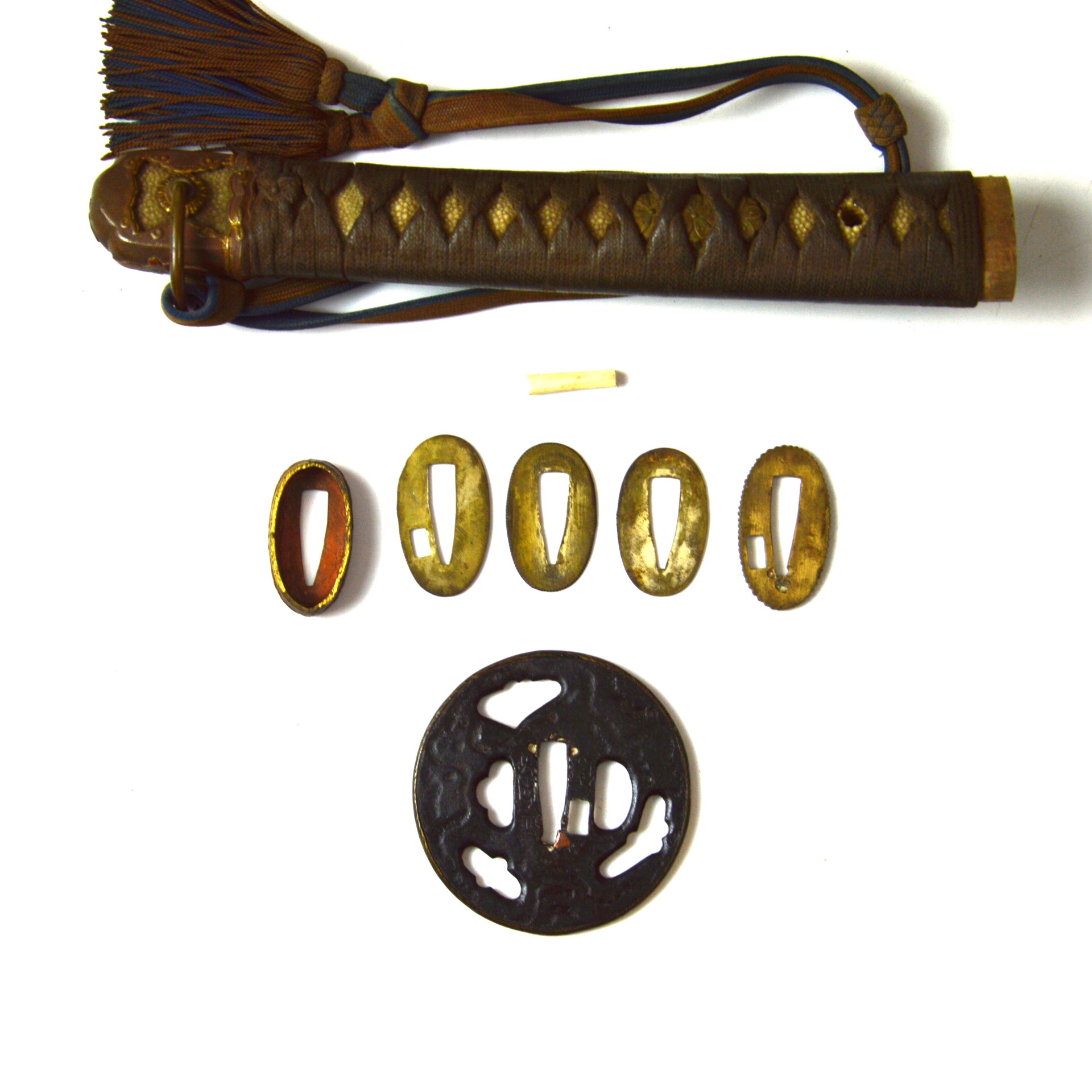
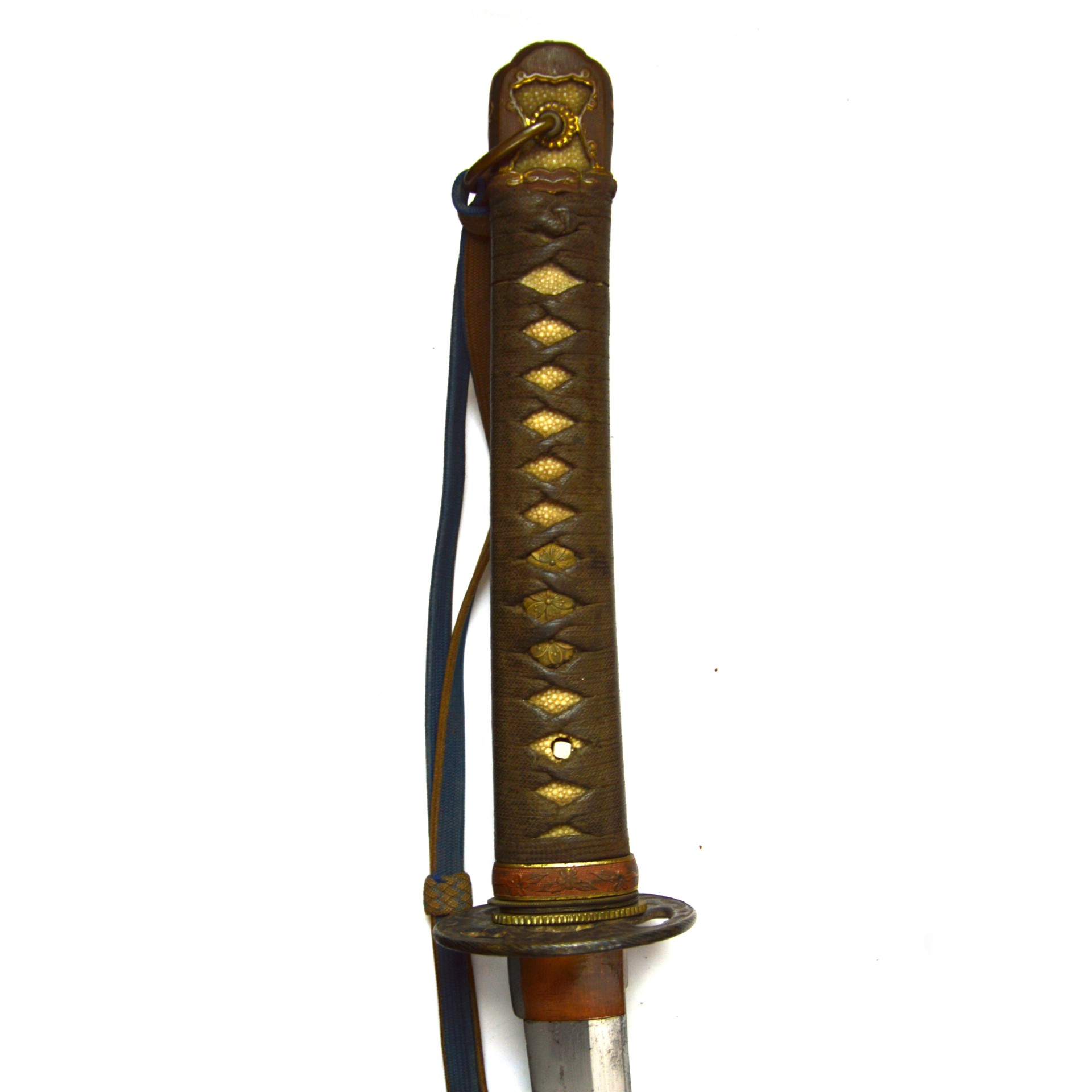
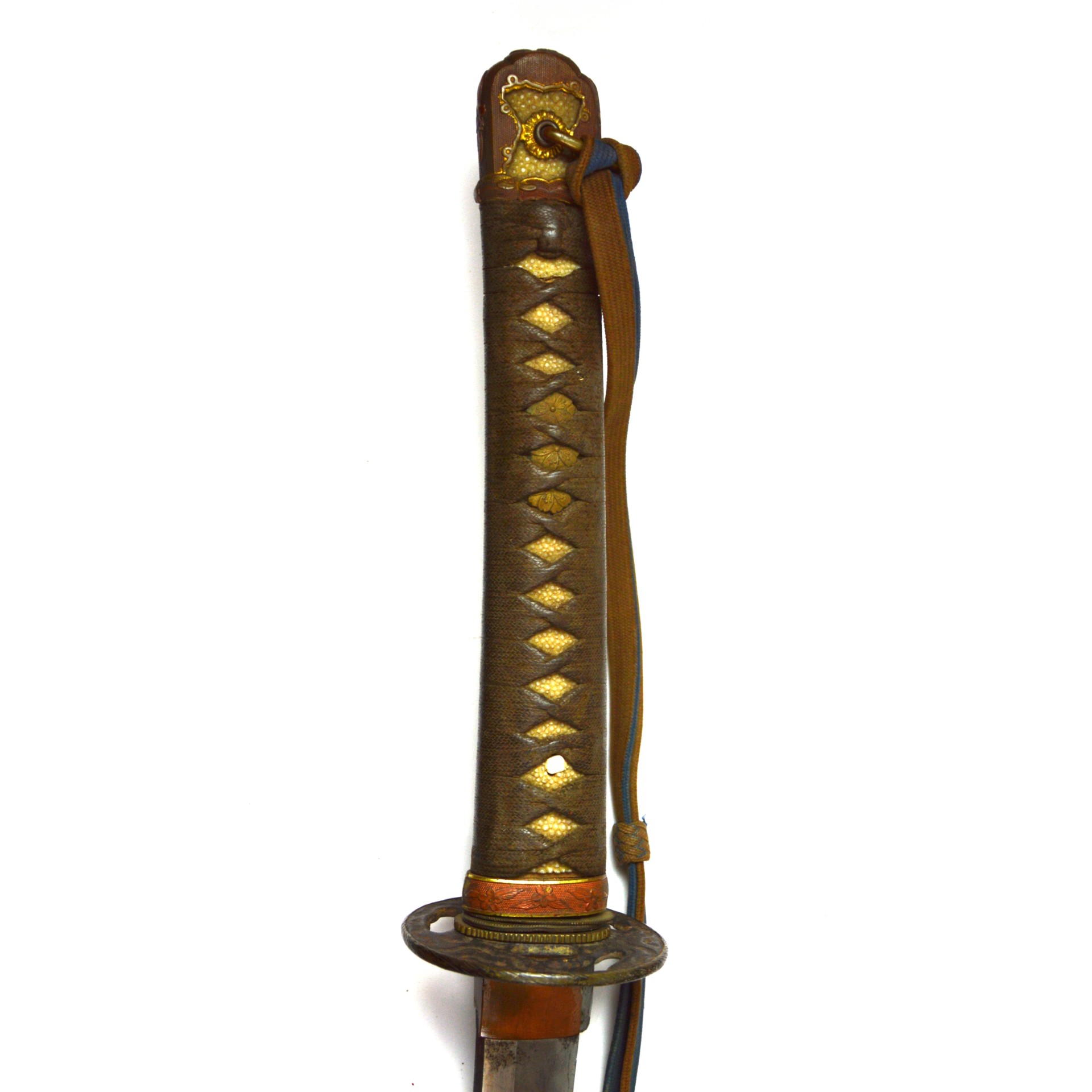
The hilt (tsuka) is wrapped in traditional style with cotton ito over rayskin (samegawa) and fitted with military-regulation mounts, including cherry blossom and traditional Japanese motifs as well as a brass lanyard loop holding the officer’s sword knot. The guard (tsuba) is significantly early, around the 17th-18th century, made from cast iron with a brass rim and cloud piercings. I believe it to be signed “Shoami Shigenobu”, although part of it has been removed to allow for a scabbard catch earlier in its serving life. The sword is housed in a combat (field) scabbard, constructed of wood with protective paint or lacquer, designed for durability in active service conditions. This is then contained within a leather jacket, again to defend against the elements, and has an attached woven leather sling, suitable for wear on webbing.
Shin guntō swords were carried by Japanese officers throughout the war, serving both as weapons and as symbols of rank, tradition, and national identity. Signed examples, particularly those attributable to known smiths such as Fujiwara Kanefusa of Seki (Mino province tradition), are of particular interest within the field of Japanese militaria and sword collecting.
This example, with named smith and complete combat mounts, represents a typical yet historically significant form of a Japanese officer’s sword from the wartime period. It is suitable for collectors of Japanese arms, World War II militaria, and edged weapons.
The sword’s history is notable; it was seized by a British soldier from a Japanese officer during the concluding days of the war in Burma.
Dimensions
Approx. 93cm overall length out of scabbard
Approx. 65.5cm blade length
Condition
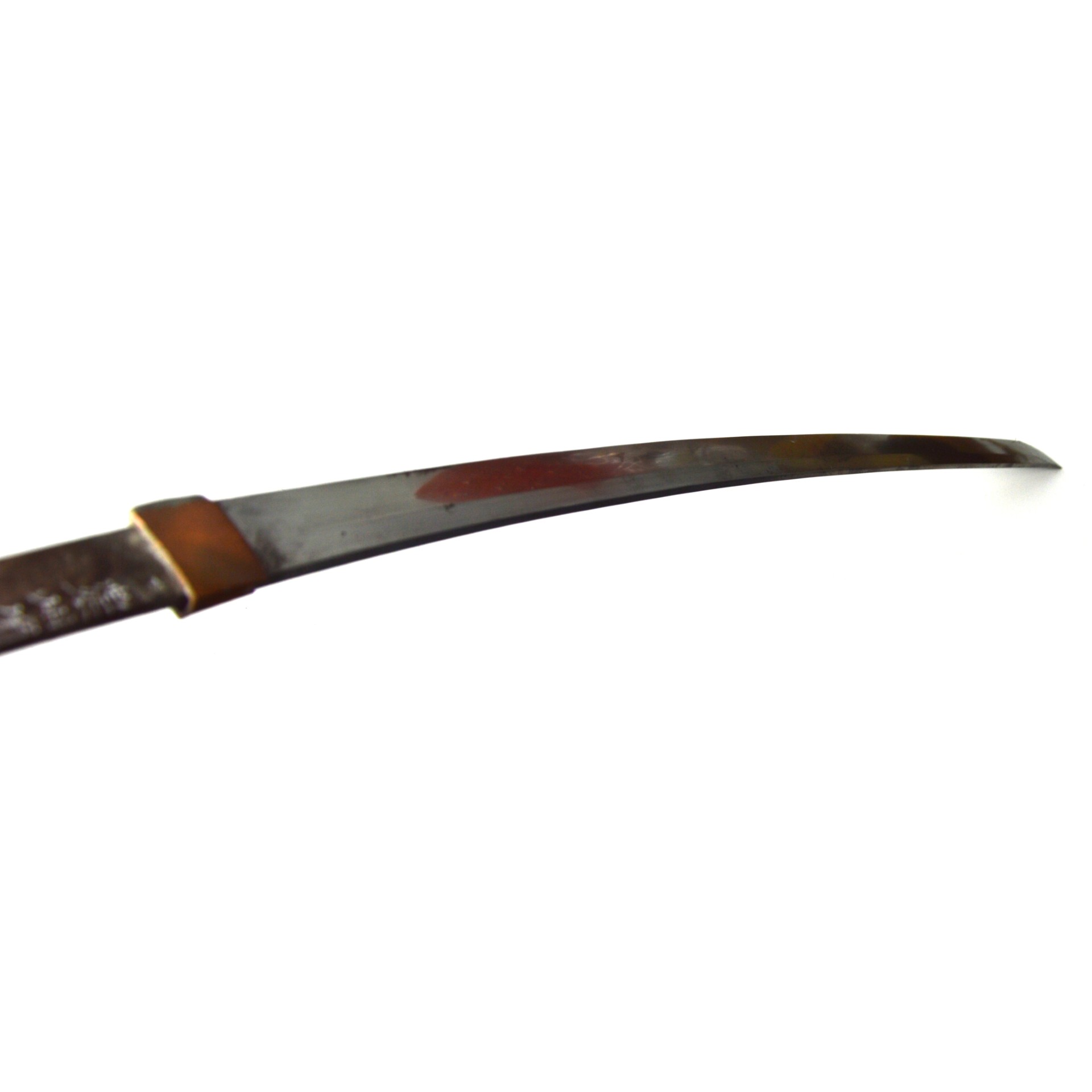
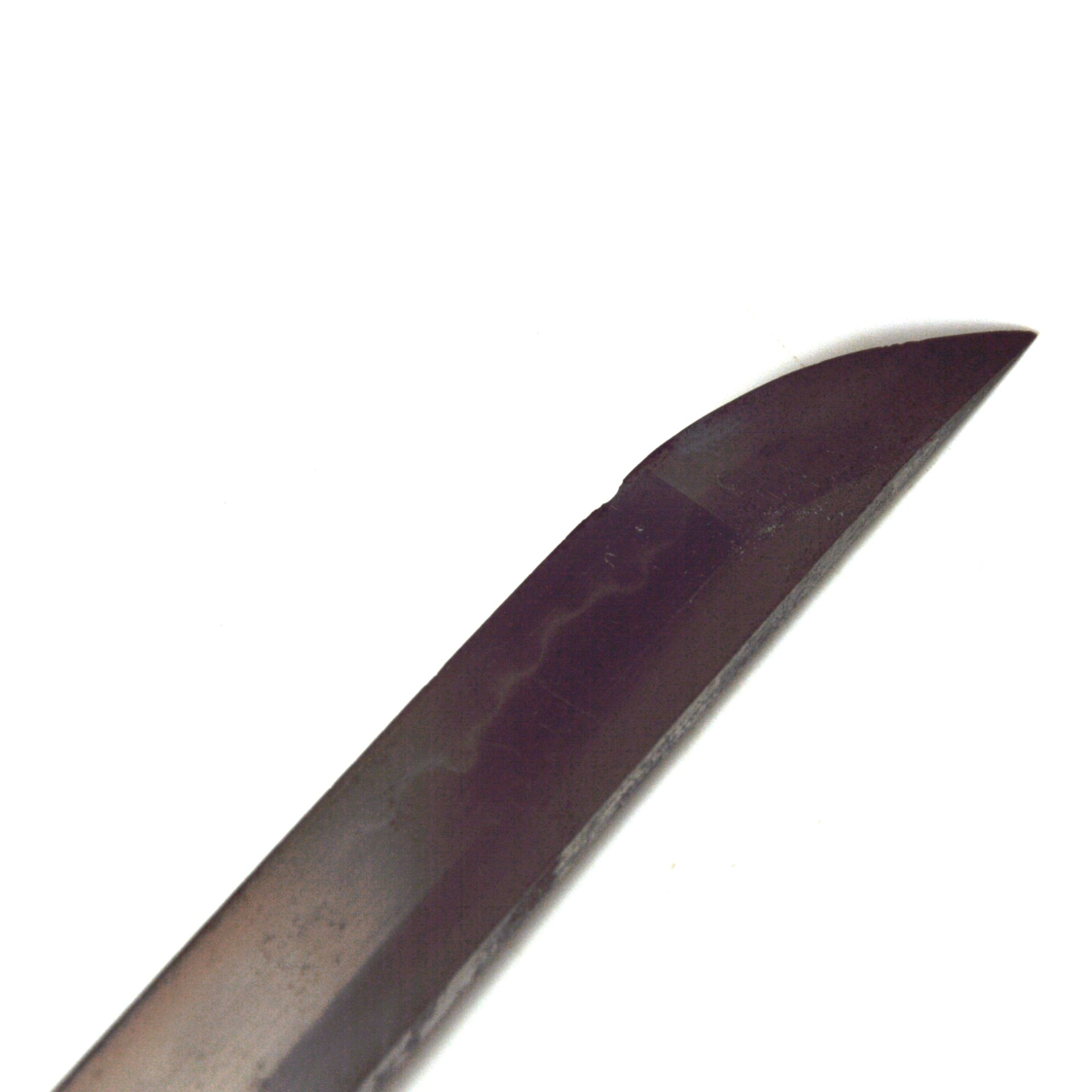
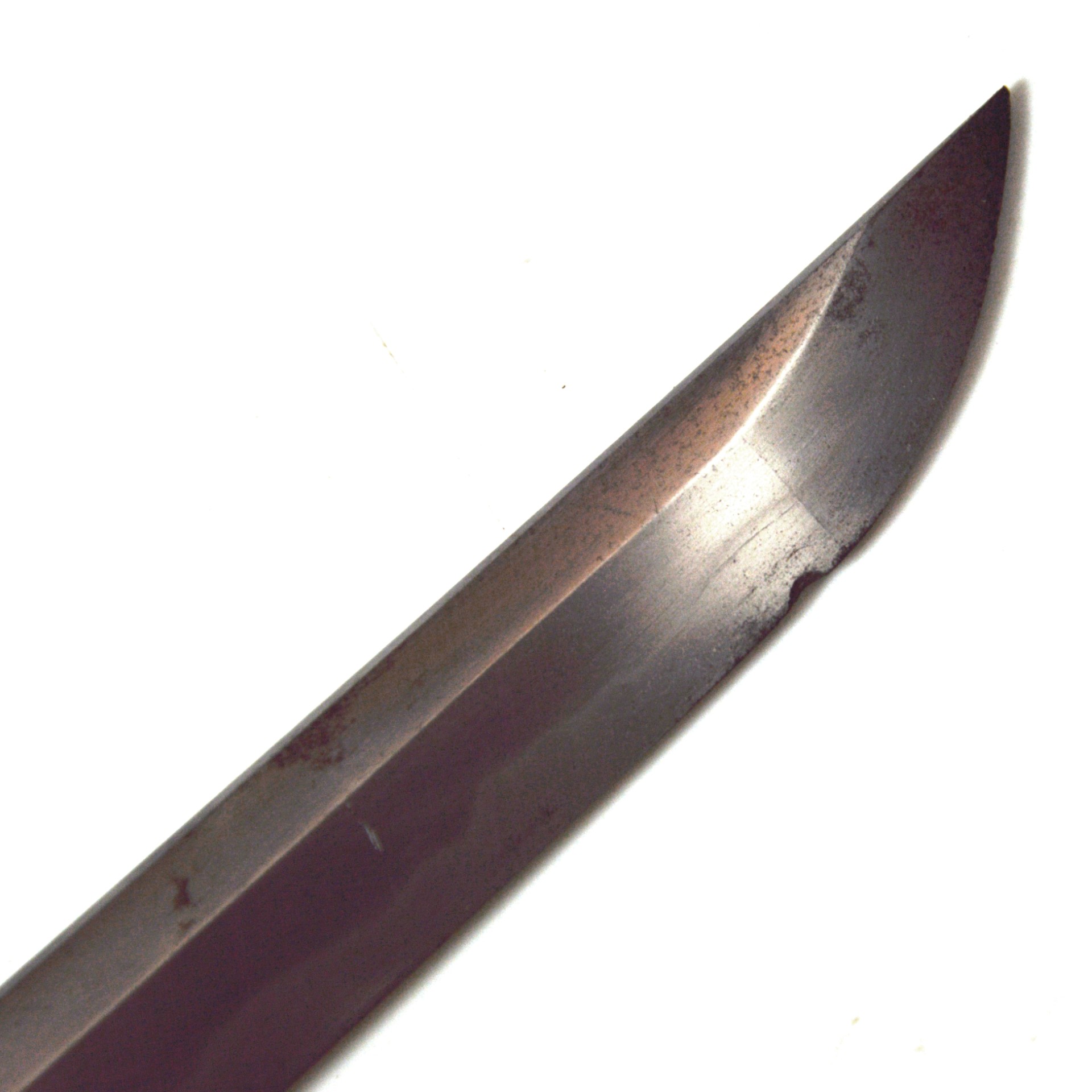
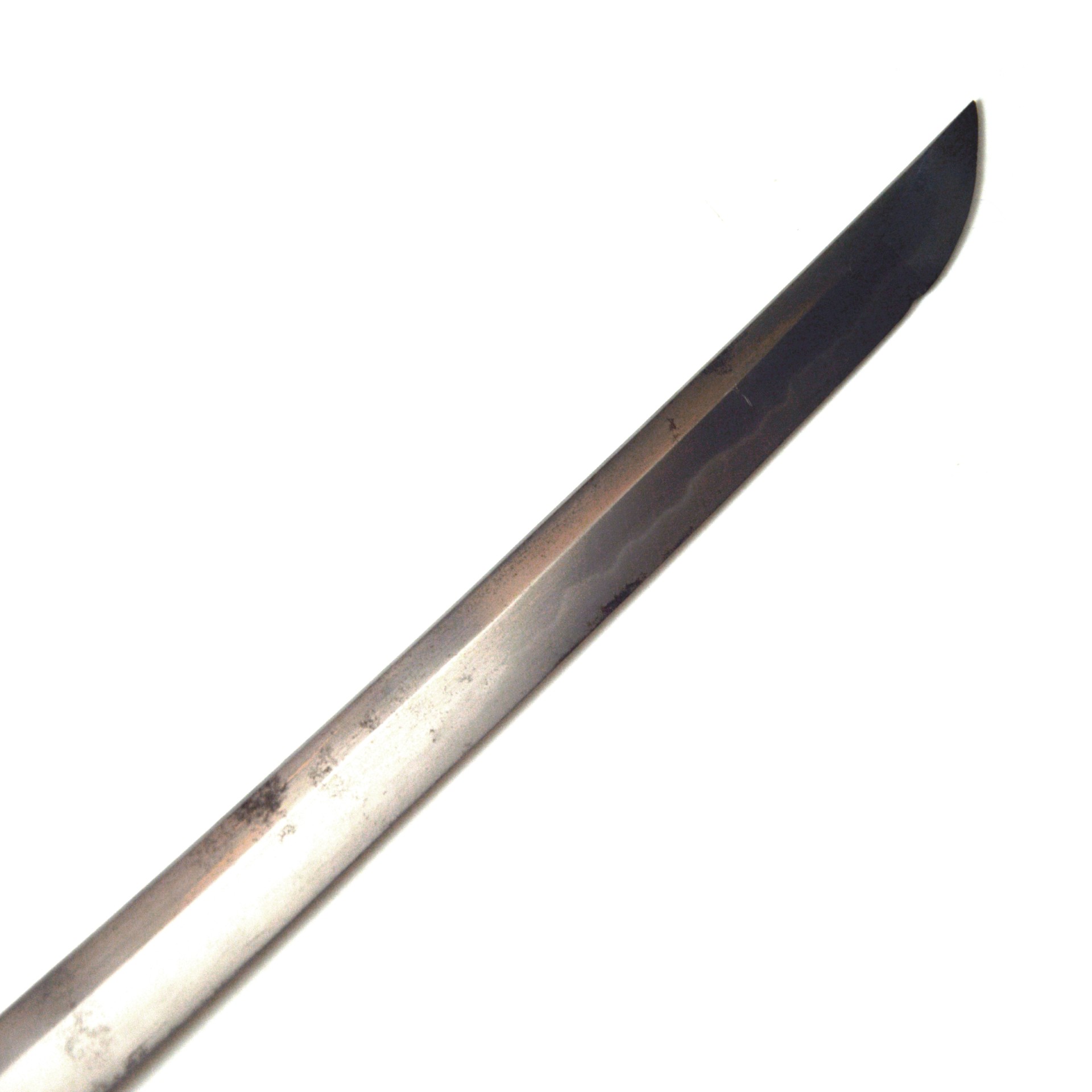
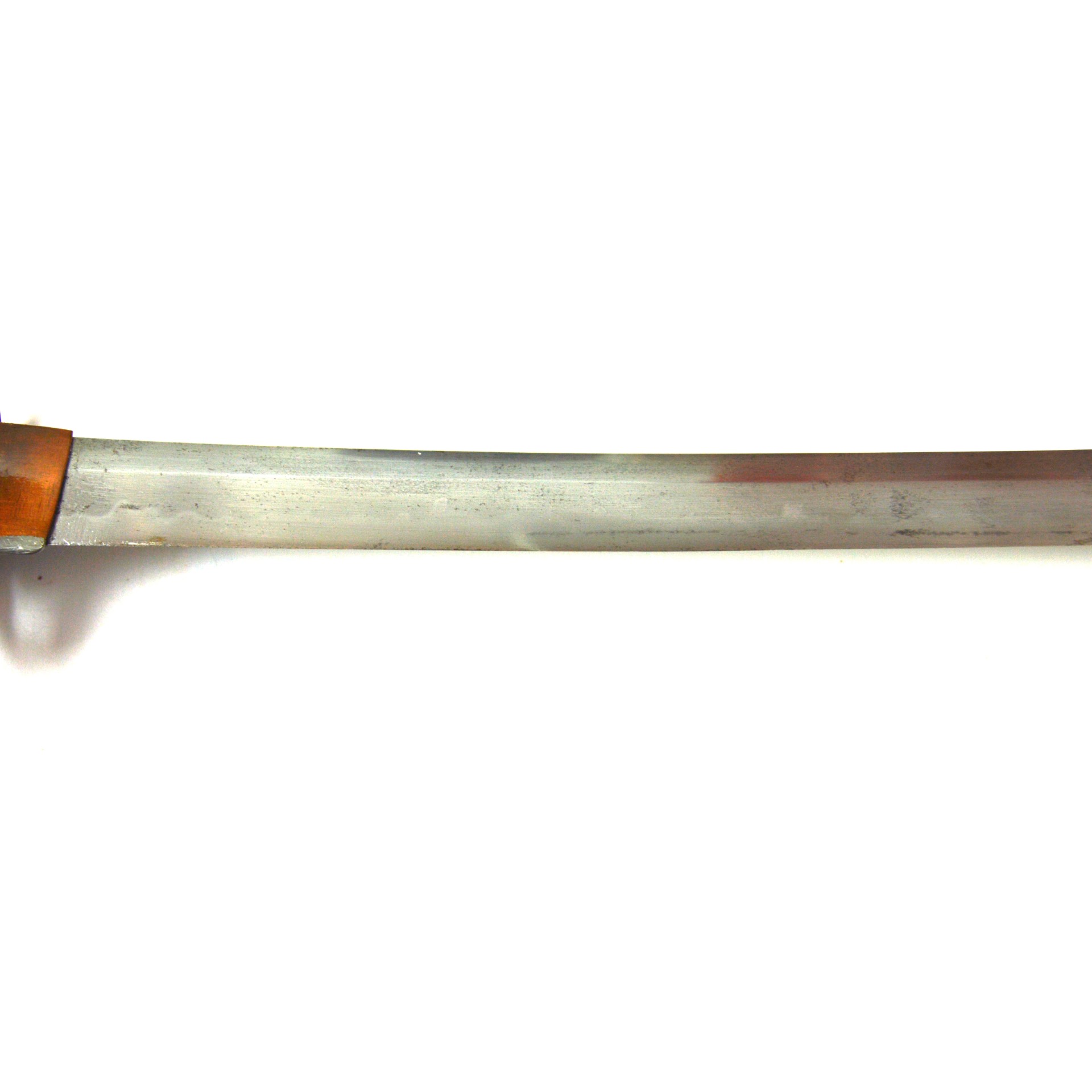
Good overall condition for its age, with a well-preserved blade with a visible hamon and signature to the tang. Some age-related wear, light surface marks, and minor signs of service use are present, including a chip towards the point of the blade. The mounts and wrapping remain intact, with expected wear. The combat scabbard shows surface wear consistent with field use but is relatively structurally sound. No significant damage or repairs are evident.
Reviews
There are no reviews yet.