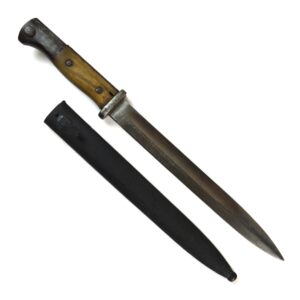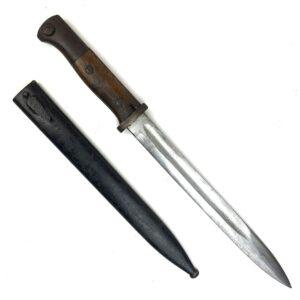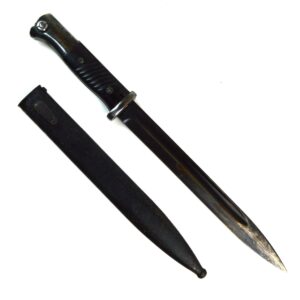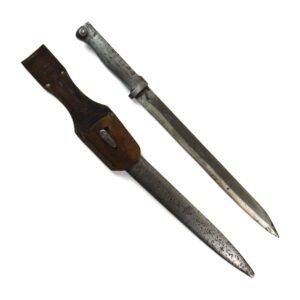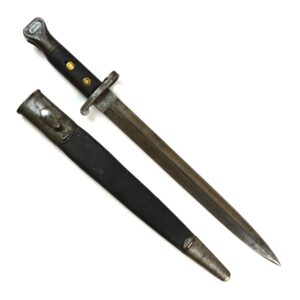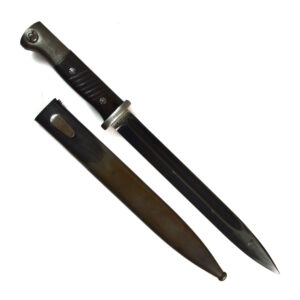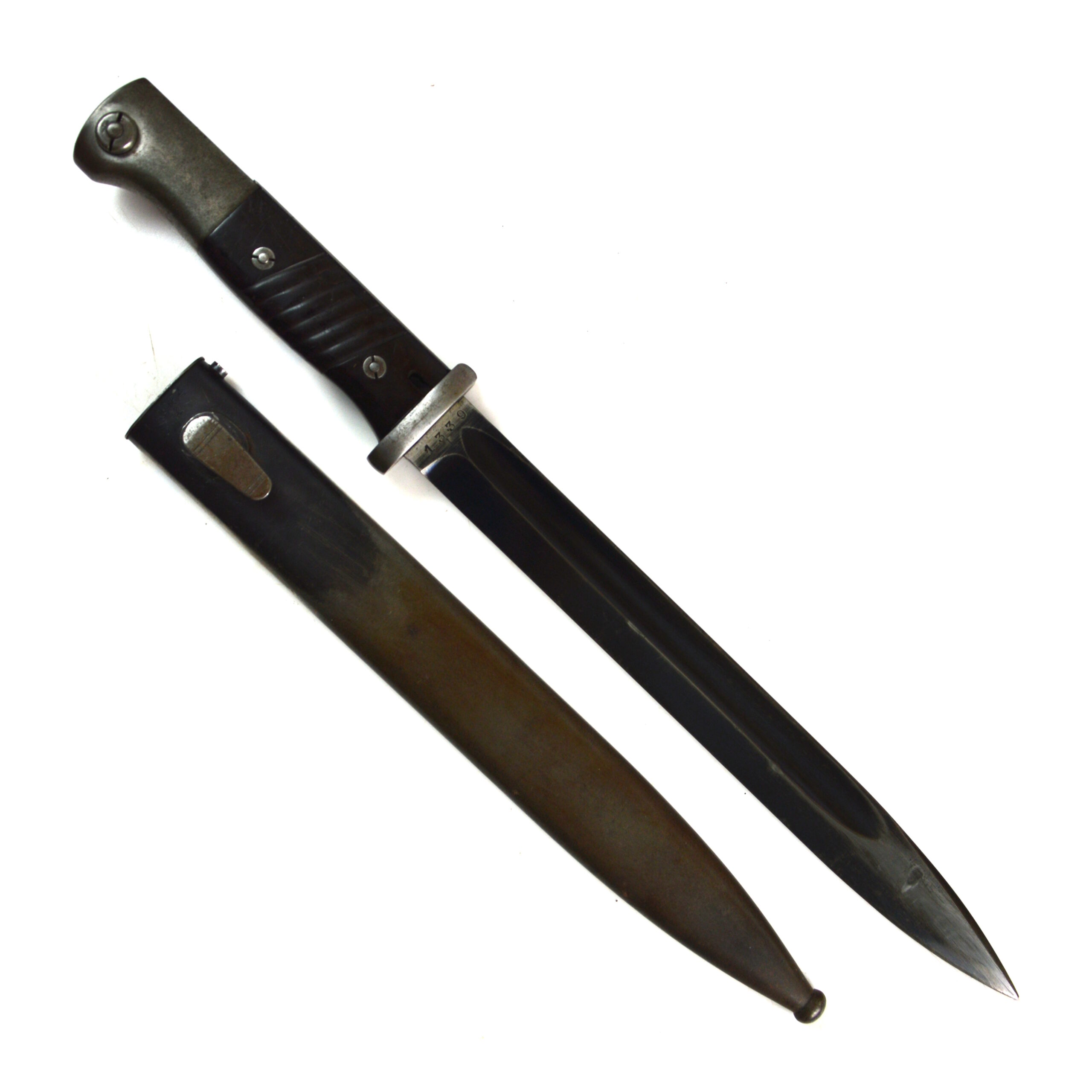
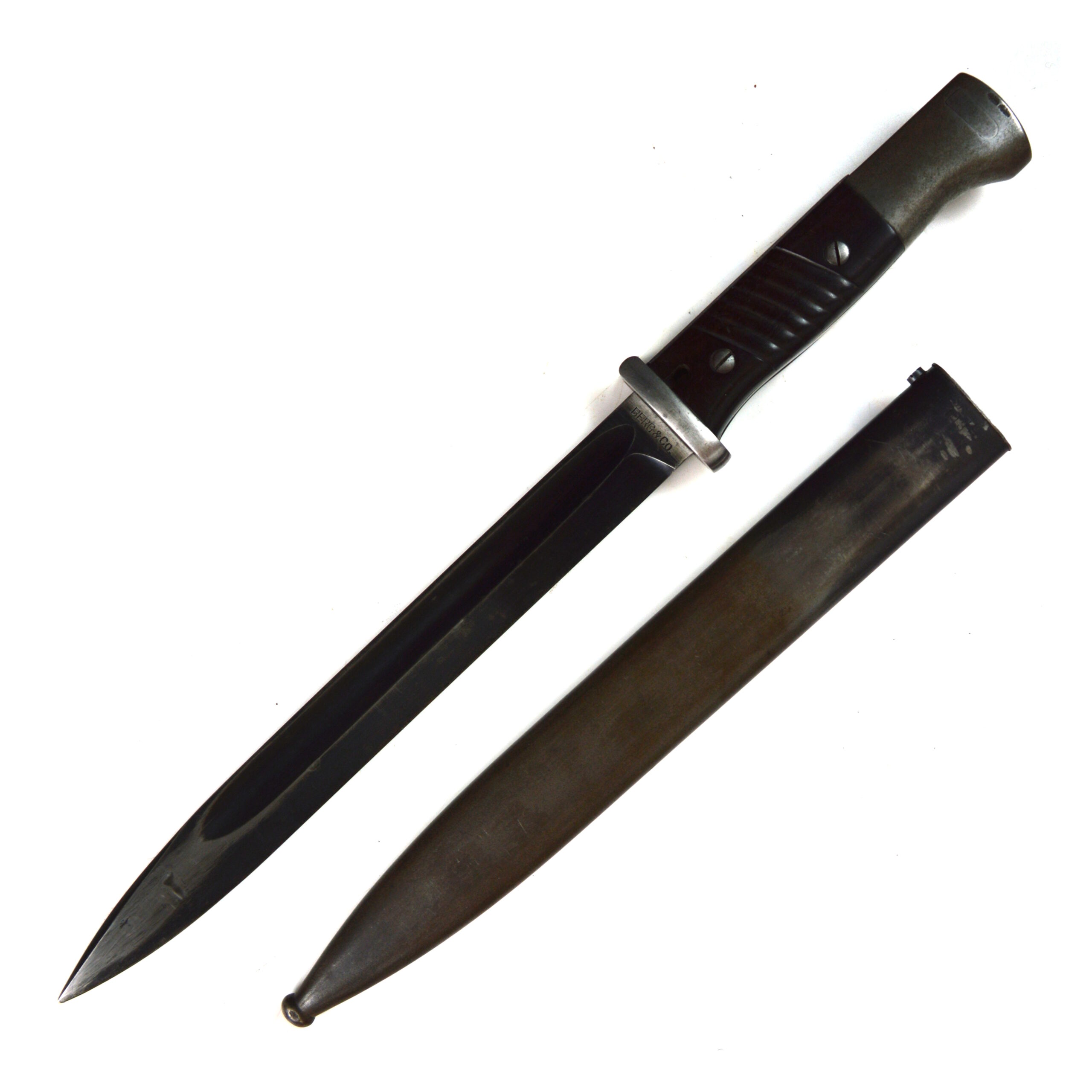
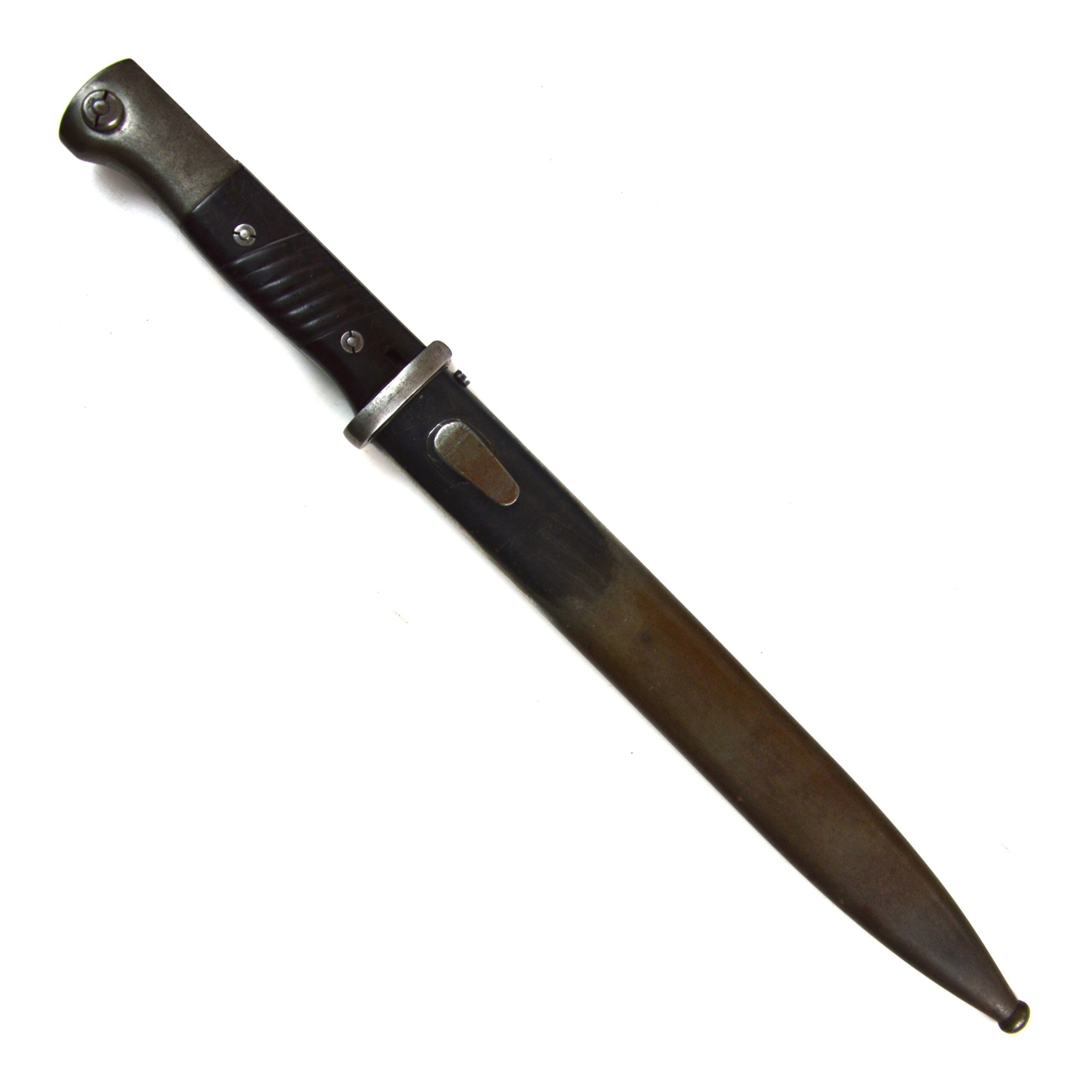
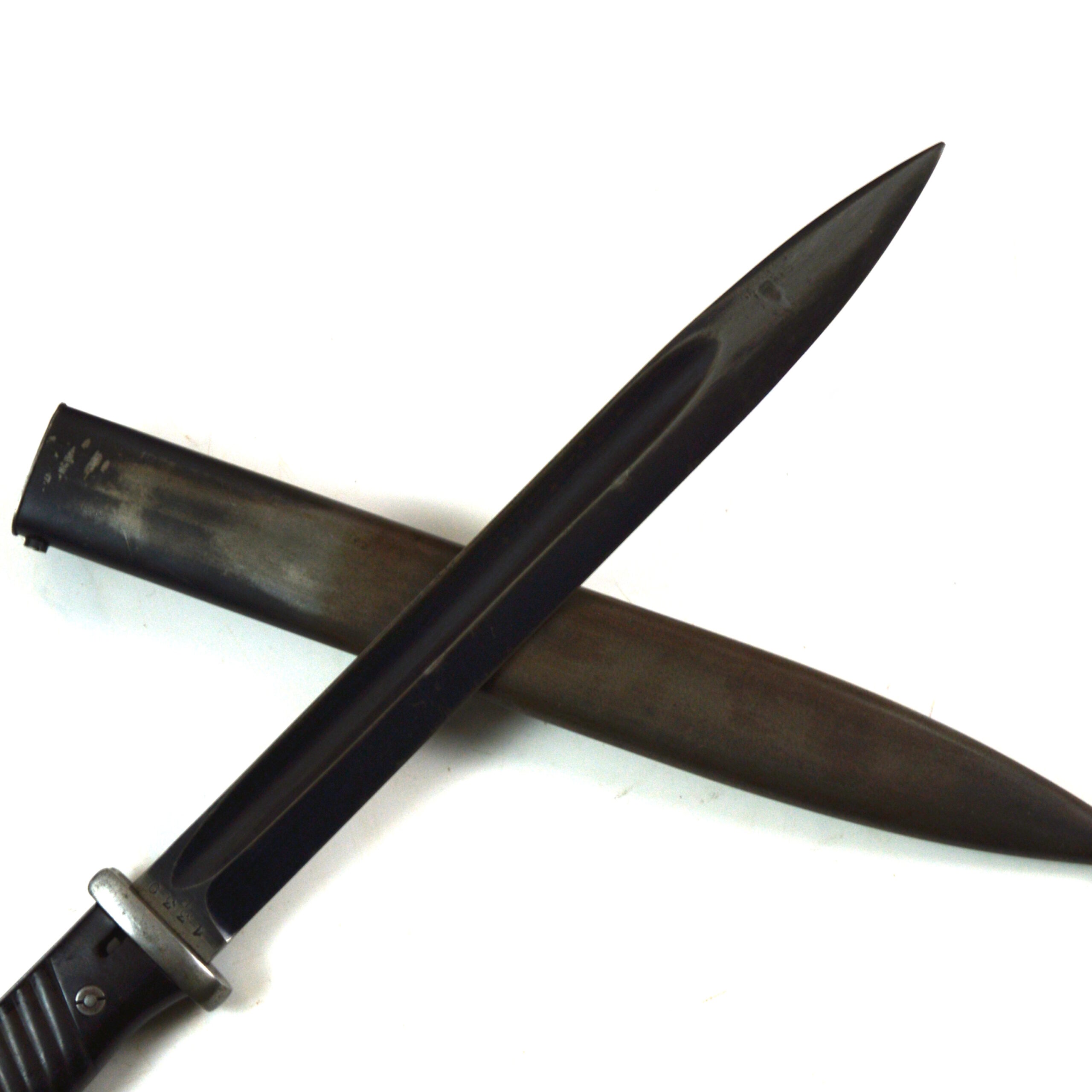
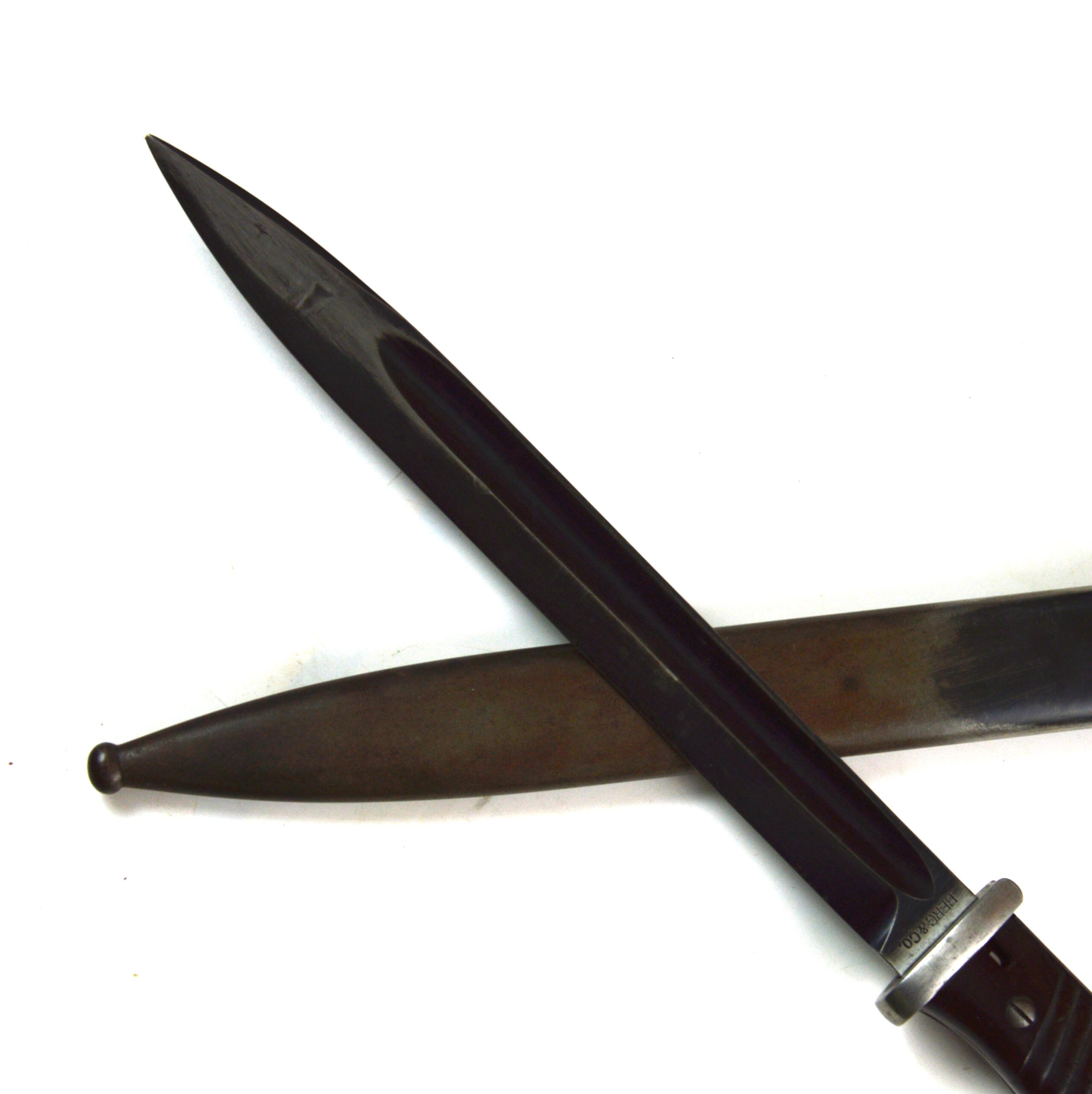
German Third Reich K98k bayonet by Berg & Co., dated 1939, complete with scabbard, a standard early-war example of a German service bayonet designed for use with the Karabiner 98k rifle. This pattern was widely issued to German forces at the outset of the Second World War.
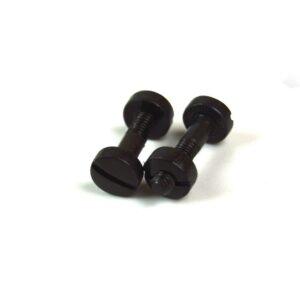
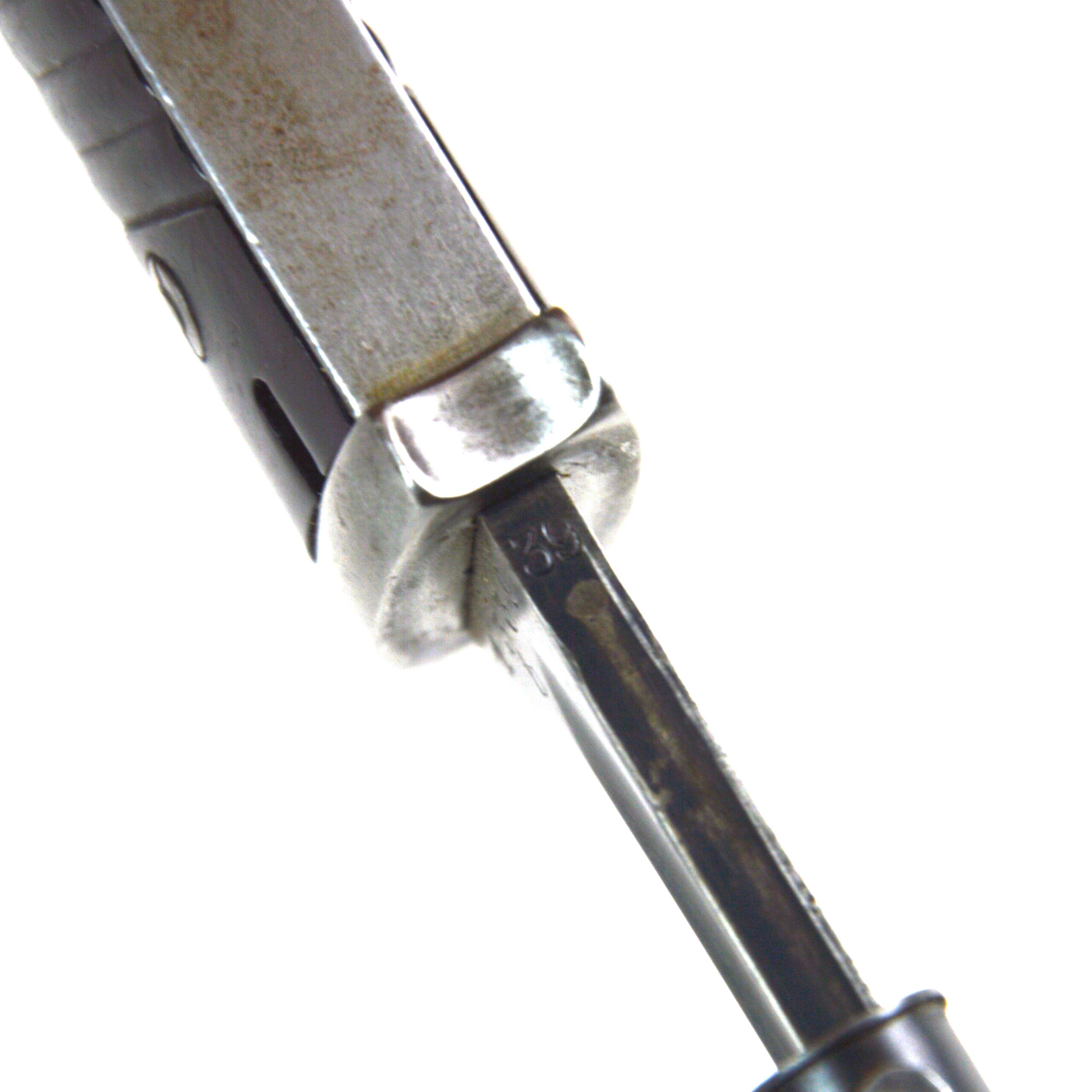
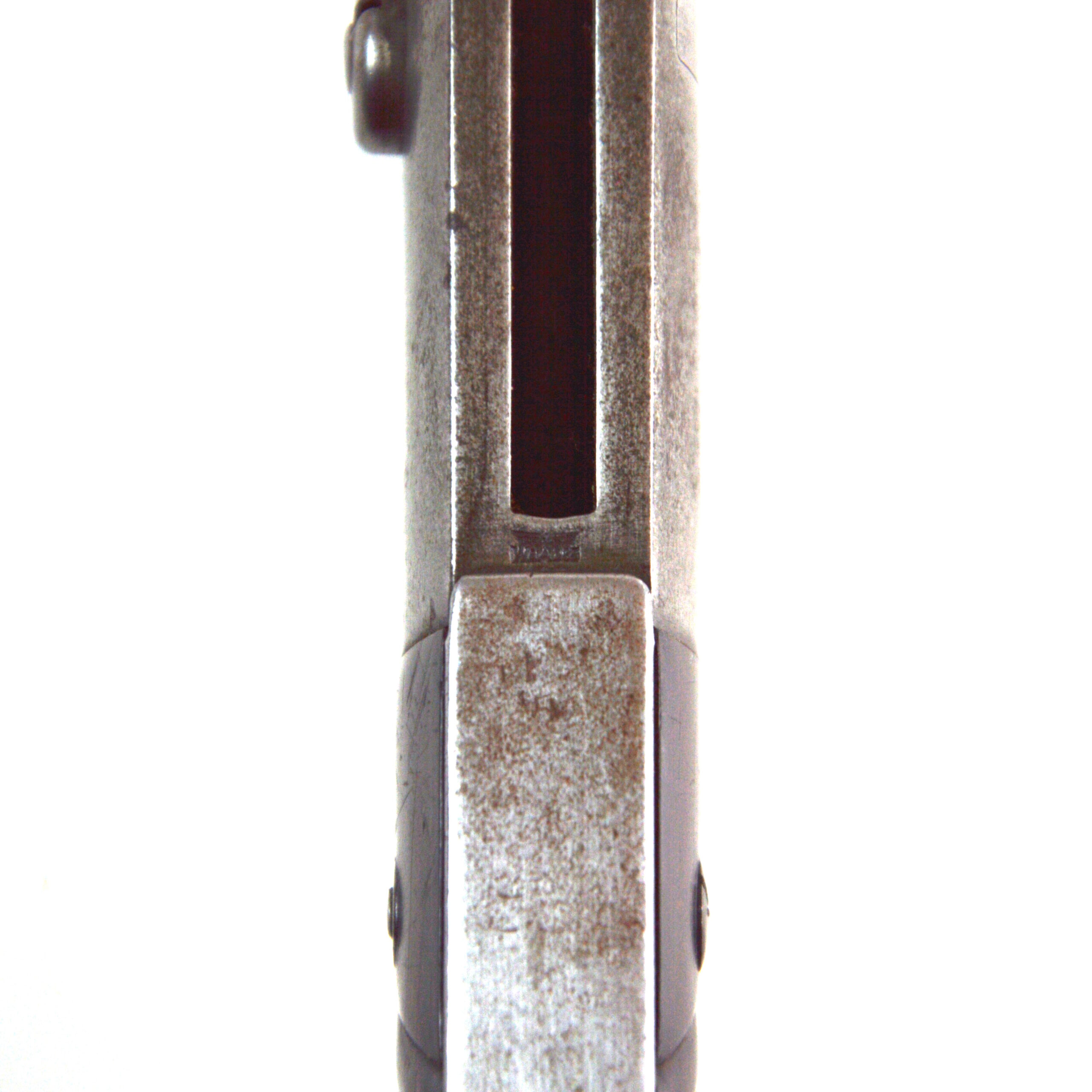
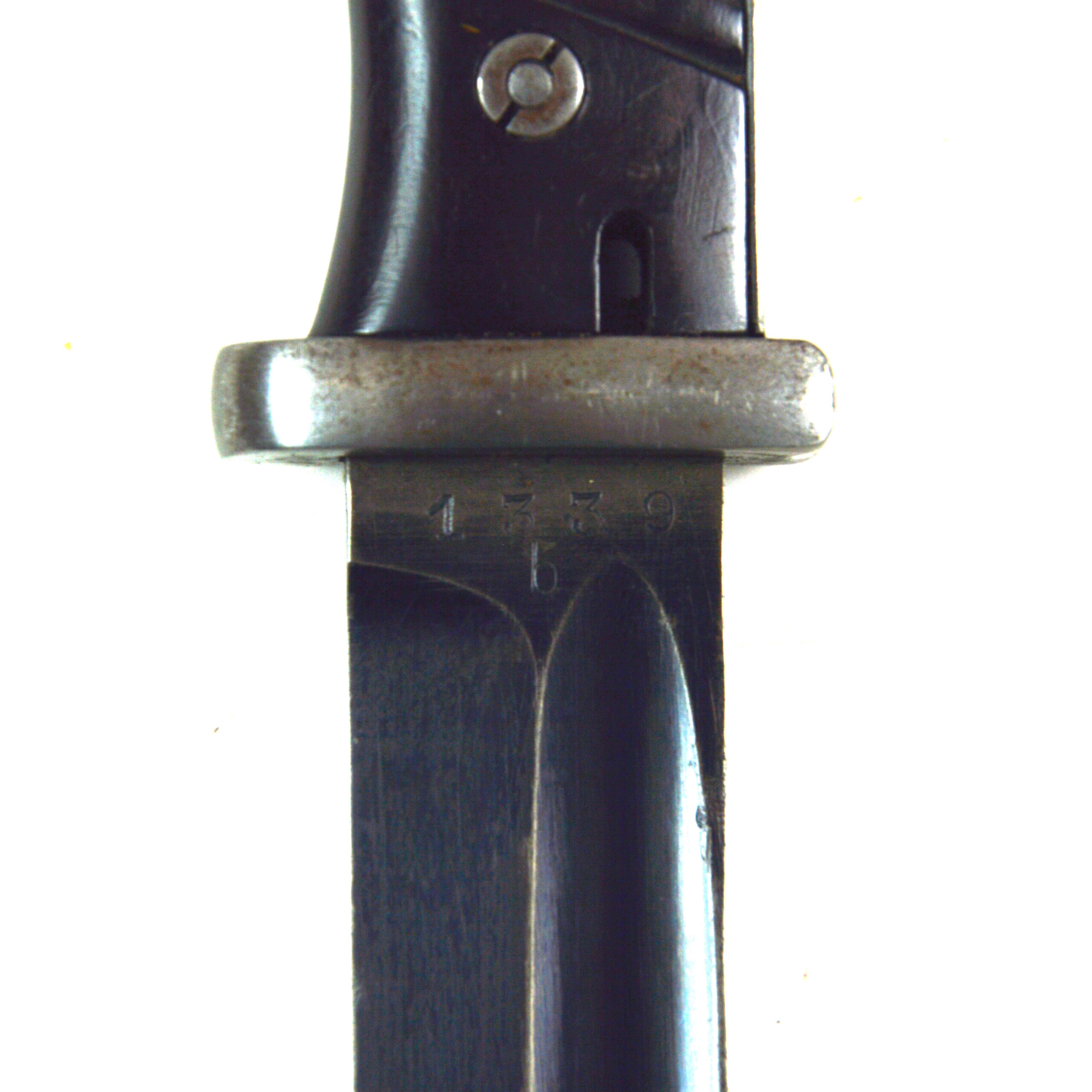
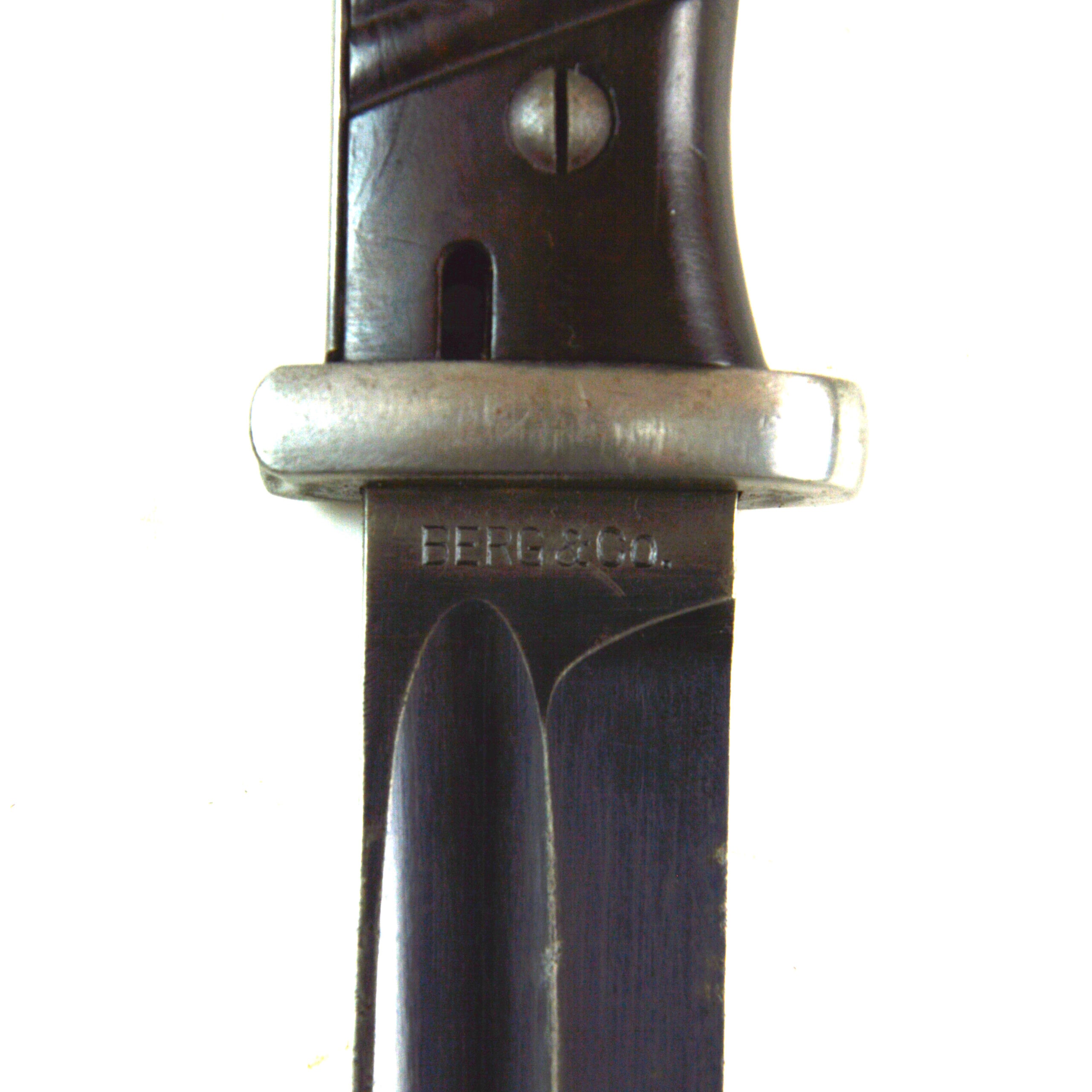
The bayonet features a single-edged blade with a fuller, typically marked with the maker’s name “Berg & Co.” on the ricasso, with the serial number “1339 / b” on the other side, and dated on the spine “39” (1939 production date). The hilt incorporates replacement bakelite grip scales, which would’ve been replaced when refurbished during its servicing life, secured by grip bolts, along with a steel pommel and crossguard designed to interface securely with the rifle’s bayonet lug via a standard push-button locking catch.
Bayonets of this type formed part of the standard equipment of German infantry units and were intended for both combat and utility use. Examples dated to 1939 are associated with the initial mobilisation and campaigns of the war, including early operations in Europe.
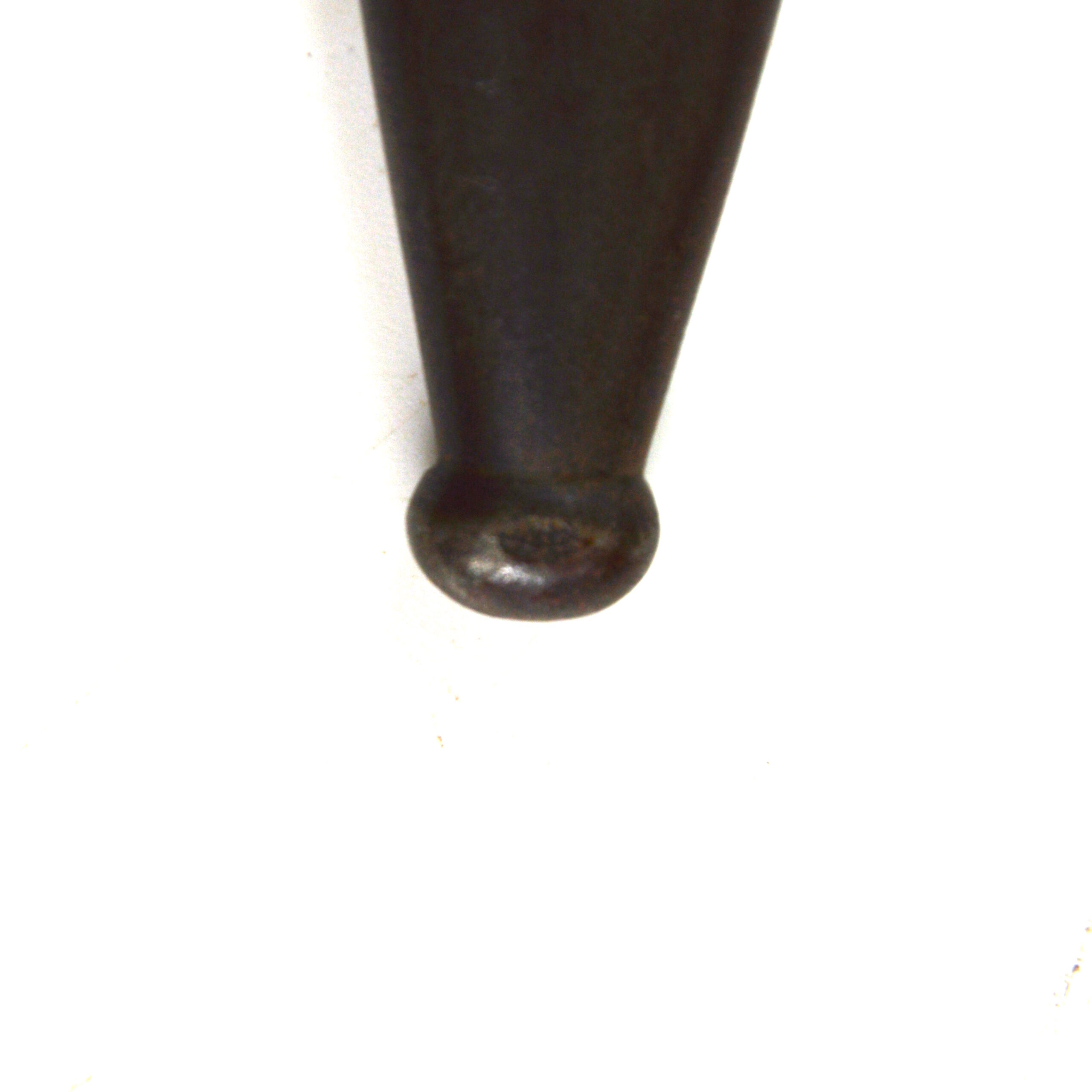
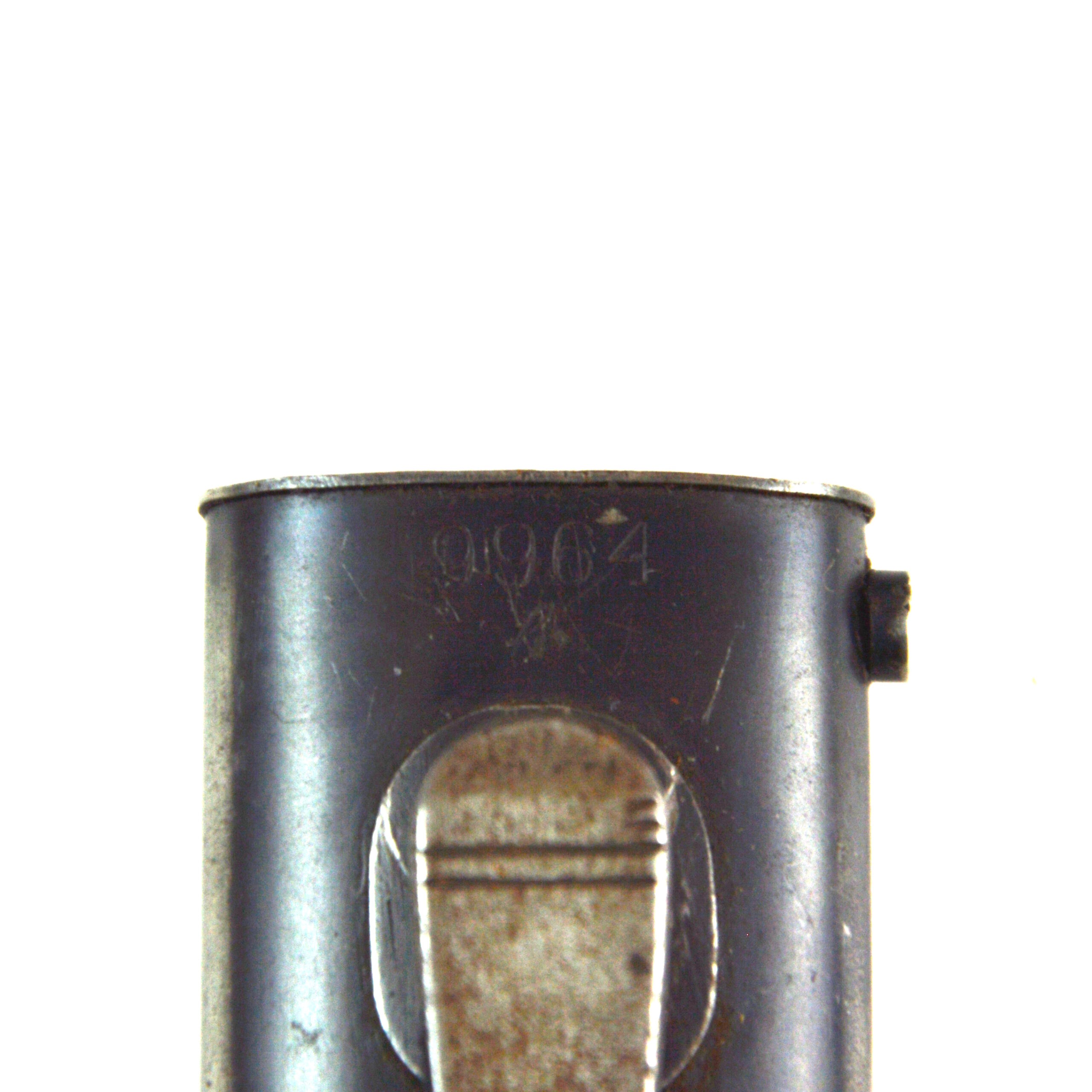
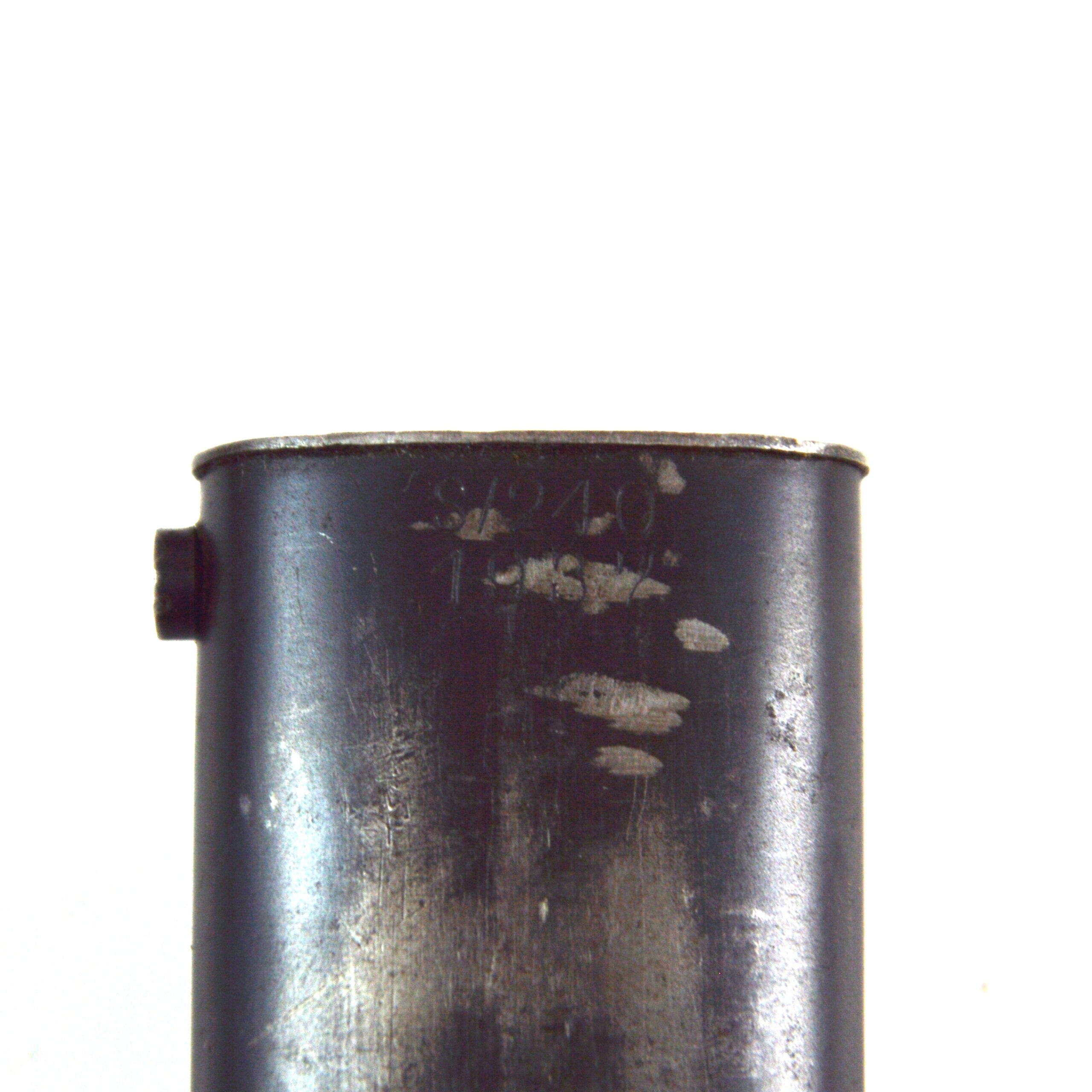
This example is accompanied by a K98k steel scabbard, finished in blueing, providing protection for the blade and allowing for field carry when paired with appropriate frog attachments. This is marked “S/240 / 1937” on one side, the code being that of “Friedrich Herder Abr. (Abraham) Sohn, Solingen” and dates it to the pre-war era. The opposing side is marked “9964 / b”.
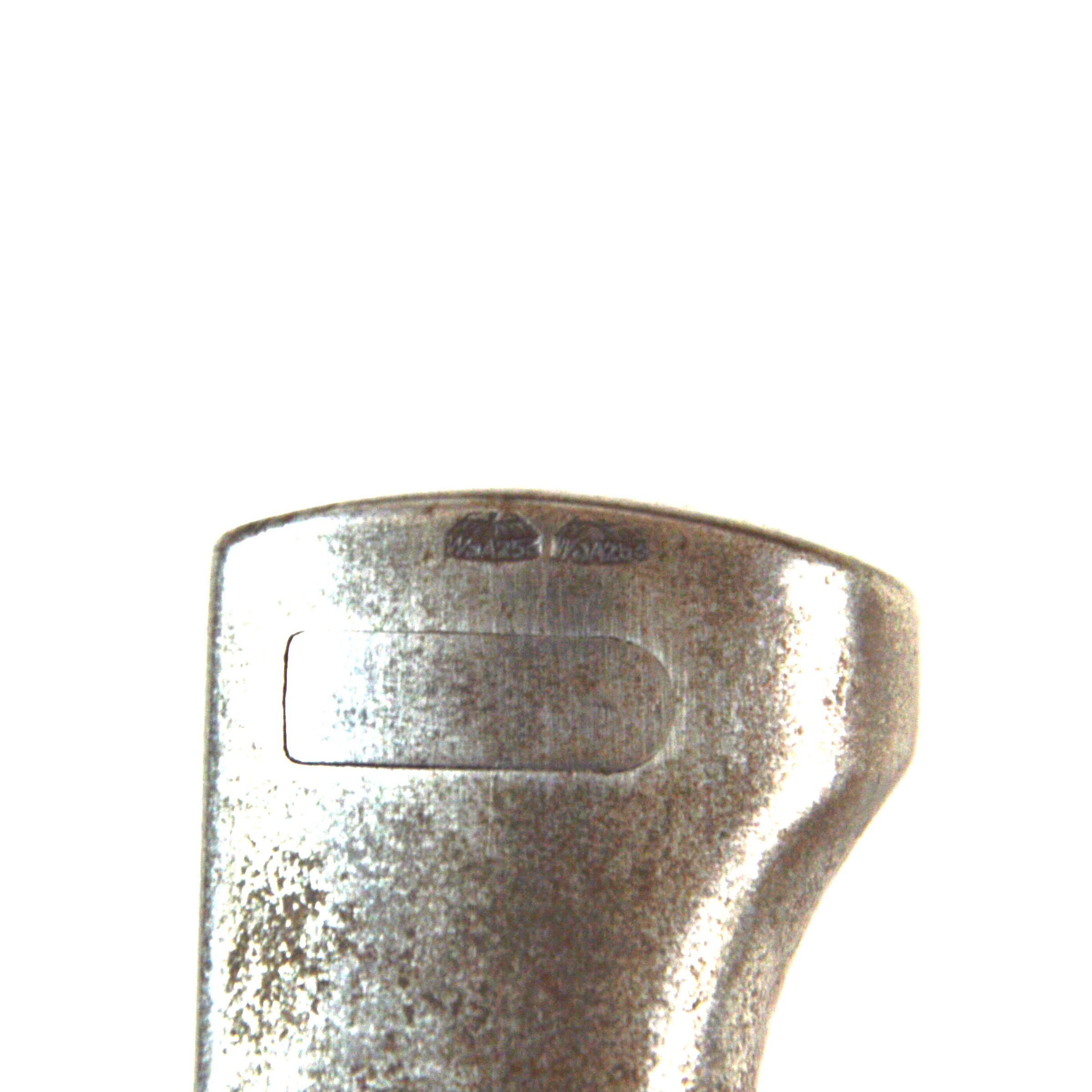
Both the bayonet and scabbard are appropriately Waffenamt-stamped, indicating they passed inspection for service.
Manufactured to military specifications, K98k bayonets are widely collected within Second World War militaria, particularly for their clear maker markings, dates, and association with early-war production.
Dimensions
Approx. 383mm overall length out of scabbard
Approx. 249mm blade length
Condition
Good overall condition, with clear maker markings and date. The blade retains a defined profile with light surface wear. The grip scales and pommel are intact and secure, with expected wear to the finish. The scabbard shows expected wear to the finish, consistent with age and service use, but remains complete and functional. No significant damage or repairs are evident.