
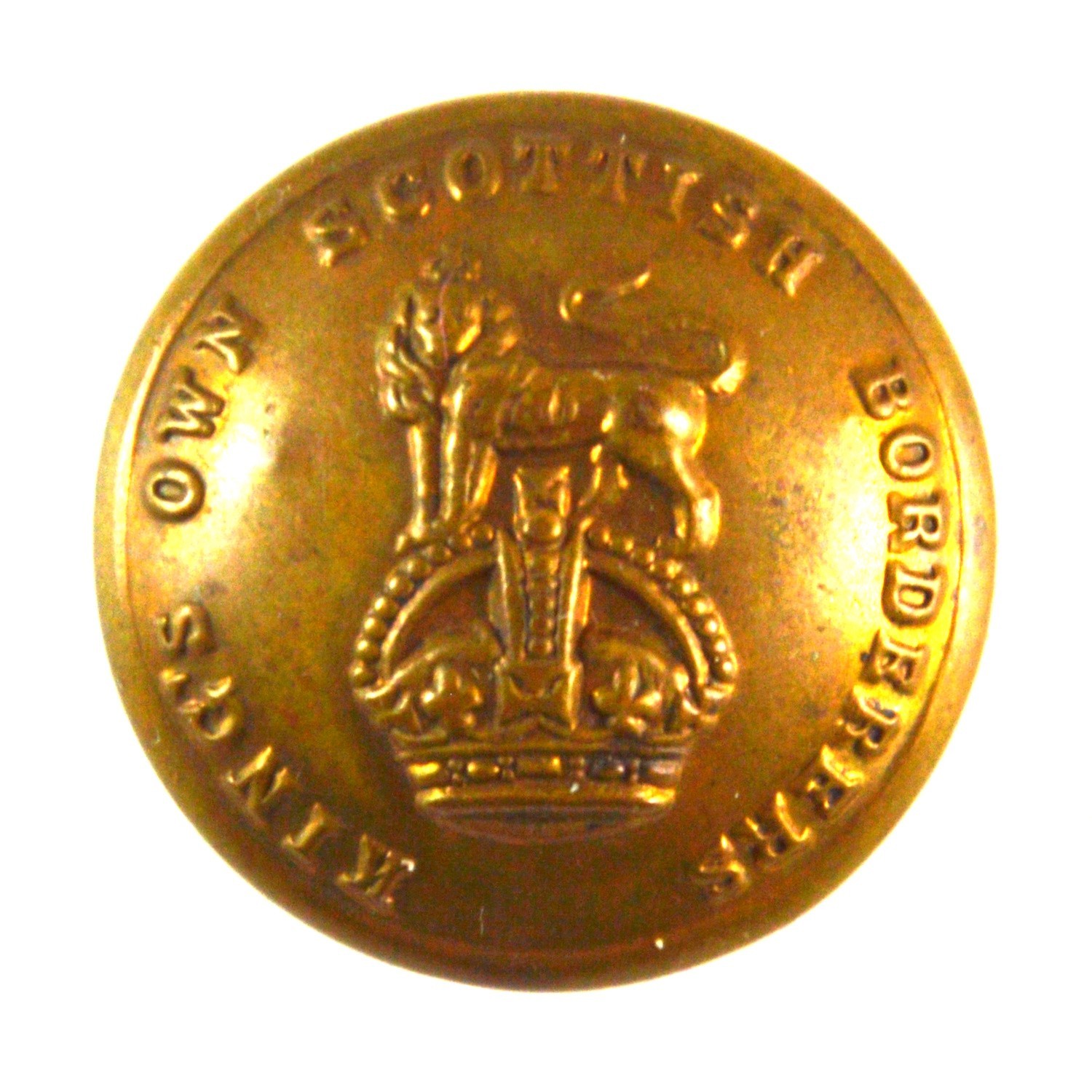
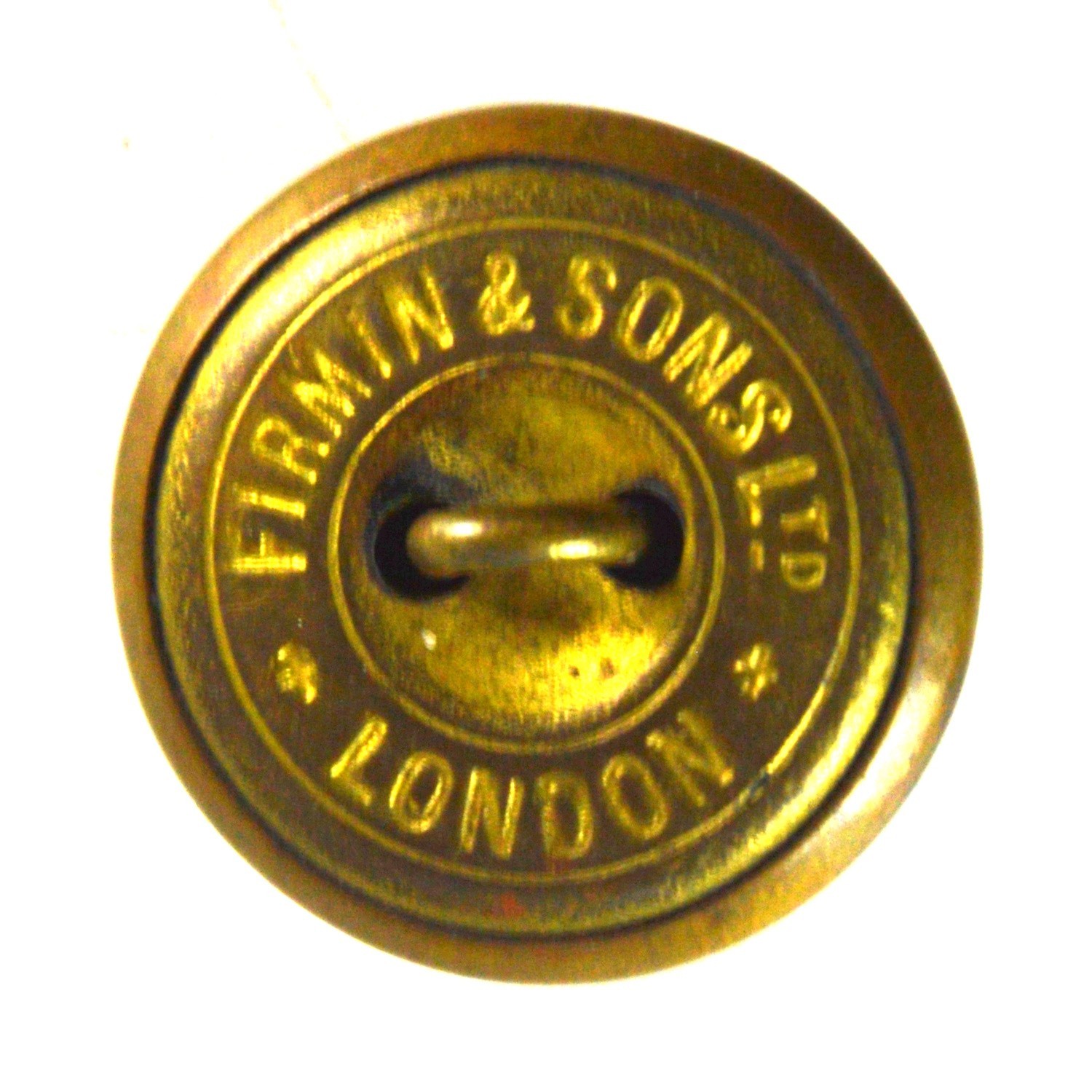
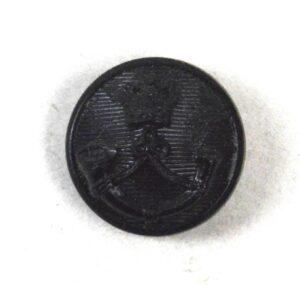
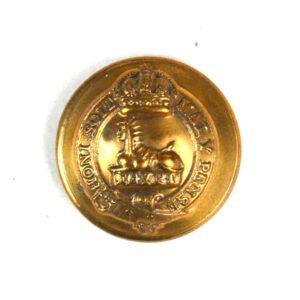
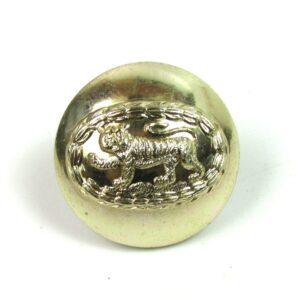
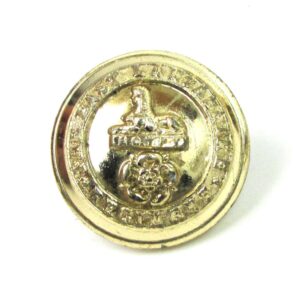
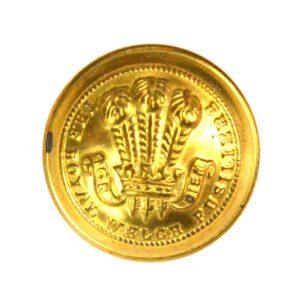
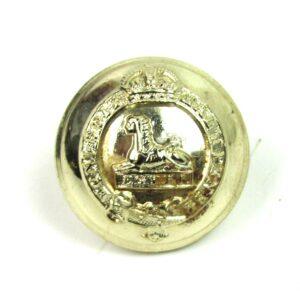
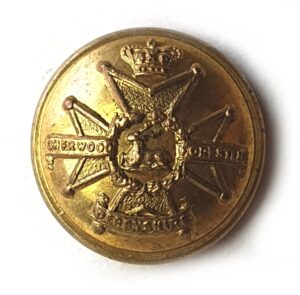
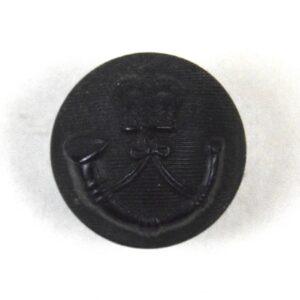
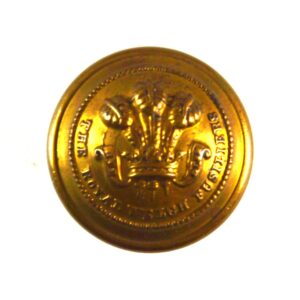
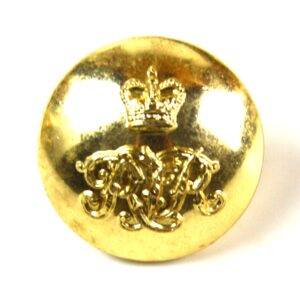
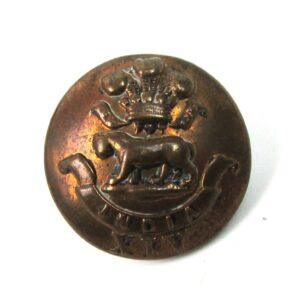
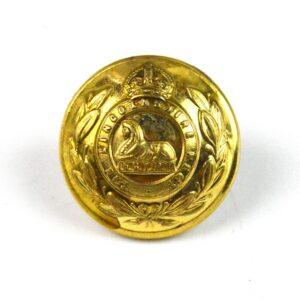
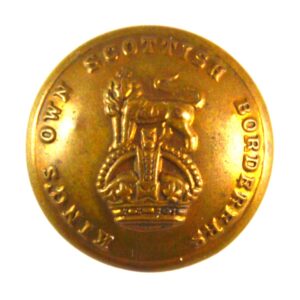
King’s Own Scottish Borderers (KOSB) brass button (1901–1953 pattern), 25mm, original example of British Army regimental uniform insignia associated with the King’s Own Scottish Borderers.
Manufactured in brass, this 25mm uniform button bears the distinctive regimental device of the King’s Own Scottish Borderers and was worn on service dress, full dress, and other uniform garments between 1901 and 1953. Introduced during the reign of Edward VII, this pattern remained in use through the reigns of George V, Edward VIII, George VI and into the early years of Elizabeth II.
The King’s Own Scottish Borderers traced their origins to 1689, when they were raised as The Earl of Leven’s Regiment during the political and military upheavals following the Glorious Revolution. Later designated the 25th Regiment of Foot, the unit became the King’s Own Scottish Borderers in 1881 following the Childers Reforms, recruiting from the Scottish Borders and surrounding areas.
During the period covered by this button pattern, the regiment served with distinction in some of Britain’s most significant conflicts. KOSB battalions fought during the Second Boer War, the First World War, and World War II, serving on the Western Front, in Gallipoli, North Africa, Italy, Burma, and other theatres of war. The regiment also saw active service during the Korean War and numerous post-war deployments.
The 1901–1953 button pattern represents the regiment through one of the most significant periods of its history, encompassing two World Wars and major changes in British Army uniform design. Original examples are highly regarded by collectors of Scottish regimental insignia due to their attractive design and association with a historic Border infantry regiment.
Manufactured in brass and retaining its original reverse shank fitting, this example represents an authentic and collectable piece of British regimental history.
Dimensions
25mm diameter
Condition
Good overall original condition, with crisp detailing and an attractive age-related brass patina. Light wear, minor surface marks, and signs of uniform use and storage may be present. The original reverse shank remains intact and secure. No significant damage or repairs evident unless otherwise noted.
Reviews
There are no reviews yet.