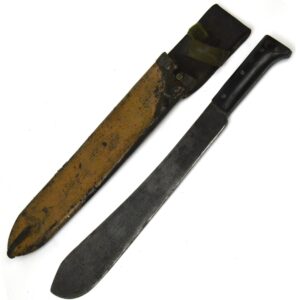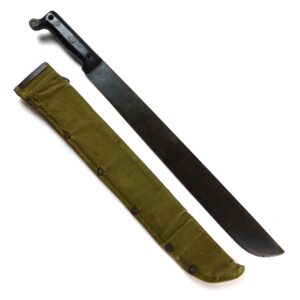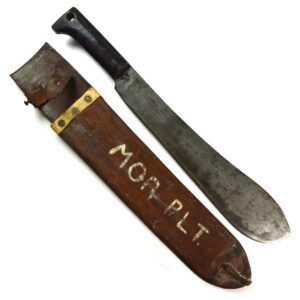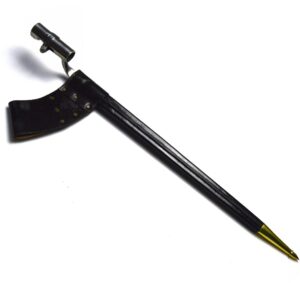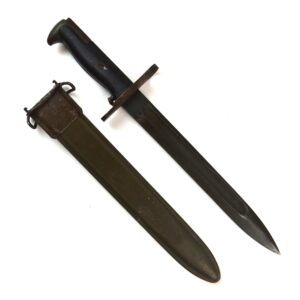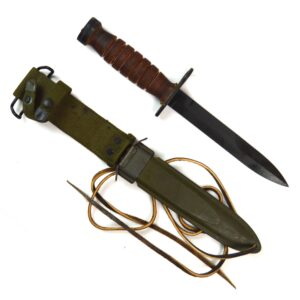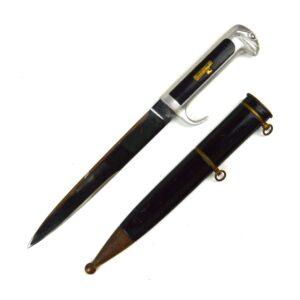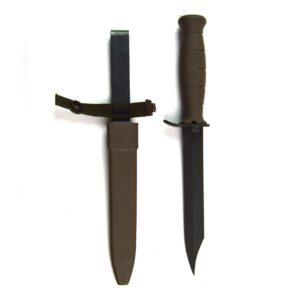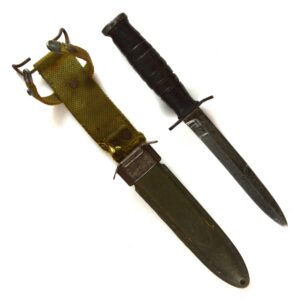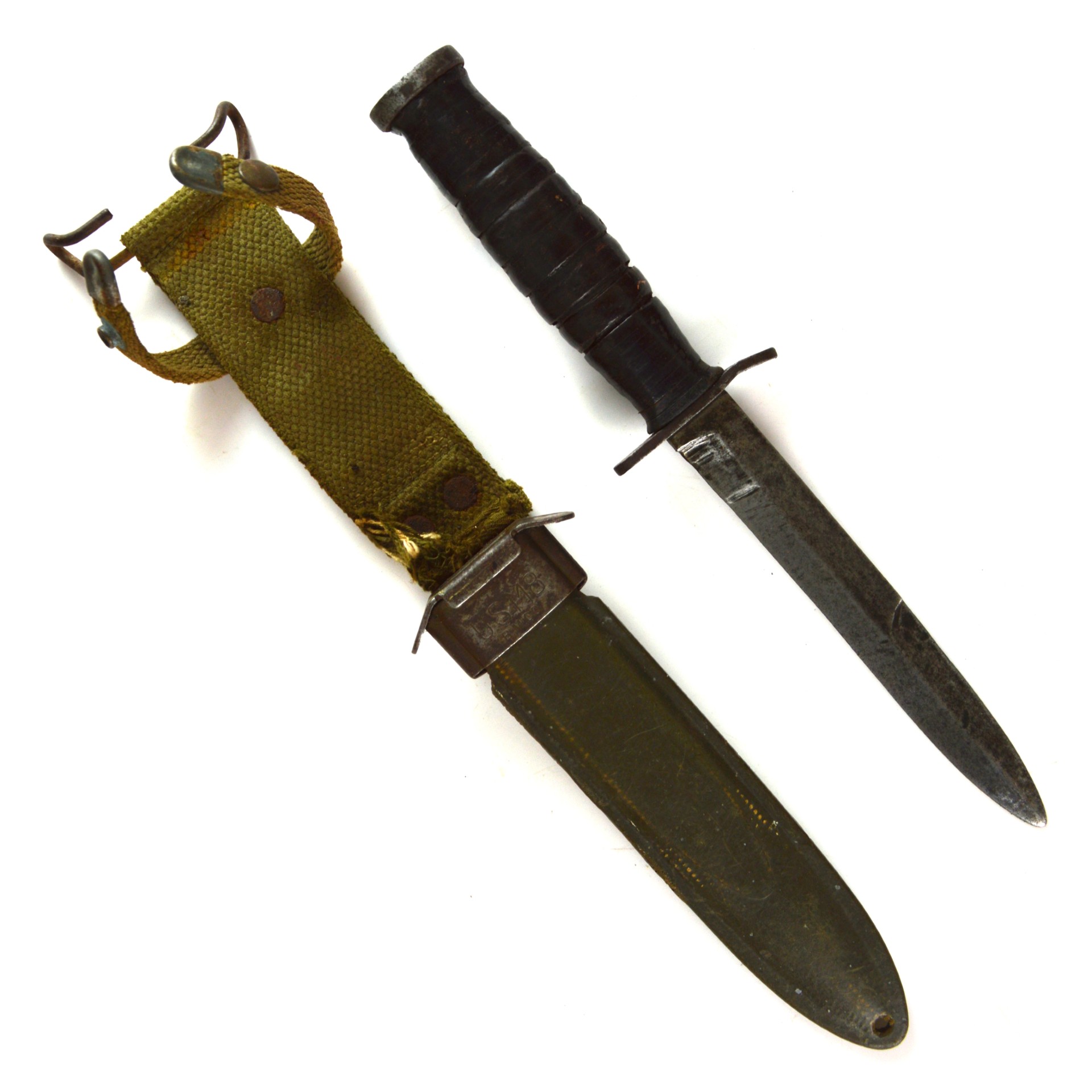
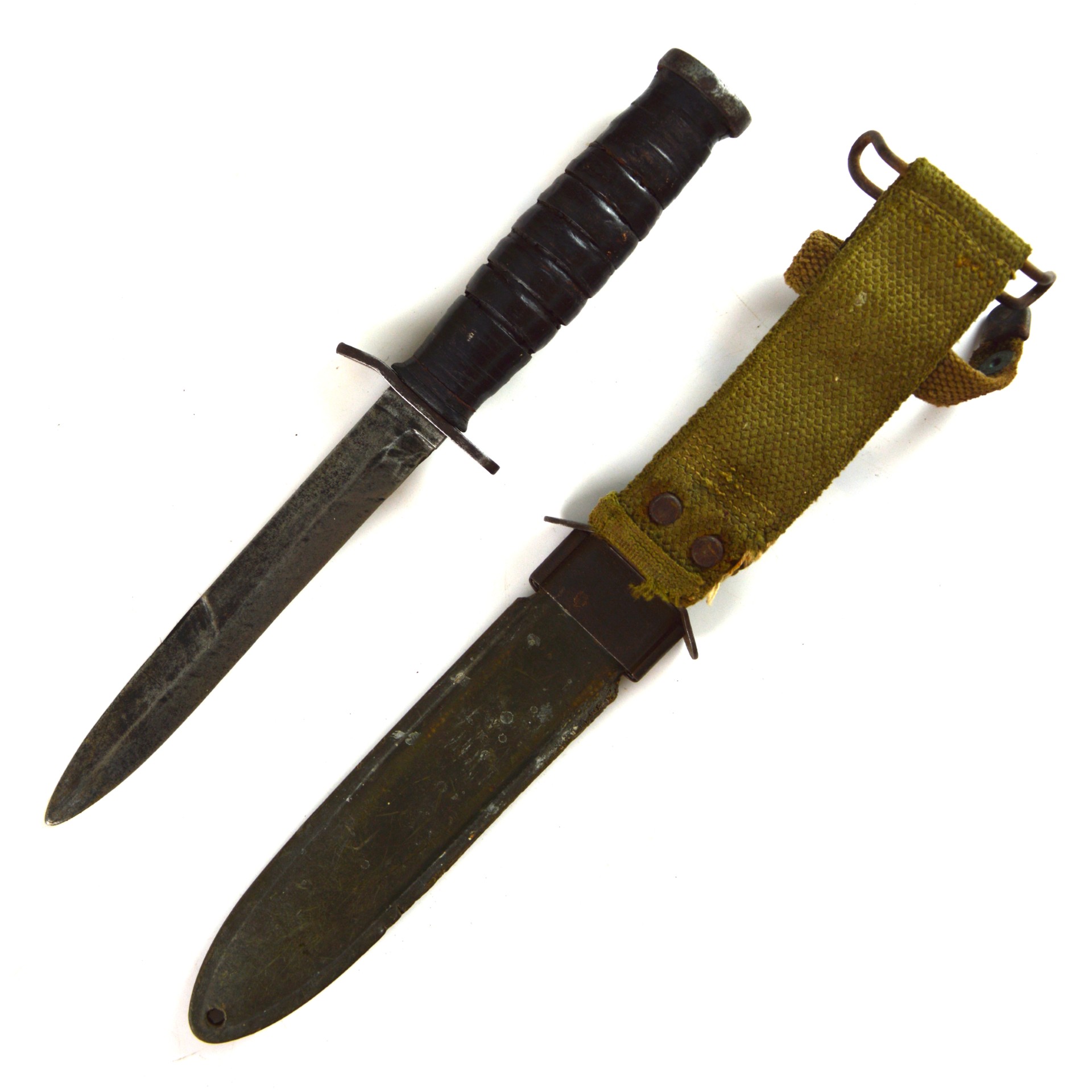
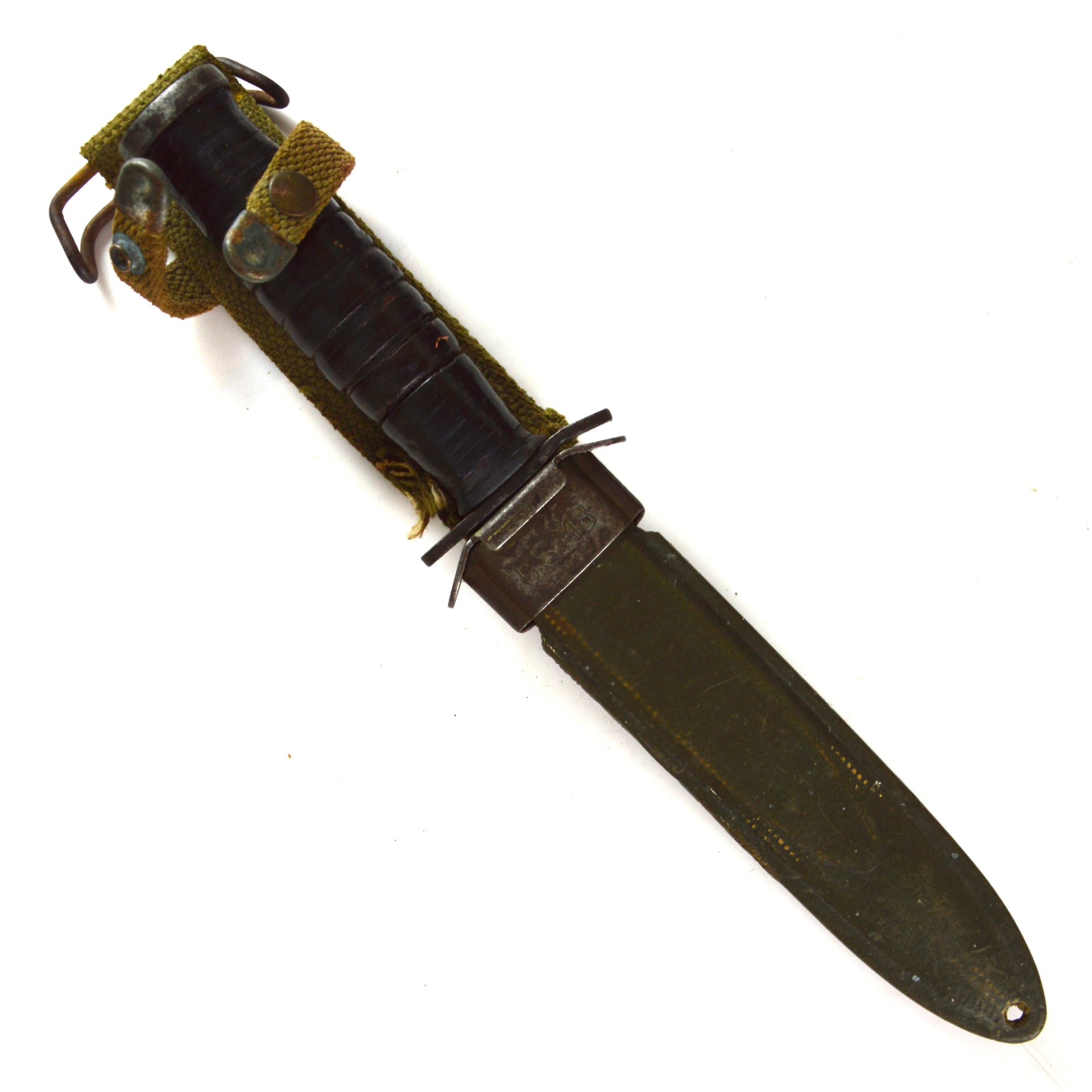
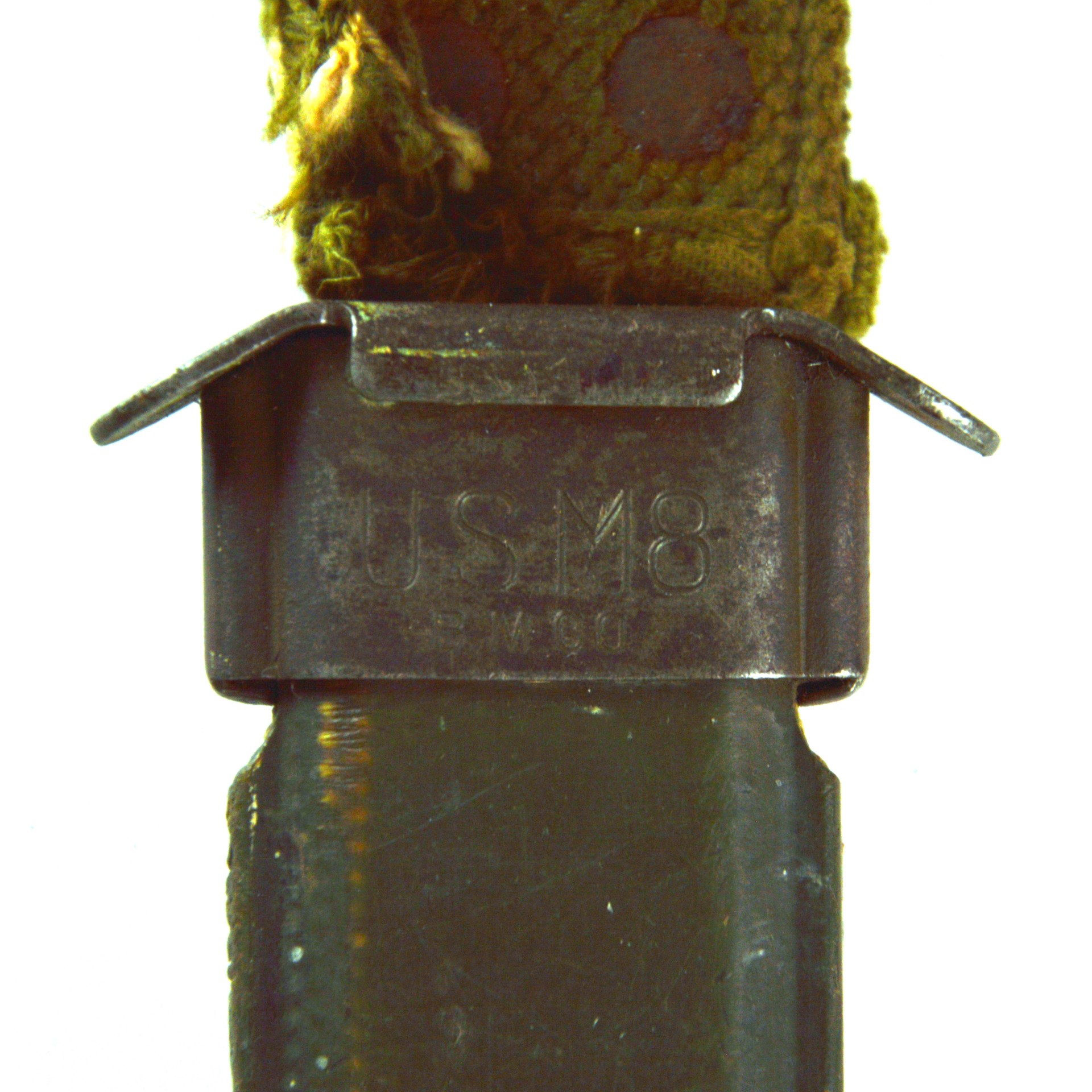
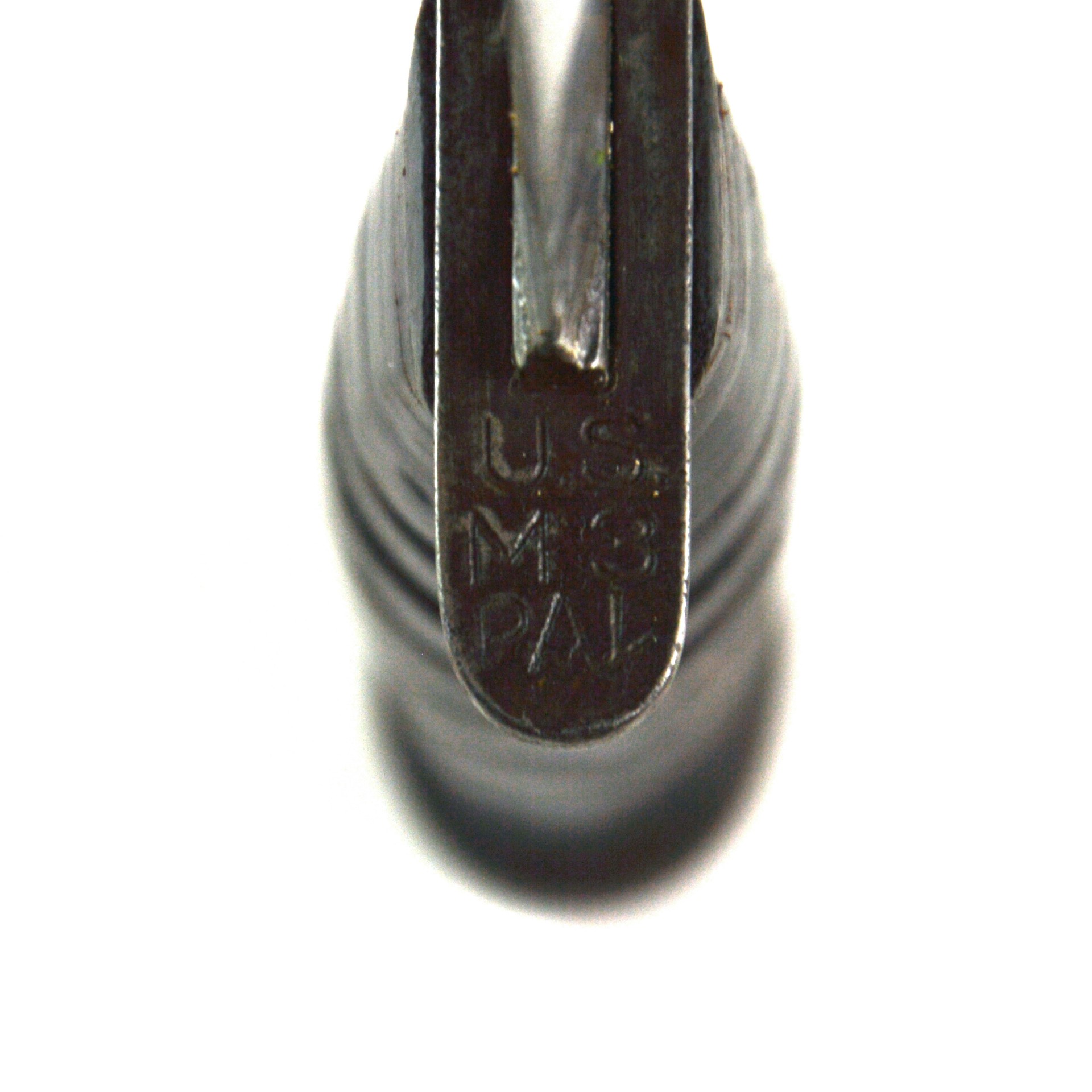
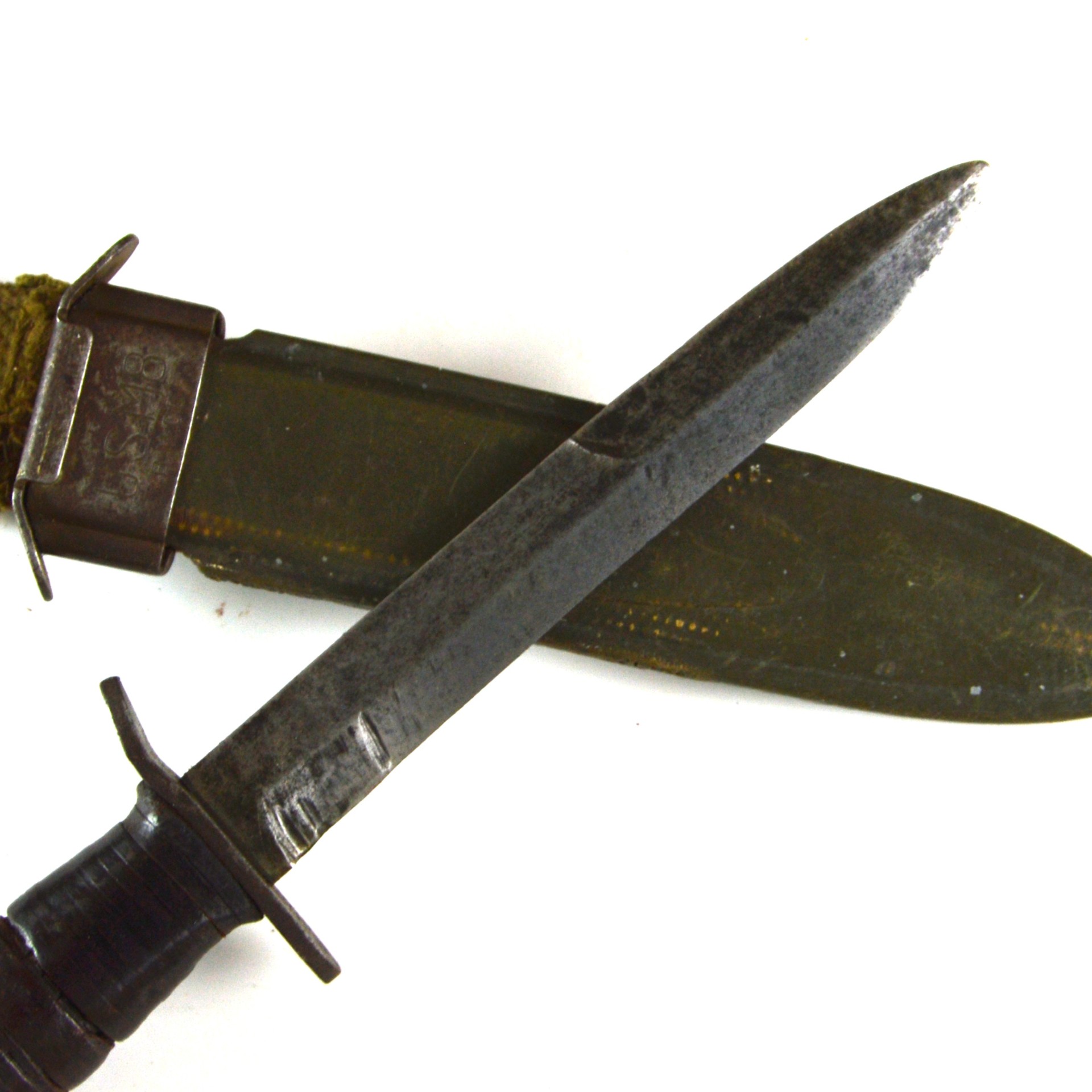
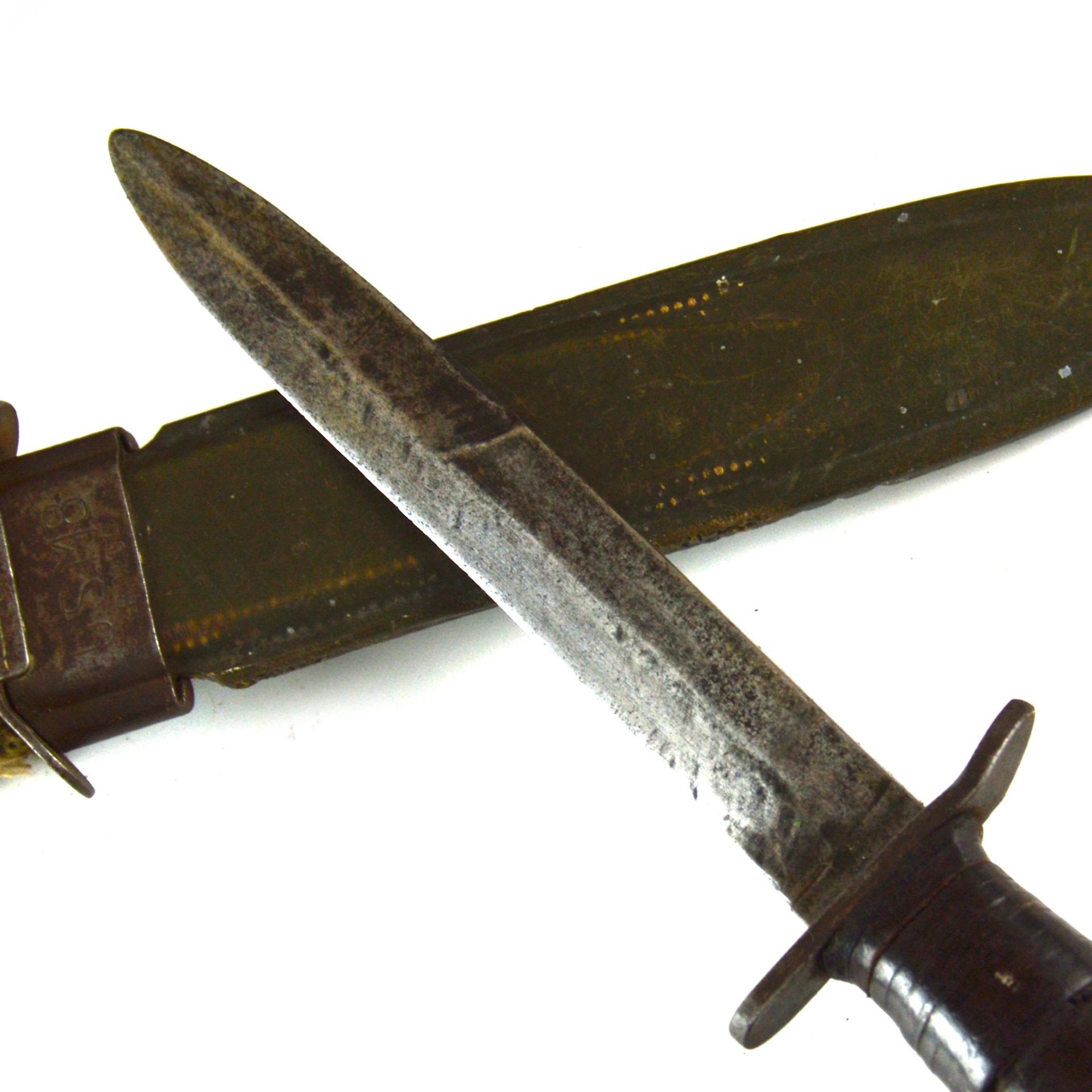
A Second World War US M3 Trench Knife in an M8 scabbard, manufactured by PAL Blade Company. The M3 was the standard American combat knife introduced during the Second World War for issue to personnel who required a dedicated fighting and utility knife. This example is accompanied by its associated M8 scabbard, made by BM Co. (Beckwith Manufacturing Company), and represents an important piece of US military edged weaponry.
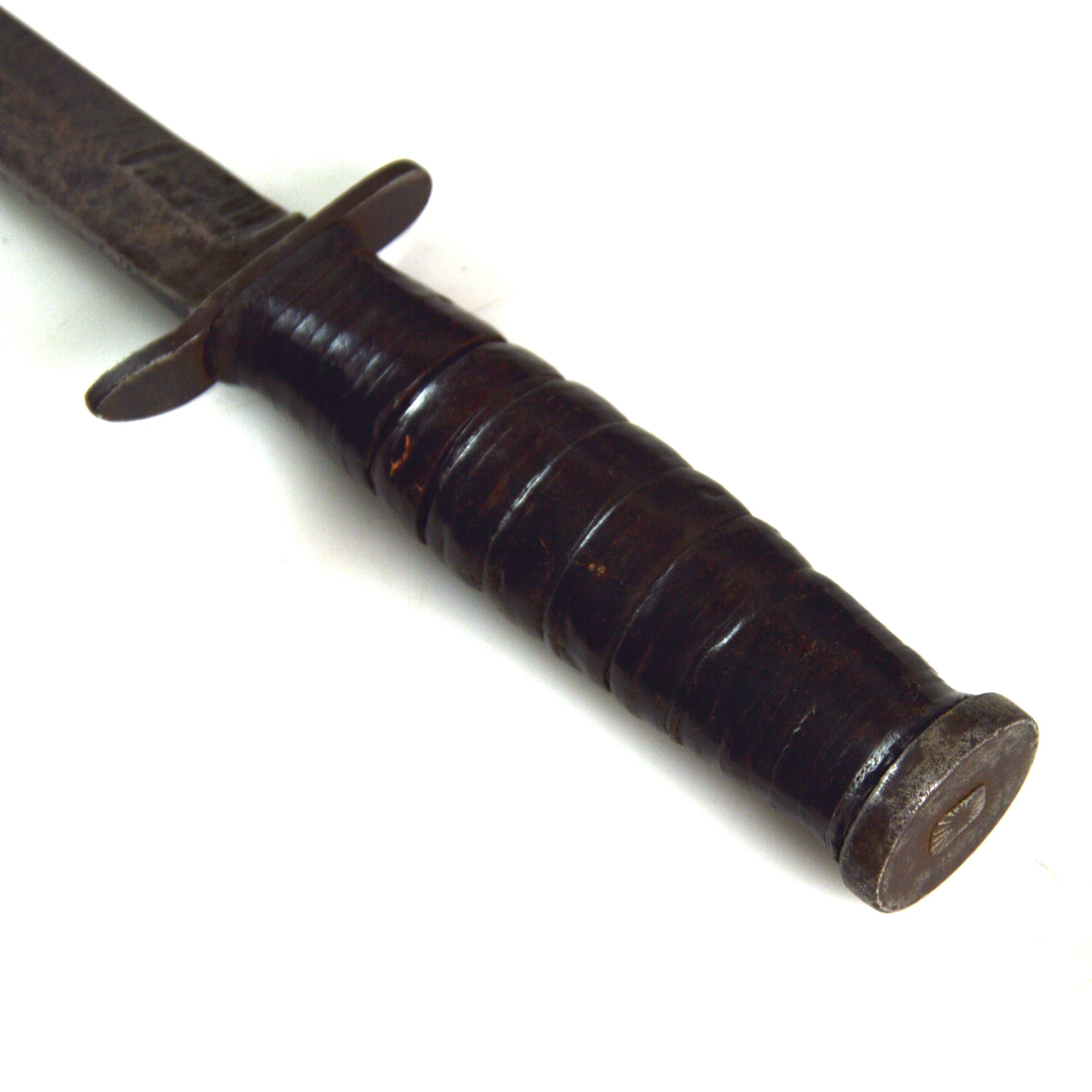
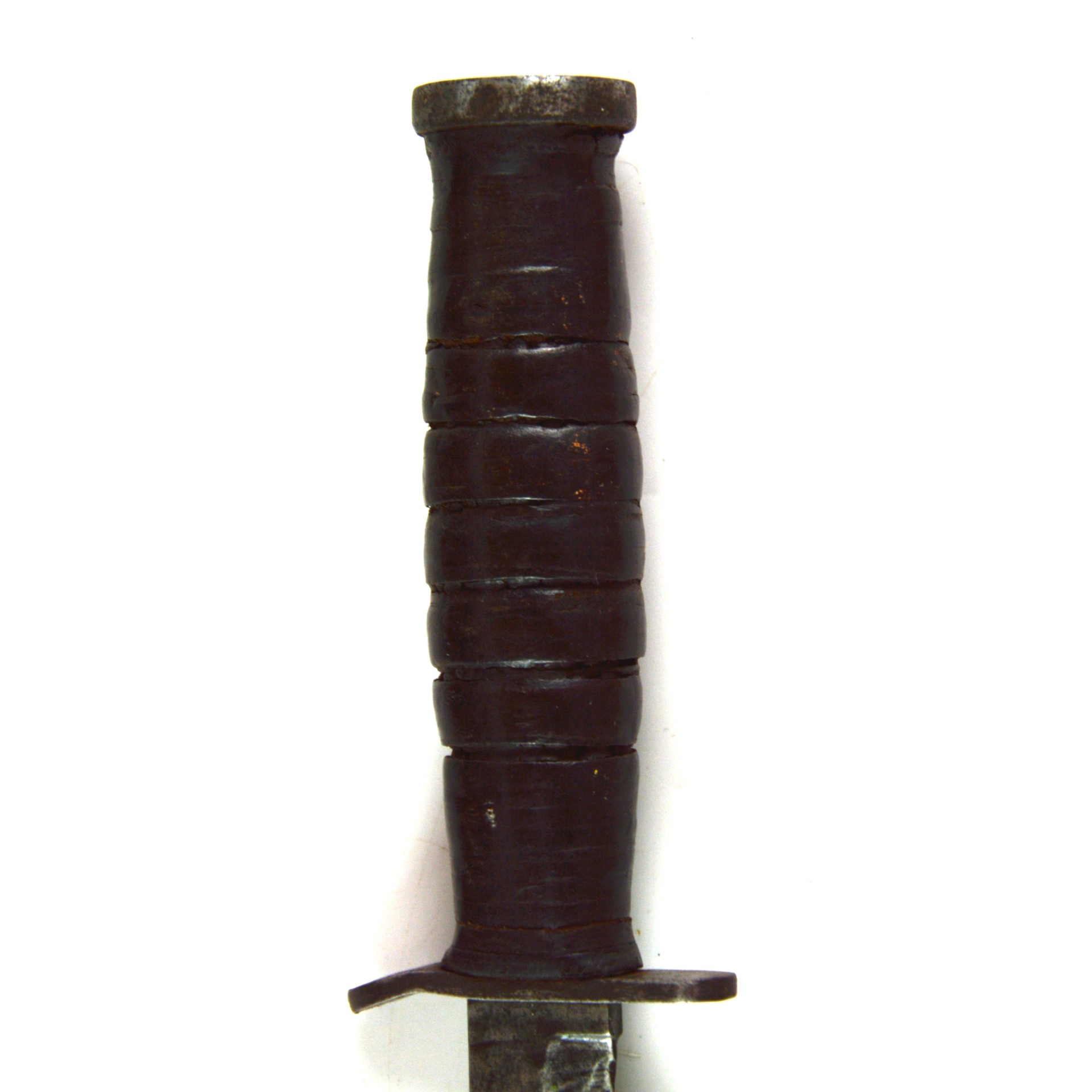
The M3 Trench Knife was introduced in 1943 as a replacement for the earlier M1918-series trench knives. Designed as a lightweight fighting knife, the M3 featured a double-edged spear-point blade, a steel crossguard, and a stacked leather washer grip. Although originally intended for troops who were not issued a bayonet, the M3 saw widespread use across the US armed forces during the latter part of the Second World War.
PAL Blade Company was one of the manufacturers contracted to produce M3 combat knives during the wartime period. PAL examples are identifiable by their characteristic manufacturer markings and are of particular interest to collectors of US Second World War edged weapons.
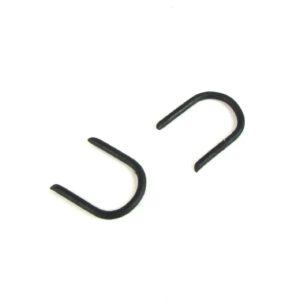
The accompanying M8 scabbard was introduced for use with the M3 and was constructed from moulded fibre material with metal fittings and an integral canvas belt loop with an attachment clip, allowing it to be attached to the soldier’s equipment. M8 scabbards were subsequently used with other US military knives and bayonets, making correct wartime examples an important part of an M3 configuration.
The M3 was carried by US troops in the European and Pacific theatres, including airborne, infantry, and other combat personnel. Surviving examples with their correct scabbards are particularly desirable to collectors of US WWII militaria, American combat knives, and wartime field equipment.
An excellent addition to any collection of US knives, edged weapons, American Second World War militaria, or US Army combat equipment.
Dimensions
Blade approx. 16cm; overall length approx. 28.5cm
Condition
Acceptable original wartime condition, with age-related wear consistent with service use. The blade shows surface marks and several deep grind marks, while the grip and fittings retain good overall integrity, though the crossguard is somewhat shaky. The accompanying M8 scabbard shows appropriate service wear, including fraying to the canvas belt attachment—an honest original Second World War M3 combat knife and scabbard.