Understanding the Militaria Market
The British militaria market in 2026 is a dynamic, diverse ecosystem spanning everything from £3 cap badges to £400,000 Victoria Crosses. Unlike the stock market or property, militaria has no central exchange, no published indices, and no standardised grading system. Prices are determined by the interplay of rarity, condition, provenance, collector demand, and the specific venue of sale. This guide aims to bring transparency to that market — drawing on decades of dealer experience and current auction results to give collectors and inheritors a realistic picture of what British military items are worth in today’s market.
Several important caveats apply to any price guide. First, condition is everything — a pristine example can be worth ten times a damaged one. Second, provenance transforms value — a named medal group with researched history is worth vastly more than an anonymous equivalent. Third, the market moves — prices quoted here reflect the market as of early 2026 and will shift over time. Fourth, retail prices (from dealers) are typically 30–60% above auction realisations, reflecting the dealer’s expertise, guarantee, and convenience. Use this guide as a starting point, not a definitive valuation.
Cap Badges and Insignia
Cap Badges
| Category |
Price Range |
Notes |
| Common brass OR badges (line infantry, RA, RE) |
£3–£15 |
Widely available; excellent for beginners |
| Scarcer regiment badges (county regiments pre-1958) |
£10–£40 |
Disbanded units attract premium |
| WWII economy (plastic/Bakelite) |
£5–£25 |
Growing interest; condition critical |
| Victorian/Edwardian glengarry badges |
£15–£60 |
Earlier styles increasingly popular |
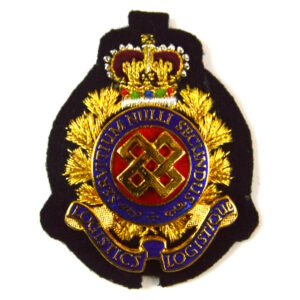
| Officer silver/gilded badges |
£25–£150 |
Quality varies; hallmarks add value |
| Volunteer/Territorial pre-1908 |
£15–£80 |
Many rare varieties |
| Special forces (SAS, SBS, Airborne) |
£20–£200+ |
High demand; many reproductions |
| Rare/obscure unit badges |
£50–£500+ |
Small, short-lived units are scarcest |
Collar Badges and Shoulder Titles
| Category |
Price Range |
Notes |
| Common collar dogs (pairs) |
£5–£20 |
Must be matching pairs for best value |
| Metal shoulder titles (common) |
£5–£15 |
Curved brass strips with regiment abbreviation |
| Metal shoulder titles (scarce units) |
£15–£60 |
Territorial, volunteer, and short-lived units |
| Cloth shoulder titles (WWII) |
£3–£20 |
Printed or embroidered; enormous variety |
| Formation signs (WWII cloth) |
£5–£50 |
Famous divisions (Airborne, Desert Rats) at top end |
| Formation signs (rare/early) |
£30–£150+ |
WWI and early WWII embroidered examples |
Medals and Decorations
Campaign Medals (Single)
| Medal |
Price Range |
Key Factors |
| Waterloo Medal 1815 |
£1,500–£5,000+ |
Regiment critical; cavalry and Guards units premium |
| Crimea Medal (1854–56) |
£150–£800 |
Clasps add value; Sebastopol most common |
| Indian Mutiny Medal (1857–58) |
£200–£1,200 |
Lucknow, Delhi clasps premium; VC actions |
| Zulu War (South Africa 1877–79) |
£400–£3,000+ |
Isandlwana/Rorke’s Drift survivors command huge premiums |
| Queen’s South Africa Medal (Boer War) |
£40–£300 |
Multiple clasps add value; named units |
| 1914 Star (“Mons Star”) |
£60–£300 |
Old Contemptibles; much scarcer than 1914-15 Star |
| 1914-15 Star |
£15–£40 |
Very common; value in groups or to named units |
| British War Medal 1914-20 |
£10–£25 |
Over 6 million issued; value in named groups |
| Victory Medal 1914-19 |
£10–£20 |
Extremely common; Mentioned in Despatches oakleaf adds |
| 1939-45 Star |
£5–£15 |
Unnamed; value only in complete groups |
| Africa Star |
£8–£20 |
8th Army clasp adds value |
| War Medal 1939-45 |
£5–£15 |
Unnamed; ubiquitous |
| Korea Medal (1950-53) |
£80–£300 |
Named to British units; fewer issued |
| General Service Medal (1918-62) |
£30–£200 |
Multiple clasps; Palestine, Malaya most common |
| South Atlantic Medal (Falklands 1982) |
£2,000–£8,000+ |
Limited issue; rosette for combat zone premium |
Gallantry Awards
| Award |
Price Range |
Notes |
| Victoria Cross (VC) |
£200,000–£500,000+ |
Highest value; major auction events |
| Distinguished Service Order (DSO) |
£1,500–£8,000 |
Higher for WWI, named actions |
| Military Cross (MC) |
£800–£4,000 |
Officer gallantry; WWI most common |
| Distinguished Conduct Medal (DCM) |
£800–£5,000 |
OR gallantry; second only to VC for other ranks |
| Military Medal (MM) |
£300–£1,500 |
WWI most common period; named unit premium |
| Distinguished Flying Cross (DFC) |
£2,000–£8,000 |
Aircrew gallantry; Battle of Britain premium |
| Mentioned in Despatches (MiD) |
£15–£50 (emblem only) |
Bronze oakleaf; value in medal groups |
Edged Weapons
Swords and Sabres
| Type |
Price Range |
Notes |
| 1796 Light Cavalry sabre |
£800–£3,000 |
Iconic design; blade condition critical |
| 1796 Heavy Cavalry sword |
£600–£2,000 |
Waterloo association adds premium |
| 1821 Light Cavalry sabre |
£400–£1,200 |
Victorian era; regiment engraving valuable |
| 1897 Infantry officer’s sword |
£200–£600 |
Still current pattern today; most affordable officer sword |
| 1908 Cavalry trooper’s sword |
£300–£800 |
Last designed-for-combat British sword |
| Highland broadsword (basket hilt) |
£500–£2,500+ |
Pre-1746 examples £2,000–£10,000+ |
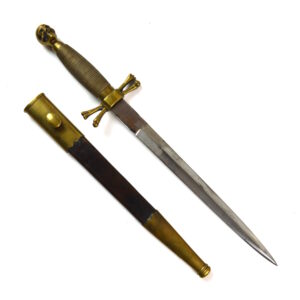
| Naval officer’s sword |
£300–£1,000 |
Lion-head pommel; various patterns |
| Naval cutlass |
£150–£500 |
1845 and 1889 patterns most common |
Bayonets
| Type |
Price Range |
Notes |
| Socket bayonet (18th/19th century) |
£30–£150 |
Plain, functional; markings add value |
| P1853 Enfield sword bayonet |
£60–£200 |
Crimea/Indian Mutiny association |
| P1907 SMLE bayonet |
£60–£200 |
Most collected; both World Wars |
| No. 4 spike bayonet |
£15–£40 |
WWII; common and affordable |
| No. 5 jungle carbine bayonet |
£80–£200 |
Shorter; less common than No. 4 |
| L1A1 SLR bayonet |
£30–£80 |
Cold War era; easy to find |
| Fairbairn-Sykes fighting knife |
£200–£1,500 |
Commando knife; pattern and maker critical |
Firearms (Deactivated)
| Type |
Price Range |
Notes |
| Lee-Enfield SMLE Mk III |
£400–£800 |
WWI icon; matching numbers premium |
| Lee-Enfield No. 4 Mk I |
£350–£700 |
WWII main service rifle |
| Lee-Enfield No. 4 (T) sniper |
£3,000–£6,000 |
Complete with scope and chest |
| Webley Mk VI revolver (.455) |
£500–£1,200 |
WWI officer’s sidearm |
| Webley Mk IV revolver (.38) |
£250–£500 |
WWII issue |
| Enfield No. 2 revolver |
£250–£500 |
WWII; Mk I* (double-action only) more common |
| Bren Gun Mk I/II |
£1,500–£3,000 |
Iconic LMG; battlefield pickup history adds value |
| Sten Gun Mk II |
£400–£800 |
Wartime economy weapon; crude but effective |
| Vickers MMG |
£3,000–£6,000 |
Heavy, impressive; complete with tripod premium |
| Boys Anti-Tank Rifle |
£1,500–£3,000 |
Large format; limited availability |
Uniforms and Equipment
| Item |
Price Range |
Notes |
| WWII Battledress blouse |
£40–£120 |
Named/badged examples worth more |
| WWII Battledress trousers |
£30–£80 |
Less collected than blouse; matching set premium |
| Officer Service Dress (named) |
£100–£400+ |
Tailor labelled; regiment identified |
| Victorian/Edwardian scarlet tunic |
£200–£800+ |
Regiment critical; condition essential |
| Highland dress items |
£200–£2,000+ |
Kilt, plaid, sporran — regiment and period drive value |
| Tropical/bush kit (KD) |
£40–£150 |
Burma, North Africa association; increasingly collected |
| Women’s auxiliary uniforms (ATS, WAAF, WRNS) |
£60–£250 |
Rarer than male equivalents; growing demand |
| Brodie helmet (WWI) |
£60–£200 |
Original paint and insignia add significant value |
| Mk II/III steel helmet (WWII) |
£40–£150 |
Unit markings, camo paint premium |
| Para helmet (Mk I/Mk II) |
£200–£800+ |
Airborne forces; Arnhem/D-Day provenance |
| Pith helmet (foreign service) |
£60–£250 |
Regimental badge adds value |
| 37-pattern webbing set (complete) |
£60–£200 |
Full set with all components increasingly hard to find |
| 08-pattern webbing (WWI) |
£80–£300 |
Complete sets rare; individual items £15–£60 |
Documents, Books, and Ephemera
| Item |
Price Range |
Notes |
| Soldiers’ personal letters (WWI/WWII) |
£5–£50 |
Content and unit determine value |
| Named soldier’s service book (AB64/paybook) |
£10–£40 |
WWI/WWII; research potential |
| Unit war diaries (original extracts) |
£20–£150 |
Rare; most are at the National Archives |
| Silk escape maps (WWII) |
£30–£150 |
Used by aircrews; visually dramatic |
| Training manuals and pamphlets |
£5–£30 |
Weapons, tactics, fieldcraft — enormous variety |
| Photographs (original prints) |
£3–£50 |
Identified units/individuals worth more |
| Commissioning scrolls (officer) |
£15–£60 |
Royal signature; decorative |
| Trench art |
£30–£500+ |
Quality and originality vary enormously |
Market Trends in 2026
Rising Areas
- Falklands War items: Sustained interest as the conflict reaches its 44th anniversary. South Atlantic Medals have doubled in value over the past decade.
- Women’s military items: WWII ATS, WAAF, and WRNS items increasingly sought as social historians and family researchers drive demand.
- Northern Ireland campaign items: GSM Northern Ireland clasps and associated items growing in collector interest.
- Named/researched groups: The genealogy boom means demand for named medal groups with research potential continues to grow.
- Economy badges (WWII): Plastic and fibre wartime economy badges are being reassessed as historically significant in their own right.
Stable Areas
- WWI medals and groups: Large numbers issued keep prices accessible; named groups with research always sell.
- General cap badges: Consistent demand; modest prices make the market robust.
- Edged weapons: Swords and bayonets hold value well; condition-dependent.
Softening Areas
- Unnamed WWII stars and medals: Oversupply depresses prices for individual unnamed medals.
- Common deactivated firearms (post-2016 spec): Recent deactivation standards have added cost but reduced collectibility for some buyers who prefer the older, more “realistic” deactivations.
Getting Items Valued
For insurance, probate, or sale purposes, seek professional valuation from:
- Specialist dealers: Most reputable militaria dealers offer valuation services, either free (with a view to purchase) or for a fee (independent written valuation).
- Auction house estimates: Free, no-obligation estimates from DNW, Bosleys, Noonans, or Warwick & Warwick provide realistic market expectations.
- OMRS: The Orders and Medals Research Society can recommend qualified valuers for significant medal groups.
Avoid online-only “valuation” services that charge fees without seeing the item. No legitimate expert can value militaria accurately from a single photograph — condition, weight, and fine detail all matter.