
- Introduction
- Planning and the COSSAC Scheme
- Operation Fortitude: The Great Deception
- The Weather and Eisenhower’s Decision
- The Airborne Assault
- 6th Airborne Division (British)
- 82nd and 101st Airborne Divisions (American)
- The Five Beaches
- Utah Beach
- Omaha Beach
- Gold Beach
- Juno Beach
- Sword Beach
- The Naval Armada: Operation Neptune
- The Air Campaign
- Logistics: The Hidden Battle
- The German Perspective
- The Human Cost
- D-Day Medals and the Collector’s Corner
- British and Commonwealth Campaign Medals
- Key Collectables
- Valuation Tips
- Legacy and Remembrance
- Sources
- Introduction
- Planning and the COSSAC Scheme
- Operation Fortitude: The Great Deception
- The Weather and Eisenhower’s Decision
- The Airborne Assault
- The Five Beaches
- The Naval Armada: Operation Neptune
- The Air Campaign
- Logistics: The Hidden Battle
- The German Perspective
- The Human Cost
- D-Day Medals and the Collector’s Corner
- Legacy and Remembrance
- Sources
Introduction
6 June 1944 — “D-Day” — remains the single most consequential military operation of the twentieth century. The Allied landings on the coast of Normandy, France, codenamed Operation Overlord, represented the culmination of years of planning, industrial mobilisation, intelligence deception and inter-Allied negotiation on a scale never attempted before or since. [1]
By the end of that single day, over 156,000 Allied troops had crossed the English Channel by sea and air. They faced approximately 50,000 German defenders manning Field Marshal Erwin Rommel’s Atlantic Wall — a network of bunkers, beach obstacles, minefields and fortified gun positions stretching from Norway to Spain. The Second Front, demanded by Stalin since 1942, was at last open. [2]
The Normandy invasion was not merely a military operation but an extraordinary feat of logistics, deception and coalition warfare. Its success — far from guaranteed on the morning of 6 June — changed the course of history and led directly to the liberation of Western Europe.
Planning and the COSSAC Scheme
Planning for a cross-Channel invasion began in earnest in early 1943, when Lieutenant General Sir Frederick Morgan was appointed Chief of Staff to the Supreme Allied Commander (COSSAC). Morgan’s team at Norfolk House in London drafted the initial Overlord plan, which proposed landing three divisions on a 25-mile front in Normandy. [1]
Normandy was chosen over the Pas-de-Calais — the shortest Channel crossing — for several reasons: the beaches were less heavily fortified, there was a major port (Cherbourg) within striking distance, and the approaches could be more easily controlled by the Royal Navy. The disadvantage was the greater distance from English ports, which required more shipping and better weather windows. [3]
When General Dwight D. Eisenhower was appointed Supreme Commander Allied Expeditionary Force in January 1944, he immediately recognised that Morgan’s three-division plan was too narrow. Together with Field Marshal Bernard Montgomery, who was given command of all ground forces for the assault phase (21st Army Group), Eisenhower expanded the plan to five beaches and three airborne divisions — effectively doubling the initial assault force. This required finding additional landing craft, which delayed the invasion from May to June. [2]
The logistical preparations transformed southern England into the largest military encampment in history. By late May 1944, there were 1.5 million American troops in Britain, alongside Canadian, British, Free French, Polish, Norwegian, Dutch, Belgian and other Allied forces. Across southern England, 170,000 vehicles were marshalled, 23 million tons of supplies stockpiled, and thousands of landing craft assembled in every harbour and inlet from Falmouth to Newhaven. [1]
Operation Fortitude: The Great Deception
The success of Overlord depended upon convincing the German High Command that the main invasion would fall at the Pas-de-Calais, not Normandy. This task fell to the London Controlling Section and its masterpiece: Operation Fortitude. [4]
Fortitude South created a fictitious “First United States Army Group” (FUSAG), supposedly commanded by General George S. Patton — the Allied commander the Germans feared most — and targeted at the Pas-de-Calais. The deception was elaborate: inflatable tanks, dummy aircraft, fake radio traffic, phoney headquarters and, crucially, a network of controlled double agents feeding false intelligence to the Abwehr. [4]
The most important of these was the Spaniard Juan Pujol Garcia, codenamed “Garbo” by MI5 and “Arabel” by the Germans, who had constructed an entirely imaginary network of sub-agents across Britain. On the night of 5–6 June, Garbo sent a message to his German handler warning of the Normandy landings — deliberately timed to arrive too late to be useful, but early enough to reinforce his credibility. He then followed up with reports insisting that Normandy was a feint and the real blow would come at the Pas-de-Calais. Hitler accepted this assessment and held the 15th Army and his panzer reserves in the Pas-de-Calais for seven critical weeks after D-Day. [4]
The Double Cross system’s contribution to Overlord was arguably as important as any division that landed on the beaches. As Sir Michael Howard later wrote, Fortitude was “the most sophisticated and successful deception operation in the entire history of warfare.” [4]
The Weather and Eisenhower’s Decision
D-Day was originally scheduled for 5 June 1944, but a ferocious storm in the Channel forced a 24-hour postponement. The situation on the morning of 4 June was grim: Force U, carrying the Utah Beach assault troops, had already put to sea and had to be recalled. Eisenhower gathered his senior commanders at Southwick House, near Portsmouth, where Group Captain James Stagg, the chief meteorological officer, delivered a cautious forecast of a brief window of improved weather on 6 June before conditions deteriorated again. [1]
Eisenhower’s options were stark. Another postponement would mean waiting a fortnight for the next suitable tide; morale, secrecy and the element of surprise would all be compromised. At 21:45 on 4 June, he made the preliminary decision to go. At 04:15 on 5 June — in a room heavy with tobacco smoke and tension — he confirmed it with the words: “OK, let’s go.” [1]
It was, as Eisenhower later acknowledged, “the most agonising decision I had to make in the war.” He drafted a press release accepting full blame in the event of failure — a note found in his wallet years later: “Our landings in the Cherbourg-Havre area have failed … If any blame or fault attaches to the attempt it is mine alone.” [2]
Ironically, the bad weather worked in the Allies’ favour. The Germans considered conditions too poor for an invasion. Rommel had left Normandy to visit his wife in Germany for her birthday. Many senior German officers were attending a war game at Rennes. When the first reports of parachute drops came in after midnight, confusion and delay paralysed the German response. [5]
The Airborne Assault
The night before the seaborne landings, three airborne divisions secured the flanks of the invasion area in some of the most dramatic actions of the entire war.
6th Airborne Division (British)
On the eastern flank, the 6th Airborne Division under Major General Richard Gale had three critical tasks: seize the bridges over the Caen Canal and River Orne intact, destroy the coastal battery at Merville, and hold the high ground east of the Orne against counter-attack. [1]
The most famous action was the coup de main at Pegasus Bridge. Six Horsa gliders carrying D Company, 2nd Oxfordshire and Buckinghamshire Light Infantry, under Major John Howard, crash-landed within 50 yards of the Caen Canal bridge at 00:16 — the first Allied soldiers to land in France on D-Day. The bridge was captured intact in ten minutes, with Lieutenant Den Brotheridge becoming the first Allied soldier killed in the invasion. [6]
Meanwhile, the 9th Parachute Battalion under Lieutenant Colonel Terence Otway assaulted the Merville Battery, whose four casemates were believed to house 150mm guns capable of enfilading Sword Beach. Of the 750 men who took off, only 150 reached the battery — the rest were scattered by anti-aircraft fire and navigation errors. Otway attacked regardless, capturing the position in twenty minutes of brutal hand-to-hand fighting. The battery’s guns proved to be Czech-made 100mm pieces rather than the feared 150mm weapons, but their threat to Sword Beach was eliminated. [1]
82nd and 101st Airborne Divisions (American)
On the western flank, the 82nd and 101st Airborne Divisions dropped behind Utah Beach to secure the causeways across the flooded marshland and block German reinforcements from the Cotentin Peninsula. The drops were badly scattered — some sticks landed more than 20 miles from their drop zones — and the fighting devolved into confused small-unit actions across the bocage. [2]
The 82nd Airborne fought a fierce battle for Sainte-Mère-Église, which became the first French town liberated. Private John Steele of the 505th Parachute Infantry Regiment famously snagged his parachute on the church steeple and hung there, playing dead, as fighting raged below — an episode immortalised in the 1962 film The Longest Day. Despite the chaos, both divisions accomplished their core missions: the causeways were secured, and German reinforcements were delayed. [2]
The Five Beaches
| Beach | Force | Key Units | H-Hour | Casualties (D-Day est.) |
|---|---|---|---|---|
| Utah | American | 4th Infantry Division | 06:30 | ~197 |
| Omaha | American | 1st & 29th Infantry Divisions | 06:30 | ~2,400 |
| Gold | British | 50th (Northumbrian) Division | 07:25 | ~1,000 |
| Juno | Canadian | 3rd Canadian Infantry Division | 07:45 | ~1,200 |
| Sword | British | 3rd Infantry Division | 07:25 | ~630 |
Utah Beach
The westernmost beach was assigned to the US 4th Infantry Division under Major General Raymond “Tubby” Barton. Strong currents pushed the landing craft 2,000 yards south of the intended zone — a fortunate accident, as the actual landing point was more lightly defended. [2]
Brigadier General Theodore Roosevelt Jr. — son of the former president, aged 56 and walking with a cane due to arthritis and a heart condition — was the first general officer ashore and the only general in the first wave on any beach. He calmly reconnoitred the causeways and redirected the entire landing operation with the famous order: “We’ll start the war from right here.” He received the Medal of Honor for his actions and died of a heart attack five weeks later, on 12 July 1944. [2]
Utah was the least costly beach, with only 197 casualties — a testament to both the fortunate landing location and the devastating effectiveness of the preliminary naval and air bombardment.
Omaha Beach
Omaha was the bloodiest beach of D-Day and came closest to outright failure. The 1st Infantry Division (“The Big Red One”) and the 29th Infantry Division faced undetected German reinforcements — the veteran 352nd Infantry Division, which had moved into the sector for an anti-invasion exercise and remained in place. [2]
Everything went wrong at Omaha. The beach was overlooked by steep, heavily fortified bluffs. The preliminary naval bombardment fell short and failed to suppress the defences. Most of the 32 DD (Duplex Drive) swimming tanks launched 6,000 yards offshore foundered in the heavy seas — only 2 of 29 reached the shore in the first sector. Entire companies of infantry were cut down in the water’s edge. [1]
For two critical hours, the outcome was genuinely in doubt. General Omar Bradley, commanding the First US Army from the cruiser USS Augusta, seriously considered diverting follow-up waves to Utah and the British beaches. It was small-group leadership — sergeants and lieutenants rallying scattered, leaderless men up the draws — that eventually cracked the German defences. Colonel George Taylor of the 16th Infantry Regiment urged his pinned-down men forward with the words: “Two kinds of people are staying on this beach, the dead and those who are going to die. Now let’s get the hell out of here.” [2]
Gold Beach
On Gold Beach, the 50th (Northumbrian) Division landed at 07:25 alongside the 47th Royal Marine Commando. Despite fierce resistance at Le Hamel — where a single German 75mm gun in a reinforced casemate held up the advance for hours — the troops pushed inland and linked up with the Canadians at Juno by evening. [3]
The specialist armour of the 79th Armoured Division — “Hobart’s Funnies” — played a crucial role on the British beaches: DD (swimming) tanks, flail tanks for clearing mines (Crabs), AVRE bridgelaying and fascine-dropping tanks, and Crocodile flame-thrower tanks. Their use at Gold and Sword contributed to the significantly lower British casualty rates compared to Omaha, where the Americans had declined the offer of Hobart’s specialised armour. [3]
Company Sergeant Major Stanley Hollis of the 6th Battalion, the Green Howards, won the only Victoria Cross awarded on D-Day itself. At Mont Fleury, Hollis single-handedly charged and captured two German pillboxes containing a total of around 30 defenders. Later that day, at the village of Crépon, he rescued two men pinned down by fire from a field gun by drawing fire upon himself. [7]
Juno Beach
The 3rd Canadian Infantry Division and the 2nd Canadian Armoured Brigade assaulted Juno Beach. Rough seas delayed the landing by 20 minutes, meaning the rising tide had covered many beach obstacles — with lethal consequences, as landing craft detonated mines on the hidden stakes. Casualties were heavy in the first wave, particularly at Bernières-sur-Mer and Courseulles-sur-Mer. [8]
Despite the bloody approach, the Canadians fought their way through the beach defences with conspicuous determination. By nightfall, they had pushed further inland than any other Allied force on D-Day — reaching a depth of nearly seven miles and coming within sight of the Caen–Bayeux road. [8]
Sword Beach
On Sword Beach, the 3rd Infantry Division under Major General Tom Rennie landed with the objective of reaching Caen, seven miles inland — the most ambitious D-Day objective. The beach exits were secured relatively quickly, aided by Hobart’s Funnies, but the advance on Caen was stopped short by a determined counter-attack from the 21st Panzer Division at Périers Ridge — the only German armoured counter-attack on D-Day itself. [1]
Lord Lovat’s 1st Special Service Brigade came ashore to the sound of Piper Bill Millin playing “Highland Laddie” on the bagpipes — one of the enduring images of D-Day. Millin later learned that German snipers had not shot him because they assumed he was mad. The commandos then fought their way to Pegasus Bridge to relieve Howard’s glider troops, arriving at 13:15 — two and a half minutes late, for which Lovat famously apologised. [6]
Caen would not fall until Operation Charnwood on 8–9 July, after a devastating Bomber Command raid on the city — and the full city was not in Allied hands until late July after Operation Goodwood. The prolonged battle for Caen remains one of the costliest and most controversial phases of the Normandy campaign. [3]
The Naval Armada: Operation Neptune
The D-Day naval force — Operation Neptune, commanded by Admiral Sir Bertram Ramsay — was the largest armada in history: 6,939 vessels including 1,213 warships, 4,126 landing craft, 736 ancillary vessels, and 864 merchant ships. [1]
The bombardment force included seven battleships — HMS Warspite, Ramillies, USS Texas, Nevada, Arkansas, and others — and 23 cruisers, which opened fire at 05:50. The Channel was swept by 287 minesweepers clearing ten channels through German minefields in a single night — an extraordinary feat of seamanship performed in complete darkness and heavy seas. [1]
Two artificial harbours — codenamed “Mulberry” — were prefabricated in England from 400 individual concrete caissons and towed across the Channel. PLUTO — “Pipe Line Under The Ocean” — was designed to pump fuel directly from the Isle of Wight to Cherbourg and later from Dungeness to Boulogne, eventually delivering one million gallons per day. [1]
The Air Campaign
Allied air supremacy was the essential precondition for Overlord’s success. By June 1944, the Luftwaffe had been catastrophically degraded by the Combined Bomber Offensive, “Big Week” (20–25 February 1944), and the Pointblank directive targeting aircraft factories and fighter production. On D-Day, the Allies flew 14,674 sorties compared to approximately 100 by the Luftwaffe. [5]
The Transportation Plan — the systematic pre-invasion bombing of French railways, bridges, and marshalling yards, championed by Air Chief Marshal Trafford Leigh-Mallory — crippled the German ability to move reinforcements. By 6 June, every Seine bridge had been destroyed by Allied bombers. German panzer divisions attempting to reach Normandy from eastern France had to make tortuous detours under constant air attack, arriving piecemeal rather than in the concentrated counter-attack force that might have thrown the Allies back into the sea. [5]
Fighter-bombers — Typhoons with rockets and P-47 Thunderbolts — provided devastating close air support throughout the campaign. The destruction of German armour and transport at the Falaise Pocket in August 1944, where the roads were choked with wrecked vehicles and dead horses, demonstrated the lethal effectiveness of tactical air power against ground forces caught in the open. [3]
Logistics: The Hidden Battle
The logistical achievement of Overlord is often overshadowed by the drama of the beach assaults. Within one week of D-Day, 326,000 troops, 54,000 vehicles, and 104,000 tons of supplies had been landed across the open beaches and through the Mulberry harbours. [1]
The Mulberry harbour at Arromanches (Gold Beach) — officially Mulberry B or “Port Winston” — handled up to 7,000 tons per day and remained in operation until well into 1945. The American Mulberry at Omaha (Mulberry A) was catastrophically damaged by the Great Storm of 19–22 June, the worst Channel storm in forty years, and was abandoned. The loss forced the US forces to rely on open-beach unloading and accelerated the drive to capture the port of Cherbourg, which fell on 26 June but was so thoroughly demolished by the retreating Germans that it did not reach full capacity until September. [1]
The German Perspective
The German defence in Normandy was fatally compromised by divided command, strategic miscalculation and Hitler’s personal interference. Two field marshals — Rommel (Army Group B) and Gerd von Rundstedt (OB West) — disagreed fundamentally on how to repel the invasion. [5]
Rommel, who had experienced Allied air supremacy in North Africa, believed the only chance was to defeat the invaders on the beaches — “the first 24 hours will be decisive,” he told his aide. He wanted the panzer reserves positioned close to the coast for immediate counter-attack. Von Rundstedt favoured holding them inland as a mobile reserve to be committed once the main landing site was identified. [5]
Hitler imposed a compromise that suited neither commander: the panzer reserves were held in a central position but could only be released by the Führer’s personal authority. On the morning of 6 June, when Rommel’s chief of staff, Major General Hans Speidel, telephoned OKW to request the immediate release of 12th SS Panzer and Panzer Lehr divisions, he was told that Hitler was asleep and no one dared wake him. The panzers were not released until 14:30 — by which time the Allies were firmly established ashore and the divisions had to move in daylight under devastating air attack. [5]
The success of Operation Fortitude compounded the paralysis. Even after the Normandy landings were clearly the main Allied effort, the German 15th Army — 19 divisions including some of the best formations available — remained rooted at the Pas-de-Calais waiting for the “real” invasion that never came. [4]
The Human Cost
Total Allied casualties on D-Day are estimated at 10,000–12,000, including approximately 4,414 confirmed dead (a figure established by the Normandy Memorial Trust’s research). Omaha Beach was the costliest sector, where the 1st and 29th Divisions suffered withering fire from the bluffs above. German casualties on 6 June are estimated at 4,000–9,000. [7]
By the end of the Battle of Normandy (Operation Overlord concluded on 25 August 1944 with the liberation of Paris), Allied casualties totalled over 225,000, including 37,000 killed among ground forces and 16,714 among Allied air forces. German losses exceeded 400,000, including approximately 200,000 captured in the Falaise Pocket and subsequent retreat. [3]
French civilian deaths in Normandy — from Allied bombardment, street fighting, and German reprisals — were approximately 20,000, a toll that has received belated but important recognition in recent decades. The devastation of Caen, Le Havre and other Norman towns was immense. [3]
D-Day Medals and the Collector’s Corner
D-Day is one of the most active and sought-after collecting fields in World War II militaria. Items range from documented medal groups to beach-recovery relics, and the market shows no sign of slowing as the last veterans pass from memory into history.
British and Commonwealth Campaign Medals
D-Day participants were eligible for the following campaign medals:
| Medal | Criteria | Notes |
|---|---|---|
| 1939–45 Star | Basic war service | Ribbon: dark blue, red, light blue (three services) |
| France and Germany Star | Service in NW Europe from 6 June 1944 | Only 1 campaign star per theatre; Atlantic or Air Crew Europe Star holders received this as a clasp |
| Defence Medal | Home/overseas defence service | 3 years home, 1 year overseas, or specified operational zones |
| War Medal 1939–45 | 28+ days’ full-time service | Mention in Despatches indicated by bronze oak leaf on ribbon |
British and Commonwealth WWII campaign medals were generally not officially named (unlike WWI medals), so identifying a D-Day man’s group depends on provenance: surviving service documents, unit rolls, original cardboard posting boxes with named labels, or contemporary documentation accompanying the medals. Named and documented D-Day groups command a significant premium — typically three to five times the value of an anonymous group. [7]
Key Collectables
- Victoria Cross group of CSM Stanley Hollis VC — the sole D-Day VC, sold at auction in 2001 to the Green Howards Museum for £1.32 million. It remains one of the highest prices paid for a British medal group. [9]
- Named American groups — US WWII medals were named, making D-Day groups identifiable. 1st and 29th Division Omaha groups are the most valued.
- Airborne groups — Medal groups to men of the 6th Airborne Division (Pegasus Bridge, Merville Battery) and the 82nd/101st Airborne are highly prized and attract transatlantic competition at auction.
- Beach-recovery relics — Items recovered from the Normandy beaches over the decades: helmets, ammunition, personal effects, vehicle parts. Provenance and authentication are critical; reputable dealers provide detailed find-spot information.
- Documents and ephemera — Orders of battle, operation orders, personal diaries, photographs and original maps from D-Day carry historical and monetary value. Signed material from senior commanders (Eisenhower, Montgomery, Ramsay) commands premium prices.
Valuation Tips
For guidance on authenticating and valuing military items, the key factors for D-Day pieces are: verifiable connection to a named individual or unit, chain of provenance, condition, and the specific beach or action involved. Omaha and Pegasus Bridge items will always command the highest prices. Collectors should be wary of “attributed” items without documentary proof — the market for D-Day material is lucrative enough to attract forgeries and misattributions.
Legacy and Remembrance
D-Day demonstrated what Allied cooperation, material superiority, and meticulous planning could achieve against a determined enemy in strongly fortified positions. The success of Overlord made Germany’s defeat inevitable — though eleven months of hard fighting remained before VE-Day on 8 May 1945. [1]
The Normandy beaches today are among the most visited military heritage sites in the world:
- American Cemetery at Colleville-sur-Mer — 9,387 white crosses and Stars of David overlooking Omaha Beach
- Bayeux War Cemetery — the largest British WWII cemetery in France, with 4,648 Commonwealth burials
- Pegasus Bridge Museum — the original bridge, replaced in 1994, is preserved alongside the café run by the Gondrée family, the first house liberated in France
- British Normandy Memorial — opened at Ver-sur-Mer in 2021, recording by name the 22,442 servicemen and women under British command who fell on D-Day and during the Battle of Normandy [7]
- Merville Battery Museum — the restored casemates with a C-47 transport aircraft and period displays
For collectors and historians alike, D-Day items — from beach-recovery relics to documented medal groups — remain among the most emotionally resonant and historically significant categories of World War II militaria. As the last veterans of the landings pass from living memory, the material record becomes ever more important in preserving and communicating the extraordinary events of 6 June 1944.
Sources
- Beevor, Antony. D-Day: The Battle for Normandy. London: Viking, 2009. ISBN 978-0-670-88703-3.
- Ambrose, Stephen E. D-Day: June 6, 1944 — The Climactic Battle of World War II. New York: Simon & Schuster, 1994. ISBN 978-0-671-67334-5.
- Buckley, John. Monty’s Men: The British Army and the Liberation of Europe. New Haven: Yale University Press, 2013. ISBN 978-0-300-13449-0.
- Hesketh, Roger. Fortitude: The D-Day Deception Campaign. London: St Ermin’s Press, 1999. ISBN 978-0-316-85172-5.
- Hastings, Max. Overlord: D-Day and the Battle for Normandy. London: Michael Joseph, 1984. ISBN 978-0-7181-2386-4.
- Ambrose, Stephen E. Pegasus Bridge: D-Day — The Daring British Airborne Raid. New York: Simon & Schuster, 1985. ISBN 978-0-671-67156-3.
- The Normandy Memorial Trust. “British Normandy Memorial — The Roll of Honour.” britishnormandymemorial.org.
- Zuehlke, Mark. Juno Beach: Canada’s D-Day Victory. Vancouver: Douglas & McIntyre, 2004. ISBN 978-1-55054-935-3.
- Imperial War Museum. “The Victoria Cross.” iwm.org.uk.
Frequently Asked Questions
What happened on D-Day?
On 6 June 1944, Allied forces launched Operation Overlord — the largest seaborne invasion in history. Over 156,000 American, British, Canadian, and Allied troops landed on five beaches along the Normandy coast of France: Utah, Omaha, Gold, Juno, and Sword. The invasion established a crucial foothold in Western Europe, beginning the liberation of France and the defeat of Nazi Germany.
How many soldiers landed on D-Day?
Approximately 156,000 Allied troops landed in Normandy on D-Day itself, with around 23,000 arriving by airborne operations and the remainder by sea. British and Canadian forces landed on Gold, Juno, and Sword beaches, while American forces assaulted Utah and Omaha. By the end of June, over 850,000 men had come ashore.
What British units fought on D-Day?
British forces on D-Day included the 3rd Infantry Division (Sword Beach), 50th (Northumbrian) Infantry Division (Gold Beach), 6th Airborne Division (airborne landings east of the Orne), and numerous commando, armoured, and support units. The Royal Navy provided the majority of the naval forces, and the RAF flew thousands of sorties in support.
What D-Day memorabilia can you collect?
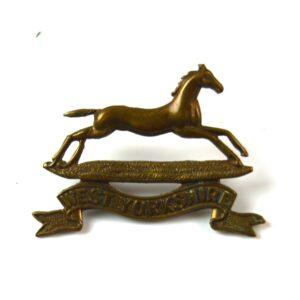
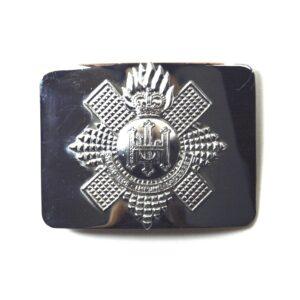
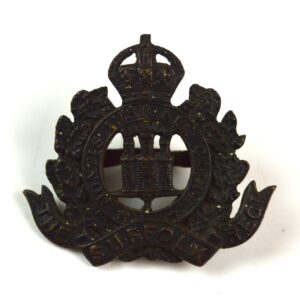
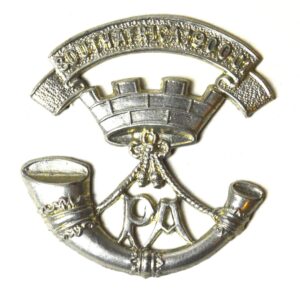
Collectible D-Day items include campaign medals (the France and Germany Star), maps, orders of service, shoulder titles and formation badges of units involved, photographs, personal diaries, escape and evasion kits, and items brought back as souvenirs. Named medals to D-Day veterans are particularly prized by collectors.
Sources & References
- Beevor, A. — *D-Day: The Battle for Normandy* (2009)
- Ambrose, S.E. — *D-Day: June 6, 1944* (1994)
- The National WWII Museum — d-day.org

Related Items in Our Collection8 items

Thanks for ones marvelous posting! I genuinely enjoyed reading it, you might be a great author.
I will remember to bookmark your blog and will come back
very soon. I want to encourage one to continue your great job,
have a nice holiday weekend!
Hi there, I think your web site could be having internet browser compatibility problems.
Whenever I take a look at your web site in Safari, it looks fine however, if opening in IE, it has some overlapping issues.
I merely wanted to provide you with a quick heads up!
Other than that, fantastic blog!