
- What Is Military Insignia?
- Cap Badges: The Heart of Regimental Identity
- Understanding Cap Badge Design
- Materials and Manufacture
- Fixing Methods
- Collar Badges (Collar Dogs)
- Shoulder Titles
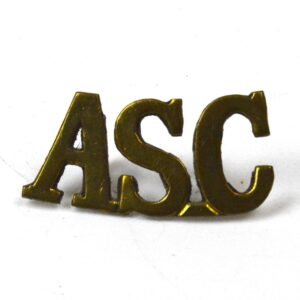
- Metal Shoulder Titles
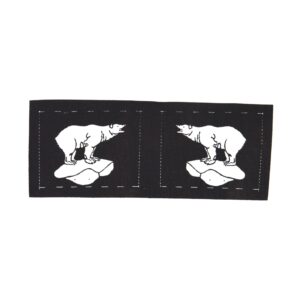
- Cloth Shoulder Titles
- Formation Signs
- Rank Insignia
- Non-Commissioned Ranks
- Commissioned Ranks
- Qualification and Trade Badges
- Identification Tips
- Step-by-Step Identification Process
- Common Pitfalls
- Building an Insignia Collection
What Is Military Insignia?
Military insignia encompasses every badge, device, patch, and marking worn on a soldier’s uniform to indicate identity, rank, unit, qualification, or appointment. In the British military tradition, insignia has served as a visual language for over three centuries — instantly communicating a soldier’s regiment, seniority, branch of service, and specialist skills to anyone who could read the signs. For collectors and historians, insignia is a gateway to understanding the organisational structure, traditions, and evolution of Britain’s armed forces.
The principal categories of British military insignia include: cap badges (worn on the headdress), collar badges or “collar dogs” (worn on the collar points), shoulder titles (identifying the regiment or corps on the shoulder), formation signs (divisional and brigade patches), rank insignia (chevrons, pips, crowns), qualification badges (parachutist wings, commando dagger, bomb disposal), and trade badges (indicating specialist skills such as signaller, armourer, or driver).
Cap Badges: The Heart of Regimental Identity
Understanding Cap Badge Design
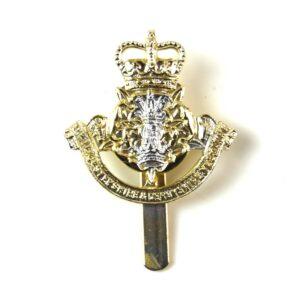
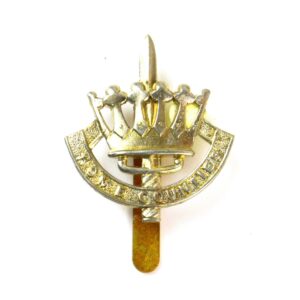
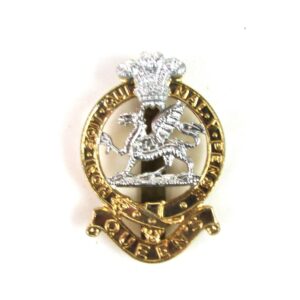
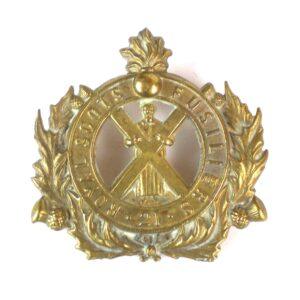
The cap badge is the most iconic piece of British military insignia. Every regiment and corps wears a distinctive badge that encapsulates its history, traditions, and identity in a single piece of metalwork. These badges incorporate heraldic devices, royal cyphers, crowns, animals, weapons, mottoes, and regimental numbers in designs that often date back centuries.
Key elements to identify on a cap badge include:
- The crown: The type of crown depicted tells you the reigning monarch. The Victorian crown (1837–1901) sits lower and wider. The King’s crown (Edward VII to George VI, 1901–1952) is rounded and sometimes called the “Tudor crown.” The Queen’s crown (Elizabeth II, 1952–2022) is the St Edward’s Crown — taller, with pronounced arches. The King’s crown returned with Charles III in 2022. The crown is the single most reliable dating indicator on a badge.
- Regimental number or title: Many badges incorporate the regiment’s number (e.g., “XXI” for the 21st of Foot) or its title (e.g., “The Buffs,” “The Rifles”).
- Heraldic devices: Lions, dragons, stags, castles, harps, thistles, and other heraldic charges link to the regiment’s history, county of origin, or battle honours.
- Mottoes: Latin or English mottoes often appear on scrolls — “Quo Fas et Gloria Ducunt” (Royal Artillery), “Cede Nullis” (The Rifles), “Honi Soit Qui Mal Y Pense” (Guards).
- Battle honours: Some badges incorporate specific battle honours — the Sphinx and “Egypt” on several regiments’ badges commemorates service in the Egyptian campaign of 1801.
Materials and Manufacture
Cap badge construction has evolved significantly over the centuries:
- Brass (gilding metal): The standard for other-ranks badges from the mid-19th century. Yellow brass alloy, die-stamped, with slider or lug fixings. The most commonly collected material.
- White metal: Used by certain regiments (particularly those with historical silver associations) and for some officer patterns. Can be nickel-plated, chrome-plated, or cast from a white alloy.
- Bi-metal: Combined brass and white metal elements — used by many regiments for a distinctive two-tone appearance.
- Silver and silver-plate: Officer-quality badges, often hallmarked, with superior detail and finish.
- Economy materials (1939–1945): Wartime shortages led to badges in plastic (Bakelite, Celastoid), painted white metal, fibre, and other substitute materials. These economy badges are increasingly sought by collectors.
- Anodised aluminium (“Staybrite”): Introduced from the late 1950s to replace brass — no polishing required. These anodised badges are the standard modern issue.
Fixing Methods
The method of attachment provides important dating evidence:
- Slider: A flat blade on the back, pushed through a slot in the headdress. Standard for most other-ranks badges from the 1870s into the 20th century.
- Lugs: Two or more posts on the back, secured by split pins or brass clips behind the headdress fabric. Standard from approximately 1900 onward for most units.
- Brooch pin: A horizontal pin with a catch — used on early shako plates and some officer patterns.
- Screw-post: Threaded posts with screw-back fittings — common on modern “Staybrite” badges.
Collar Badges (Collar Dogs)
Collar badges — universally known as “collar dogs” — are smaller versions of the regimental device, worn in pairs on the collar points of jackets and tunics. They typically mirror each other (left and right versions face in opposite directions). Collar dogs are smaller and lighter than cap badges, making them ideal for new collectors on a budget — most sell for £5–£20 per pair.
Dating collar dogs follows similar principles to cap badges: crown type, material, and fixing method all provide clues. Some regiments used collar dog designs that differed significantly from their cap badges, adding variety to a collection.
Shoulder Titles
Metal Shoulder Titles
Metal shoulder titles are curved brass or white metal strips bearing the regiment’s abbreviated title — “R.BERKS” (Royal Berkshires), “GORDONS” (Gordon Highlanders), “R.A.” (Royal Artillery). They were worn on the shoulder straps of jackets and greatcoats. Metal shoulder titles are one of the most affordable collecting areas, with most examples available for £5–£25.
Cloth Shoulder Titles
Embroidered or printed cloth titles were used extensively in both World Wars. WWII examples are particularly common, with printed titles on khaki or dark blue backgrounds. Wartime cloth titles can often be found for £3–£15 each. Post-war embroidered titles in various colour combinations are also widely collected.
Formation Signs
Formation signs — divisional and brigade patches — are cloth badges worn on the upper sleeve to identify the wearer’s formation. They became widespread in World War I and were standardised in World War II, when dozens of distinctive designs were created. The red and blue divided shield of the 21st Army Group, the yellow jerboa of the 7th Armoured Division (“Desert Rats”), and the Pegasus of the Airborne are among the most recognised.
Formation signs are classified into: divisional signs, brigade signs, corps and army signs, district signs, and command signs. Each has its own design logic — many incorporate local symbols, historical references, or visual puns on the formation commander’s name.
Collecting formation signs is one of the most visually appealing areas of insignia collecting. Prices range from £5 for common WWII printed patches to £100+ for rare or early embroidered examples. Complete collections of all known British WWII formation signs number in the hundreds.
Rank Insignia
Non-Commissioned Ranks
NCO rank is indicated by chevrons (inverted “V” shapes) on the upper arm:
- Lance Corporal: One chevron
- Corporal: Two chevrons
- Sergeant: Three chevrons
- Staff/Colour Sergeant: Three chevrons with a crown above
- Warrant Officer Class 2: Crown in a wreath
- Warrant Officer Class 1: Royal coat of arms
Chevrons have been embroidered, woven, printed, and applied in brass. Each method reflects its period: hand-embroidered bullion wire chevrons (Victorian and Edwardian officers’ mess dress) are prized collectors’ items at £15–£50 per set, while WWII printed chevrons are available for a few pounds.
Commissioned Ranks
Officer rank is indicated by pips (Bath stars) and crowns on the shoulder:
- Second Lieutenant: One pip
- Lieutenant: Two pips
- Captain: Three pips
- Major: Crown
- Lieutenant Colonel: Crown and one pip
- Colonel: Crown and two pips
- Brigadier: Crown and three pips
- Major General: Pip and crossed sword/baton
- Lieutenant General: Crown, pip, and crossed sword/baton
- General: Crown, pip, crossed sword/baton, and pip
- Field Marshal: Crown, crossed batons in a wreath
Qualification and Trade Badges
Specialist qualification badges denote skills and training:
- Parachutist wings: The winged parachute, awarded after completing parachute training. Variations exist for military freefall, jumpmaster qualified, and foreign wings.
- Commando dagger: The fighting knife badge worn by those who passed the All Arms Commando Course at Lympstone.
- Bomb disposal badge: Worn by qualified Ammunition Technical Officers and Ammunition Technicians.
- SAS wings: The distinctive downward-pointing dagger with “Who Dares Wins” scroll — highly sought by collectors and correspondingly expensive.
Trade badges (worn on the lower sleeve) indicated specialist military skills: signaller, armourer, driver, clerk, cook, musician, farrier, and dozens more. Victorian and Edwardian embroidered trade badges are attractive collectors’ items, with many available for £10–£30.
Identification Tips
Step-by-Step Identification Process
When faced with an unknown piece of insignia, follow this systematic process:
- Determine the type: Is it a cap badge, collar dog, shoulder title, formation sign, or rank/trade badge? Size and fixing method are the first clues.
- Examine the crown: If a crown is present, identify the type (Victorian, King’s, Queen’s) to narrow the date range.
- Identify the heraldic device: Note the main design elements — animals, weapons, numbers, scrolls, mottoes. Sketch or photograph them clearly.
- Check the material: Brass, white metal, bi-metal, economy material, anodised — each narrows the period.
- Examine the back: Fixing method (slider, lugs, screw-post), maker marks, and any casting or stamping marks.
- Consult references: Check Kipling & King’s “Head-Dress Badges” (the standard two-volume reference), the Military Historical Society’s badge lists, or online databases.
- Ask the community: If reference books fail, post clear photographs on the British Badge Forum or relevant collectors’ groups. The community is generally helpful and knowledgeable.
Common Pitfalls
- Amalgamation confusion: The 1958, 1968, and 2004–2007 regiment amalgamations created new badges while making predecessor badges “obsolete” — and therefore collectible. Don’t confuse a modern regiment’s badge with its predecessor’s.
- Officer vs. other ranks: Officer-quality badges are often finer, sometimes in silver, with better detail. They are separate items, not just better-condition examples of the same badge.
- Copies and re-strikes: Legitimate re-strikes (authorised reproductions for commemorative or replacement purposes) exist alongside deliberate fakes. A re-strike is not a fake, but should be priced accordingly.
- Foreign similarities: Some Commonwealth and colonial badges closely resemble British patterns. Australian, Canadian, Indian, and South African badges sometimes share design elements with their British parent units.
Building an Insignia Collection
Insignia collecting is one of the most accessible and rewarding areas of militaria. Items are compact, relatively affordable, easy to store and display, and available in enormous variety. A lifetime of collecting cannot exhaust the field — the British Army alone has used thousands of distinct badge patterns over the past two centuries, and when collar dogs, shoulder titles, formation signs, and rank badges are included, the total runs to tens of thousands of individual items.
Start with what interests you. A collection of badges from one regiment across all periods tells a powerful regimental story. A collection of all known WWII formation signs creates a visual record of the British Army’s wartime order of battle. A collection of trade badges documents the extraordinary range of skills the military has demanded from its soldiers. Whatever path you choose, insignia offers an endlessly fascinating window into Britain’s military heritage.
Frequently Asked Questions
What is the difference between a cap badge and a collar dog?
A cap badge is the larger badge worn on the front of the headdress, displaying the full regimental device. Collar dogs are smaller paired badges worn on the collar points of the tunic, usually showing a simplified version of the regiment's emblem.
How can I identify an unknown British military badge?
Follow a systematic approach: note the metal (brass, white metal, bi-metal), the fixings (slider, lugs, pin), any text or motto, and the central device. Cross-reference with Kipling & King's Head-Dress Badges of the British Army or online databases like the British Military Badge Forum.
What are formation signs?
Cloth patches worn on the sleeve indicating the wearer's division or brigade. Examples include the Desert Rats' red jerboa (7th Armoured Division), the Red Devils' Pegasus (Airborne), and the 51st Highland Division's HD monogram.
Sources & References
- Kipling, A.L. & King, H.L., Head-Dress Badges of the British Army (Muller)
- Wilkinson-Latham, R., Collecting Militaria (David & Charles)
- Cole, H., Formation Badges of World War 2 (Arms & Armour Press)

Related Items in Our Collection8 items

What’s up to every , because I am genuinely keen of reading this
weblog’s post to be updated on a regular basis. It consists of fastidious stuff.
Have you ever considered about adding a little bit more than just your articles?
I mean, what you say is valuable and all.
However think of if you added some great images or videos to give
your posts more, “pop”! Your content is excellent but
with images and clips, this blog could definitely be one of the
most beneficial in its field. Terrific blog!
Quality articles or reviews is the crucial to interest the people to go to see the web
page, that’s what this web site is providing.