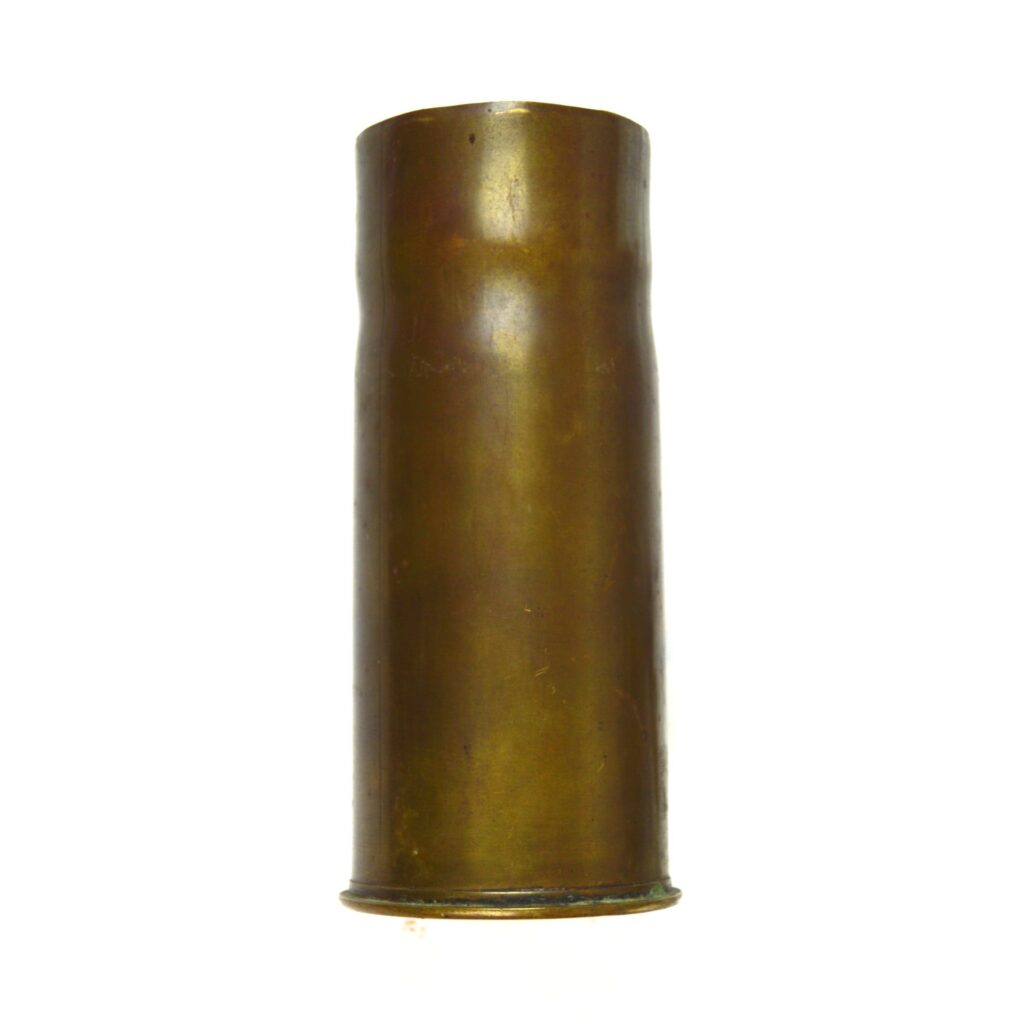
- What Is Trench Art?
- The Origins and History of Trench Art
- Pre-World War I Precedents
- World War I: The Golden Age
- World War II and Beyond
- Common Types of Trench Art
- Shell Case Vases
- Letter Openers and Paperknives
- Cigarette Lighters and Smoking Accessories
- Sweetheart Brooches and Jewellery
- Crucifixes and Religious Items
- Model Ships, Planes, and Tanks
- Buttons, Coins, and Engraved Items
- Who Made Trench Art?
- Identifying and Dating Trench Art
- Base Markings on Shell Cases
- Materials and Techniques
- Collecting Trench Art
- What to Look For
- Price Guide
- Condition and Care
- Building a Collection
- Trench Art as Social History
- Notable Trench Art in Museum Collections
- Fakes and Reproductions
- Trench Art in Museums and Private Collections
- Regional Variations and National Styles
- The Ethics of Battlefield Recovery
- Conservation Challenges
What Is Trench Art?
Trench art is a broad term for objects made from war materials by soldiers, prisoners of war, and civilians, either during or immediately after a conflict. The term is most strongly associated with World War I, when millions of men spent years in static positions with access to enormous quantities of spent brass, copper, and aluminium. The practice, however, extends far beyond the 1914–1918 conflict — trench art has been documented from the Napoleonic Wars through to the Korean War and beyond. [1]
Despite the name, most “trench art” was not made in the trenches — conditions there were far too dangerous and cramped. Much of it was produced behind the lines, in rest areas, hospitals, and POW camps, where men had time and materials to work. The term itself was coined retrospectively; soldiers at the time simply called these items “souvenirs” or “keepsakes.”
The sheer scale of industrialised warfare provided raw materials in unprecedented quantities. On the Western Front alone, over one billion artillery shells were fired between 1914 and 1918, leaving mountains of spent brass casings. Millions of .303 British, 8mm Lebel, and 7.92mm Mauser cartridge cases littered the landscape. This industrial detritus became the canvas for human creativity in the most inhuman of circumstances. [2]
The Origins and History of Trench Art
Pre-World War I Precedents
The tradition of soldiers fashioning objects from battlefield debris predates the Great War by centuries. During the Napoleonic Wars, French prisoners of war held in British camps — notably at Norman Cross and Dartmoor — carved intricate ship models from bone, a practice that produced objects now valued at tens of thousands of pounds. The Crimean War (1854–1856) saw soldiers creating souvenirs from Russian cannonballs and shell fragments. [3]
The Boer Wars (1899–1902) produced their own distinctive tradition, with soldiers on both sides fashioning items from Mauser and Lee-Metford cartridge cases. However, it was the unprecedented scale of World War I that transformed occasional craft into a mass phenomenon.
World War I: The Golden Age
The static nature of trench warfare, combined with the industrial scale of munitions production, created the perfect conditions for trench art. Long periods of boredom punctuated by short bursts of terror meant that soldiers in reserve had hours to fill. Those with pre-war skills — blacksmiths, jewellers, engravers, tinsmiths — found themselves in demand as craftsmen.
The British Army, which deployed over five million men on the Western Front between 1914 and 1918, produced an enormous volume of trench art. French and Belgian soldiers and civilians contributed equally. German trench art tends to be more technically accomplished, reflecting Germany’s strong tradition of metalworking apprenticeships. [1]
By 1916, the production of decorative shell case vases had become semi-commercial. Units behind the lines set up informal workshops, and French civilians in towns near the front — Amiens, Albert, Arras — established cottage industries producing souvenirs for sale to soldiers. Some of these civilian-made pieces are beautifully crafted but carry less of the raw personal connection that makes soldier-made items so compelling. [2]
World War II and Beyond
Trench art continued in the Second World War, though the mobile nature of 1939–1945 warfare reduced the volume. Notable examples include items made by British POWs in German Stalags, RAF aircrew fashioning desk ornaments from Perspex windscreens, and Desert Rats creating objects from Italian and German ordnance in North Africa. The Korean War and Vietnam War both produced smaller but distinctive trench art traditions.
Common Types of Trench Art
Shell Case Vases
By far the most common form. Brass artillery shell cases — typically 18-pounder (British), 75mm (French), or 77mm (German) — were hammered, chased, and engraved into decorative vases. Common motifs include flowers (particularly forget-me-nots, roses, and poppies), regimental crests, town names, and dates. Matched pairs were particularly popular as mantelpiece ornaments. The most elaborate examples feature repousse work — raised decoration hammered from the inside — requiring considerable skill and patience. [1]
Larger shell cases — 4.5-inch howitzer, 60-pounder, and even 6-inch naval cases — were sometimes converted into umbrella stands, stick holders, or dinner gongs. A pair of 18-pounder cases with good engraving might sell for £60–£120 today; a rare named and dated example linked to a specific battle can reach £200 or more.
Letter Openers and Paperknives
Made from bullet cartridges, copper driving bands, and scrap metal. Some are crude; others show remarkable craftsmanship, with inlaid handles and etched blades. A popular format used a .303 cartridge case as the handle and a flattened bullet as the blade. French examples often incorporated miniature bayonets or swords.
Cigarette Lighters and Smoking Accessories
Fashioned from bullet casings — typically .303 British or 8mm Lebel — with improvised flint-and-wick mechanisms. Some incorporate cap badges or coins. These were both practical items and souvenirs. Cigarette cases made from folded brass or copper sheet are also common, sometimes with punched or engraved unit insignia. The soldiers’ reliance on tobacco during the war made these items genuinely useful as well as decorative.
Sweetheart Brooches and Jewellery
Soldiers often fashioned miniature versions of their regimental badges as gifts for sweethearts and family. These “sweetheart brooches” were made from coins, shell fragments, or purpose-bought blanks, and mounted with pin fastenings. They represent some of the most personal trench art. Some were manufactured commercially from base metals and enamel, but the hand-made examples — often slightly crude but deeply personal — are the most sought-after by collectors. [3]
Crucifixes and Religious Items
Crosses made from battlefield aluminium and cartridge cases were common. Some served as grave markers; others were personal devotional objects. These pieces carry a particular emotional weight. Aluminium from German aircraft was particularly prized for its lightness and workability — crucifixes made from downed Zeppelin frames are rare and valuable.
Model Ships, Planes, and Tanks
POWs with time on their hands produced remarkably detailed models from whatever materials were available — wood, bone, tin, sheet brass. Model ships and aeroplanes are the most prized, with some examples reaching four figures at auction. British POWs in German camps produced models of warships; German POWs in British and French camps created intricate bone carvings continuing a tradition stretching back to the Napoleonic Wars.
Buttons, Coins, and Engraved Items
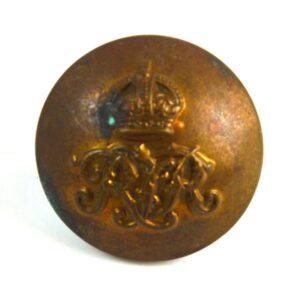
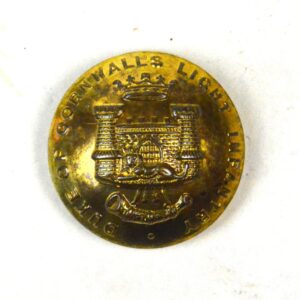
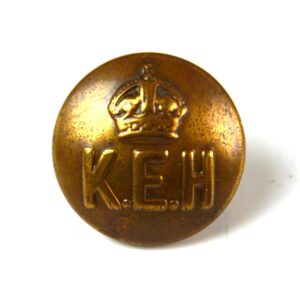
Coins — especially large French and Belgian copper coins — were filed, punched, and engraved with dates, initials, and images. Soldiers’ identity disc blanks were sometimes repurposed as love tokens. Buttons from various armies were mounted as brooches or cufflinks.
Who Made Trench Art?
The makers fell into several categories:
- Soldiers — both front-line troops behind the lines and those in reserve. Pre-war skills (blacksmiths, jewellers, engravers) made certain men go-to craftsmen. Skilled men were sometimes informally attached to unit workshops.
- Prisoners of war — with time and motivation, POWs produced some of the most intricate pieces. German POWs in British and French camps created elaborate bone carvings, wooden models, and metal work. The POW camp at Frongoch in Wales and Alexandra Palace in London both yielded notable trench art.
- Civilians — particularly in France and Belgium, local civilians produced pieces for sale to soldiers as souvenirs. These tend to be of higher commercial quality but lower historical interest. Some French commercial trench art is marked with makers’ stamps.
- Chinese Labour Corps — the CLC members who worked behind the lines on the Western Front created distinctive pieces with Chinese characters and motifs. These are rare and increasingly sought after by collectors.
- Wounded soldiers — hospitals and convalescent homes encouraged craft work as occupational therapy. Items produced in these settings are sometimes marked with hospital names or Red Cross insignia.
Identifying and Dating Trench Art
Base Markings on Shell Cases
The base of an artillery shell case carries stamped markings that reveal its origin: the manufacturer, date of production, calibre, and often a lot number. British shell cases bear broad arrow marks; French cases have arsenal stamps (e.g., “ABS” for Atelier de Construction de Bourges). German cases use Gothic script and Iron Cross stamps. These markings survive on trench art and are essential for identification and dating. [1]
A genuine World War I shell case vase should show period-correct base stamps. Post-war reproductions exist — particularly from the 1920s and 1930s when there was a commercial market for trench art as remembrance items — but these can usually be distinguished by machine-made decoration and inconsistent markings.
Materials and Techniques
Wartime brass has a distinctive warm, golden tone that differs from modern alloys. Genuine wartime patina — a soft brown-gold oxidation — is the best indicator of age. Be wary of pieces that have been heavily polished: this destroys patina and may be an attempt to disguise a reproduction. The weight and gauge of wartime brass is typically heavier than modern commercial equivalents.
Collecting Trench Art
What to Look For
The most desirable pieces are those with clear provenance — named, dated, and linked to a specific unit or battle. A shell case engraved “SOMME 1916 — PTE. T. JONES — 9TH DEVONS” is worth far more than a generic floral vase. Key indicators of value include:
- Named and dated pieces with identifiable unit markings
- Hand-worked (not machine-stamped) decoration
- Authentic shell base markings visible
- Period-correct metals and patina
- Crude or uneven work (soldiers were not professional artists)
- Unusual or rare types (aircraft models, POW carvings, CLC pieces)
- Association with known battles or campaigns
Price Guide
| Type | Typical Range | Premium Examples |
|---|---|---|
| Plain shell case vase (single) | £15 – £40 | Named/dated: £80–£150 |
| Engraved vase (regimental) | £40 – £120 | Rare unit: £200+ |
| Matched pair, engraved | £60 – £180 | Named pair: £250+ |
| Bullet lighter | £20 – £60 | With badge: £80+ |
| Sweetheart brooch (hand-made) | £15 – £50 | Rare regiment: £100–£200 |
| Sweetheart brooch (commercial) | £10 – £25 | Enamel: £40+ |
| POW carved model | £50 – £300 | Ship/plane model: £500+ |
| Letter opener | £15 – £40 | Named/dated: £60+ |
| Crucifixes (aluminium) | £30 – £80 | Aircraft aluminium: £120+ |
| CLC-made items | £80 – £250 | Rare pieces: £400+ |
Condition and Care
With trench art, condition is relative. These are handmade wartime objects — some crudeness is expected and part of their charm. However, dents, splits, and heavy cleaning (which destroys patina) all reduce value. The golden rule: do not polish trench art. Original patina adds authenticity and warmth.
Store brass items in a dry environment to prevent verdigris (green corrosion). Display away from direct sunlight, which can cause uneven oxidation. If cleaning is absolutely necessary, use only a soft cloth and warm water — never abrasive cleaners, Brasso, or chemical dips.
Building a Collection
Trench art is an excellent starting point for new collectors due to its relative affordability and wide availability. Begin with shell case vases — they are common at antique fairs, militaria shows, and online auctions. As your collection develops, specialise: some collectors focus on a specific regiment, others on a particular type (lighters, brooches), and others on POW-made items. The best collections tell a story — consider selecting pieces that connect to a particular battle, unit, or theatre of war.
Good hunting grounds include provincial antique shops, militaria fairs (particularly the War and Peace Show, Beltring, and regional Arms Fairs), eBay, and specialist dealers. Auction houses like Bosleys, Dix Noonan Webb, and C&T Auctions regularly sell trench art lots.
Trench Art as Social History
Beyond their collecting appeal, trench art pieces are important social documents. They reveal what soldiers were thinking about — home, family, religion, humour, regimental pride. A shell case vase decorated with forget-me-nots and the inscription “TO MOTHER, FROM FRANCE, 1917” tells us as much about the human experience of war as any diary entry. [2]
Trench art also illuminates the economic conditions of wartime. The cottage industries that sprang up around the Western Front, the use of craft as therapy for wounded soldiers, and the post-war commercialisation of remembrance objects all add layers of meaning to these items.
Major museum collections exist at the Imperial War Museum (London), the Canadian War Museum (Ottawa), the In Flanders Fields Museum (Ypres), and the Musee de la Grande Guerre in Meaux. Nicholas Saunders’ seminal book Trench Art: Materialities and Memories of War (2003) is the definitive academic study. [3]
Notable Trench Art in Museum Collections
The Imperial War Museum holds one of the world’s finest trench art collections, including a remarkable series of bone-carved models by German POWs and a collection of sweetheart brooches donated by veterans’ families. The Canadian War Museum has a particularly strong collection — the Canadian Corps’ reputation as elite troops on the Western Front generated a rich tradition of commemorative objects. [1]
Perhaps the most poignant example is The Great War Quilt held by the Victoria and Albert Museum — a patchwork quilt made from military uniform fabric by a wounded soldier convalescing in a British hospital. It combines fabric from uniforms of several nations and incorporates hand-embroidered dates and battle names.
Fakes and Reproductions
As with all militaria, trench art attracts forgers. Modern reproductions have become increasingly sophisticated, particularly shell case vases and sweetheart brooches. Warning signs include:
- Suspiciously uniform decoration (genuine handwork varies)
- Modern solder or welds visible under magnification
- Incorrect base stamps (wrong calibre/date combination)
- Chemical “ageing” that looks patchy or unconvincing
- “Too good to be true” provenance stories without documentation
The best protection is experience. Handle as many genuine pieces as possible, attend militaria fairs, and buy from reputable dealers who guarantee authenticity. For collectors, trench art remains one of the most affordable and evocative entries into World War I militaria.
Trench Art in Museums and Private Collections
Several major museums hold significant trench art collections that serve as essential reference points for collectors. The Imperial War Museum in London has one of the finest collections in the world, with hundreds of examples ranging from simple carved bullets to elaborate shell-case vases and picture frames. The museum’s conservation department has published guidelines on caring for these often-fragile objects that are invaluable to private collectors. [3]
The In Flanders Fields Museum in Ypres, Belgium, holds an outstanding collection focused on the Western Front, including numerous examples dug from the former battlefields. The Canadian War Museum in Ottawa also has a major collection, reflecting the significant contribution of Canadian soldiers to the trench art tradition. Many regimental museums across the United Kingdom hold smaller but important collections, often with documented provenance linking pieces to specific units, battles, or individuals.
In the private collecting market, trench art has experienced dramatic growth in interest and value since the early 2000s. The centenary commemorations of the First World War (2014–2018) generated enormous public interest in all aspects of the conflict, and trench art — as the most personal and creative expression of the soldier’s experience — benefited particularly. Pieces that sold for a few pounds at car boot sales in the 1990s now command serious money at specialist auctions.
Regional Variations and National Styles
Experienced collectors learn to identify the national origin of trench art by stylistic clues. French trench art tends to be more elaborate and decorative, reflecting the strong tradition of decorative arts in French culture — ornate floral patterns, art nouveau influences, and highly polished finishes are characteristic. German trench art is often technically superior, with precise engineering and metalwork reflecting German industrial craftsmanship — intricately machined shell cases, precision-made cigarette lighters, and finely engraved presentation pieces. British and Commonwealth trench art tends to be more varied in quality but is characterised by strong regimental identity — cap badge reproductions, unit crests, and regimental mottoes feature prominently. [3]
One particularly interesting category is prisoner-of-war trench art, made by soldiers in captivity using whatever materials were available. POW-made items — bone carvings, tin-can constructions, carved wooden models — have a poignancy that elevates them beyond their material value. The conditions under which they were made, the ingenuity required, and the evidence of hope and creativity in the most difficult circumstances make them among the most emotionally powerful pieces of trench art.
The Ethics of Battlefield Recovery
A significant proportion of trench art on the market has been recovered from former battlefields — particularly the Western Front fields of France and Belgium, where ploughing continues to turn up artifacts more than a century after the war. The ethics of battlefield collection are complex: French and Belgian law regulates the removal of war material from private land, and the disturbance of human remains is strictly prohibited. Collectors should be aware of the provenance of items described as “ground-dug” or “battlefield recovery” and ensure that legal and ethical standards have been observed. [3]
The Iron Harvest — the annual crop of shells, bullets, and other war material brought to the surface by agricultural activity in the former war zone — ensures that new trench art continues to emerge. Farmers in the Somme and Ypres Salient regions routinely discover artifacts that eventually reach the collectors’ market through local dealers and fairs such as the Arras and Ypres militaria events.
Conservation Challenges
Trench art presents unique conservation challenges because of its mixed-material construction. A single piece might incorporate brass, copper, steel, aluminium, lead, wood, leather, fabric, and paint — each material requiring different environmental conditions and conservation approaches. The key principles are:
- Store in a stable, dry environment with relative humidity between 45–55%
- Do not polish brass or copper pieces — the patina is part of the object’s history and character
- Handle shells and cases with cotton gloves to avoid transferring salts and oils from skin
- Never attempt to clean lead items with water — lead is susceptible to “lead disease” (white crystalline corrosion) in damp conditions
- For mixed-material pieces, prioritise the most vulnerable material in your storage conditions
- Document each piece photographically before any conservation intervention
Trench art remains one of the most accessible, varied, and emotionally resonant areas of First World War collecting. Every piece is unique — a one-of-a-kind creation born in extraordinary circumstances — and the market continues to develop as new generations discover the artistic legacy of the trenches. [3]
Frequently Asked Questions
What is trench art?
Trench art refers to decorative objects made by soldiers, prisoners of war, and civilians from wartime materials — typically spent shell cases, bullet casings, and other military debris. Most pieces date from the First World War (1914–1918), though the tradition extends to earlier and later conflicts.
How can I identify genuine WWI trench art?
Genuine WWI trench art typically shows hand-worked tool marks, period-correct materials (brass shell cases dated 1914–1918), authentic military headstamp markings, and natural age patina. Machine-made reproductions lack the irregularities of hand craftsmanship and often use modern alloys.
What is trench art worth?
Common items such as decorated shell cases sell for £30–£80. Unusual or highly skilled pieces — intricate engravings, named items, or pieces with documented provenance — can reach £200–£500+. Exceptional items with known maker histories have sold for over £1,000.
Where can I buy trench art?
Trench art is widely available at militaria fairs (Aldershot, Detling, Newark), specialist auction houses (Bosleys, Warwick & Warwick), antique shops, and online via eBay and specialist dealer websites. Always examine pieces in person where possible.
Which museums have good trench art collections?
The Imperial War Museum (London), the In Flanders Fields Museum (Ypres, Belgium), and the Canadian War Museum (Ottawa) hold significant trench art collections. Many local and regimental museums also display examples.
Sources & References
- Saunders, N.J. — *Trench Art: Materialities and Memories of War* (2003)
- Kimball, J. — *Trench Art: An Illustrated History* (2004)
- Imperial War Museum trench art collection records

Related Items in Our Collection8 items