
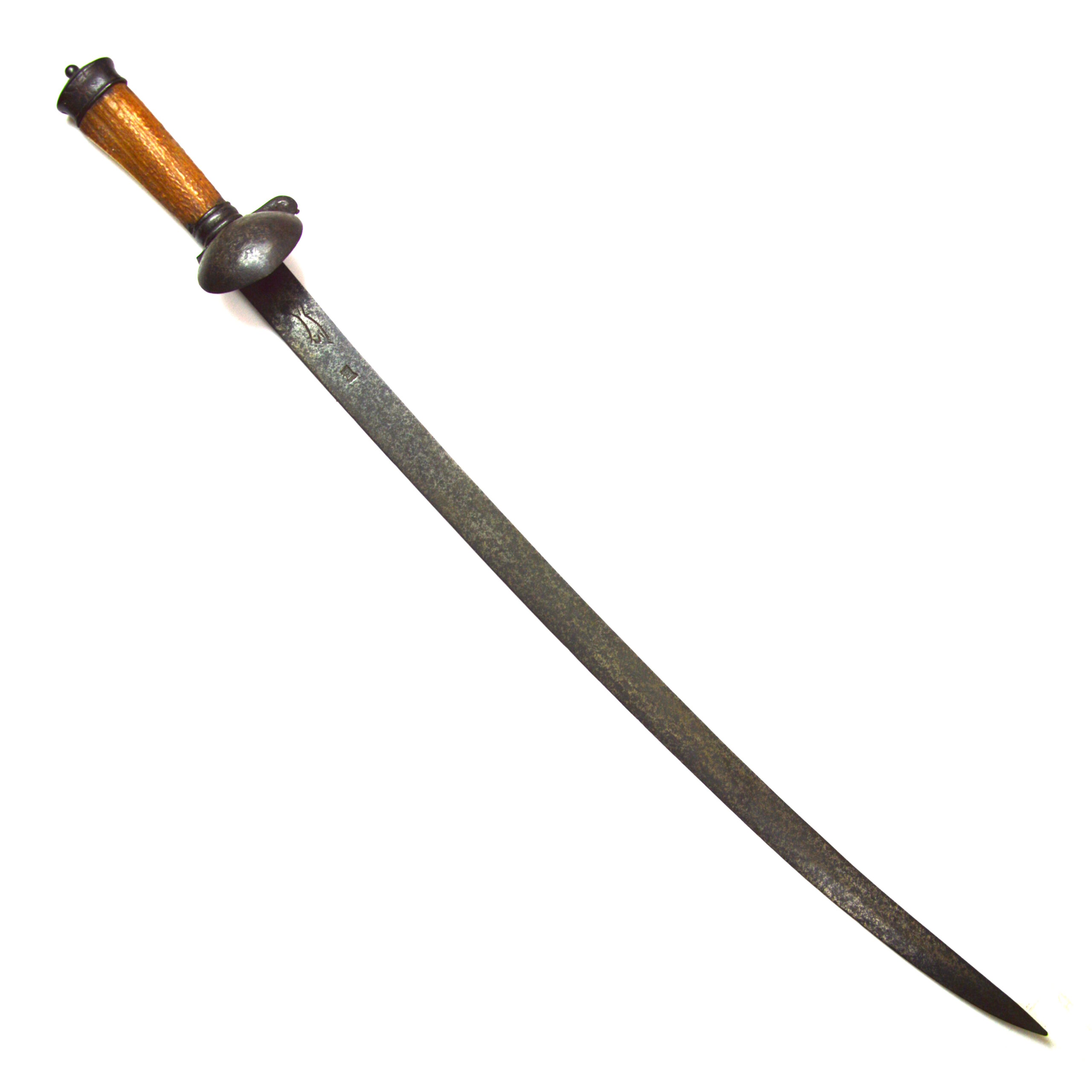
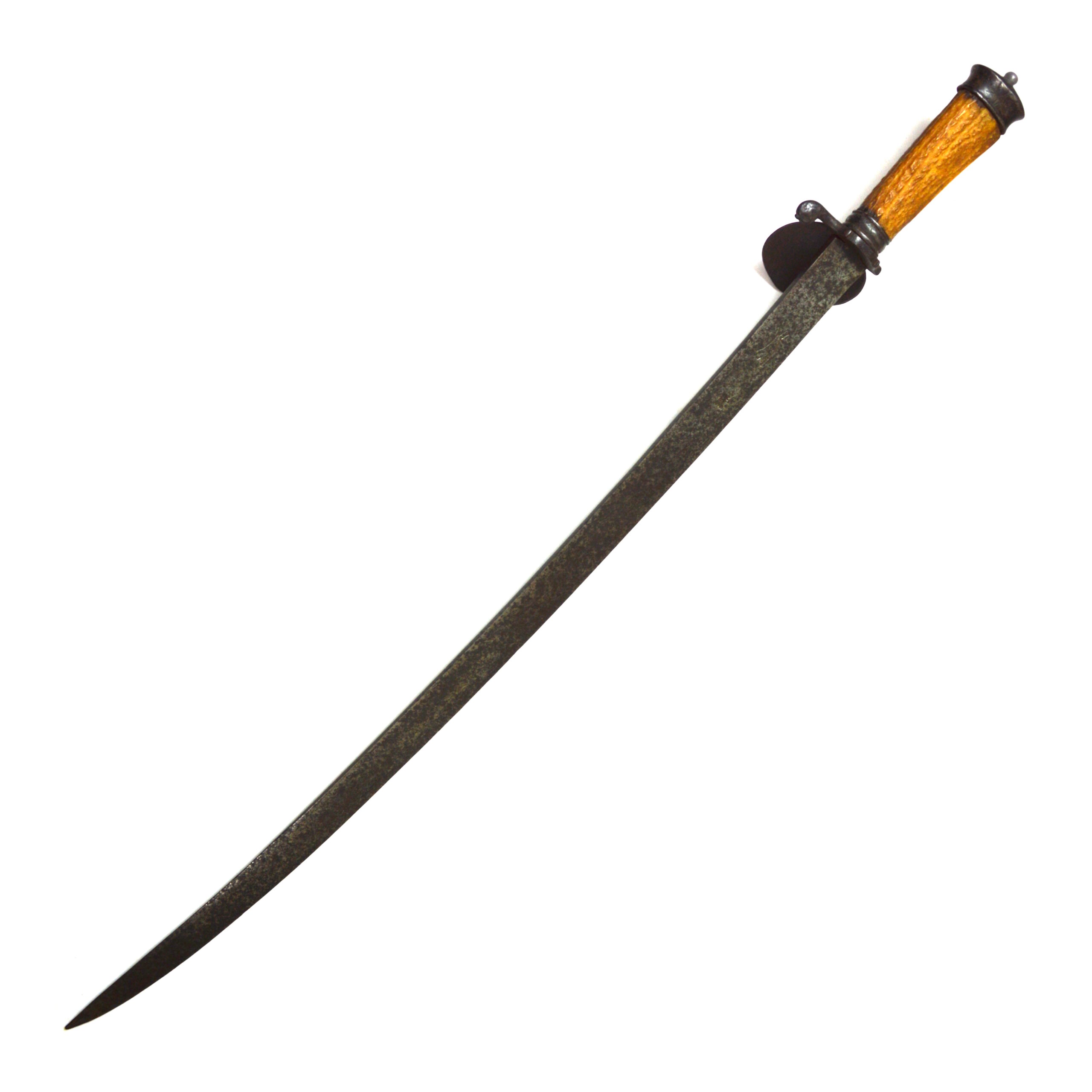
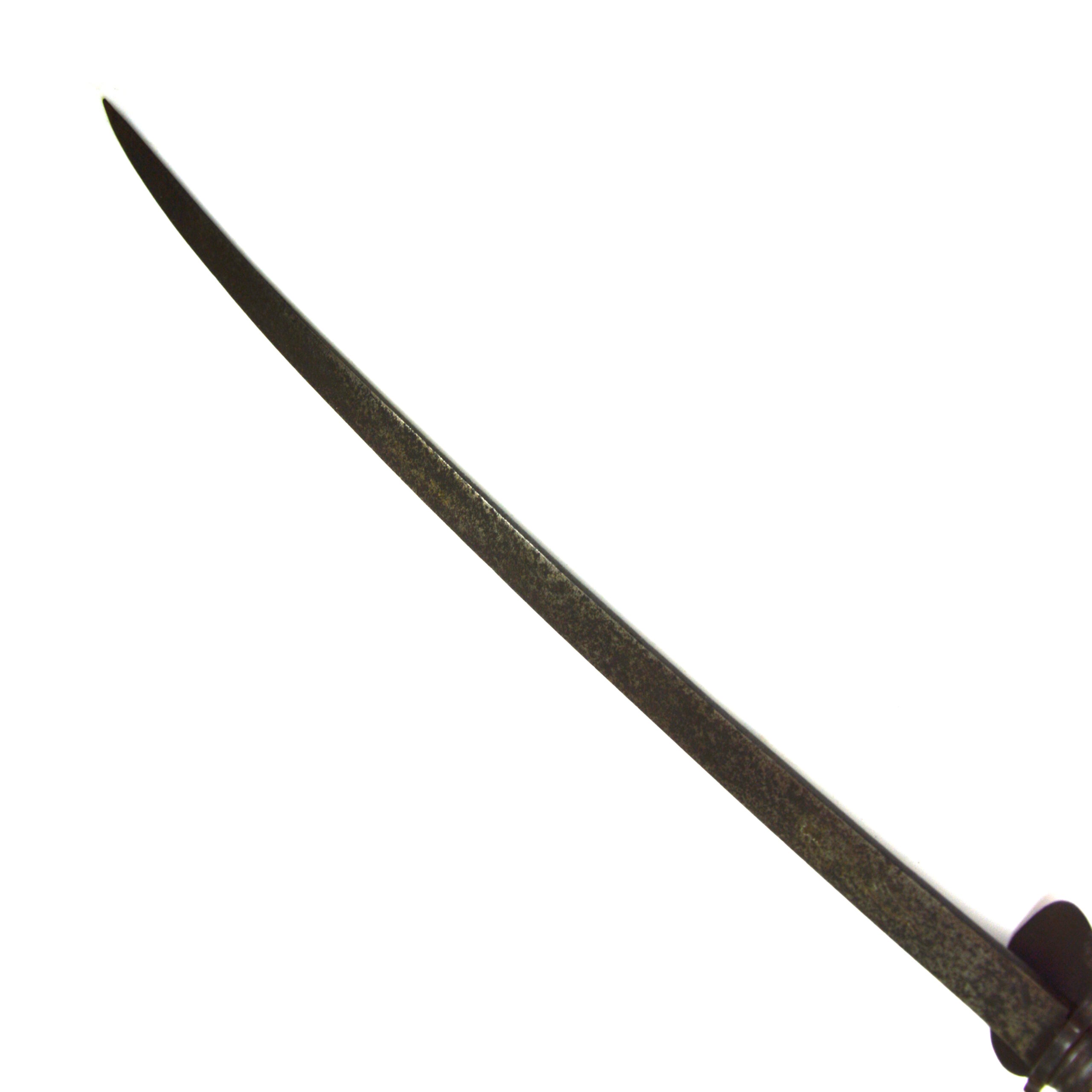
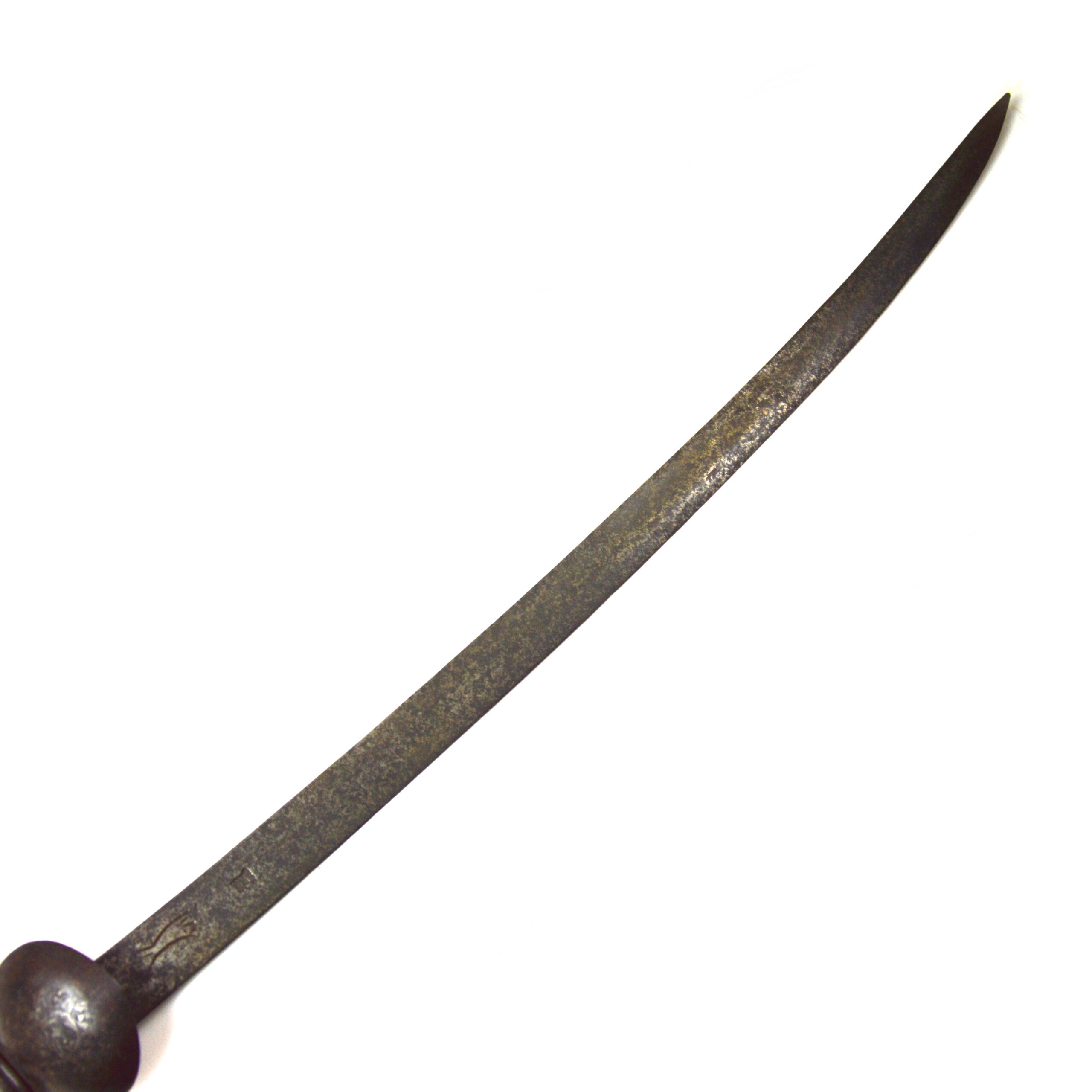
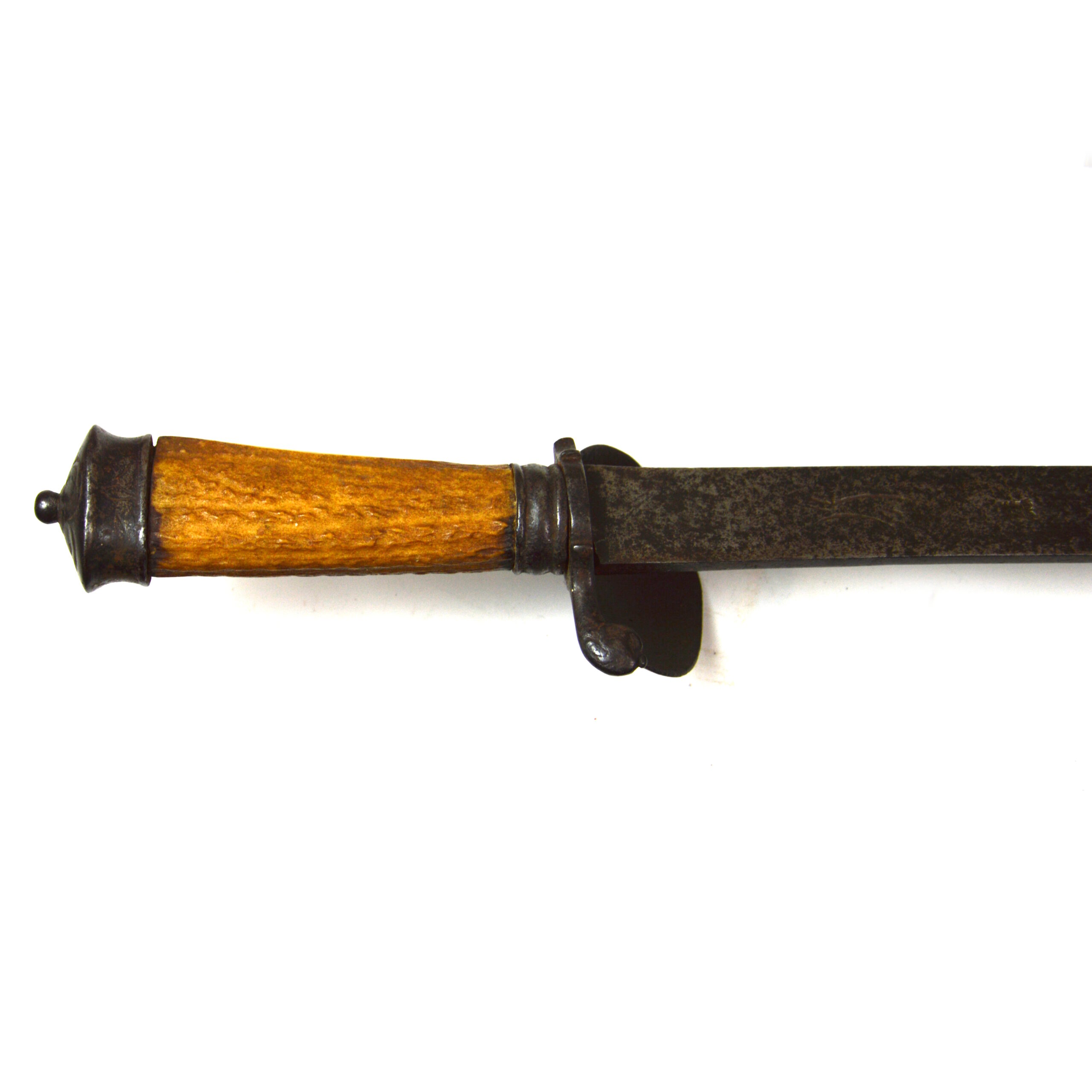
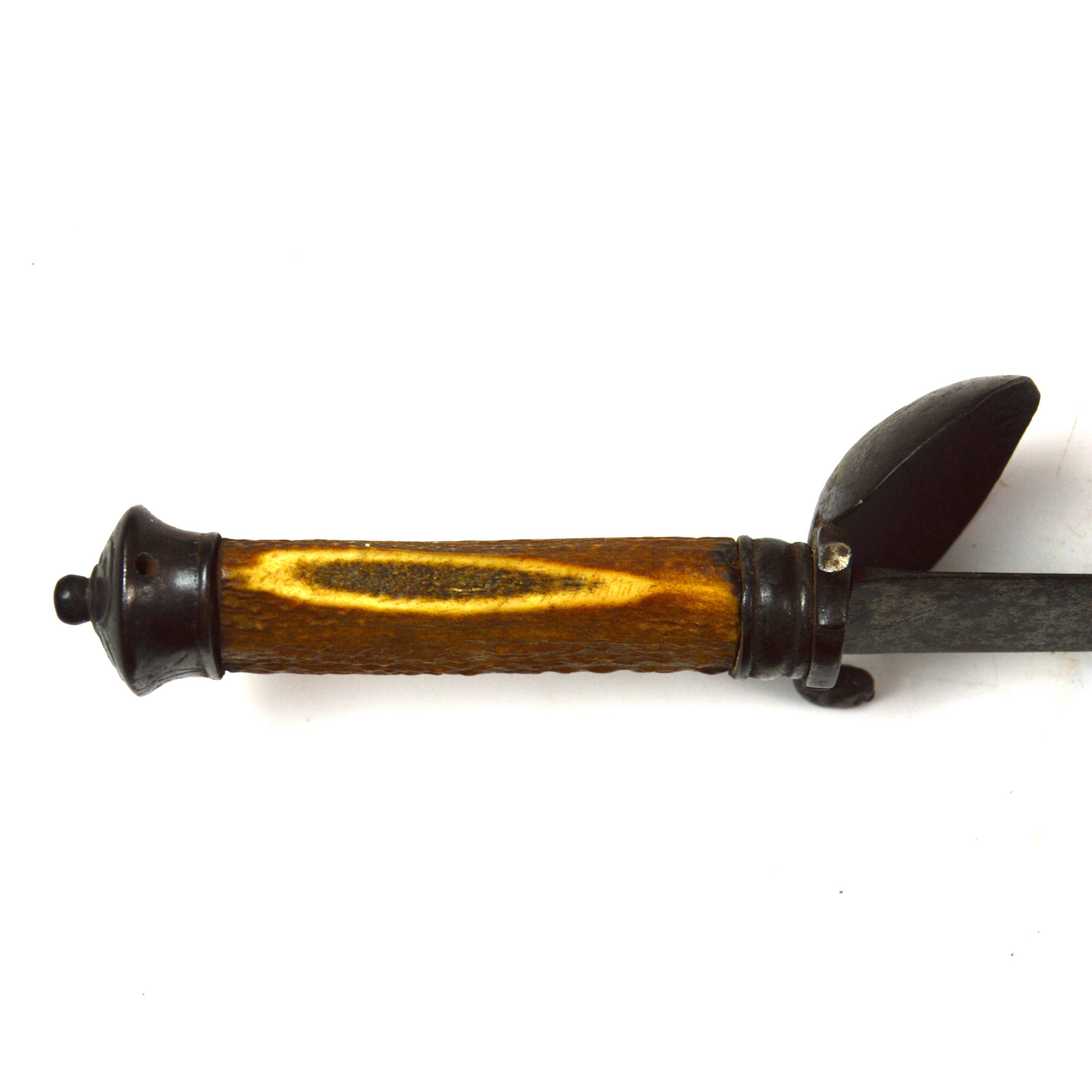
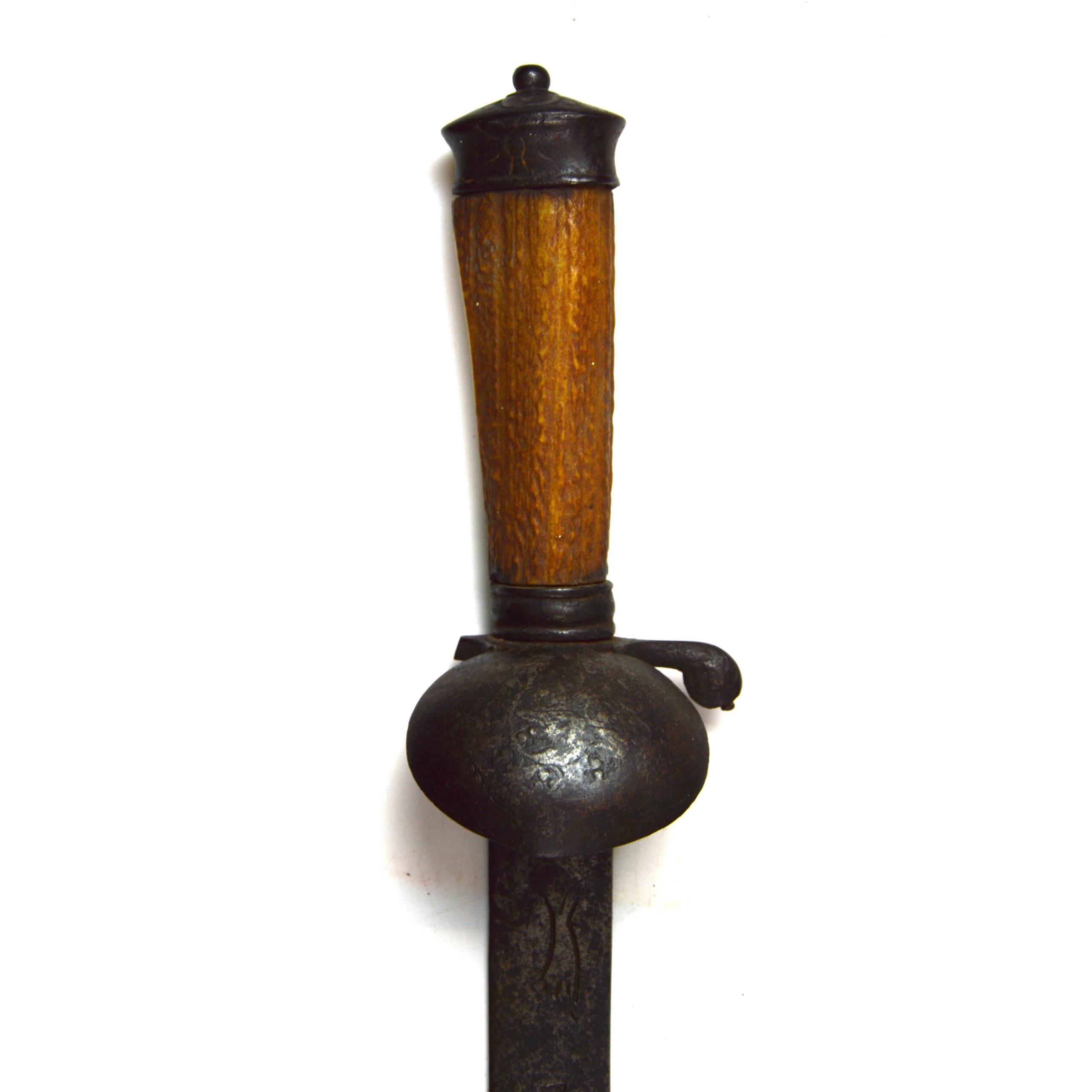
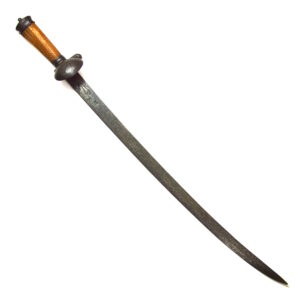
17th-century British hunting sword with a Solingen-made blade, an early example of an edged weapon associated with hunting, status, and sidearm use among the gentry and nobility of the Stuart period. This type of sword reflects the influence of continental blade-making centres such as Solingen in modern-day Germany, renowned from the medieval period onwards for producing high-quality blades that were widely exported across Europe.
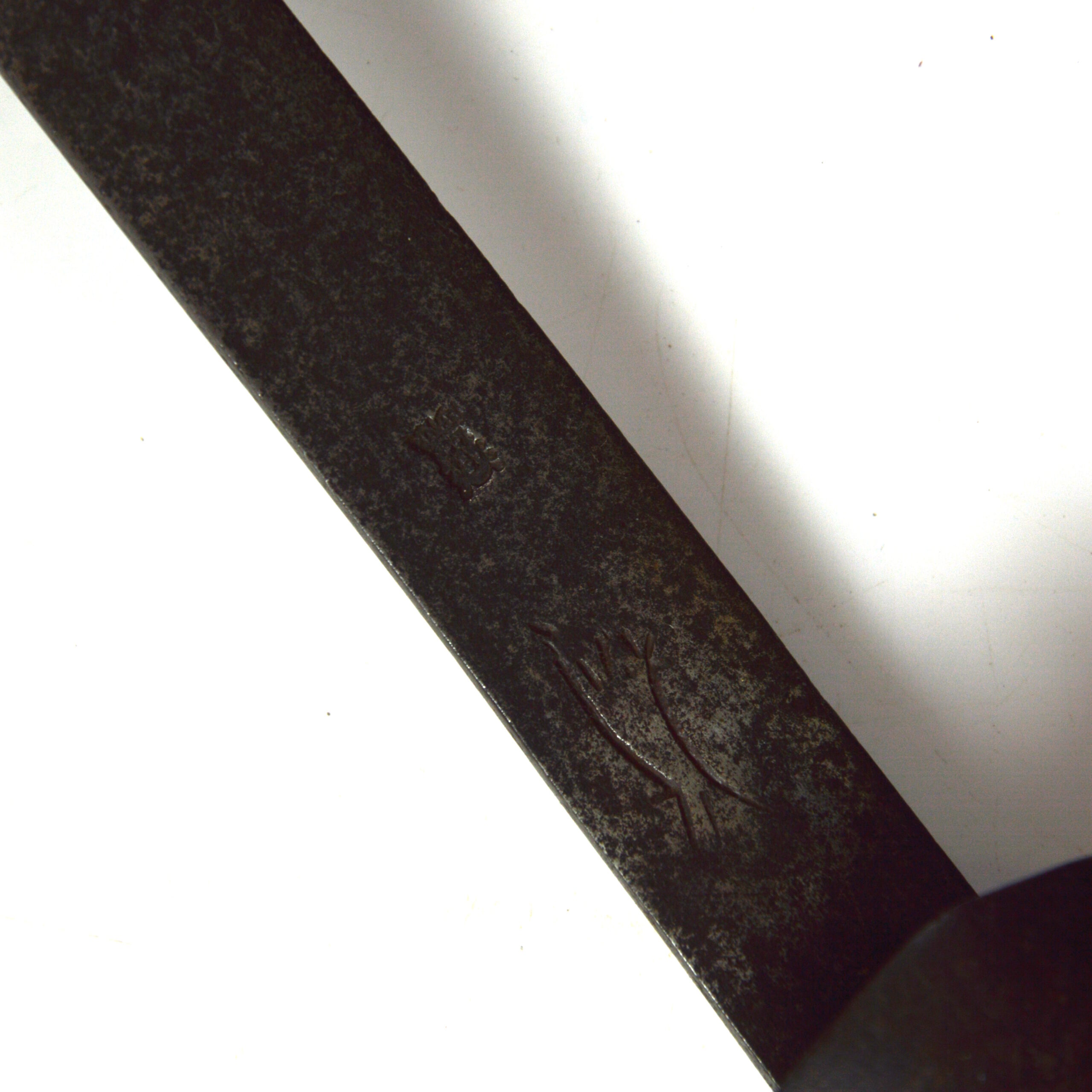
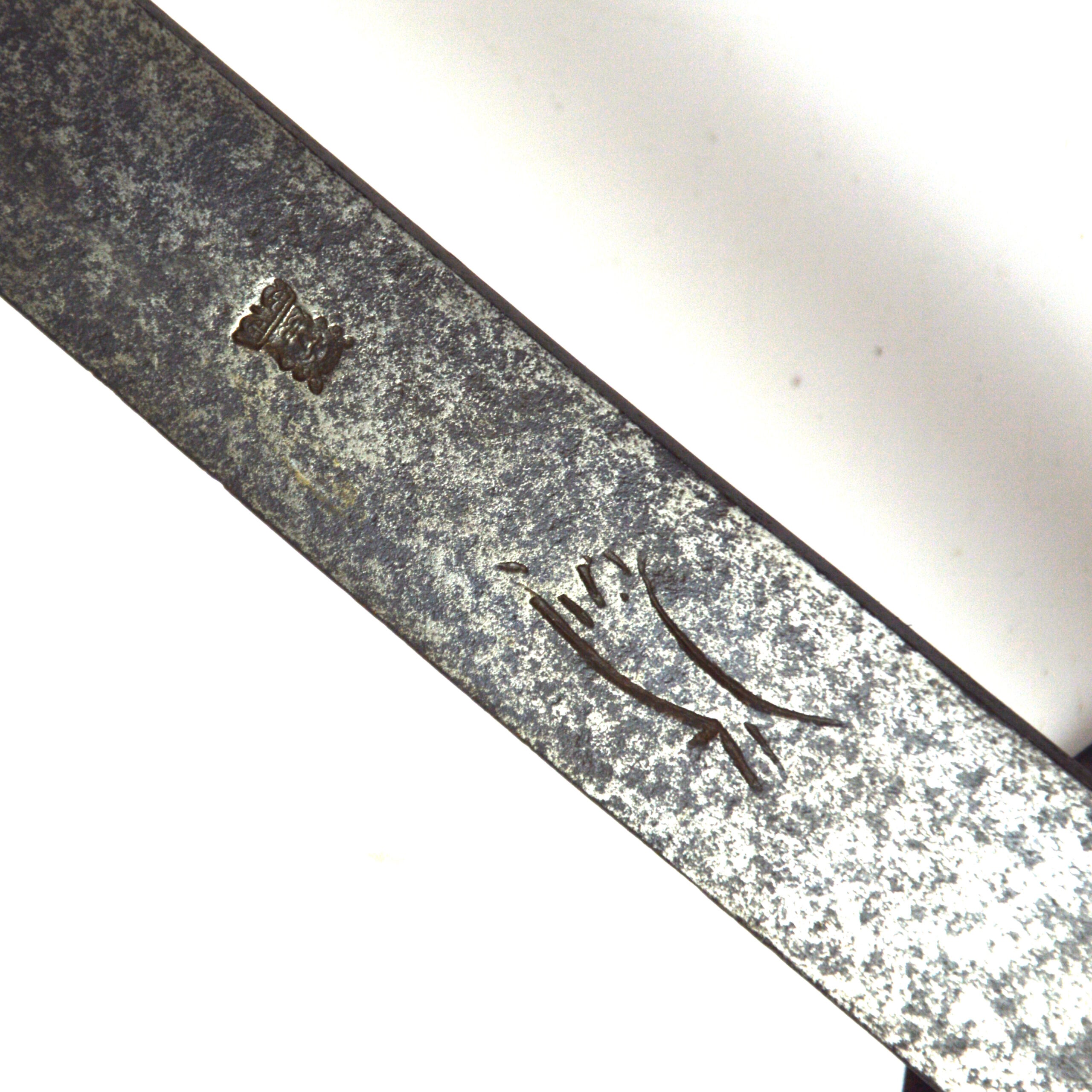
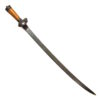
The sword features a simple, long, curved steel blade, suited to close use in hunting contexts, including the dispatch of game. Blades of Solingen origin were often prized for their quality and durability and were frequently mounted with locally produced hilts in Britain. The blade features 2 sets of maker’s or retailer’s marks, including a crowned face, associated with English retail, and a running fox or wolf, associated with Solingen at the time.
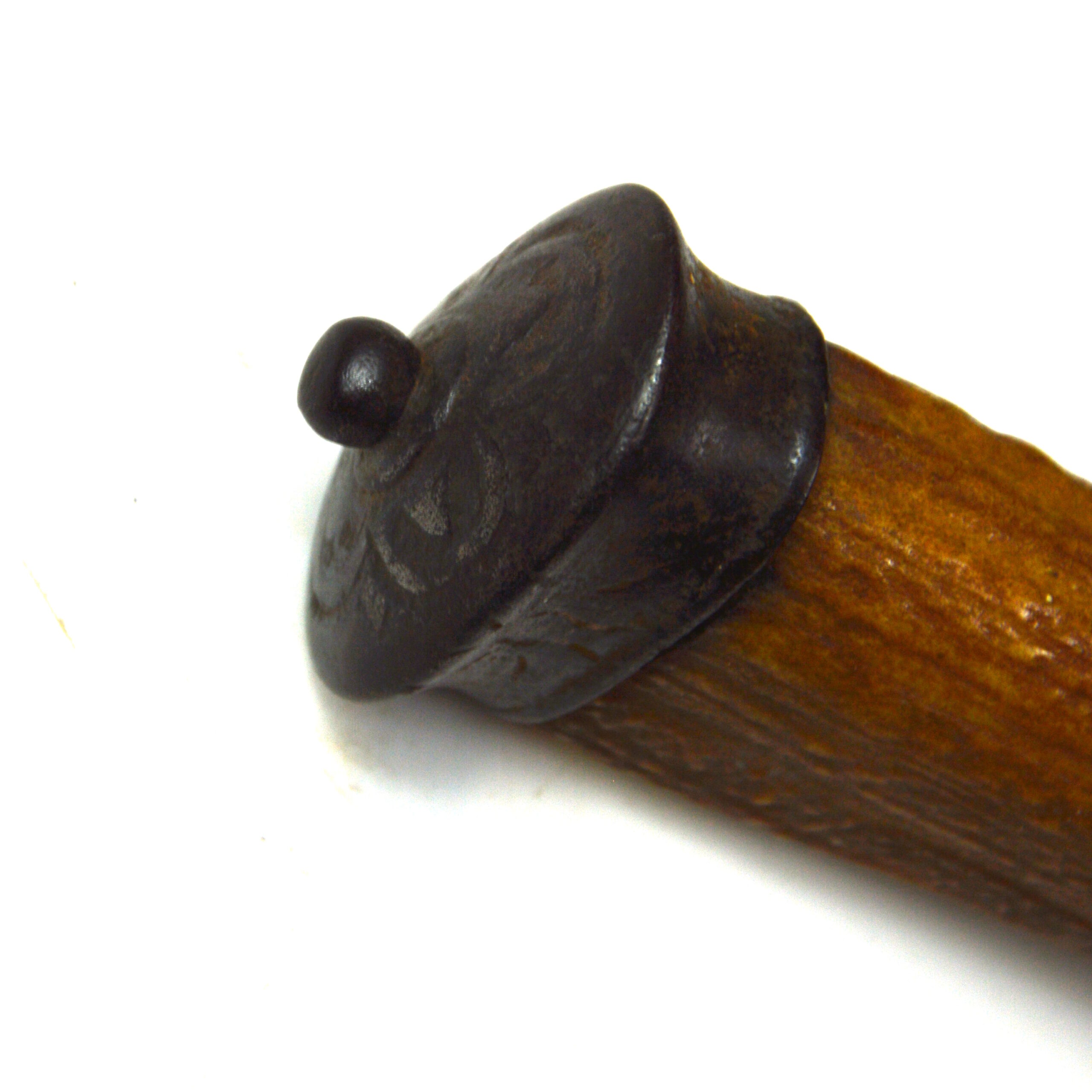
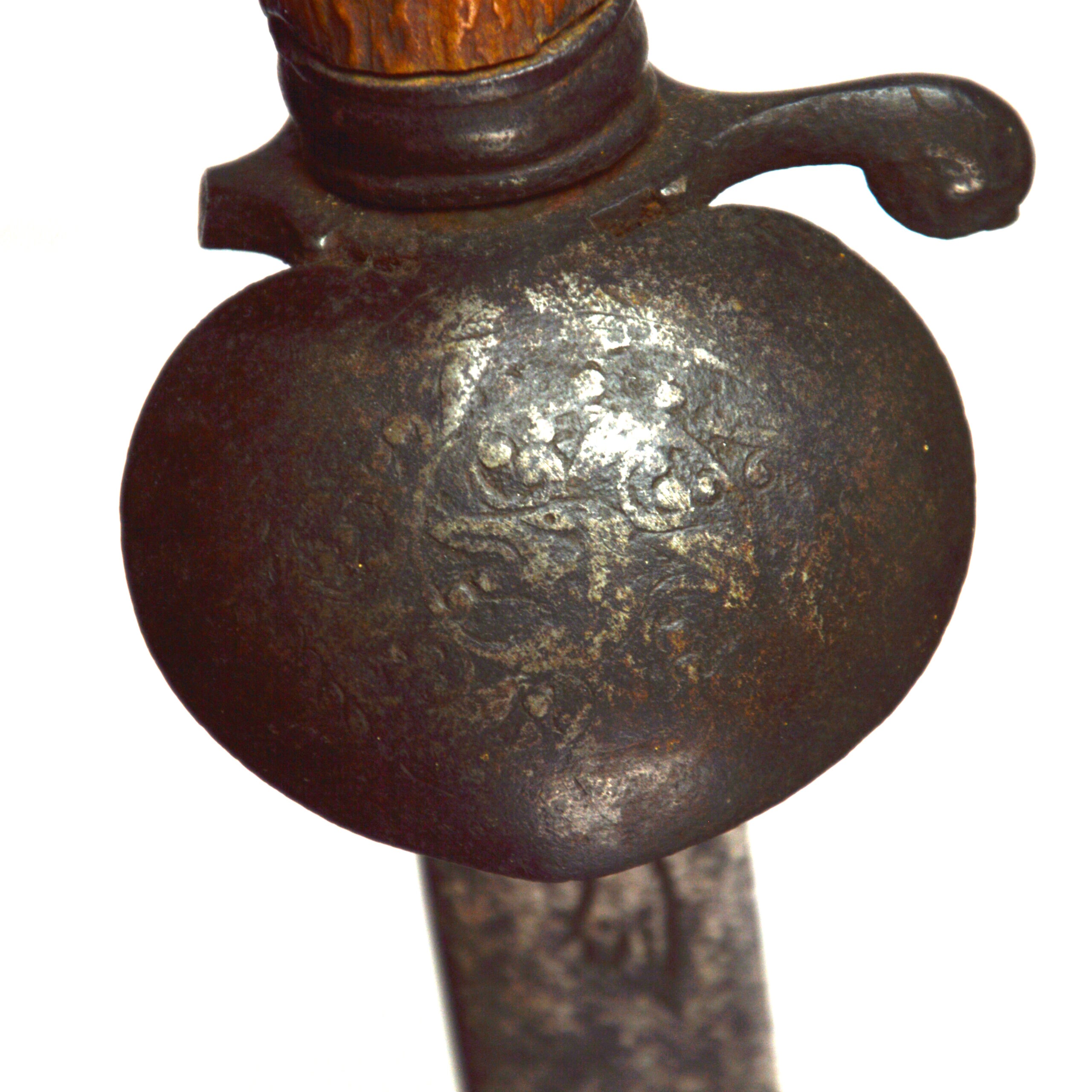
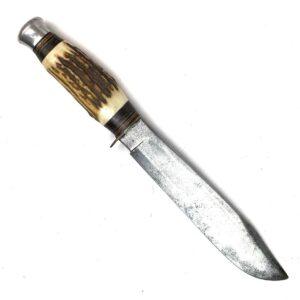
The hilt form on hunting swords of this era includes an ornate steel crossguard with a guard shell and would’ve originally had a knuckle bow hand guard for knuckle protection. This is accompanied by a grip of antler horn and a modest engraved steel pommel. These weapons occupied a space between functional tools and status items, often carried as part of hunting dress and occasionally serving as personal and naval sidearms.
Hunting swords of the 17th century are associated with the broader social and cultural practices of Tudor England, during the reign of Elizabeth I and her predecessors, when hunting was both a practical activity and a symbol of rank and privilege. Surviving examples provide insight into early modern craftsmanship, trade networks, and the adoption of imported blades within British mounts.
Examples of this type are collected within the fields of early edged weapons, Stuart-period artefacts, and European arms and armour. The combination of a British-mounted hilt with a Solingen blade highlights the interconnected nature of European craftsmanship during the period.
Dimensions
Approx. 88cm overall length (varies by example)
Condition
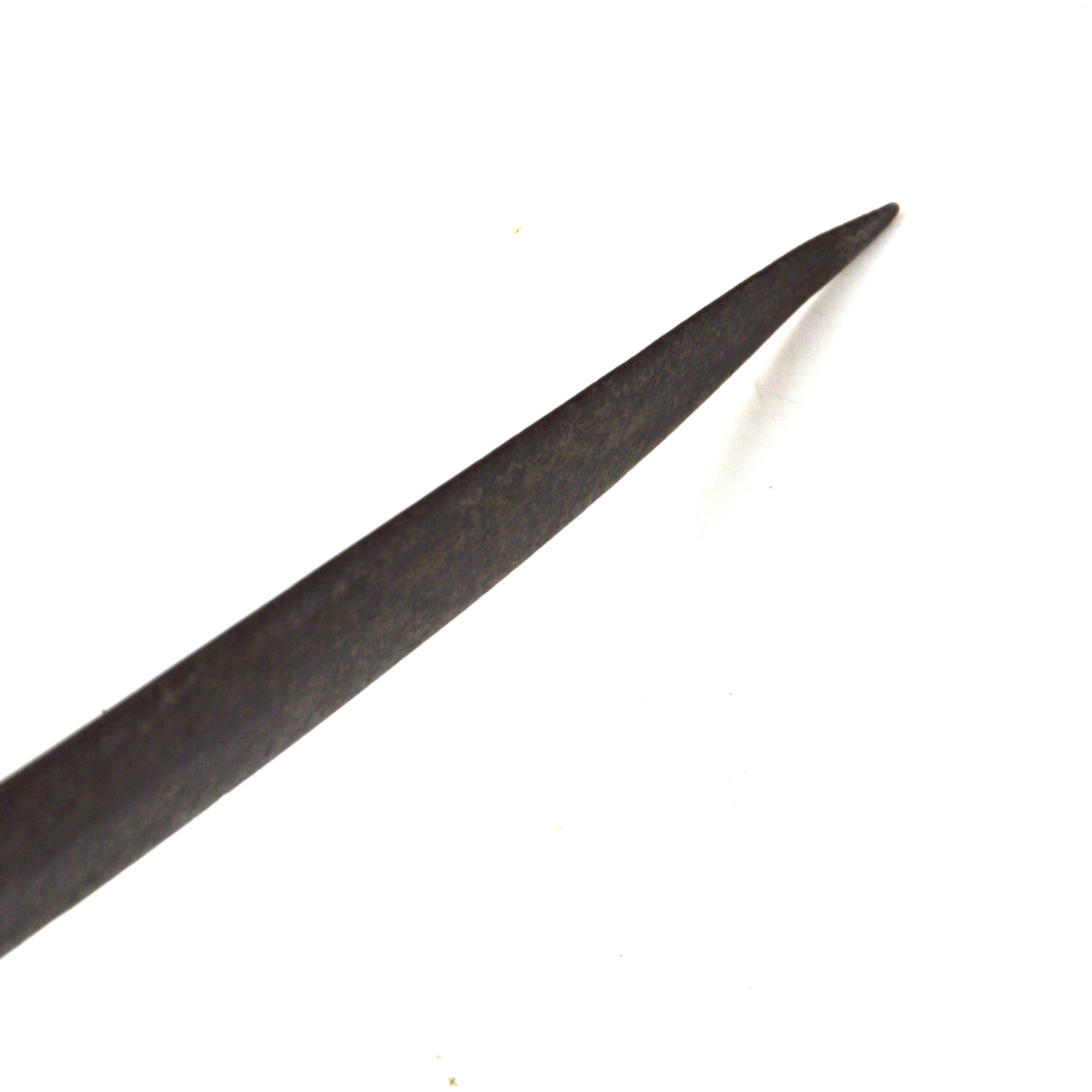
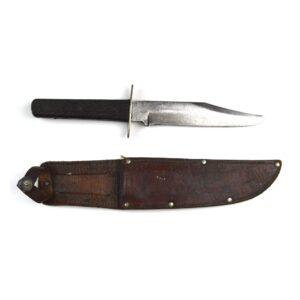
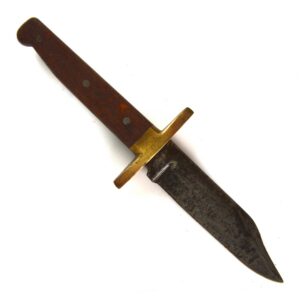
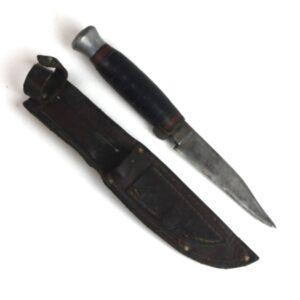
Fair to good antique condition, with significant age-related wear consistent with a 17th-century piece. The blade shows patina, surface marks, and light pitting, with a slightly bent tip. The hilt is in excellent condition; however, the knuckle bow has broken off. An ideal restoration project.

Reviews
There are no reviews yet.