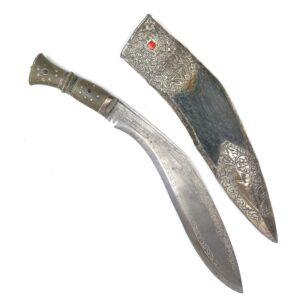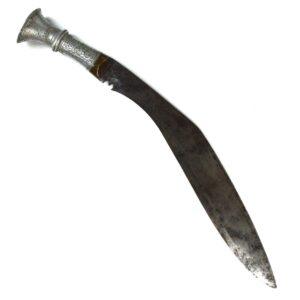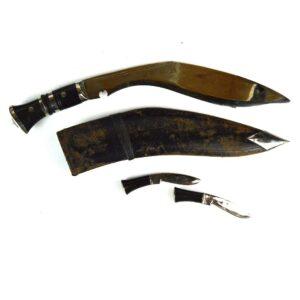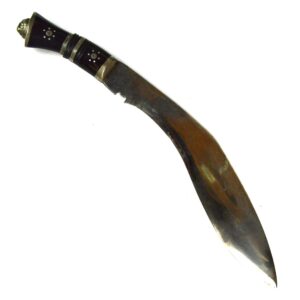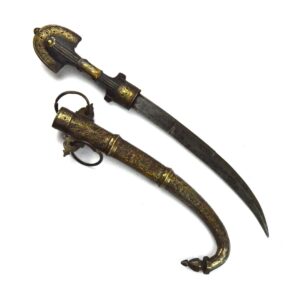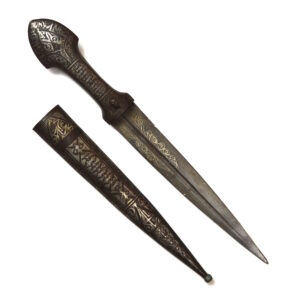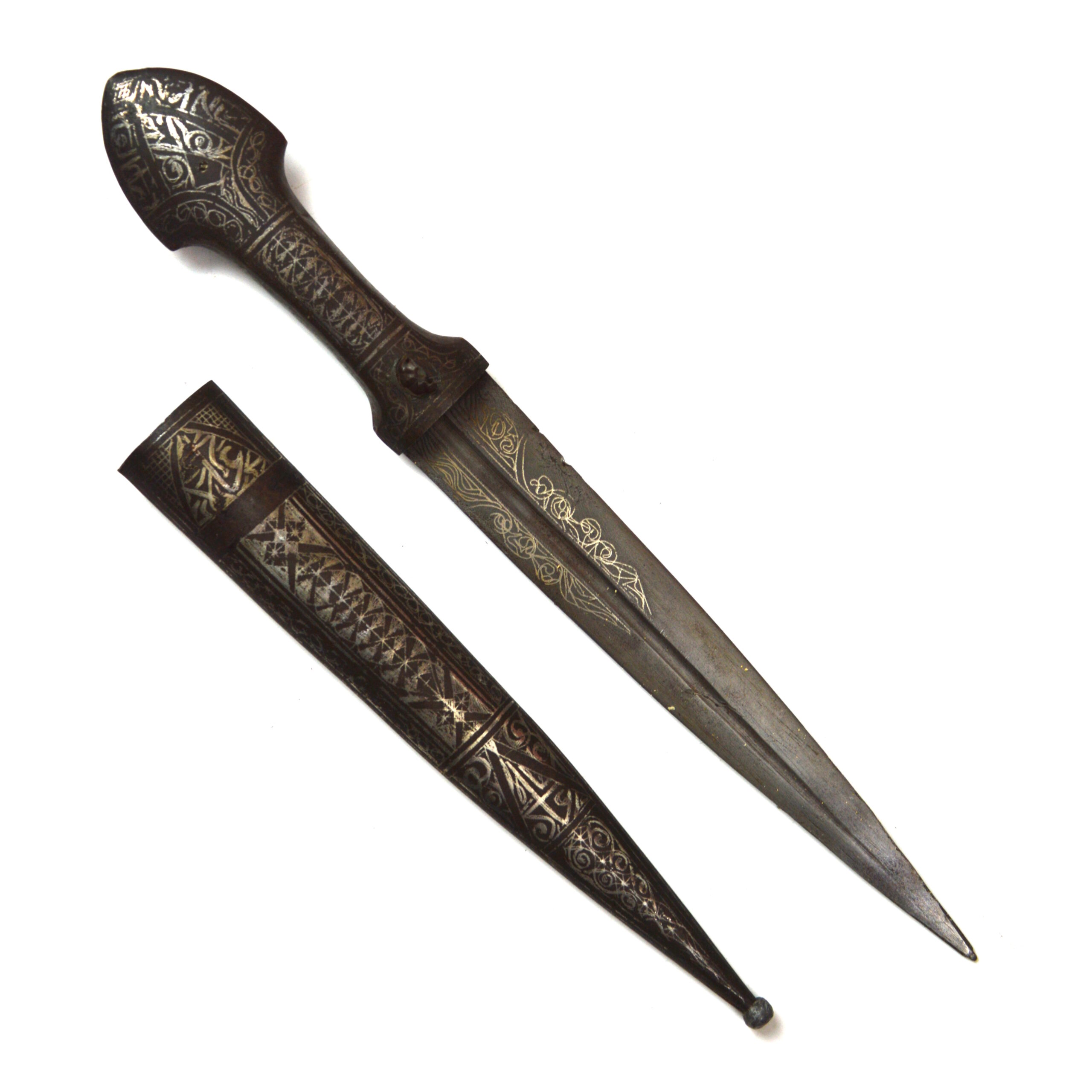
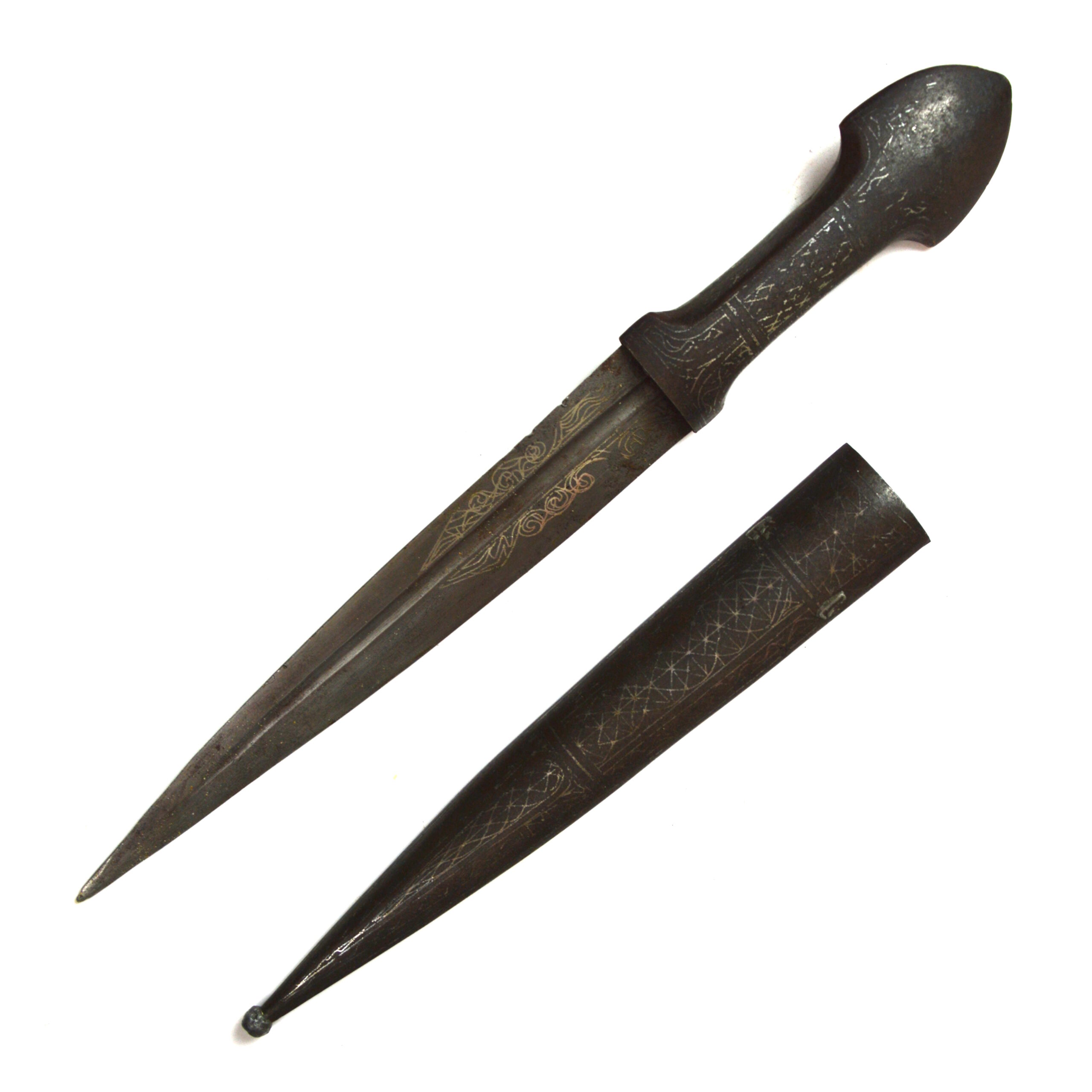
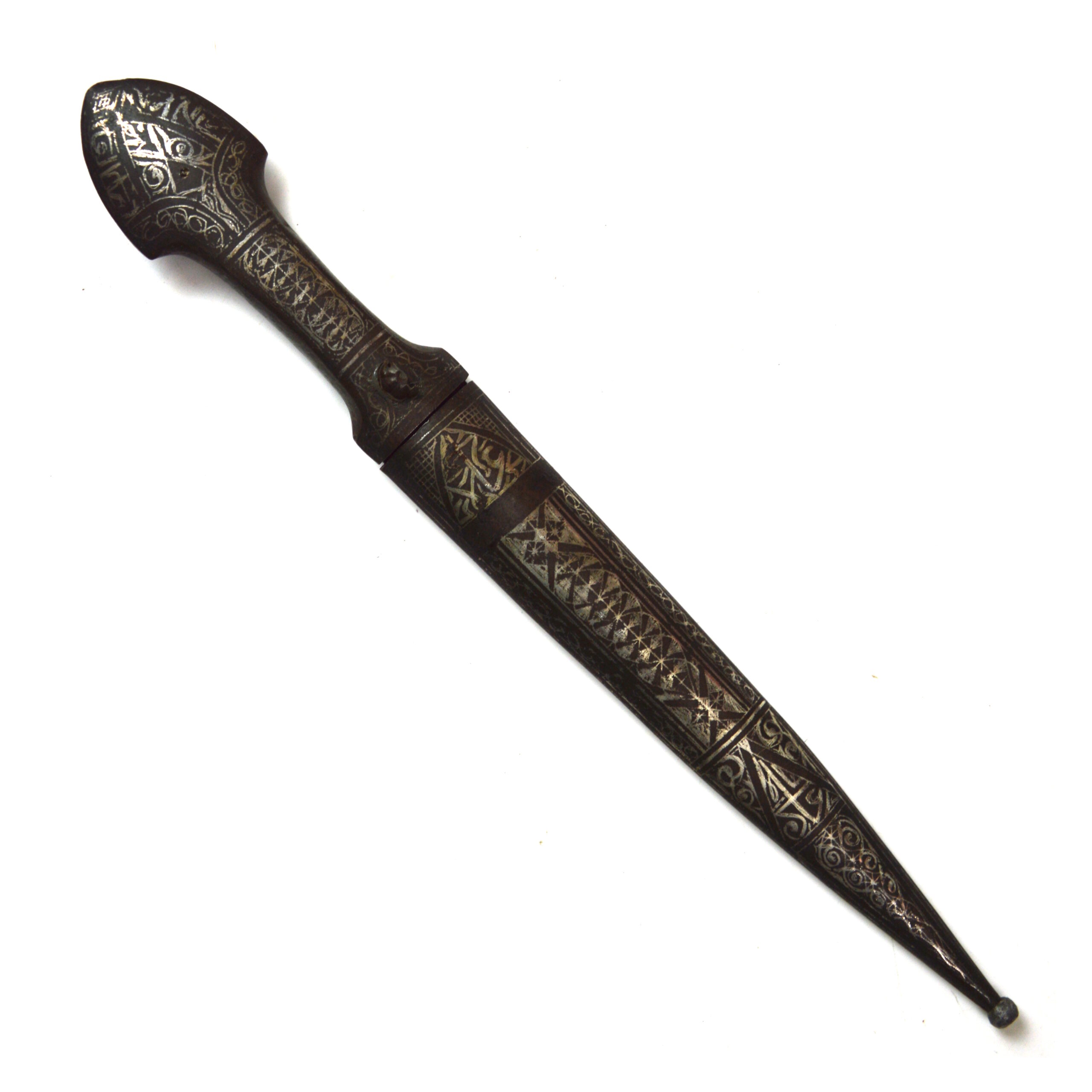
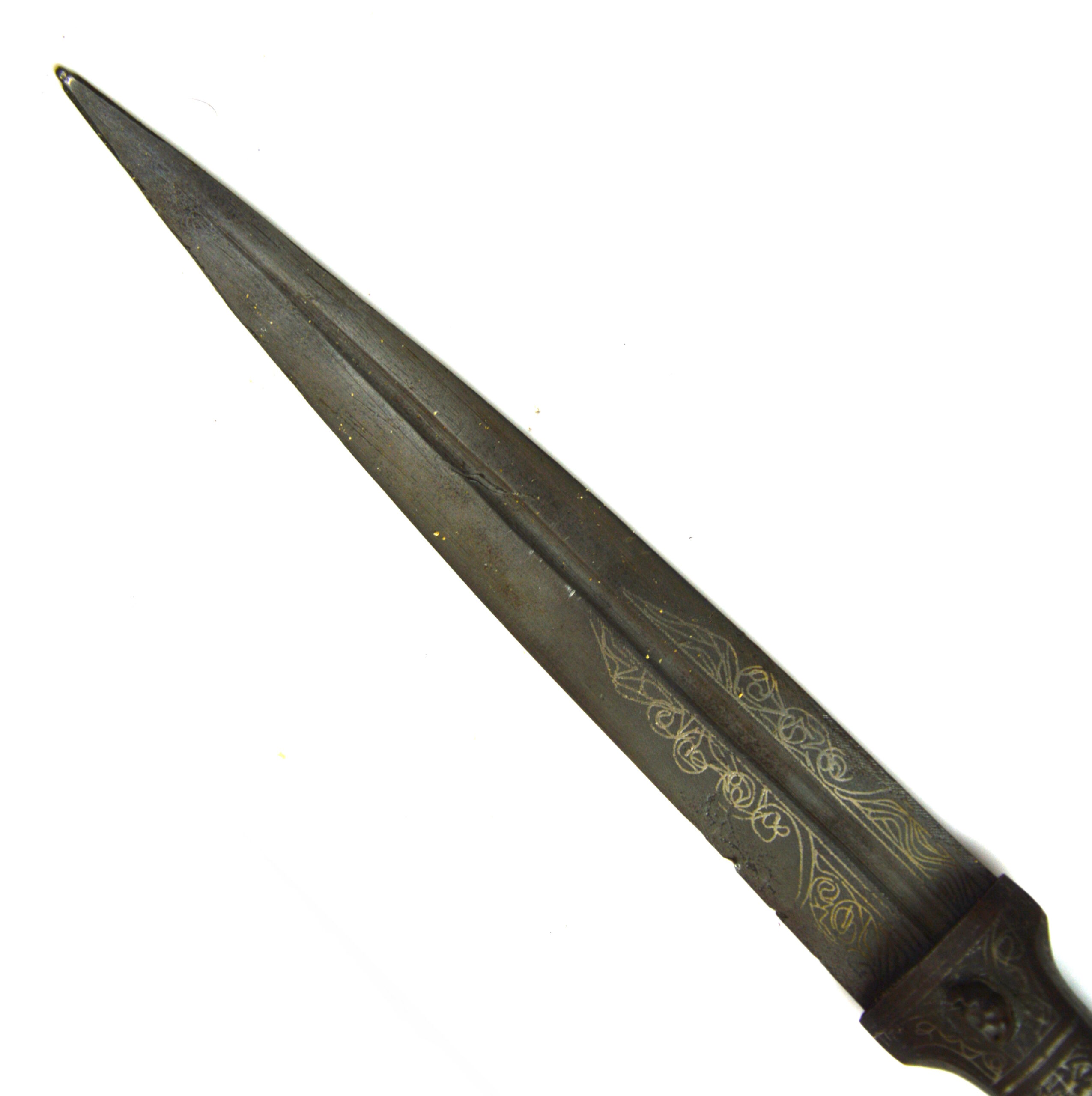
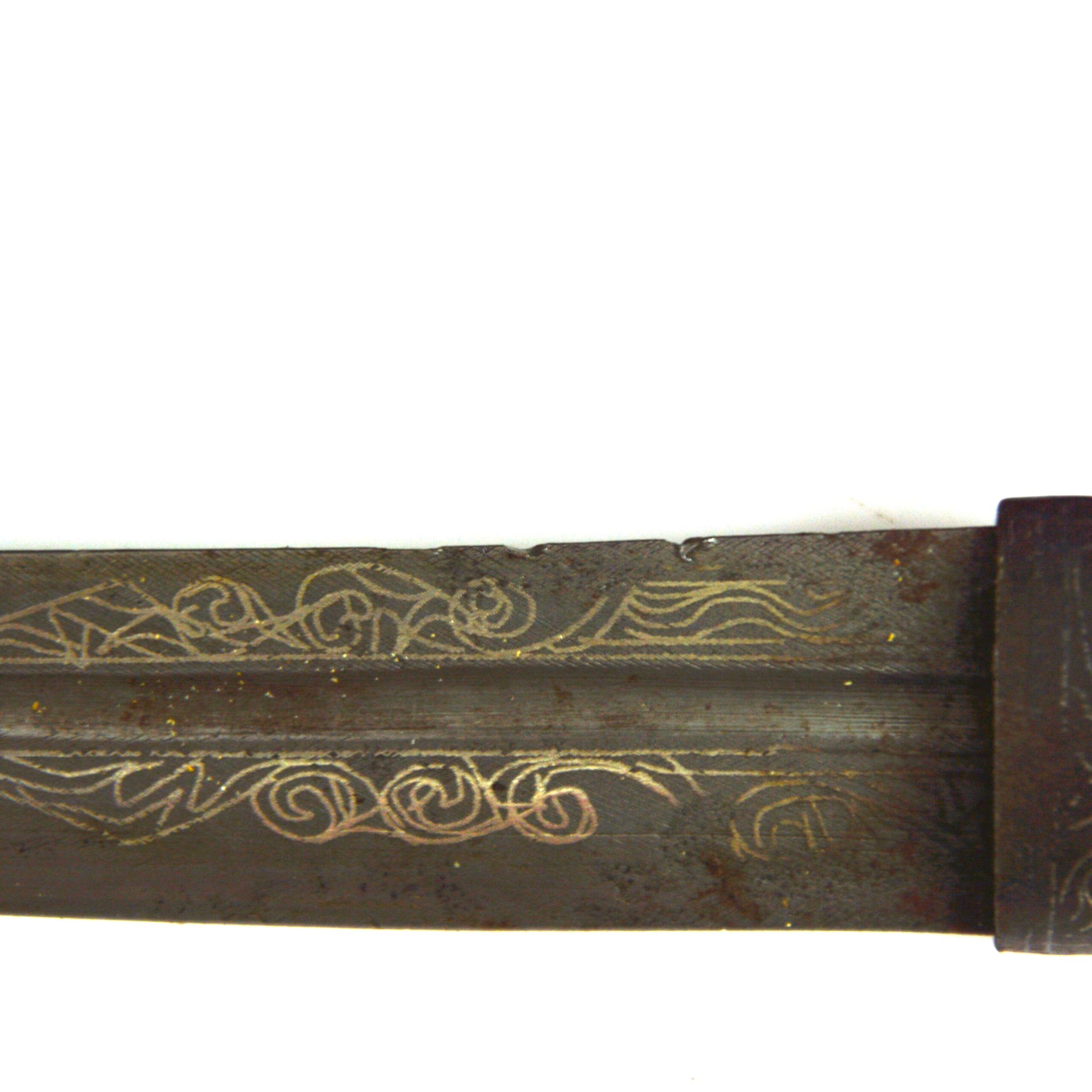
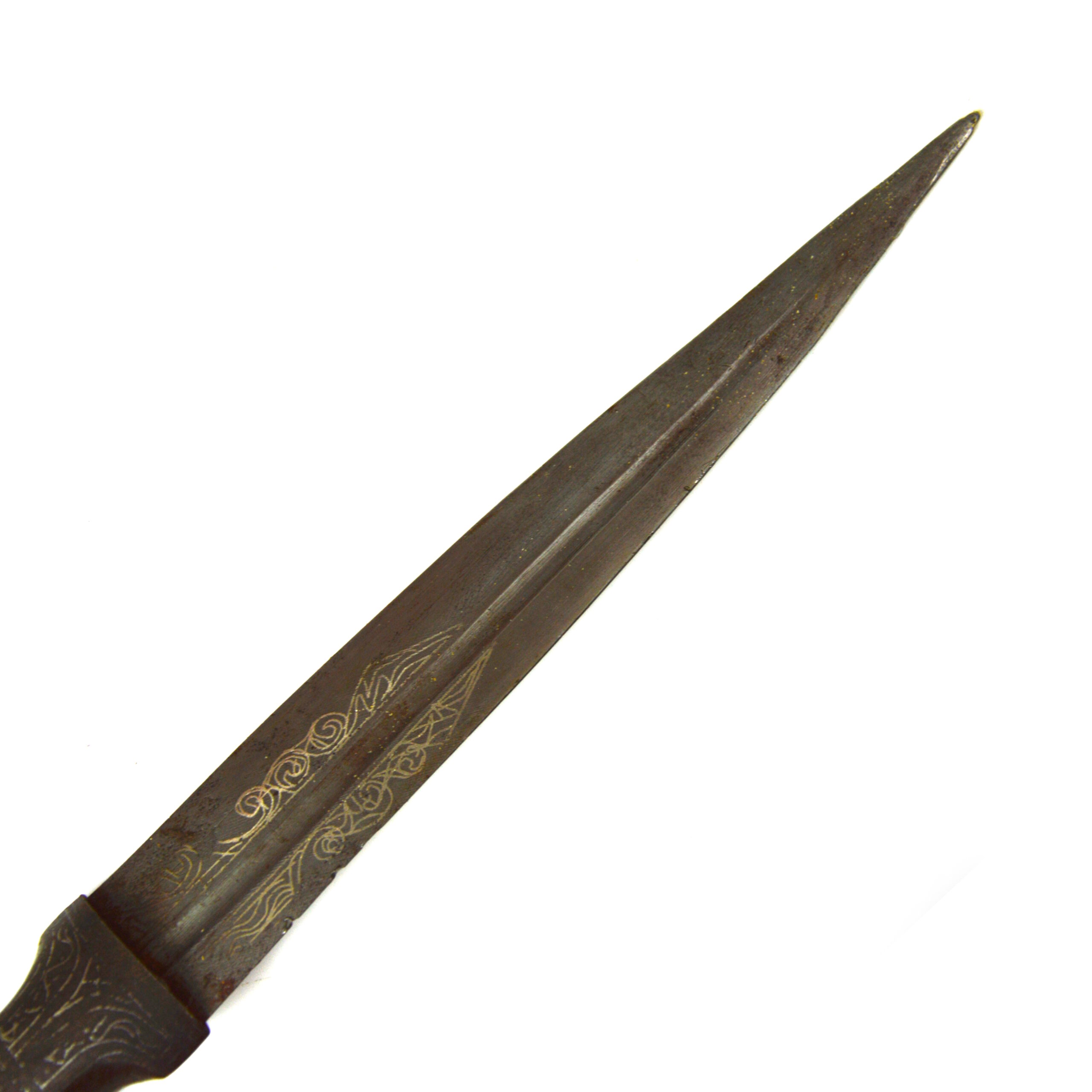
Indo-Persian silver inlay koftgari kindjal dagger with scabbard, a decorative edged weapon reflecting the artistic metalworking traditions of the Indo-Persian and Turkic cultural spheres. The Kindjal dagger form is characterised by its broad, double-edged blade with a pronounced central fuller, designed for close combat while also serving as a status object.
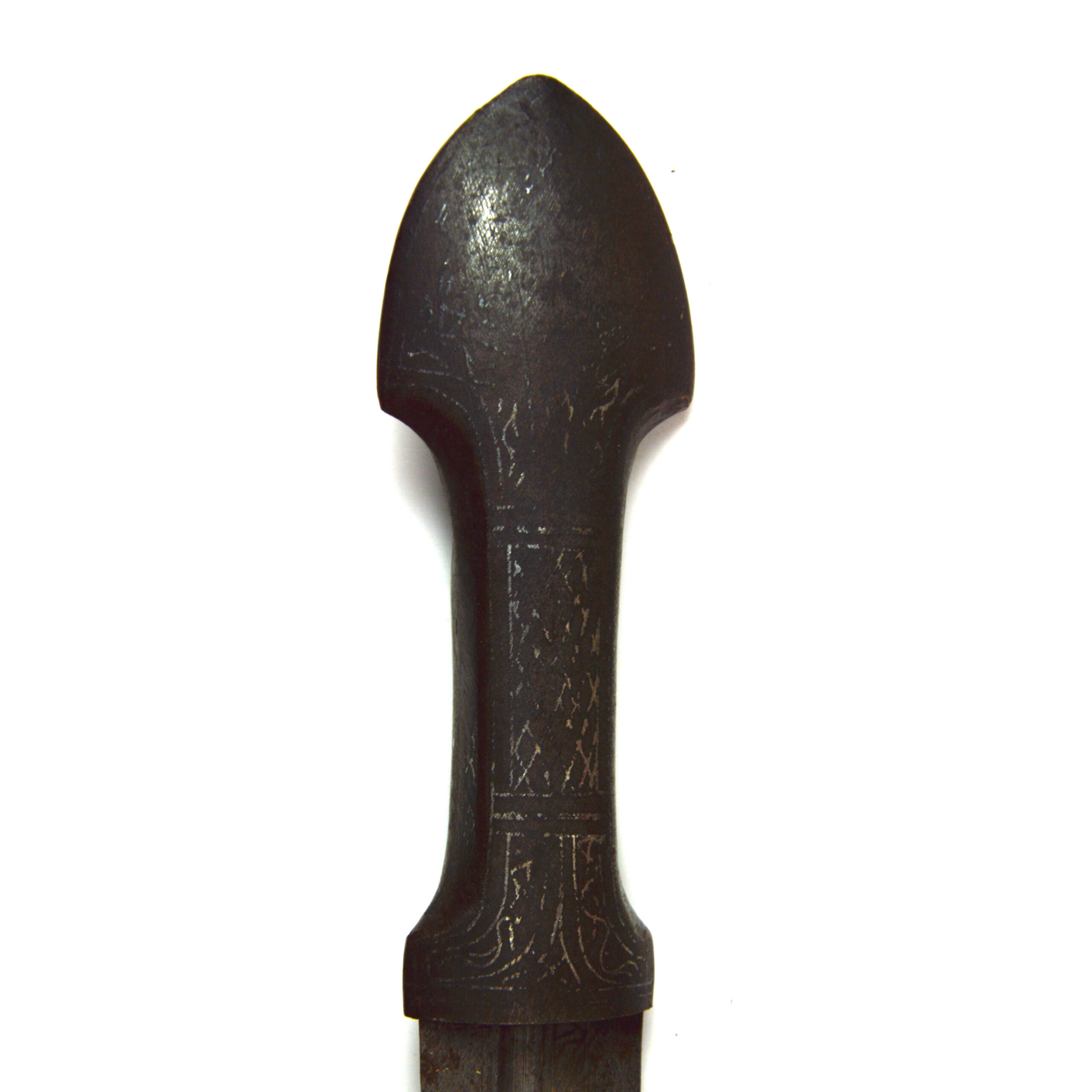
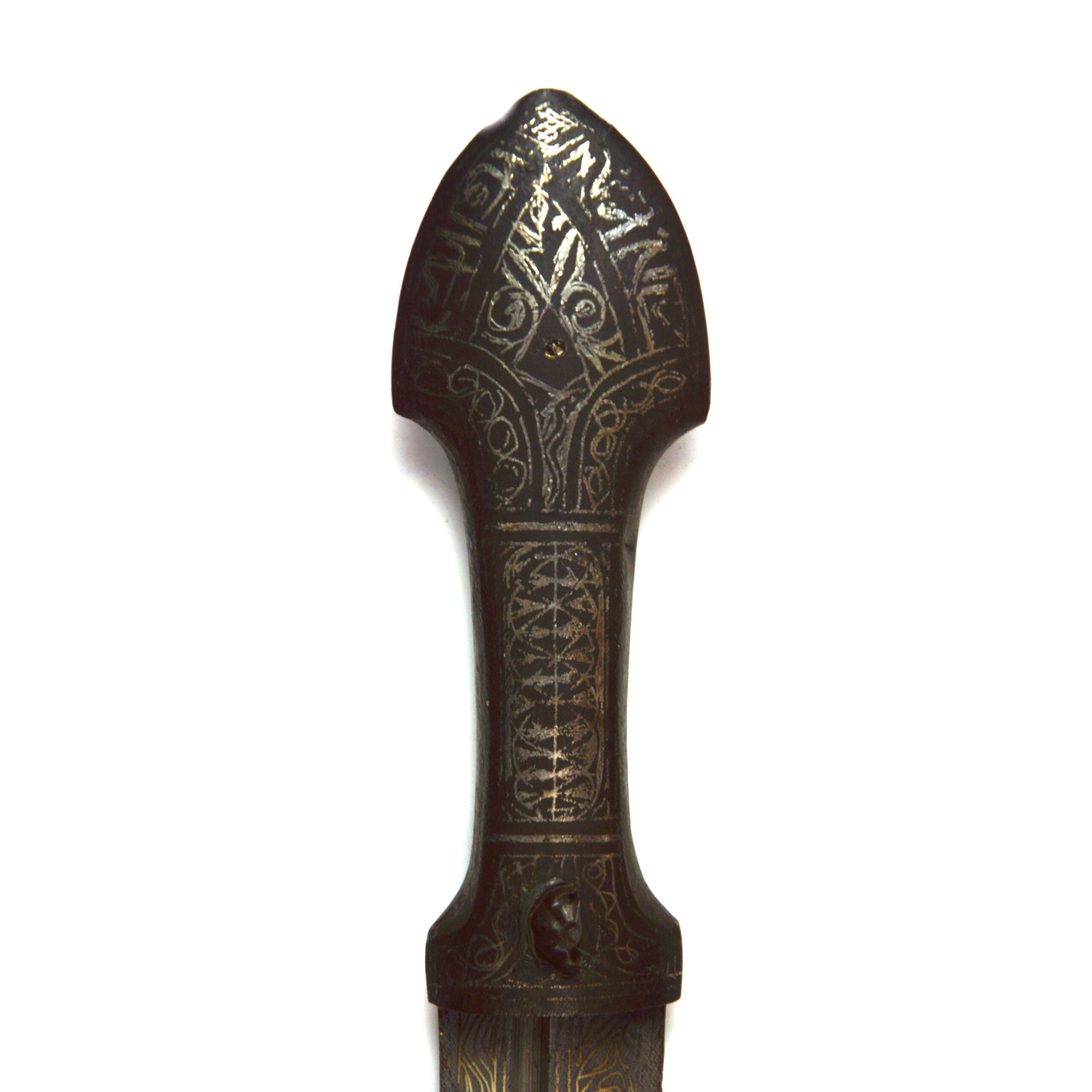
This example features koftgari (also spelt koftari) silver inlay work, a traditional technique in which fine silver wire or sheet is hammered into engraved channels on the steel surface to create intricate patterns. The decoration includes geometric and tribal style designs applied to the blade, hilt, and scabbard. The result is a strong contrast between the darkened steel ground and the bright silver detailing.
The hilt is of characteristic kindjal form, with a shaped grip and flared pommel, constructed from steel and decorated en suite with the blade. The accompanying scabbard is also constructed of steel that displays koftgari ornamentation, completing the ensemble.
Daggers of this type are associated with regions spanning Persia (modern Iran), the Caucasus, and northern India, where Indo-Persian artistic influence shaped arms and armour production over several centuries. Such pieces often served both functional and ceremonial roles, reflecting status, craftsmanship, and regional identity.
Examples of koftgari-decorated kindjals are collected within the fields of Islamic and Indo-Persian arms and armour, ethnographic artefacts, and decorative edged weapons. Their appeal lies in the combination of practical weapon form and detailed surface ornamentation.
Dimensions
Approx. 32.5cm overall length
Approx. 20.5cm blade length
Condition
Good overall condition, with clear silver inlay decoration and defined blade form. The blade shows surface marks, with 2 significant chips in the edge as well as a gouge in the fuller. The scabbard remains intact with expected wear and possible fittings absent. The rosette on the hilt is broken, with only about half of it remaining.