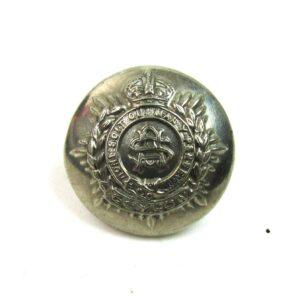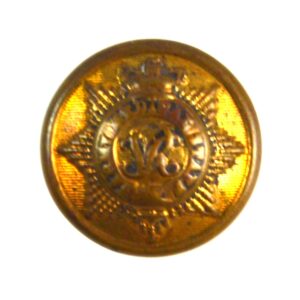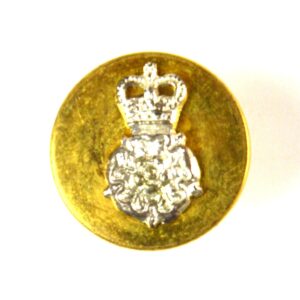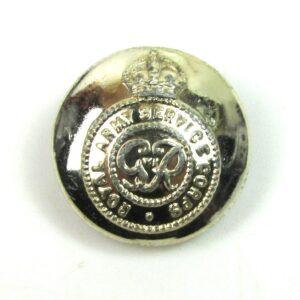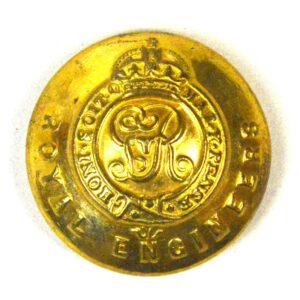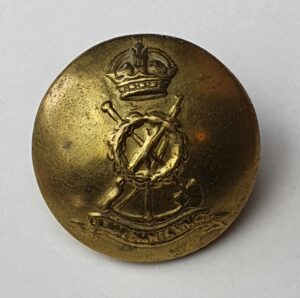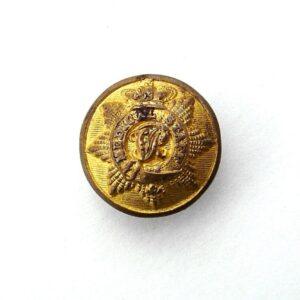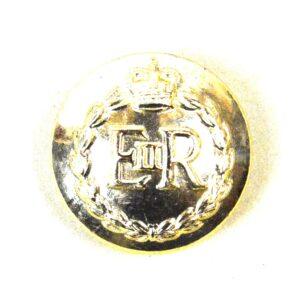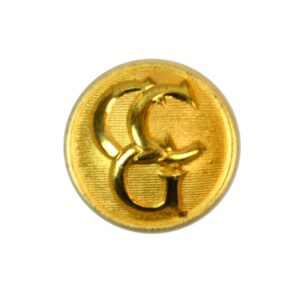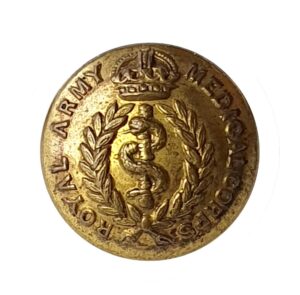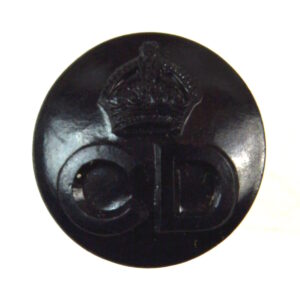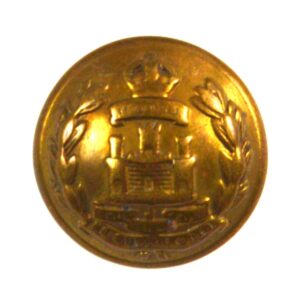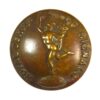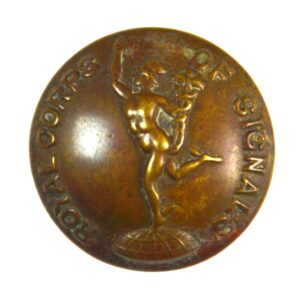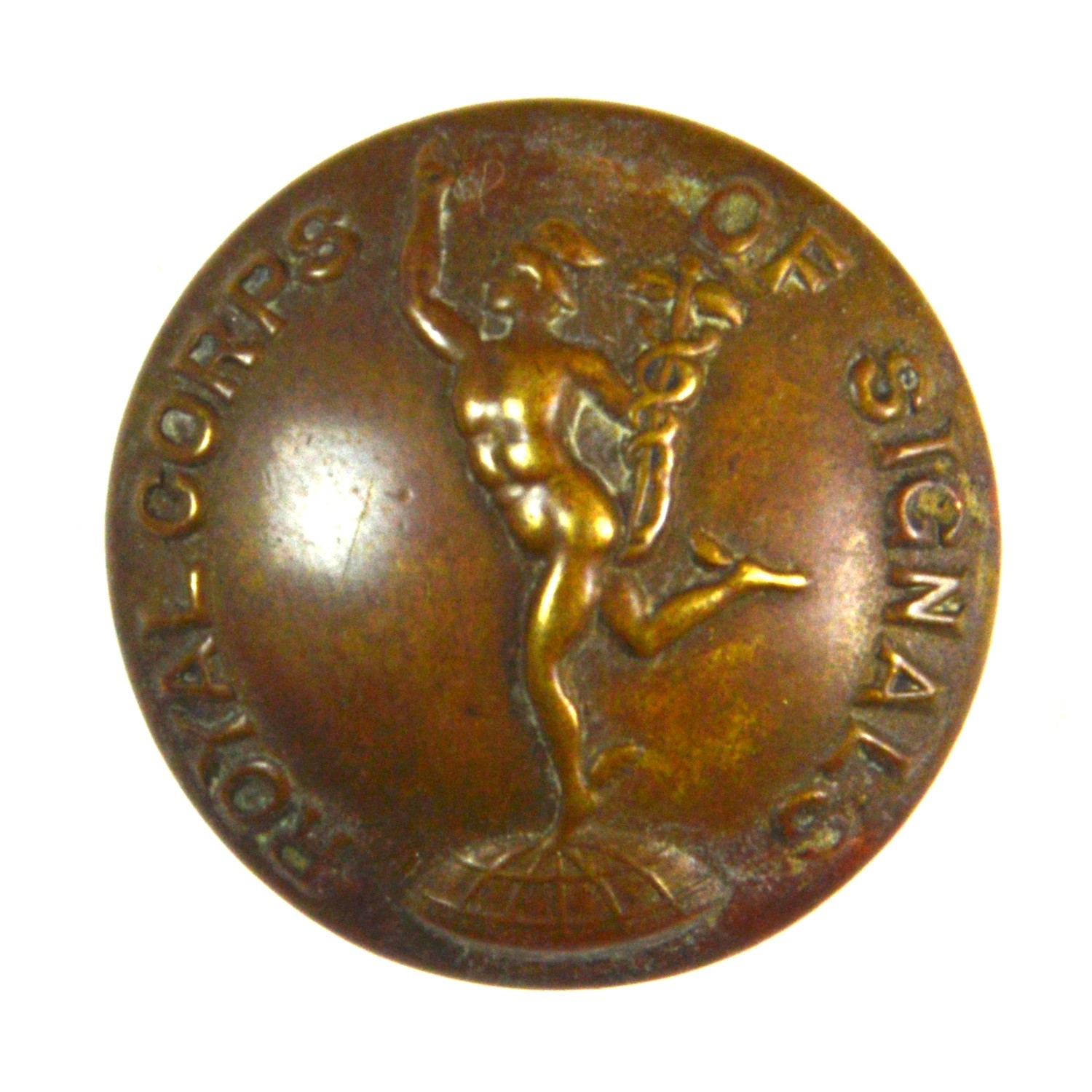
Royal Corps of Signals brass button (1920–1947 pattern), 25mm example of British Army uniform insignia associated with the Royal Corps of Signals. This pattern dates from the formation of the corps in 1920 through to the end of the post-war era in 1947, covering service during the interwar period and the World War II.
The button design features the corps insignia in relief, incorporating Mercury, the winged messenger, reflecting the corps’ communications and signalling role within the British Army. The brass construction follows traditional military manufacturing standards and was intended for regular polishing and service wear.
Buttons of this type were worn on service dress and other uniform garments by officers and enlisted personnel of the Royal Corps of Signals, serving both a practical fastening role and as a visible symbol of corps identity. The 25mm size corresponds to use on tunics and outer garments where larger buttons were required.
The Royal Corps of Signals was established in 1920 to provide military communications capability across the British Army, taking responsibility for signalling, telecommunications, and information transmission. During the Second World War, Signals personnel played a vital role in maintaining communications across all theatres of operation.
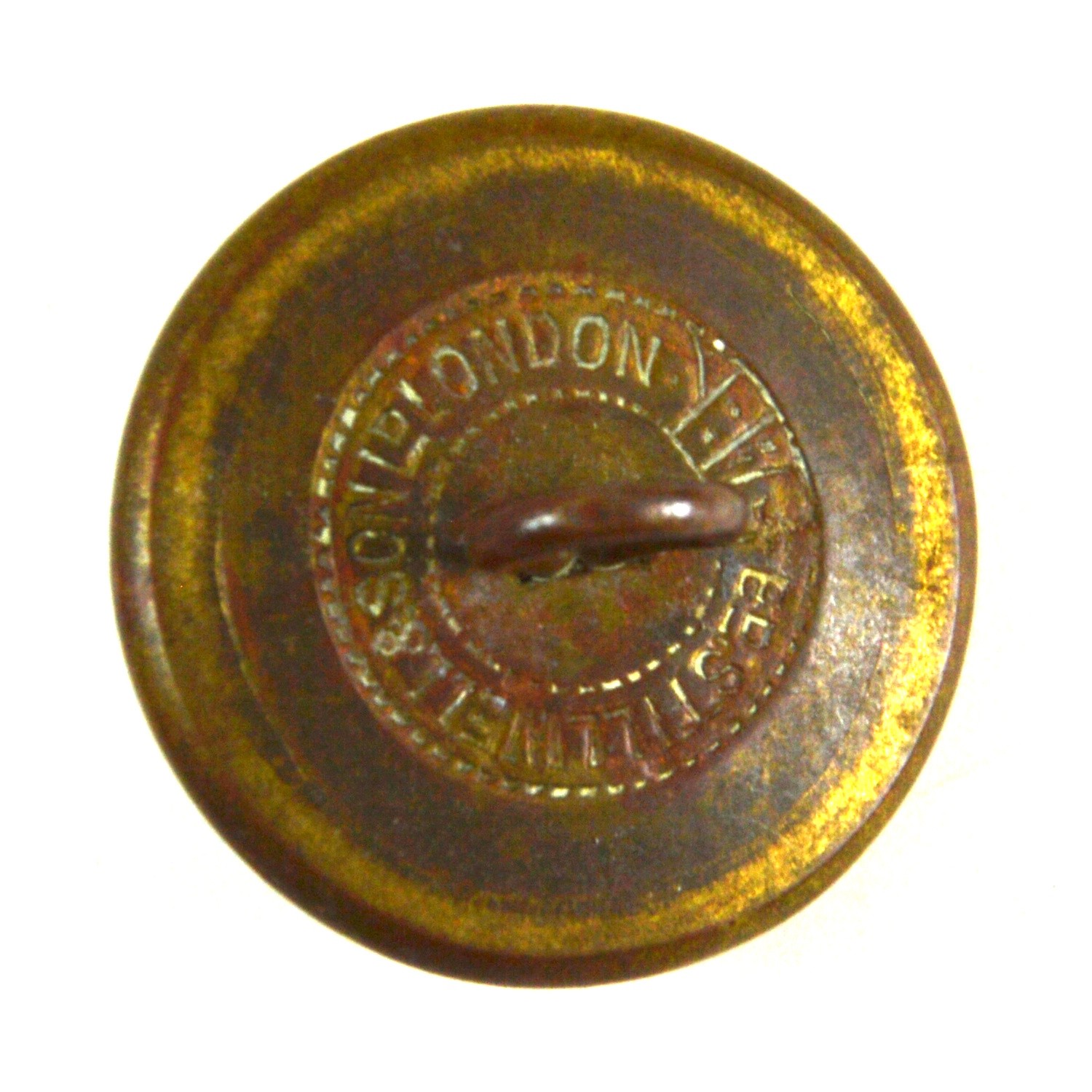
Manufactured in brass with a shank fitting to the reverse, this example represents a classic piece of British military insignia suitable for display or collection.
Dimensions
25mm diameter
Condition
Good overall condition, with clear detailing and a well-preserved brass surface. Light wear and minor marks consistent with age and service use may be present. The reverse shank remains intact and secure. No significant damage or repairs evident.
Note
The reverse may vary