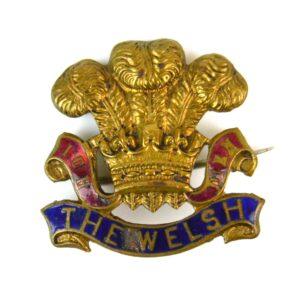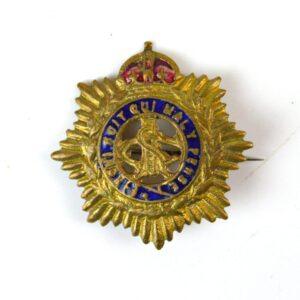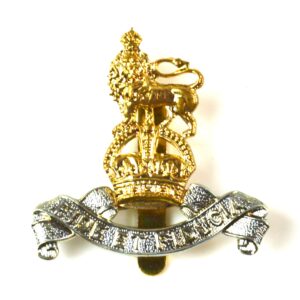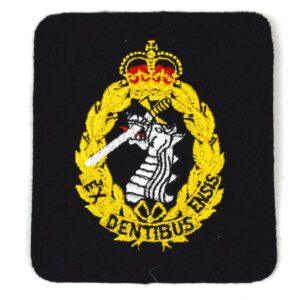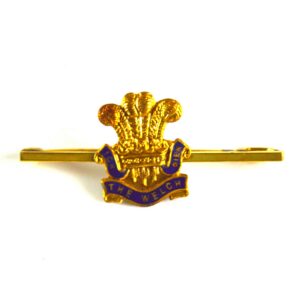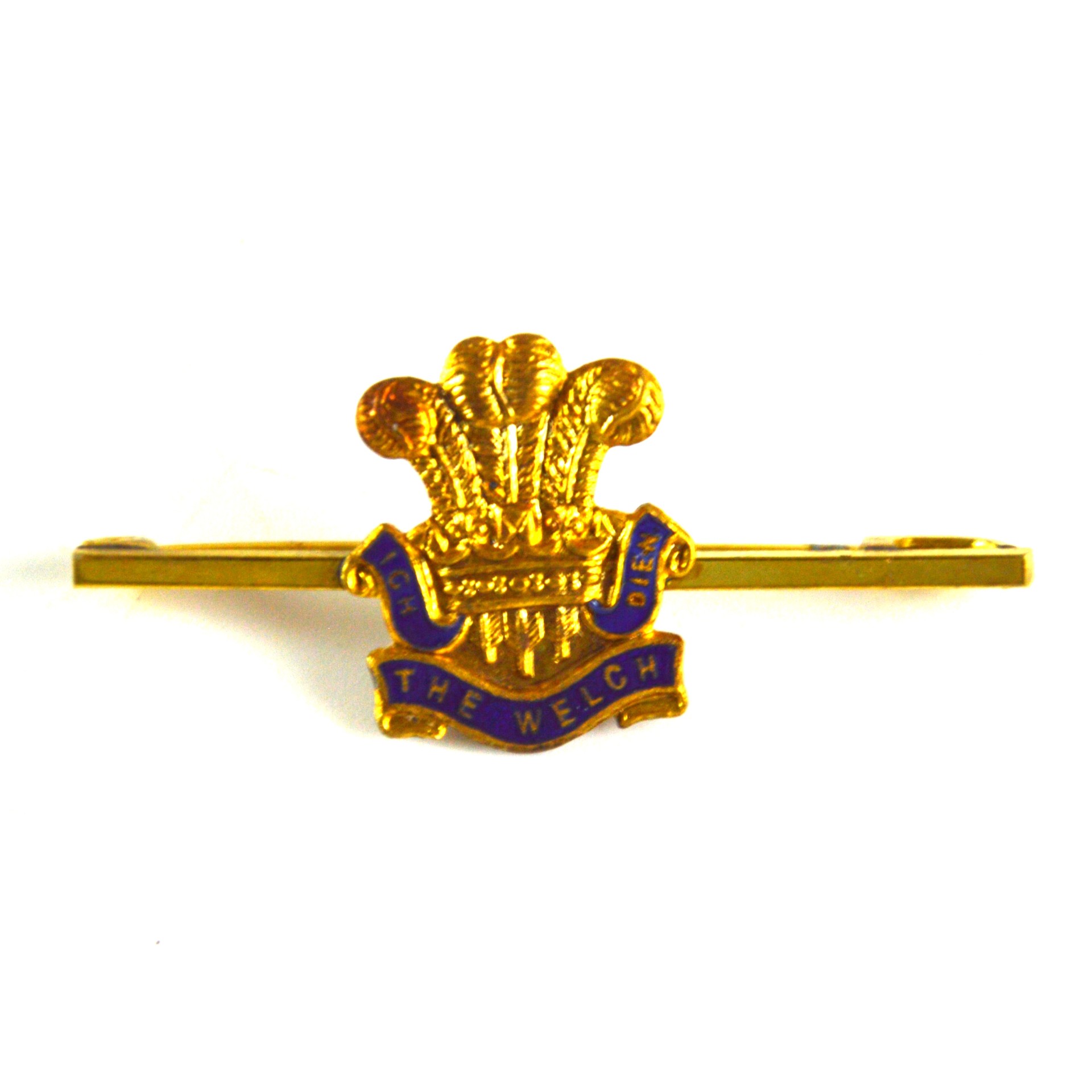
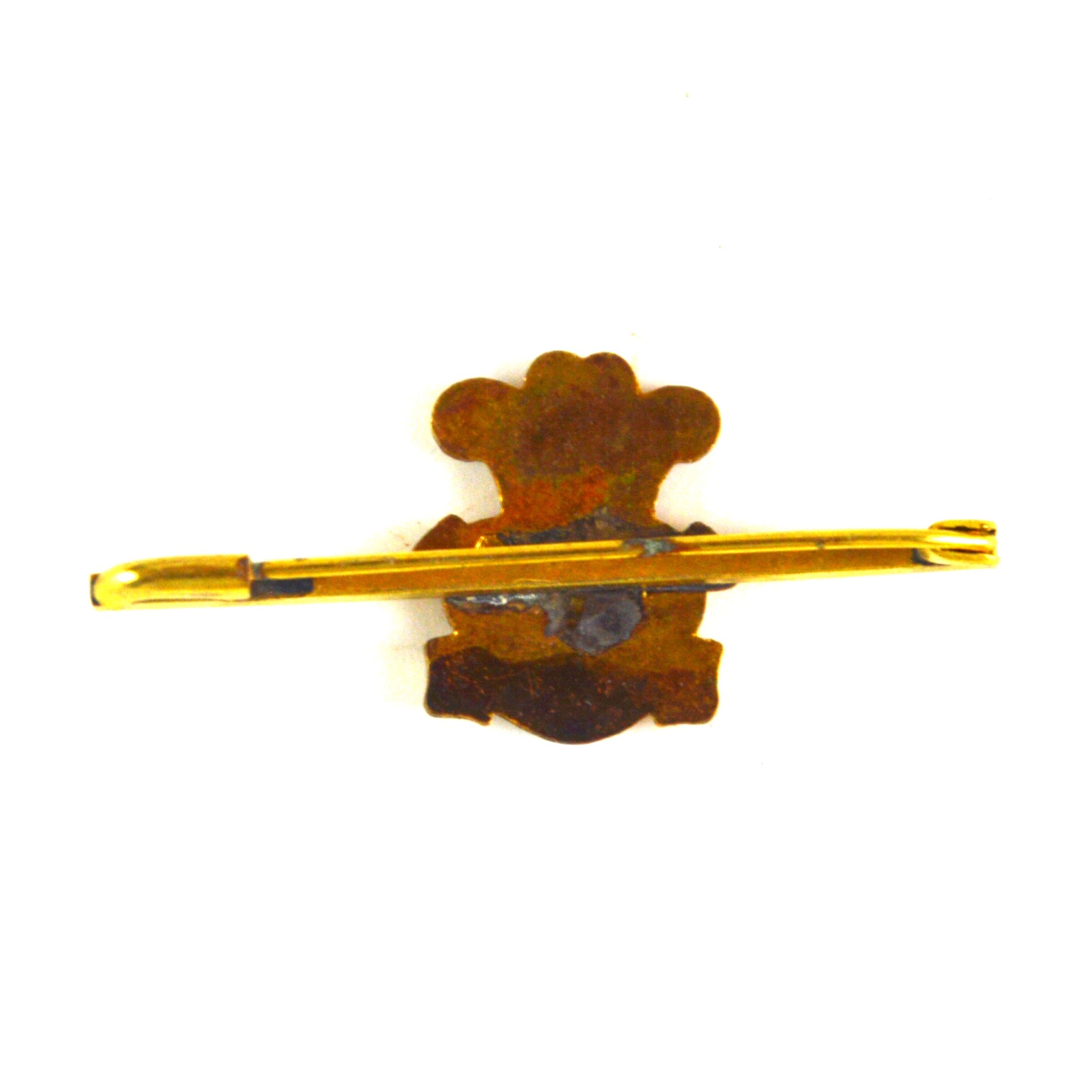
Welch Regiment sweetheart tie brooch in gilt metal with blue enamel, produced in the pattern current between 1920 and 1969 as a privately purchased keepsake and token of regimental association. This British Army Welsh infantry regimental sweetheart brooch displays the recognised Welch Regiment badge device in miniature, incorporating the Prince of Wales’s plumes — three ostrich feathers emerging from a coronet — as the principal device, with a motto scroll flanking the coronet inscribed “ICH DIEN” in raised lettering inlaid with blue enamel, and a lower scroll reading “THE WELCH” similarly inlaid with blue enamel, the whole rendered in gilt metal throughout and mounted on a slender horizontal brooch bar with a pin and safety catch fitting to the reverse. The blue enamel infill to both the “ICH DIEN” and “THE WELCH” scrolls is characteristic of the post-1920 Welch Regiment sweetheart brooch production, the enamel colour reflecting the regiment’s association with the blue of the Prince of Wales’s livery. The brooch bar format — in which the badge device is centrally mounted on a slim horizontal pin bar — identifies this as a tie brooch pattern rather than the earlier larger lapel brooch type, consistent with production from the interwar period onward.
Sweetheart brooches are miniature regimental keepsakes produced commercially for purchase by serving soldiers, veterans, and their families as tokens of regimental loyalty, love, and remembrance. The tradition of regimental sweetheart brooches developed strongly during the First World War, when soldiers purchased small gilt and enamel replicas of their cap badges to give to wives, mothers, sweethearts, and sisters as keepsakes before departing for the front, the emotional significance of the regimental device lending a personal dimension to what was otherwise a mass-produced commercial item. The Welch Regiment sweetheart brooch tradition continued through the interwar period and the Second World War, with examples documented across a range of quality and construction from fine hallmarked gold and enamel pieces produced by Birmingham jewellers such as Turner and Simpson to more modest gilt and enamel commercial examples of the type represented by this brooch. The “THE WELCH” scroll on the lower device distinguishes post-1920 examples from the First World War period, during which the regiment’s brooches carried the older “THE WELSH” spelling—the War Office having approved the reversion to the traditional “Welch” spelling in 1920 and existing badge stock being replaced progressively from that date. The regiment was amalgamated with the South Wales Borderers on 11 June 1969 to form the Royal Regiment of Wales, at which point the Welch Regiment device ceased to be produced in new sweetheart brooch form.
Manufactured in gilt metal with blue enamel consistent with British Army Welsh infantry regimental sweetheart tie brooch production of the 1920 to 1969 period, this example provides a well-defined representation of the Welch Regiment sweetheart brooch in its post-1920 form. Welch Regiment gilt and enamel sweetheart brooches are collected as examples of British Army regimental keepsake jewellery, Welsh infantry sweetheart brooch production of the interwar and Second World War periods, and personal militaria associated with the Welsh county regiment tradition.
Dimensions: Approx. 45mm x 20mm
Condition: Very good, some discolouration may be visible