- Introduction
- The Sword as a Weapon
- Cavalry Swords: The Cutting vs Thrusting Debate
- Key British Military Sword Patterns
- 18th Century
- The 1796 Light Cavalry Sabre
- The 1796 Heavy Cavalry Sword
- 19th Century: Victorian Patterns
- The 1897 Infantry Officer’s Sword
- 20th Century: The Final Patterns
- Highland Broadswords and Basket Hilts
- Collecting Military Swords
- Identification
- Authentication Concerns
- Price Guide
- UK Legal Position
- Further Reading
- The Social History of the Sword
- The Sword as Symbol of Authority
- Court Swords and Diplomatic Weapons
- Naval Swords and Cutlasses
- Scottish Military Swords
- Conservation and Display of Sword Collections
Introduction
The military sword occupies a unique place in British military history. From the broadswords carried by Cromwell’s Ironsides to the pattern swords still worn by officers on parade today, the sword has served as both a weapon of war and a symbol of rank, authority, and honour. For over three centuries, the design, manufacture, and regulation of swords for the British Army has produced an extraordinary variety of patterns — cavalry sabres, infantry swords, Highland broadswords, naval cutlasses, and officers’ dress swords — that together form one of the richest and most collectible fields in militaria. [1]
The Sword as a Weapon
Cavalry Swords: The Cutting vs Thrusting Debate
No question generated more controversy in British military circles than the proper design of the cavalry sword. For over a hundred years — from the Napoleonic Wars to the eve of the First World War — cavalrymen, swordsmiths, and military theorists debated whether the cavalry sword should be designed primarily for cutting (a sweeping, slashing action) or thrusting (a straight-armed stabbing action with the point). [2]
Proponents of the cutting sword — including many cavalry officers with combat experience — argued that the natural motion of a mounted man swinging at a gallop was a cut, that cutting wounds were more visible and demoralising, and that the curved sabre was better balanced for mounted combat. The great light cavalry sabres of the Napoleonic era — the 1796 Light Cavalry Sabre in particular — were superb cutting weapons.
Proponents of the thrust — including influential theorists like John Gaspard Le Marchant (who designed the 1796 Heavy Cavalry Sword) and later the advocates of the 1908 pattern — countered that the thrust was more lethal (penetrating deeper), more difficult to parry, and could be delivered without exposing the swordsman’s arm. The debate was never fully resolved, but the final British military patterns — the 1908 Cavalry Sword and the 1912 Officers’ Cavalry Sword — were overwhelmingly thrusting weapons. [1]
Key British Military Sword Patterns
18th Century
| Pattern | Type | Key Features |
|---|---|---|
| 1751 Pattern Dragoon Sword | Heavy cavalry | Straight blade, basket hilt; one of the first regulated patterns |
| 1788 Light Cavalry Sabre | Light cavalry | Curved blade, stirrup hilt; immediate predecessor to the 1796 |
| 1796 Light Cavalry Sabre | Light cavalry | Broad curved blade, simple stirrup guard; devastating cutting weapon |
| 1796 Heavy Cavalry Sword | Heavy cavalry | Straight blade, disc guard; designed by Le Marchant for thrusting |
The 1796 Light Cavalry Sabre
Perhaps the most famous British military sword. The 1796 Light Cavalry Sabre was a brutal, effective cutting weapon with a wide, curved blade designed to deliver devastating slashing wounds. It was carried by British light dragoons and hussars throughout the Napoleonic Wars, and its reputation was fearsome — French soldiers reportedly feared the British sabre more than any other weapon. At the Battle of Laswaree (1803) in India, a single cut from a 1796 sabre was recorded as severing a Maratha cavalryman’s musket barrel. [2]
The 1796 pattern is one of the most sought-after British military swords. Genuine examples in good condition sell for £1,500–£4,000+. The German-made blades (many were manufactured at Solingen) are typically marked with the cutler’s name, and the iron scabbard often bears rack numbers and unit stamps.
The 1796 Heavy Cavalry Sword
Designed by Lieutenant Colonel John Gaspard Le Marchant — a brilliant cavalry officer who was also the founder of the Royal Military College at Sandhurst — the 1796 Heavy Cavalry Sword was intended as a thrusting weapon. With a long, straight, spear-pointed blade and a simple disc guard, it was a radical departure from the previous heavy cavalry broadswords. At Waterloo, the charge of the Union Brigade (the Scots Greys, Inniskillings, and Royals) was delivered with the 1796 pattern, with devastating effect. [1]
19th Century: Victorian Patterns
| Pattern | Type | Key Features |
|---|---|---|
| 1821 Light Cavalry Sabre | Light cavalry | Curved blade, three-bar guard; slightly less curved than 1796 |
| 1827 Rifle Regiment Sword | Infantry officers | Curved blade, Gothic-style guard; rifle regiments only |
| 1822 Infantry Officer’s Sword | Infantry officers | Straight blade, Gothic guard, gilt fittings; standard pattern for decades |
| 1845 Infantry Officer’s Sword | Infantry officers | Pipe-backed blade, slightly curved; comfortable to wear |
| 1853 Pattern Cavalry Sword | Heavy cavalry | Straight blade, three-bar guard; compromise between cut and thrust |
| 1885 Cavalry Sword | All cavalry | Straight blade, bowl guard; primarily thrusting |
| 1897 Infantry Officer’s Sword | Infantry officers | Straight blade, Gothic (pierced) guard; the current pattern |
The 1897 Infantry Officer’s Sword
The Pattern 1897 is the current-issue sword for British infantry officers and the most commonly encountered British military sword in the collectors’ market. With its straight, etched blade (typically bearing the Royal cypher, regimental device, and scrollwork) and pierced Gothic brass guard, it is an elegant and well-balanced weapon. The 1897 pattern has been in continuous use for over 125 years — through the Boer War, both World Wars, and into the present day. [2]
The value of an 1897 depends heavily on the etching (plain or elaborate), the maker (Wilkinson Sword Company pieces are the most sought-after), and any regimental or personal associations. Wilkinson maintained meticulous records — the “Wilkinson Sword ledgers” — that can trace a sword to its original purchaser by serial number.
20th Century: The Final Patterns
1908 Cavalry Trooper’s Sword
The Pattern 1908 is widely regarded as the finest cavalry sword ever produced. Designed after extensive trials, it was a pure thrusting weapon with a long, narrow, pointed blade of T-section (for rigidity), a large bowl guard that provided excellent hand protection, and a pistol grip that naturally aligned the point with the target. The 1908 was the last British military sword designed for combat, and it saw extensive use in the opening months of World War I — including cavalry charges at Mons, Néry, and the 1914 retreat. [1]
1912 Officers’ Cavalry Sword
The officer’s equivalent of the 1908, with a similar blade but a more ornate guard incorporating the owner’s regimental device. Less commonly encountered than the 1908 trooper’s pattern. [2]
Highland Broadswords and Basket Hilts
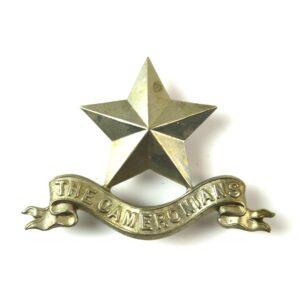
Scottish Highland regiments — the Black Watch, Gordon Highlanders, Cameron Highlanders, Argyll and Sutherland Highlanders, and others — carried distinctive basket-hilted broadswords that are among the most visually dramatic weapons in British military history. The basket hilt — an enclosed cage of iron or steel bars providing complete hand protection — evolved from the Scottish Highland tradition and was adopted for military regulation patterns from the 18th century onwards. [1]
Key patterns include:
- 1828 Highland Officer’s Broadsword: The standard pattern, with a basket of interlaced steel bars lined with red leather or cloth, and a double-edged blade
- Highland NCO’s and Other Ranks’ models: Simpler construction, often with a brass or iron basket
- Regimental variations: Each Highland regiment had subtle differences in basket design, liner colour, and blade etching
Highland broadswords are among the most desirable and expensive British military swords. A good Victorian officer’s basket-hilted broadsword might sell for £1,500–£5,000+.
Collecting Military Swords
Identification
Identifying a British military sword requires attention to several features:
- Blade markings: Look for the maker’s name (typically etched or stamped on the blade near the hilt), War Department inspection marks, and proof marks. Major makers include Wilkinson, Henry, Mole, Reeves, and Thurkle.
- Blade etching: Officers’ swords typically bear etched decoration — the Royal cypher, regimental devices, military trophies, and scrollwork. The quality and extent of etching varies by period and price bracket.
- Guard/hilt design: The guard is the most reliable indicator of pattern. Compare with reference books to confirm the pattern and date.
- Blade section: The cross-section of the blade (single-edged, double-edged, pipe-backed, T-section) helps identify the pattern and intended use.
- Scabbard: Iron, leather, or nickel-plated scabbards with brass or steel mounts. The scabbard should match the sword in period and pattern. [2]
Authentication Concerns
- Indian-made replicas: Large quantities of reproduction swords are produced in India. They are generally identifiable by poor blade steel (soft and flexible), crude etching, lightweight construction, and modern screws and fittings.
- Re-hilted blades: A blade from one pattern fitted to a guard from another. Check that all components match in period and style.
- Parade swords: Some swords were made purely for ceremonial use (never sharpened, thin blades, light construction). These are legitimate items but are less desirable than service-weight weapons.
- Sharpened vs unsharpened: Combat swords were sharpened; dress swords typically were not. Evidence of sharpening (grinding marks, reduced blade width near the edge) on a pattern known for combat use adds interest. [1]
Price Guide
| Type | Typical Range | Notes |
|---|---|---|
| 1796 Light Cavalry Sabre | £1,500 – £4,000+ | Condition, markings, and scabbard critical |
| 1796 Heavy Cavalry Sword | £1,200 – £3,000 | Le Marchant design; Waterloo association |
| 1822/1845 Infantry Officer’s Sword | £200 – £600 | Etching quality and regiment affect value |
| 1897 Infantry Officer’s Sword | £200 – £500 | Wilkinson at premium; Boer/WWI-era desirable |
| 1908 Cavalry Trooper’s Sword | £400 – £1,000 | Bowl guard; the finest cavalry sword design |
| Highland officer’s basket-hilted broadsword | £1,500 – £5,000+ | Regiment-specific; red-lined basket |
| NCO’s/OR’s Highland broadsword | £600 – £1,500 | Simpler construction |
| Victorian dress sword (infantry) | £150 – £400 | Common; good starter pieces |
| Naval cutlass (Victorian/WWI) | £200 – £500 | 1889 and 1890 patterns most common |
UK Legal Position
In the UK, swords may be legally owned and kept at home. They are classified as bladed articles under the Criminal Justice Act 1988 and the Offensive Weapons Act 2019. It is illegal to carry a sword in public without a lawful reason (re-enactment, dealer travel, cultural purposes). There is no licensing requirement for owning swords, and no restrictions on buying or selling antique swords at any price. [2]
Further Reading
- British Military Swords by Harvey Withers — accessible introduction with good illustrations
- Rebirth of the English Cavalry Sword by Robson — definitive study of the 1908 pattern
- The Sword and the Pen by Wilkinson Sword — history of the company and its military production
- Cut and Thrust by John Wilkinson-Latham — covers British military swords from 1600 to 1914
From the thundering charge at Waterloo to the quiet ceremony of a passing-out parade at Sandhurst, the British military sword has been carried with pride for over three centuries. It is a weapon, a symbol, and a work of art — and for collectors, an endlessly rewarding field of study. [1]
The Social History of the Sword
The Sword as Symbol of Authority
In British military culture, the sword has always been far more than a weapon — it is the officer’s badge of rank and the symbol of his authority. The tradition of the officer carrying a sword dates back centuries and has survived long past the point where the sword had any practical combat value. Understanding this symbolic dimension is essential for appreciating the place of the sword in British military history and in the collector’s cabinet. [1]
The presentation of a sword marks an officer’s commissioning — the moment of transformation from civilian to military leader. Traditionally, a young officer’s family purchased his sword, and many families passed swords down through generations of military service. These family swords, often bearing multiple inscriptions recording successive owners, are among the most historically resonant items a collector can encounter. [1]
The sword of honour — awarded to the top graduate of each intake at the Royal Military Academy Sandhurst — represents the highest expression of the sword’s symbolic role. The Sandhurst Sword of Honour is perhaps the most prestigious award in British military education, and the recipients include many who went on to distinguished careers. Swords of honour from Sandhurst, Woolwich (the Royal Military Academy for artillery and engineer officers), and other training establishments are extremely rare on the open market and command substantial prices when they do appear. [1]
Court Swords and Diplomatic Weapons
In addition to military patterns, British officers were required to own a court sword for attendance at Royal courts, levees, and formal state occasions. Court swords are distinctive: smaller and lighter than military patterns, with decorative hilts (often gilt or silver, with ivory or mother-of-pearl grips) and etched blades bearing royal cyphers, armorial bearings, and decorative motifs. [2]
The court sword represents a fascinating intersection between military culture and civilian social hierarchy. An officer attending a Royal levee was required to wear the correct pattern of court sword appropriate to his rank and regiment — the regulations governing these matters were detailed and enforced. Court swords are lighter and more decorative than service patterns, and their presence in a collection provides an elegant contrast to the more functional combat weapons. [2]
Prices for court swords vary enormously: a standard Victorian Levee pattern can be acquired for £150–£400, while an elaborately decorated example with documented provenance to a senior officer or nobleman might reach £1,000–£3,000 or more. [2]
Naval Swords and Cutlasses
No collection of British military swords is complete without consideration of naval patterns. The Royal Navy maintained its own distinct sword tradition, with patterns designed for the specific conditions of shipboard combat. Key naval patterns for collectors include:
- 1805 pattern naval officer’s sword: The standard naval officer’s sword of the Napoleonic era, with a lion’s-head pommel and a stirrup hilt guard. This pattern was contemporary with Nelson and is highly prized.
- 1827 pattern naval officer’s sword: The most common and long-lived naval sword pattern, with a gilt brass guard incorporating a crowned anchor and a white ray-skin grip bound with gilt wire. Variants of this pattern remain in service today for ceremonial purposes.
- Naval cutlass (various patterns): The cutlass — a short, heavy cutting sword — was the standard weapon for boarding parties and naval landing forces. The 1804, 1845, and 1900 patterns are the most commonly collected. Naval cutlasses are robust, no-nonsense weapons designed for close-quarters combat in the confined spaces of a ship’s deck. They lack the elegance of officer’s swords but compensate with their powerful associations with naval warfare. Cutlasses are among the most affordable categories of antique sword (£150–£500 for most patterns) and make an excellent starting point for a new collector.
Scottish Military Swords
The Highland broadsword tradition stands apart from the mainstream of British military sword development. The basket-hilted broadsword — carried by Highland officers and sometimes by other ranks — maintains a design heritage stretching back to the 16th century. The distinctive basket hilt, made from intersecting steel bars forming a protective cage around the hand, is one of the most recognisable sword forms in the world. [2]
For collectors, Scottish military swords present a complex and rewarding field:
- Pre-1746 clan broadswords: Swords from before the Battle of Culloden are rare, valuable, and represent the authentic weapon of the Highland warrior. Prices start at £2,000 and can reach £10,000+ for documented examples.
- Regimental basket-hilted swords (1750–1900): The regulation broadswords carried by officers of Highland regiments. Each regiment had its own pattern, with variations in blade length, basket design, and decoration. These are the core of most Scottish sword collections. Expect to pay £500–£2,500 depending on the regiment, period, and condition.
- Non-commissioned officers’ broadswords: NCOs of Highland regiments carried their own pattern of basket-hilted sword, typically plainer than the officer’s version. These are scarcer than officer’s swords (fewer survived) and are increasingly sought. Prices range from £400–£1,200.
- Dirks: The Highland officer’s dirk — a long dagger worn with Highland dress — complements the broadsword and is often collected alongside it. Complete dirk sets (dirk, knife, and fork in a shared scabbard) are the most desirable.
Conservation and Display of Sword Collections
Swords require specific conservation approaches that differ from other metalwork. The combination of a steel blade (often of excellent quality) with a grip that may incorporate wood, leather, wire, ray-skin, ivory, mother-of-pearl, or other organic materials creates complex conservation requirements. [3]
The blade should be kept clean and dry, protected with a light coat of Renaissance Wax (microcrystalline wax). Never sharpen or polish a collector’s sword — the patina, tool marks, and surface condition are part of the item’s historical record. If rust is present, stabilise it with tannic acid or mechanical cleaning using fine bronze wool, followed by wax protection. [3]
For display, wall-mounted racks — either horizontal or angled — are traditional and effective. Ensure that the mounting supports do not place stress on delicate features (guard components, grip bindings). Vertical display (sword hanging by the pommel or guard) is acceptable but should be avoided for heavy swords, which may stress the grip over time. Keep swords away from exterior walls (where temperature and humidity fluctuate most) and out of direct sunlight. [3]
Scabbards deserve equal attention. Leather scabbards should be treated with conservation-grade leather dressing annually. Metal scabbards (brass or steel) should be waxed. Wooden scabbards with leather or cloth covering are vulnerable to insect attack and should be monitored. Always store the sword separately from its scabbard if the scabbard is damp or shows signs of active deterioration — metal in contact with deteriorating leather or wood will corrode rapidly. [3]
Frequently Asked Questions
What types of British military swords are there?
Main categories: infantry officer's swords (straight blades), cavalry sabres (curved cutting blades), Highland broadswords (basket hilts), naval officer's swords (lion-head pommels), and naval cutlasses. Patterns changed periodically, with the 1796 Light Cavalry, 1897 Infantry, and 1908 Cavalry among the most significant.
How much are antique military swords worth?
Naval cutlasses: £150–£500. Infantry officer's swords: £200–£800. Cavalry sabres: £300–£1,500. Highland broadswords: £500–£2,500+. Pre-1746 clan broadswords: £2,000–£10,000+. Documented provenance, famous regiments, and battle association significantly increase value.
How should I care for an antique sword?
Keep the blade clean and protected with Renaissance Wax (microcrystalline wax). Never sharpen or abrasively polish a collector's sword. Remove surface rust with fine bronze wool (never steel), then wax. Treat wooden/leather grips with conservation wax. Store in a dry environment away from direct sunlight.
Are antique swords legal to own in the UK?
Yes, antique swords are legal to own, buy, and sell in the UK. The Criminal Justice Act 1988 exempts antiques from restrictions on curved swords. Curved swords manufactured before 1954 are classed as antiques. Straight-bladed swords of any age are unrestricted.

Related Items in Our Collection8 items