
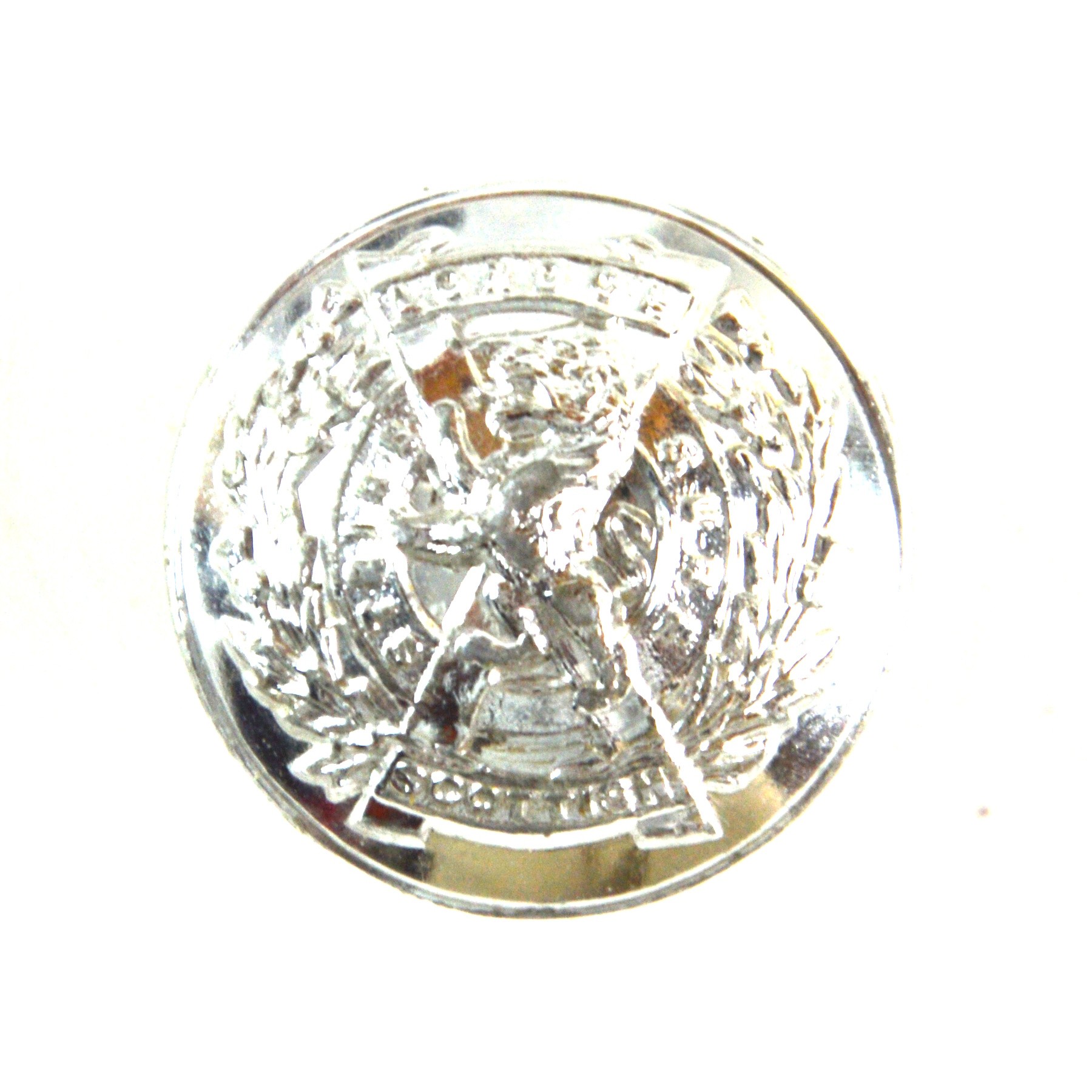
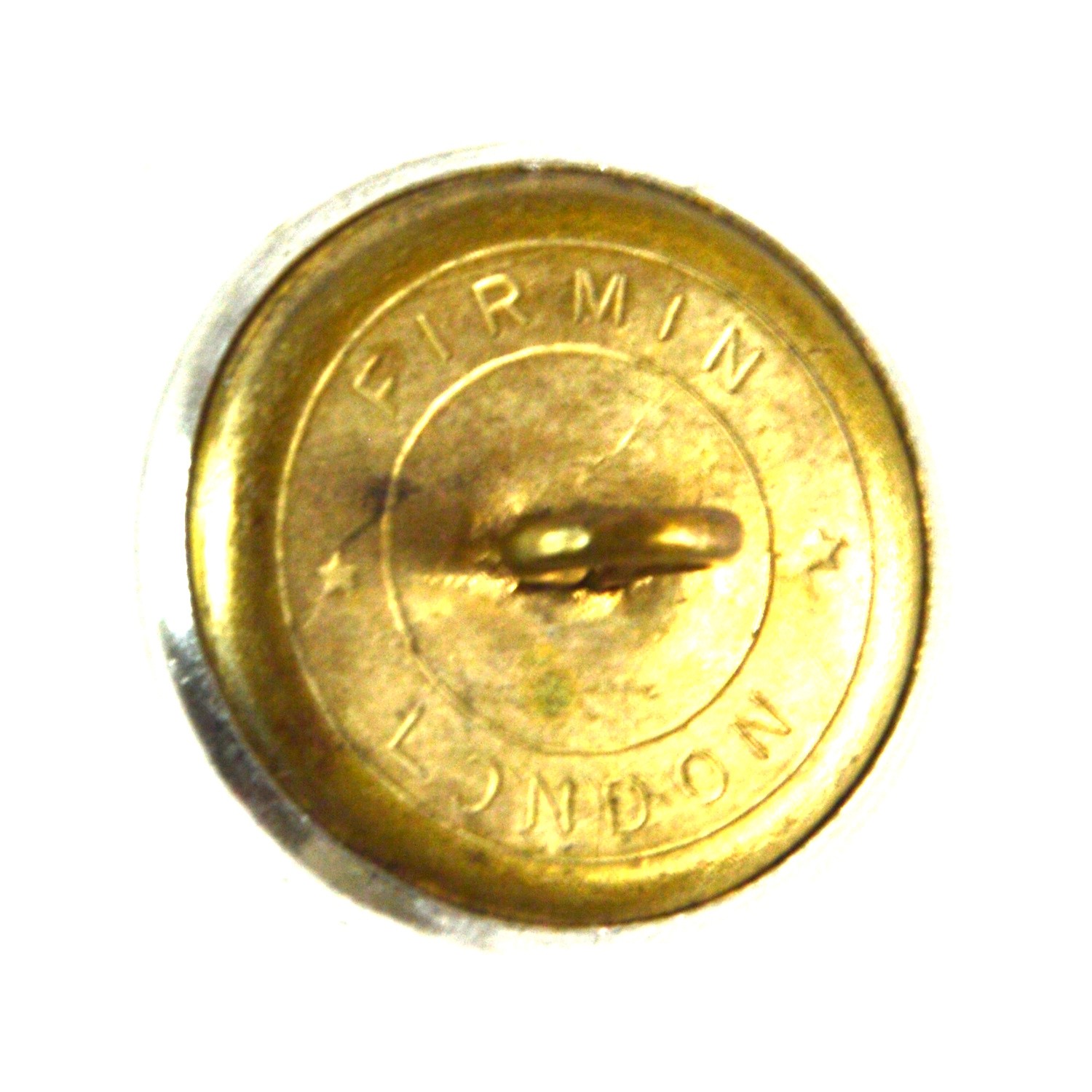
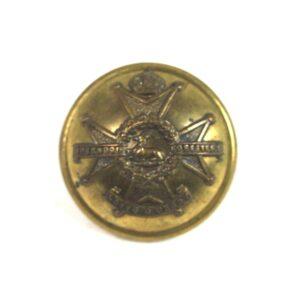
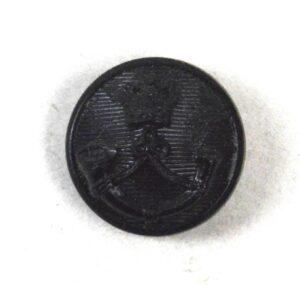
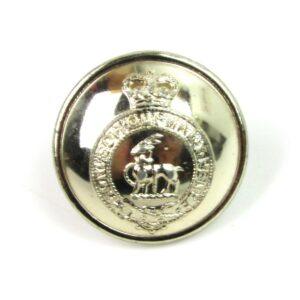
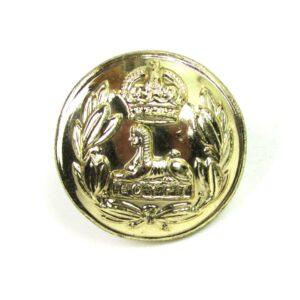
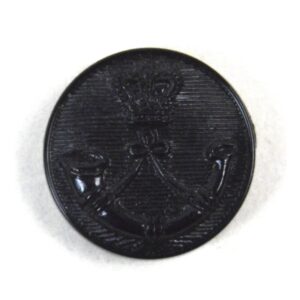
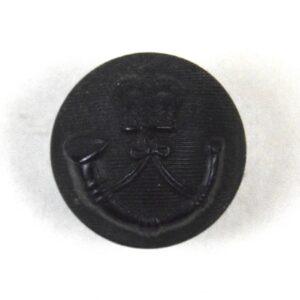
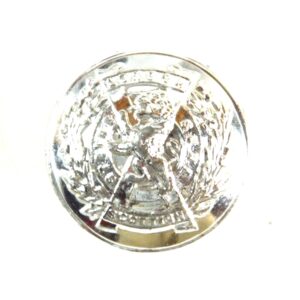
London Scottish piper’s anodised button, 25mm, original example of British Army regimental uniform insignia associated with the London Scottish Regiment.
Manufactured in anodised aluminium, this 25mm uniform button bears the distinctive badge of the London Scottish Regiment and was worn on service dress and ceremonial uniforms during the post-war period. The introduction of anodised aluminium buttons provided a lightweight, durable, and low-maintenance alternative to traditional gilt and brass examples while retaining the regiment’s historic identity.
The London Scottish Regiment was formed in 1859 as the London Scottish Rifle Volunteer Corps, becoming the first volunteer rifle unit in the British Army to adopt Highland dress. Recruiting primarily from London’s Scottish community, the regiment established a distinguished reputation through its volunteer service before becoming part of the Gordon Highlanders and later the London Regiment while maintaining its unique traditions and identity.
During the Second Boer War, volunteers from the regiment formed the London Scottish Volunteer Service Company, becoming the first volunteer unit to serve overseas in the conflict. In the First World War, the regiment gained lasting fame during the Battle of Messines in October 1914, becoming the first Territorial Force infantry battalion to engage the enemy on the Western Front. It continued to serve with distinction throughout the war and later during World War II.
Anodised buttons of this pattern were worn as part of the regiment’s modern uniform and remain popular with collectors of British military insignia, reflecting the enduring traditions of one of Britain’s most celebrated volunteer infantry regiments.
Manufactured in anodised aluminium and retaining its original shank fitting to the reverse, this example represents an authentic and collectable piece of British regimental history.
Dimensions
25mm diameter
Condition
Good overall original condition, with crisp detailing and a well-preserved anodised finish. Light age-related wear, minor surface marks, and signs of uniform use and storage may be present. The original reverse shank remains intact and secure. No significant damage or repairs evident unless otherwise noted.
Reviews
There are no reviews yet.