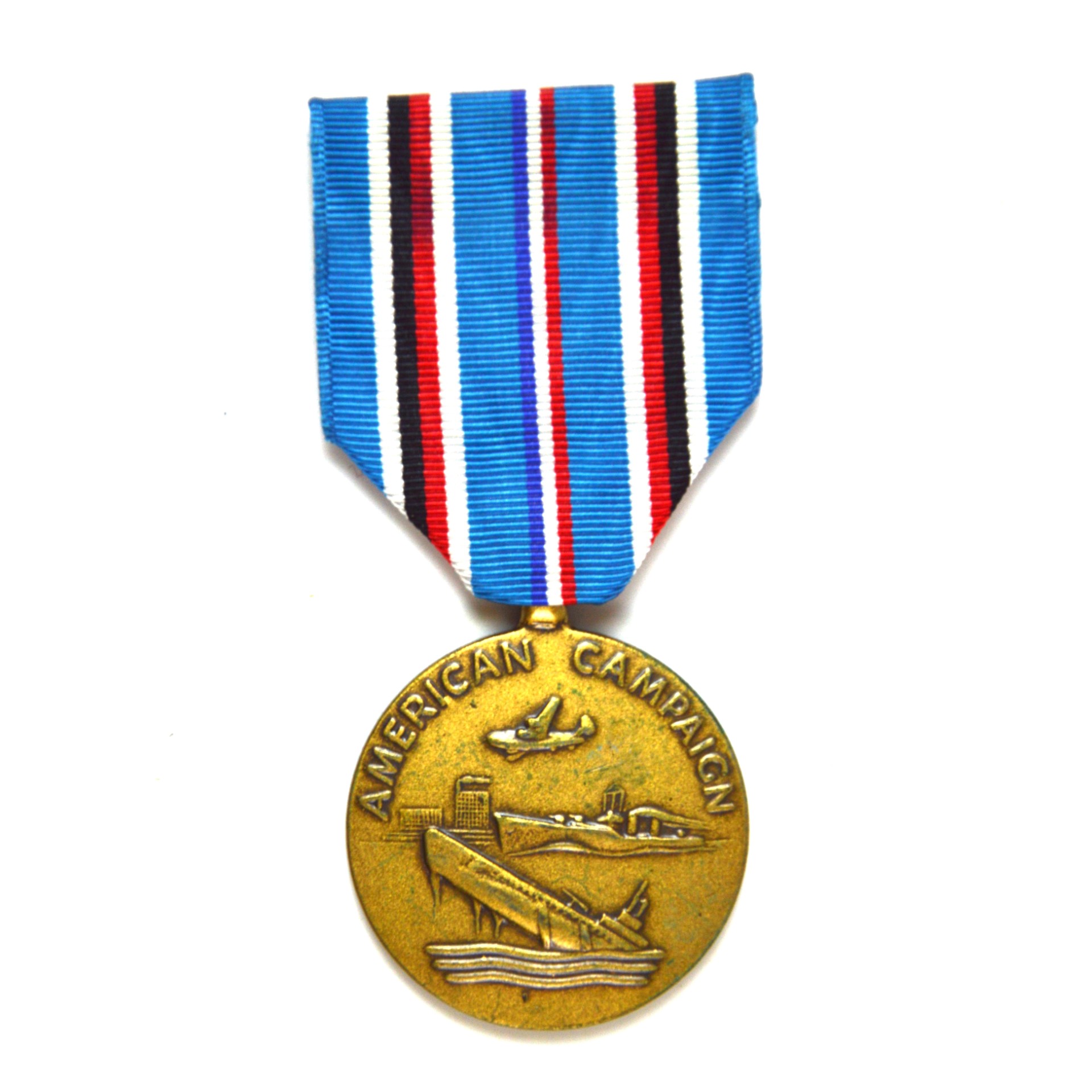
United States American Campaign Medal, a Second World War campaign medal established by President Franklin D. Roosevelt under Executive Order 9265 on 6 November 1942. The medal recognised qualifying service by members of the United States Armed Forces within the American Theatre of Operations between 7 December 1941 and 2 March 1946. Eligibility included specified service outside the continental United States, qualifying duty aboard vessels or aircraft operating over ocean waters, participation in active combat against the enemy, or an aggregate of one year’s service within the continental United States during the qualifying period. The award reflects the importance of defending the American homeland, protecting Atlantic and Pacific sea routes, and countering enemy submarine and aerial threats during the Second World War.
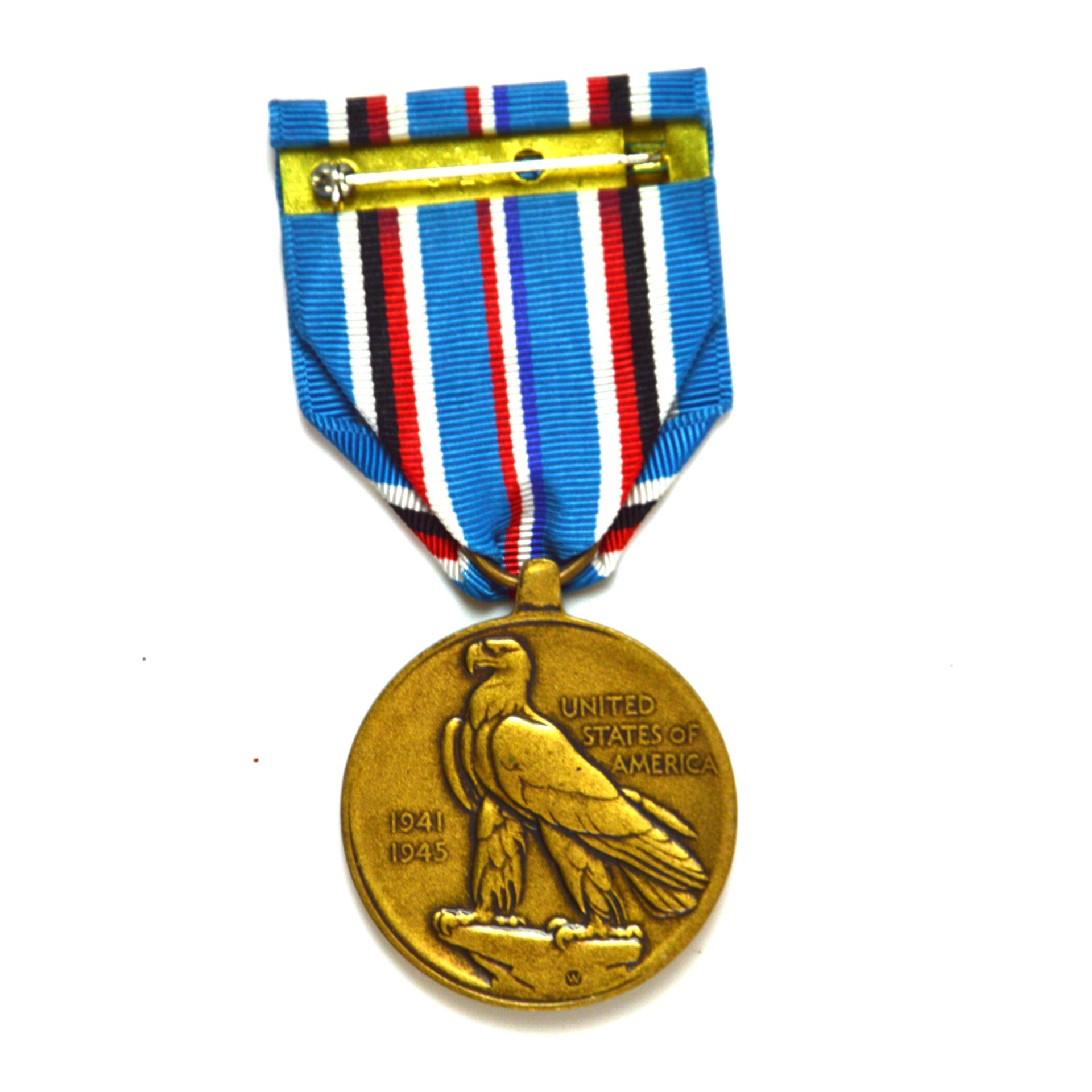
The bronze medal features a naval cruiser steaming at sea, a B-24 Liberator aircraft overhead and a sinking enemy submarine in the foreground. Buildings in the background represent American industrial production, while the inscription “AMERICAN CAMPAIGN” identifies the award. The reverse depicts a bald eagle between the dates “1941–1945” and the inscription “UNITED STATES OF AMERICA”. The predominantly blue ribbon incorporates red, white and black stripes, with a central red, white and blue section. Designed by Thomas Hudson Jones, the medal forms part of the principal United States Second World War campaign award series. It is of interest to collectors of American military decorations, United States Navy memorabilia and Second World War medals.
Condition
As new