- Why Collect British Militaria?
- Getting Started: The First Steps
- Choose Your Focus
- Build Knowledge Before Spending
- Your First Purchases
- Where to Buy British Militaria
- Militaria Fairs
- Specialist Auction Houses
- Online Buying
- Understanding What You’re Collecting
- Cap Badges and Insignia
- Medals and Decorations
- Edged Weapons
- Uniforms and Equipment
- Firearms
- Documents and Ephemera
- Authentication: Spotting Fakes and Reproductions
- The Scale of the Problem
- General Authentication Principles
- Red Flags
- Building Your Collection: Practical Advice
- Record-Keeping
- Storage and Conservation
- Display
- Insurance
- Valuation and the Market
- Understanding Prices
- Price Guides: What to Expect
- Legal Considerations
- Edged Weapons
- Firearms
- Nazi-Era Items
- Export and Import
- Building Expertise: The Long Game
- Join the Community
- Research Skills
- Develop Your Eye
- The Ethics of Collecting
Why Collect British Militaria?
Britain’s military history spans over a thousand years — from the medieval longbowmen who shaped Europe at Crécy and Agincourt, through the redcoats who built the largest empire the world has ever seen, to the soldiers, sailors, and airmen who fought two world wars and countless smaller conflicts across every continent. Every campaign, every regiment, every individual who served left behind physical traces: medals, badges, uniforms, weapons, documents, photographs. Collecting these objects is not merely a hobby — it is the preservation of history in tangible form.
The appeal of militaria collecting crosses generations and motivations. Family historians seek medals awarded to grandfathers and great-grandfathers. Military enthusiasts pursue items from favourite regiments or campaigns. Some collectors are drawn by the craftsmanship of Victorian-era badges or Edwardian sword blades. Others find fascination in the social history that uniforms and personal items reveal. And for many, the thrill of the hunt — finding an unrecognised rarity at a car boot sale or identifying a mystery badge — is the primary draw.
Unlike many collecting fields, British militaria remains remarkably accessible. While headline-grabbing auction prices for Victoria Crosses and rare medals make the news, the vast majority of collecting areas offer genuine, historically significant items for modest sums. A Victorian cap badge can be acquired for under £10. A named World War I trio of medals — linking you to a real soldier’s service — can be found for £60–£150. A complete WWII battledress uniform might cost £80–£200. Few other hobbies offer such direct, physical connections to history at such accessible prices.
Getting Started: The First Steps
Choose Your Focus
The single most important decision a new collector makes is choosing a focus. The field of British militaria is so vast that attempting to collect everything guarantees a disorganised, mediocre collection. The most satisfying — and most valuable — collections are those built around a clear theme. Consider these common approaches:
- Regimental focus: Collecting everything relating to one regiment — badges, medals, uniforms, documents, photographs. This is the most traditional approach and allows deep expertise. Popular choices include the Guards regiments, county infantry regiments, and famous formations like the Parachute Regiment, SAS, or Gurkhas.
- Campaign/era focus: Concentrating on a specific conflict or period — the Zulu War, the Boer Wars, World War I, World War II, or the Falklands. This allows you to build a comprehensive picture of one moment in history.
- Item type focus: Specialising in one category — cap badges, medals, edged weapons, helmets, buttons, or uniforms. This builds deep knowledge of manufacturing, dating, and authentication within a defined field.
- Named/attributed items: Collecting only items traceable to a specific individual — named medal groups, identified uniforms, documented personal effects. This is the most research-intensive but most historically rewarding approach.
- Geographic focus: Collecting items relating to your local regiment, garrison town, or county Territorial battalion. This connects your collection to your own community’s history.
The best advice for beginners is to start broad, explore for three to six months, and let your natural interests guide you toward a focus. Visit museums, attend fairs, read widely, and see what excites you before committing serious money.
Build Knowledge Before Spending
The golden rule of militaria collecting: knowledge is your most valuable asset. A knowledgeable collector with a modest budget will always build a better collection than an ignorant collector with deep pockets. Spend your first three months — and minimal money — on education:
- Reference books: Identify the standard references for your chosen area. For cap badges: Kipling & King’s “Head-Dress Badges of the British Army” (two volumes). For medals: Joslin, Litherland & Simpkin’s “British Battles and Medals.” For edged weapons: Robson’s “Swords of the British Army.” These are investments that pay for themselves many times over by preventing costly mistakes.
- Museums: The Imperial War Museum, National Army Museum, and regimental museums across the UK offer free or inexpensive access to verified, authenticated items. Study the real thing before you buy.
- Societies and organisations: The Military Historical Society, the Orders and Medals Research Society (OMRS), the Military Heraldry Society, and the Bayonet Society all publish journals, organise meetings, and provide access to expert knowledge. Annual memberships typically cost £25–£50 — outstanding value.
- Online resources: Forums such as the British Badge Forum, Great War Forum, and WW2Talk contain decades of accumulated expertise. Use them to learn, ask questions, and verify items before purchasing.
Your First Purchases
When you are ready to buy, start modestly. Your first purchases should be learning experiences as much as acquisitions. Choose items in the £10–£50 range that allow you to handle genuine period objects and develop your eye. Common starter items include:
- Victorian or Edwardian brass cap badges — widely available at £5–£20 each
- WWII economy (plastic) cap badges — £3–£10 each, surprisingly varied
- Individual campaign medals (unnamed British War Medals or Victory Medals) — £10–£30
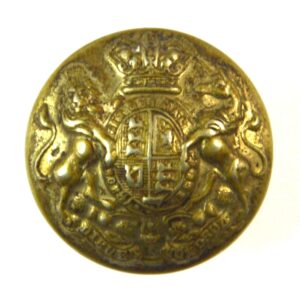
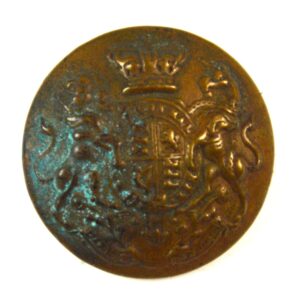
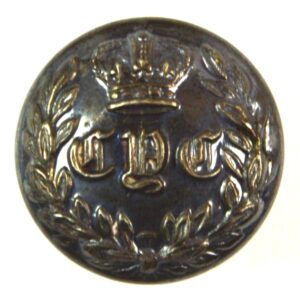
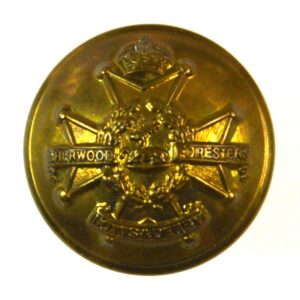
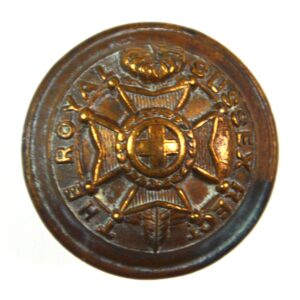
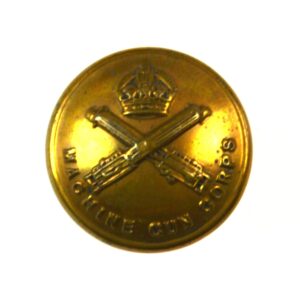
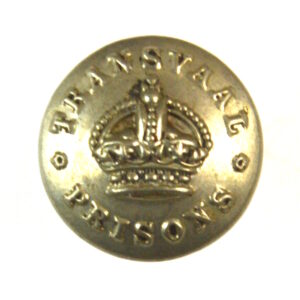
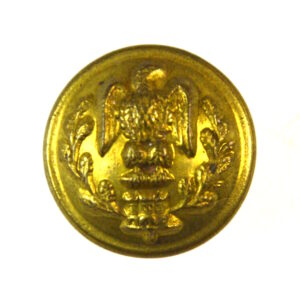
- Military buttons — one of the most affordable entry points at £2–£15
- Shoulder titles and formation signs — £5–£25
- Small items of equipment: brass button sticks, cap badge backplates, mess tins
Buy from reputable dealers at established militaria fairs. Handle items, ask questions, and learn from experienced sellers. Most genuine dealers are happy to educate enthusiastic beginners — they are building their future customer base.
Where to Buy British Militaria
Militaria Fairs
Fairs remain the best environment for buying and learning. The major UK fairs include:
- Aldershot Militaria Fair: Held monthly at the Princes Hall, Aldershot — the spiritual home of the British Army. Consistently strong selection of badges, medals, and general militaria.
- Detling (War & Peace Revival): Kent County Showground — one of the largest events, combining militaria sales with vehicle displays and re-enactment.
- Newark: The International Antiques & Collectors Fair at Newark Showground — massive scale with dedicated militaria sections.
- Malvern Militaria Fair: Three Counties Showground — well-established Midlands event.
- OMRS Convention: Annual convention of the Orders and Medals Research Society — premier medal fair with top-quality dealer tables.
Fairs offer critical advantages: you can handle items before buying, compare prices across multiple dealers, and build relationships with specialists in your collecting area. Arrive early for the best selection — serious collectors are through the doors at opening time.
Specialist Auction Houses
For higher-value items, specialist auction houses offer authenticated lots with provenance:
- Dix Noonan Webb (DNW): London-based, the premier auction house for medals and militaria. Excellent catalogue descriptions and strong buyer confidence.
- Noonans (formerly Glendining’s): Strong medals and orders specialist with regular sales.
- Bosleys: Marlow, Buckinghamshire — dedicated militaria auctioneer with particular strength in badges, helmets, and edged weapons.
- Warwick & Warwick: Good general militaria sales with medals, badges, and ephemera.
- Wallis & Wallis: Lewes, Sussex — long-established arms and militaria auctioneer.
Auction buying requires discipline. Set a firm maximum bid before the sale and do not exceed it. Factor in buyer’s premium (typically 20–25% plus VAT) when calculating your maximum. Study the catalogue carefully and, where possible, view lots in person beforehand.
Online Buying
eBay and specialist dealer websites offer convenience but require caution:
- eBay: Enormous selection but variable quality and accuracy of descriptions. Buy from sellers with high feedback scores, study photographs carefully, and verify descriptions against reference books. Be especially cautious with high-value items — the reproduction market is sophisticated.
- Dealer websites: Established dealers with online shops (such as ourselves at militarian.com) often offer guaranteed-authentic items with returns policies — safer than unvetted marketplace sellers.
- Facebook groups: Several active militaria buying/selling groups exist, but caveat emptor applies. Verify seller reputations through group administrators.
Understanding What You’re Collecting
Cap Badges and Insignia
Cap badges are the most popular entry point to militaria collecting, and with good reason. Every regiment and corps of the British Army has worn its own distinctive badge — a visual identity that soldiers took fierce pride in. From the flaming grenade of the Grenadier Guards to the bugle horn of the Light Infantry, each badge tells a story of regimental heritage stretching back centuries.
The main categories of badges include: cap badges (worn on the headdress), collar dogs (worn on the collar), shoulder titles (metal or cloth, identifying the regiment on the shoulder), and formation signs (divisional and brigade patches). Each category offers its own collecting possibilities, with cap badges being the most widely collected.
Dating badges relies on several factors: the metal used (brass, white metal, bi-metal, or wartime economy materials like plastic and Bakelite), the fixing method (slider, lugs, brooch pin), the monarch’s crown depicted (Victorian, Edwardian, King’s or Queen’s crown), and the maker’s details. The transition from brass to economy materials during the World Wars, and the amalgamation of regiments in 1958, 1968, and 2004-2007, created distinct collecting periods.
Medals and Decorations
British campaign medals form a continuous record from the Waterloo Medal of 1815 through to modern operational service medals. Most are named — engraved or impressed with the recipient’s details — making them among the most historically traceable of all militaria. The standard references (Joslin et al.) catalogue every authorised medal, its ribbon, clasps, and issuing criteria.
Medal collecting divides broadly into: campaign medals (awarded for service in specific conflicts), gallantry awards (Victoria Cross, Distinguished Conduct Medal, Military Medal, etc.), long service and good conduct medals, coronation and jubilee medals, and foreign awards. The most common collecting approach is assembling complete groups — all the medals awarded to one individual, ideally with supporting research confirming service details.
Pricing varies enormously. A single unnamed Victory Medal might cost £15; a named group with a gallantry award to an identified individual can reach tens of thousands. A VC can command £200,000–£400,000 or more. The key value drivers are: the gallantry or distinction of the award, the unit (famous regiments command premiums), the campaign (some are far rarer than others), and the quality of provenance and research.
Edged Weapons
Swords, bayonets, fighting knives, and dirks represent some of the most visually dramatic militaria. British military swords range from the elegant officers’ swords of the 18th century through the devastatingly effective 1796 Light Cavalry sabre to the 1908 Pattern cavalry sword — the last sword designed primarily as a combat weapon. Bayonets chart a parallel evolution from plug bayonets through socket bayonets to the short spike bayonets of the mid-20th century.
Collecting edged weapons requires attention to blade condition, originality of components (many swords have had grips or scabbards replaced over the centuries), and correct identification of pattern and date. Reference books by Robson (swords) and Skennerton (bayonets) are essential. For Scottish weapons — broadswords, dirks, and sgian-dubhs — the specialist literature is extensive and the prices correspondingly higher.
Uniforms and Equipment
Uniform collecting requires space but offers unparalleled visual impact. Items range from complete dress uniforms (scarlet tunics, mess dress, highland dress) to individual items of battledress, tropical kit, or webbing equipment. The key challenge is storage and conservation — textiles require careful environmental control to prevent moth damage, mould, and deterioration.
Helmets form a popular sub-speciality: from the pith helmet of the colonial era through the Brodie helmet of WWI, the Mark III and Mark IV of WWII, to the paratrooper’s distinctive rimless helmet. Each pattern has its own variations, markings, and dating clues.
Firearms
Deactivated firearms — rendered permanently incapable of firing by an approved process — are legally collectible in the UK. The Lee-Enfield (in all its variants), the Webley revolver, the Bren gun, and the Sten gun are among the most collected British military firearms. Current UK deactivation standards (2016 EU regulations) require extensive work, and pre-2016 deactivated weapons may need re-proofing to be sold. Always verify the deactivation certificate and ensure compliance with current legislation.
Documents and Ephemera
Paper items — service records, letters, photographs, postcards, instruction manuals, maps, and unit war diaries — provide the human context that physical objects alone cannot. A medal group researched alongside the soldier’s service record, diary entries, and family photographs becomes a narrative rather than a collection of metal discs. Ephemera is often undervalued relative to its historical significance and offers excellent value for collectors willing to do research.
Authentication: Spotting Fakes and Reproductions
The Scale of the Problem
Reproduction militaria is a significant and growing issue. The most commonly faked items include: Third Reich daggers and insignia (the highest-profit fakes market), rare cap badges, gallantry medals (especially VCs and higher awards), and Commando/SAS items. The quality of reproductions ranges from obvious tourist souvenirs to sophisticated forgeries that can deceive experienced collectors.
General Authentication Principles
- Weight and feel: Genuine period items were made from specific alloys and materials. Reproductions often use modern metals that differ in weight, density, and colour. Handle as many verified genuine items as possible to train your instinct.
- Manufacturing method: Period items were made using the technology of their era — hand-soldering, die-stamping, engraving. Reproductions may show modern manufacturing marks: machine-perfect surfaces, casting bubbles, or incorrect tool marks.
- Wear and patina: Genuine items that have been used, stored, and handled for decades or centuries develop a natural patina. Artificial ageing (acid baths, tumbling) creates a different appearance that experienced eyes can detect.
- Provenance: Where did the item come from? A medal bought from the descendant of the recipient, with supporting documents, is almost certainly genuine. An item with no history, sold by an anonymous seller at a suspiciously low price, warrants extreme caution.
- Reference comparison: Compare every significant purchase against verified examples in reference books, museum collections, or authenticated items in established collections. If the details do not match, investigate further before buying.
Red Flags
- Price significantly below market value — if it looks too good to be true, it probably is
- Seller unwilling to provide provenance or allow expert examination
- Item looks “too good” — suspiciously crisp details, no wear, no patina on an allegedly old item
- Multiple identical items available from the same seller (genuine rarities are, by definition, rare)
- Incorrect details that reference books flag: wrong crown, wrong maker mark, wrong material for the claimed period
Building Your Collection: Practical Advice
Record-Keeping
Maintain a detailed record of every item in your collection from the very first purchase:
- Photographs: Multiple views of each item — front, back, close-up details, maker marks, any damage or distinguishing features
- Purchase details: Date acquired, source (dealer, auction, fair), price paid, lot number if applicable
- Item description: Formal identification — pattern, date, maker, regiment, condition assessment
- Research notes: Any research conducted — medal rolls checked, service records found, history uncovered
- Provenance: Chain of ownership where known — previous collections, family history, auction appearances
This record serves three purposes: insurance documentation (essential for claims), authentication evidence (your research strengthens the item’s provenance), and future reference (when you sell or bequeath, complete records significantly increase value).
Storage and Conservation
Proper storage protects your investment and preserves items for future generations:
- Environment: Maintain stable conditions — 18–20°C, 45–55% relative humidity. Avoid attics (extreme temperature swings) and basements (damp). Use a digital hygrometer to monitor.
- Metals: Apply a thin coat of microcrystalline wax (Renaissance Wax) to prevent oxidation. Store in acid-free tissue. Silica gel packets in display cases absorb excess moisture.
- Textiles: Store uniforms on padded hangers or rolled around acid-free tubes — never folded. Use breathable cotton covers, not plastic bags. Cedar or lavender as moth deterrents.
- Paper: Acid-free folders, boxes, and interleaving tissue. Handle with clean, dry hands. Store flat, never folded. Keep away from direct sunlight to prevent fading.
- Leather: Condition periodically with conservation-grade leather dressing. Store away from heat sources. Allow leather items to breathe — do not seal in airtight containers.
Display
A well-displayed collection brings history to life. Options range from simple shadow boxes (ideal for medal groups or small badge collections) to purpose-built display cabinets with controlled lighting. Key principles:
- Avoid direct sunlight — UV degrades textiles, fades ribbons, and bleaches paper
- Use museum-quality UV-filtering glass in frames and cabinets
- Group items thematically — a complete regimental display (badge, medals, photograph, shoulder titles) tells a story better than random items
- Label items clearly — identification, date, and context transform a display from a collection of objects into a historical narrative
Insurance
For collections valued above £5,000, specialist insurance is strongly recommended. Standard household contents policies typically exclude or severely limit cover for collections. Specialist providers (Collectinsure, Connoisseur Policies, or brokers recommended by the OMRS) offer comprehensive cover including accidental damage, theft, and transit. An up-to-date photographic inventory with valuations is essential for any claim.
Valuation and the Market
Understanding Prices
Militaria prices are driven by: rarity, condition, completeness, provenance, and current market fashion. Some general principles:
- Rarity: Fewer surviving examples means higher prices. Badges from regiments disbanded after short service, medals for campaigns with few recipients, and items from small volunteer units all carry rarity premiums.
- Condition: A badge in near-mint condition is worth significantly more than a damaged or heavily worn example of the same item. However, “honest wear” consistent with genuine use is acceptable — collectors are suspicious of items in implausibly perfect condition.
- Completeness: A complete medal group (all medals to one recipient, correctly court-mounted) is worth more than the individual medals. A uniform with matching badges, buttons, and insignia commands more than the components separately.
- Provenance: Documented history — named medals, researched service records, family connections, previous collection pedigree — significantly increases value.
- Fashion: Collecting trends shift. SAS, Parachute Regiment, and Commando items have seen sustained price increases. Certain campaigns (Zulu War, Gallipoli, D-Day) always command premiums. Conversely, some previously expensive areas (certain WWII German items) have softened as the collecting generation changes.
Price Guides: What to Expect
| Item Type | Entry Level | Mid-Range | Premium |
|---|---|---|---|
| Cap badges (brass) | £3–£15 | £15–£80 | £100–£500+ |
| Campaign medals (single) | £15–£50 | £50–£300 | £500–£5,000+ |
| Medal groups (named) | £60–£200 | £200–£1,500 | £2,000–£50,000+ |
| Bayonets | £30–£80 | £80–£300 | £400–£2,000+ |
| Military swords | £150–£400 | £400–£1,500 | £2,000–£15,000+ |
| Helmets (steel) | £40–£100 | £100–£400 | £500–£3,000+ |
| Uniforms (WWII BD) | £40–£120 | £120–£400 | £500–£5,000+ |
| Deactivated firearms | £200–£500 | £500–£1,500 | £2,000–£10,000+ |
Legal Considerations
Edged Weapons
Antique swords (pre-1954 for curved blades) are legal to own, buy, and sell in the UK without restrictions. Bayonets are classed as offensive weapons and technically require a reasonable excuse for carrying in public, but ownership and private sale are not restricted. Always transport edged weapons securely and discreetly.
Firearms
Deactivated firearms require a valid deactivation certificate issued by one of the London or Birmingham Proof Houses. Since 2016, EU-wide deactivation standards apply. Pre-2016 deactivations may not be legally transferable without re-proofing. Antique firearms (manufactured before 1939 for certain categories) may be exempt — seek specialist legal advice for specific items.
Nazi-Era Items
In the United Kingdom, the collection and sale of Third Reich items is legal. However, display and sale of items bearing Nazi symbols is illegal in Germany, Austria, France, and other European countries. Cross-border transactions (including online sales) may be affected. Be aware of platform-specific policies — eBay restricts listings of certain Nazi-era items.
Export and Import
Some items may require export licences under UK law, particularly cultural property above certain value thresholds. Ammunition components, even inert, may attract customs attention. When buying internationally, check both export regulations in the selling country and import regulations in the UK.
Building Expertise: The Long Game
Join the Community
The militaria collecting community is remarkably generous with knowledge. Key organisations to consider:
- The Military Historical Society (MHS): Publishes the “Doublure” journal — essential for badge and insignia collectors. Regular meetings and an annual convention.
- Orders and Medals Research Society (OMRS): The premier organisation for medal collectors. Their journal is the standard for medal research, and the annual convention is a highlight of the collecting calendar.
- The Bayonet Society: Specialist organisation for bayonet collectors — journal, meetings, and expert knowledge.
- Great War Forum / WW2Talk: Online communities with decades of accumulated expertise and generous, knowledgeable members.
Research Skills
Learning to research is as important as learning to identify. Key resources include:
- The National Archives (Kew): Service records (WO 363/364 for WWI), unit war diaries (WO 95), medal rolls (WO 329), and much more. Increasingly digitised and searchable online.
- Commonwealth War Graves Commission: Free online database of all Commonwealth casualties from both World Wars — essential for researching named medals.
- Ancestry.co.uk / FindMyPast: Digitised military records, including service papers, medal index cards, and pension records.
- Regimental museums: Most hold archives, photographs, and records relating to their regiment’s history. Curators are often knowledgeable and helpful.
- London Gazette: Online archive of all gallantry awards, promotions, and military announcements — free to search.
Develop Your Eye
There is no substitute for handling genuine items. Visit museums, attend fairs, and examine items in dealers’ stocks — even items you have no intention of buying. Over time, you develop an instinct for authenticity that no book can fully teach. The weight of a genuine brass badge, the patina of a century-old medal, the hand-stitching on a Victorian tunic — these sensory memories become your most reliable authentication tool.
The Ethics of Collecting
Militaria collecting carries ethical responsibilities that thoughtful collectors take seriously. These items often represent sacrifice, suffering, and loss. Treat them with the respect they deserve. Research the human stories behind named items — the soldier behind the medal group. Preserve items properly for future generations. Be honest in transactions — accurately describe condition, provenance, and any doubts about authenticity. Support museums and historians with access to items in your collection. And recognise that you are a temporary custodian of these objects — they will pass to other hands one day, just as they passed to yours.
British militaria collecting is a hobby that can last a lifetime, growing richer and more rewarding as your knowledge deepens. Whether you end up with a cabinet of cap badges, a wall of framed medal groups, or a room of uniformed mannequins, you are preserving the tangible heritage of Britain’s military past. Welcome to the community.
Frequently Asked Questions
What is the best way to start collecting British militaria?
Begin with a single area that interests you u2014 cap badges, medals, or a specific regiment or era. Buy from reputable dealers and fairs, handle as many items as possible, and invest in good reference books before spending heavily on items.
How much money do I need to start a collection?
You can start with as little as u00a310-u00a320 for common cap badges or WWII buttons. Campaign medals start around u00a340 for common groups. There is no minimum u2014 buy what interests you within your budget.
Is it legal to collect British militaria?
Yes, collecting militaria is entirely legal in the UK. Some items (deactivated firearms, certain edged weapons) have specific regulations under the Firearms Act and Criminal Justice Act, but ownership for collection purposes is lawful.
Where is the best place to buy British militaria?
Specialist militaria fairs, established auction houses (DNW, Spink, Bosleys), reputable online dealers, and carefully vetted eBay sellers. Avoid buying expensive items without provenance or from unknown sellers.
How do I know if a piece of militaria is genuine?
Learn to assess materials, construction methods, and maker's marks. Compare with known genuine examples. For expensive items, seek expert authentication from specialists or auction houses. Reference books are essential.
Sources & References
- Bull, S., An Historical Guide to Arms & Armour (Studio Editions)
- Wilkinson-Latham, R., Discovering British Military Badges and Buttons (Shire)
- Joslin et al., British Battles and Medals (Spink)

Related Items in Our Collection8 items