- Introduction
- What Is a Cap Badge?
- History and Development
- Materials and Manufacture
- Design Elements and Heraldry
- The Regimental Families
- The Great Reorganisations
- Officers’ vs Other Ranks’ Badges
- Commonwealth and Imperial Badges
- Identifying and Authenticating Badges
- How to Start Collecting
- Care, Display, and Valuation
- Sources
- Introduction
- What Is a Cap Badge?
- History and Development
- Materials and Manufacture
- Design Elements and Heraldry
- The Regimental Families
- The Great Reorganisations
- Officers’ vs Other Ranks’ Badges
- Commonwealth and Imperial Badges
- Identifying and Authenticating Badges
- How to Start Collecting
- Care, Display, and Valuation
- Sources
Introduction
The cap badge is perhaps the single most potent symbol of regimental identity in the British Army. For over two centuries, a small piece of stamped, cast, or engraved metal has served as the outward expression of a soldier’s regiment — his history, his traditions, his loyalty, and his pride. To the collector, cap badges offer a compact, affordable, and endlessly varied entry point into British military history. To the historian, they are a visual index of every reorganisation, amalgamation, and disbandment the Army has undergone. [1]
This guide covers the history of British Army cap badges, the materials and methods of their manufacture, the heraldic language of their designs, the great reorganisations that transformed them, and practical advice for the collector on identification, authentication, and care.
What Is a Cap Badge?
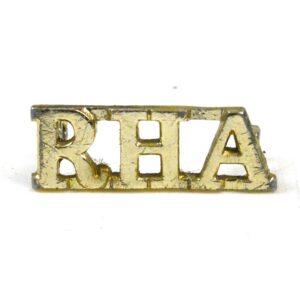
A cap badge is a metal (or occasionally cloth) insignia worn on the front of military headgear to identify the wearer’s regiment or corps. In the British Army, the cap badge is properly termed the “head-dress badge” — it appears on berets, forage caps, peaked caps, and formerly on helmets, shakos, and busbies. The badge is distinct from collar badges, shoulder titles, and formation signs, though all serve identifying functions. [1]
The cap badge is more than mere identification. In a regimental system built on fierce local identity, shared history, and competitive pride, the badge is a totem — an object of reverence, argument, and deep emotional attachment. Ask any British soldier what his cap badge means and you are inviting a monologue on centuries of battle honours, traditions, and regimental superiority. Amalgamation — and the consequent loss of a cap badge — has provoked more passionate resistance than almost any other military reform in British history.
History and Development
Identifying emblems on military headgear predate the modern cap badge by centuries. Tudor and Stuart soldiers wore regimental devices — cockades, plumes, and painted tin plates — but the formalised metal cap badge as we know it emerged in the early 19th century, particularly with the adoption of the shako by the British infantry after 1800. [2]
The early shako plates were large, elaborate brass stampings — often incorporating the royal cypher, regimental number, battle honours, and decorative flourishes. These evolved through several shako patterns (Stovepipe, Belgic, Albert, Quilted) between 1800 and 1878. When the shako was replaced by the home service helmet (spiked pith helmet) in 1878, the badge took the form of a large star-shaped helmet plate — another rich collecting field. [2]
The modern-style cap badge — smaller and designed for the field service cap or beret — became standard during the Boer War and First World War era. The 1898-pattern field service cap required a much smaller badge than the home service helmet, and this format has essentially persisted (with changes for each monarch) to the present day. The adoption of the beret from the 1940s onwards cemented the small metal badge as the universal format. [1]
Materials and Manufacture
Understanding materials is essential for both identification and authentication. The manufacturing method and material are often the quickest way to date a badge or spot a reproduction.
| Material | Period | Notes |
|---|---|---|
| Brass (stamped) | c. 1880–1952 | Standard OR badge; die-struck from sheet brass; usually with slider or lugs |
| White metal | c. 1880–1952 | Used for specific regiments (e.g. many Scottish, fusilier, and rifle regiments) |
| Gilt and silver | All periods | Officers’ badges; often with more refined detail; sometimes hallmarked |
| Bi-metal | c. 1890 onwards | Combined brass and white metal; common in many regiments |
| Bronze | Various | Officers’ service dress; dark patina; Rifle regiments and others |
| Anodised aluminium | 1952 onwards | “Staybrite” issue; replaced brass; gold or silver finish; no polishing required |
| Plastic (economy) | c. 1941–1945 | Wartime economy; brown or black; brittle; rare survivors |
Manufacturing methods included die-striking (most common for OR badges — a flat brass sheet struck between hardened steel dies), casting (used for more three-dimensional designs, particularly officers’ badges), and hand-finishing (officers’ quality badges were often hand-chased and gilded). The quality of die-striking deteriorated during both World Wars as dies wore and materials were economised — which means that a blurred, poorly struck badge is not necessarily a fake; it may simply be a late-war production. [2]
The slider — a flat strip of metal on the reverse that slips behind the hat band — is the most common fixing method for OR badges. Officers’ badges more often use lugs (small pins with split-pin fasteners). Screw-post fittings appear on certain patterns. The fixing method is a key authentication point: if you see a lugs-and-pins fitting on a badge that should have a slider, investigate further. [1]
Design Elements and Heraldry
British cap badges are works of condensed heraldry. Each element of a badge’s design tells a story — and understanding the visual vocabulary unlocks the ability to identify badges without a reference book. Common elements include:
- The Crown — nearly every badge bears the sovereign’s crown. The Victorian Crown (depressed arches, small), the King’s Crown or “Tudor Crown” (flatter top, used by Edward VII to George VI), and the Queen’s Crown or “St Edward’s Crown” (taller, rounded, EIIR 1953–2022) are the three main patterns. The 2023 change to the CIIIR cypher under King Charles III is beginning to appear on new-pattern badges.
- Regimental number — before the 1881 Childers Reforms, regiments were known by number (e.g. “24th Foot”). Post-1881, numbers were replaced by territorial titles, but the old number sometimes survived in the badge design.
- Motto scrolls — many badges bear regimental mottoes. Some are in Latin (Nec Aspera Terrent — “Difficulties Do Not Deter”), others in English (“Fear God, Honour the King”), and a few in exotic languages reflecting colonial connections.
- Animals and devices — the sphinx (for Egypt), the tiger (for India), the dragon (for China), the harp (for Irish regiments), the thistle (for Scottish), the plume of feathers (for Welsh), and hundreds of other devices each carry specific historical resonance.
- Battle honours — some badges incorporate specific battle honours (the Sphinx with “Egypt” is perhaps the best known), though the full list of honours is usually displayed on the colours rather than the badge.
The Regimental Families
The British Army’s pre-2006 regimental system grouped infantry regiments into broad families, each with shared history and badge traditions:
- Guards — the five regiments of Foot Guards (Grenadier, Coldstream, Scots, Irish, Welsh) wear distinctive star devices. The Guards Division maintains the most prestigious badge traditions in the Army.
- English county regiments — from the Green Howards (Yorkshire) to the Devonshire Regiment, each bore local symbols. Roses (Lancashire, Yorkshire), castles (various), keys, eagles, and county crests abound.
- Scottish regiments — stags, thistles, saltires, clan mottos, and distinctive white-metal construction. Scottish badges are among the most ornate and beautiful in British militaria.
- Irish regiments — harps, shamrocks, crowns, and — in the case of the disbanded southern Irish regiments — badges that exist only as historical collectors’ items since 1922.
- Welsh regiments — the Prince of Wales’s plume, the red dragon, and leek devices. The South Wales Borderers’ badge, with its sphinx commemorating Egypt, is one of the most recognised.
- Rifle regiments — the Maltese Cross, stringed bugle-horn, and dark bronze or blackened metal distinguish the rifle tradition. The King’s Royal Rifle Corps, the Rifle Brigade, and later The Royal Green Jackets maintained their distinctive identity through badge and uniform.
- Corps — the Royal Artillery, the Royal Engineers, the RAMC, the REME, and dozens of other corps each have their own badge, often with a rich history stretching back centuries.
The Great Reorganisations
Every major Army reorganisation created, destroyed, and transformed cap badges — making these reform dates essential knowledge for the collector.
| Reform | Date | Impact on Badges |
|---|---|---|
| Childers Reforms | 1881 | Numbered regiments linked into county-titled pairs; entirely new territorial badges issued |
| Haldane Reforms | 1908 | Territorial Force created; TF battalions often used parent regiment badge, but some received unique patterns |
| Post-WWI reductions | 1919–22 | Irish regiments disbanded; southern Irish badges became collectors’ items overnight |
| Post-WWII amalgamations | 1958–71 | Massive programme of mergers; dozens of historic badges replaced by new amalgamated designs |
| Options for Change | 1991–94 | Further amalgamations; new badges for merged regiments |
| Army 2020 / Forming the Deterrent | 2006–present | “Super-regiments” created (The Rifles, The PWRR, The Mercian, etc.); many historic badges finally lost |
The 1881 Childers Reforms represent the single biggest transformation. Before 1881, infantry regiments were known by number (1st Foot, 2nd Foot, etc.) and wore relatively standardised badges featuring the regimental number. Childers linked pairs of numbered regiments to county depots and gave them territorial titles — thus the 24th Foot became the South Wales Borderers, the 33rd Foot became the Duke of Wellington’s Regiment, and so on. Entirely new badges were designed incorporating county symbols, mottoes, and territorial devices. For the collector, this means that pre-1881 badges and post-1881 badges are fundamentally different objects. [2]
The post-1958 amalgamations are the richest field for the collector with a limited budget. Dozens of historic county regiments were merged: the Buffs and the Queen’s Own became the Queen’s Own Buffs; the Devons and the Dorsets became the Devonshire and Dorset Regiment. Each amalgamation produced a new badge that drew on both parents — and made the originals instantly more collectable. The process accelerated under Options for Change (1991–94) and the Army 2020 reforms (2006 onwards), which created the current “large regiment” structure. [3]
Officers’ vs Other Ranks’ Badges
Collecting cap badges means understanding the distinction between officers’ and other ranks’ (OR) badges. Officers’ badges were privately purchased, often from specialist military outfitters such as J.R. Gaunt, Firmin, or Hobson & Sons. They were typically made of superior materials — gilt and silver rather than brass, with finer detail and better finishing. Many officers’ badges bear makers’ marks or hallmarks on the reverse — a valuable authentication and dating aid. [1]
OR badges were government-issue, mass-produced by War Department contract. They are generally die-struck from sheet brass or white metal, with cruder detail than their officers’ counterparts but often possessing a robust charm of their own. Because millions were produced, OR badges are usually much more affordable than officers’ — making them the natural starting point for most collectors.
The key distinctions: officers’ badges tend to be slightly different in size (sometimes larger, sometimes smaller depending on period), better finished, and more three-dimensional. An officer’s badge of a Scottish regiment, for example, might feature a separately applied enamel panel within a silver framework — whereas the OR badge uses a flat, die-struck bi-metal design. Learning to spot these differences takes time but is one of the most rewarding skills a badge collector can develop.
Commonwealth and Imperial Badges
British cap badge design influenced the entire Commonwealth. Australian, Canadian, New Zealand, South African, and Indian Army units all adopted the cap badge tradition, often with distinctive national variations:
- Australia — the “Rising Sun” badge, first worn by the Australian Light Horse in the Boer War, became the universal Australian military badge and remains so today. Individual units also had their own badges, particularly in the two World Wars.
- Canada — the maple leaf is ubiquitous, but Canadian unit badges are remarkably varied and ornate: from the Princess Patricia’s Canadian Light Infantry to the Lord Strathcona’s Horse, Canadian badges are a rich collecting field.
- New Zealand — fern leaf and kiwi motifs. NFZ (New Zealand Forces) badges from both World Wars appear regularly in the UK market.
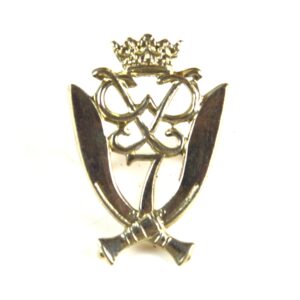
- India — the British Indian Army’s badges are among the most beautiful and collectable of all: ornate, incorporating Mughal and Hindu motifs, and made to extremely high standards by Indian silversmiths and military contractors. Gurkha badges, with their distinctive crossed kukris, are both common and eternally popular.
Commonwealth badges often appear in British collections — brought home by soldiers who served alongside allied units, or acquired as “swaps” during combined operations. They add international breadth and historical depth to any badge collection.
Identifying and Authenticating Badges
Identification begins with the major reference books. Kipling and King’s Head-Dress Badges of the British Army remains the bible — comprehensive, well-illustrated, and covering two volumes. Westlake’s guides to WWI-era badges are invaluable for the enormous variety of wartime-raised units. For post-1945 patterns, Gaylor’s Military Badge Collecting is the accessible starting point. [3]
When authenticating, look for:
- Weight and feel — genuine period badges have a specific heft. Reproductions are often lighter (thin castings) or heavier (solid rather than hollow-backed). Handle enough originals and you develop an instinct.
- Patina — genuine brass badges develop a deep, even patina over decades. Reproductions may be artificially aged (chemically darkened) — look for patina in recesses (genuine) vs even all over (possibly artificial).
- Die quality — period badges show sharp detail (early production) or even wear (late-war). Reproductions from recut dies often have slightly “soft” or blurred detail, or miss fine elements like crown jewels or text serifs.
- Fixings — correct slider, lugs, or screw for the pattern. The reverse of a badge is often more telling than the front. Reproduction sliders tend to be thinner and more crudely bent.
- Known fakes — certain high-value badges (disbanded Irish regiments, rare volunteer battalions, economy-issue WWII plastic) are widely reproduced. Buy from reputable dealers and ask for provenance.
How to Start Collecting
Cap badge collecting is one of the most accessible areas of British militaria. A genuine WWII-era common-regiment badge can be bought for a few pounds. Even rarer Victorian-era badges remain affordable compared to medals or edged weapons. A suggested approach for beginners:
- Choose a focus — by regiment, by period (WWI, WWII), by type (Scottish regiments, Rifle regiments, Corps), or by theme (disbanded regiments, all variants of one badge). A focused collection is more satisfying and more educational than random accumulation.
- Buy the book first — invest in Kipling & King or Gaylor before buying badges. Knowledge prevents expensive mistakes.
- Start with OR brass — affordable, plentiful, and available at militaria fairs, online auctions, and dealer lists. Build your eye on common badges before spending on rare pieces.
- Join a specialist society — the Military Historical Society and the Military Heraldry Society both have active membership and publications.
- Handle everything — attend fairs and handle badges physically. No photograph can replicate the education of feeling genuine versus reproduction in your hand.
Care, Display, and Valuation
Badge care is straightforward. Brass badges should not be polished with commercial brass cleaner — this removes original patina and can obliterate fine detail. A wipe with a dry cloth or a very light application of Renaissance Wax is sufficient. Officers’ gilt and silver badges should be stored separately to prevent scratching. White-metal badges can develop tarnish; a specialist silver cloth is appropriate for light cleaning. [3]
For display, purpose-built display boards covered in felt or baize are the traditional method. Alternatively, framed shadow boxes with individual mounting clips allow attractive wall display. Avoid direct sunlight (which can affect cloth backing) and high humidity (which accelerates corrosion).
Valuation depends on rarity, condition, age, and desirability. Common WWII OR brass badges trade for £3–£15. Scarce Victorian badges might fetch £50–£200. Officers’ silver and gilt badges of disbanded or amalgamated regiments regularly achieve £100–£500 at auction. Exceptional rarities — such as economy-issue WWII plastic badges in good condition, or pre-1881 shako plates of specific regiments — can reach four figures. As with all militaria, condition is paramount: a sharp, undamaged badge with original slider will always command a premium over a polished, bent, or slider-replaced example.
Sources
- Kipling, Arthur L. and King, Hugh L. Head-Dress Badges of the British Army. 2 vols. London: Frederick Muller, 1972–79. ISBN 978-0-584-10368-2.
- Parkyn, Major H.G. Shoulder-Belt Plates and Buttons. Aldershot: Gale & Polden, 1956.
- Gaylor, John. Military Badge Collecting. London: Leo Cooper, 1996. ISBN 978-0-85052-506-1.
- Westlake, Ray. British Battalions on the Western Front, January to June 1915. London: Leo Cooper, 2001. ISBN 978-0-85052-797-3.
Frequently Asked Questions
How do I identify a British Army cap badge?
Start by examining the crown type (Victorian, King's, Queen's), the regiment or corps title, and the materials used. Victorian-era badges tend to be bi-metal (brass and white metal), while later Staybrite badges are made from anodised aluminium. Check for maker's marks on the reverse and compare against reference books such as Kipling & King's 'Head-Dress Badges of the British Army'.
What is a Staybrite badge?
Staybrite badges are cap badges made from anodised aluminium, introduced in the late 1950s to replace traditional brass badges that required regular polishing. They are lighter, shinier, and maintenance-free. While less collectible than older brass or bi-metal examples, they remain popular with collectors of post-war militaria.
How much are WW2 cap badges worth?
Values vary enormously depending on the regiment, condition, and rarity. Common infantry regiment badges from WW2 may sell for £5–£15, while badges from disbanded or short-lived units can fetch £50–£200 or more. Special forces badges, such as those from the SAS or Commandos, are particularly sought after and can command premium prices.
What is the difference between a cap badge and a collar badge?
A cap badge is worn on the front of the headdress and is typically larger, displaying the full regimental device. Collar badges are smaller versions worn in pairs on the collar of the tunic. Collar badges often feature a simplified version of the cap badge design and are sometimes referred to as 'collar dogs'.
Sources & References
- Kipling & King - Head-Dress Badges of the British Army (1972)
- Westlake - Collecting Metal Shoulder Titles (1980)
- Imperial War Museum Archives

Related Items in Our Collection8 items