
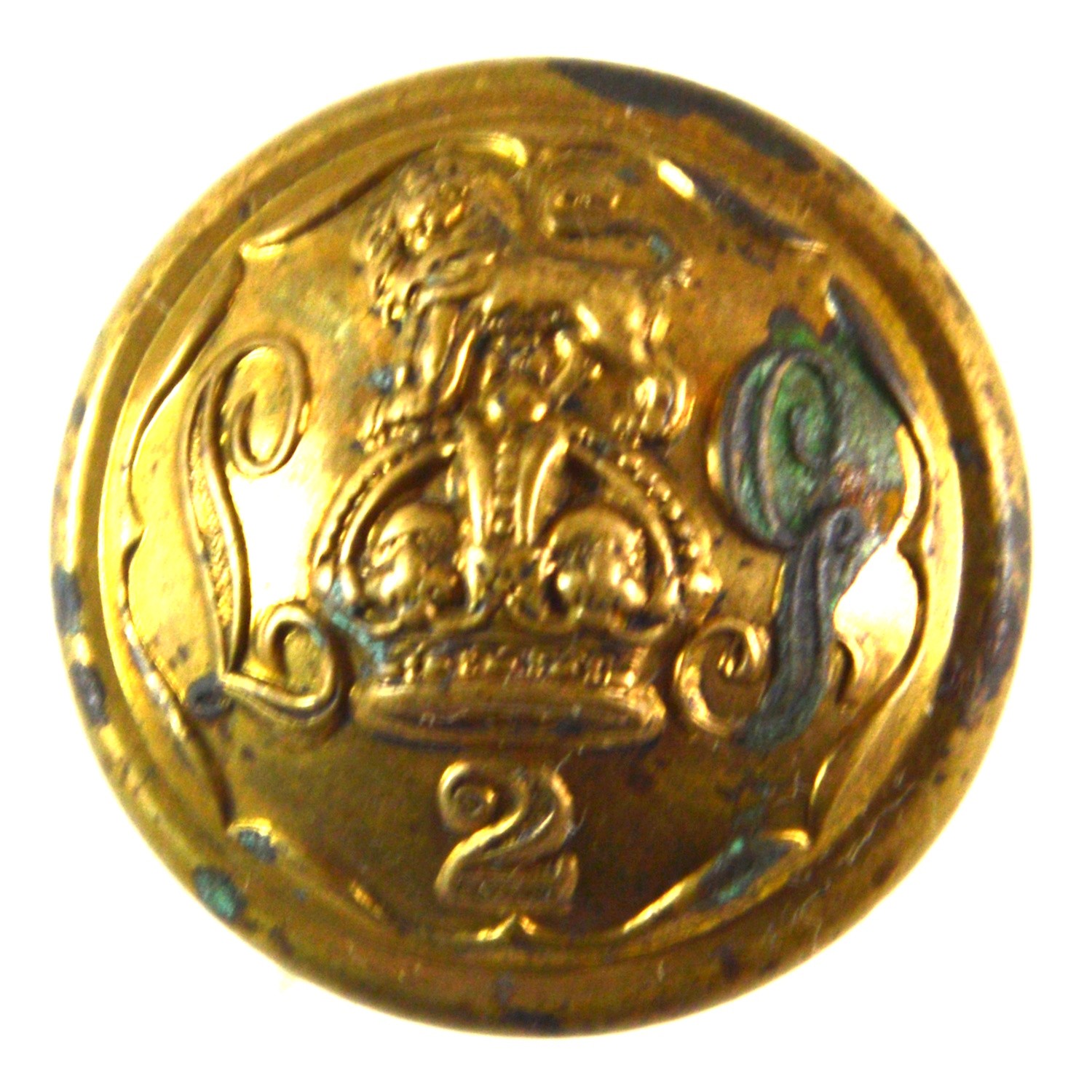
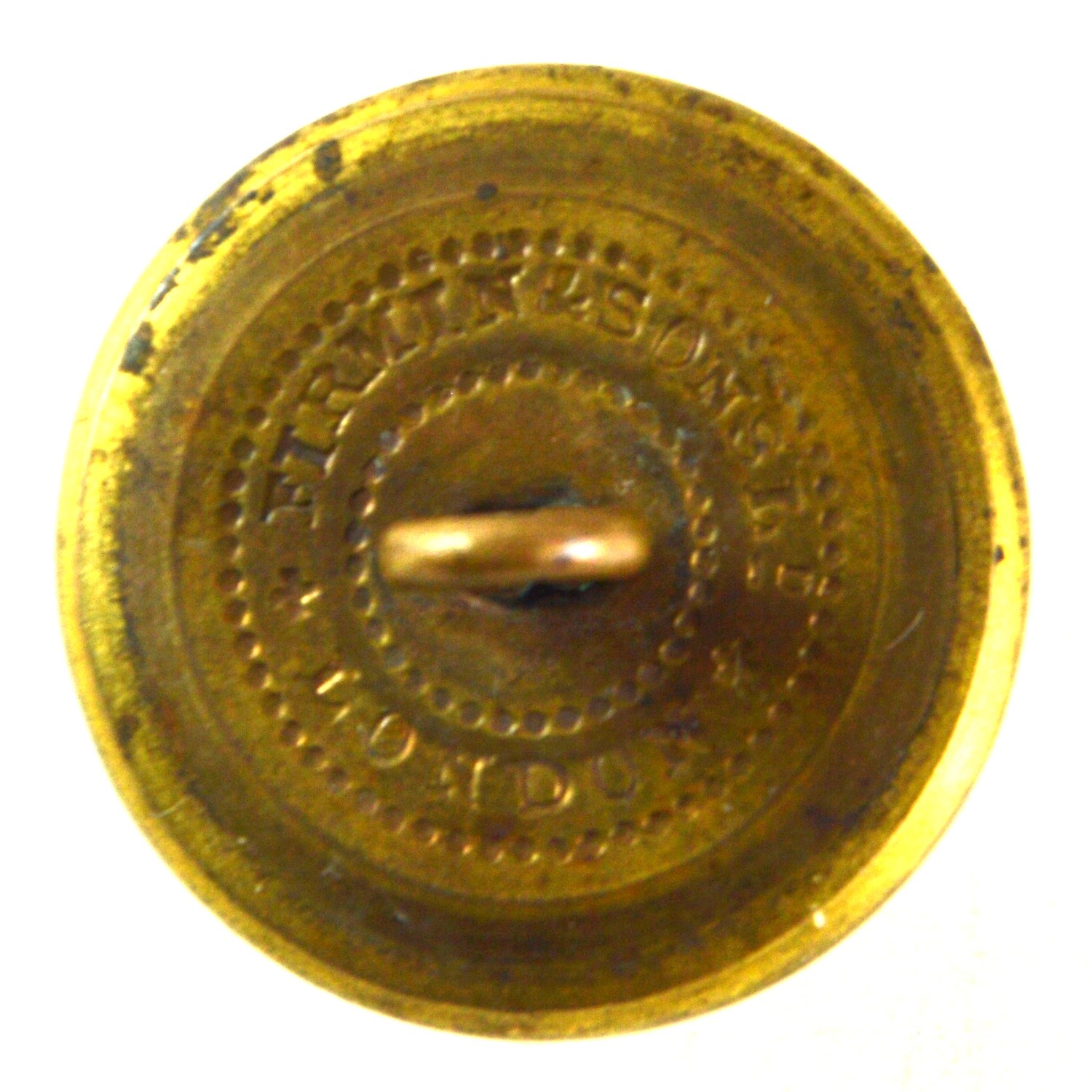
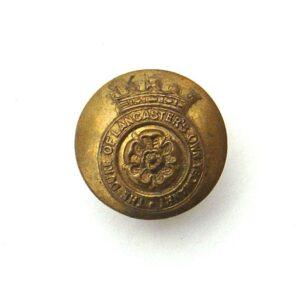
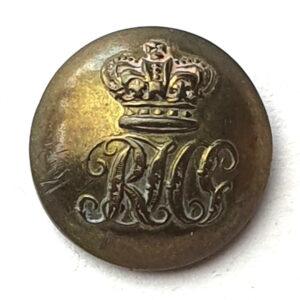
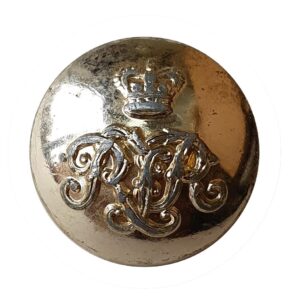
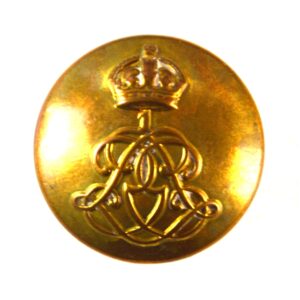
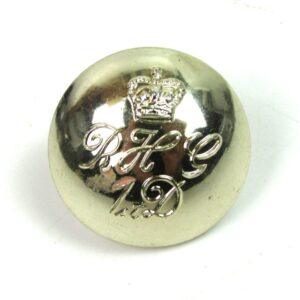
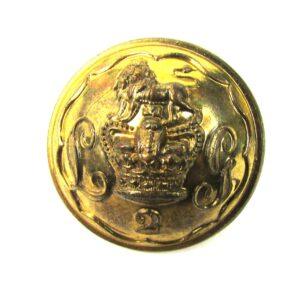
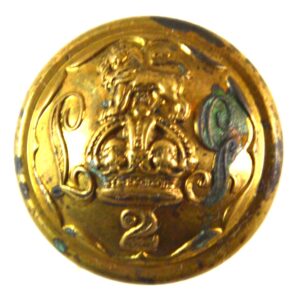
Manufactured in gilt metal to officer quality, this 25mm uniform button bears the distinctive regimental device of the 2nd Life Guards surmounted by the King’s Crown, identifying it as the pattern worn between 1901 and 1922 during the reigns of Edward VII and George V. Privately purchased by officers, buttons of this quality were finely struck and finished to a superior standard for wear on service dress, full dress, and ceremonial uniforms.
The 2nd Life Guards was one of the senior regiments of the Household Cavalry, tracing its origins to 1661 when it was raised during the Restoration of the monarchy. As part of the Sovereign’s Household Troops, the regiment combined prestigious ceremonial duties with an operational role as a front-line heavy cavalry regiment of the British Army.
During the period in which this button was worn, officers of the regiment served with distinction in the Second Boer War and later in the First World War. Initially employed as mounted cavalry, the regiment adapted to the changing nature of modern warfare, undertaking both mounted and dismounted operations on the Western Front while maintaining the traditions and standards of the Household Cavalry.
In 1922, the 2nd Life Guards amalgamated with the 1st Life Guards to form The Life Guards, creating the single regiment that continues to serve today as part of the Household Cavalry. As a result, original officer’s buttons bearing the insignia of the independent 2nd Life Guards were produced for a comparatively limited period and are highly desirable to collectors of British cavalry insignia and Household Cavalry memorabilia.
Officer-quality buttons of this pattern are particularly sought after due to their fine manufacture, historical significance, and association with one of Britain’s oldest and most prestigious cavalry regiments.
Manufactured in gilt metal and retaining its original reverse shank fitting, this example represents an authentic and collectable piece of British Household Cavalry history.
Dimensions
25mm diameter
Condition
Good overall original condition. Age-related wear, oxidisation, and signs of uniform use or storage. The original reverse shank remains intact and secure.
Reviews
There are no reviews yet.