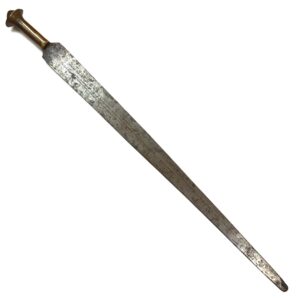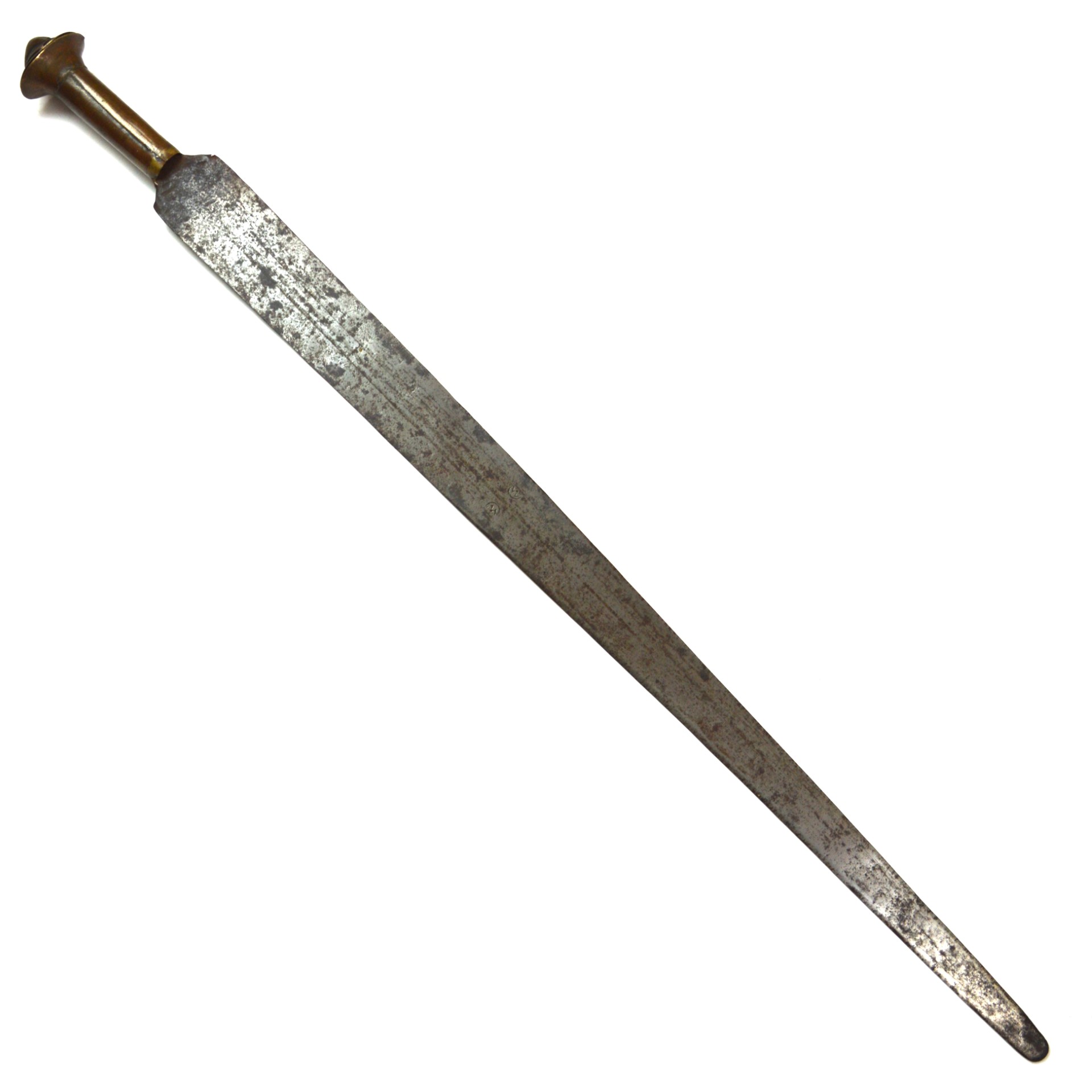
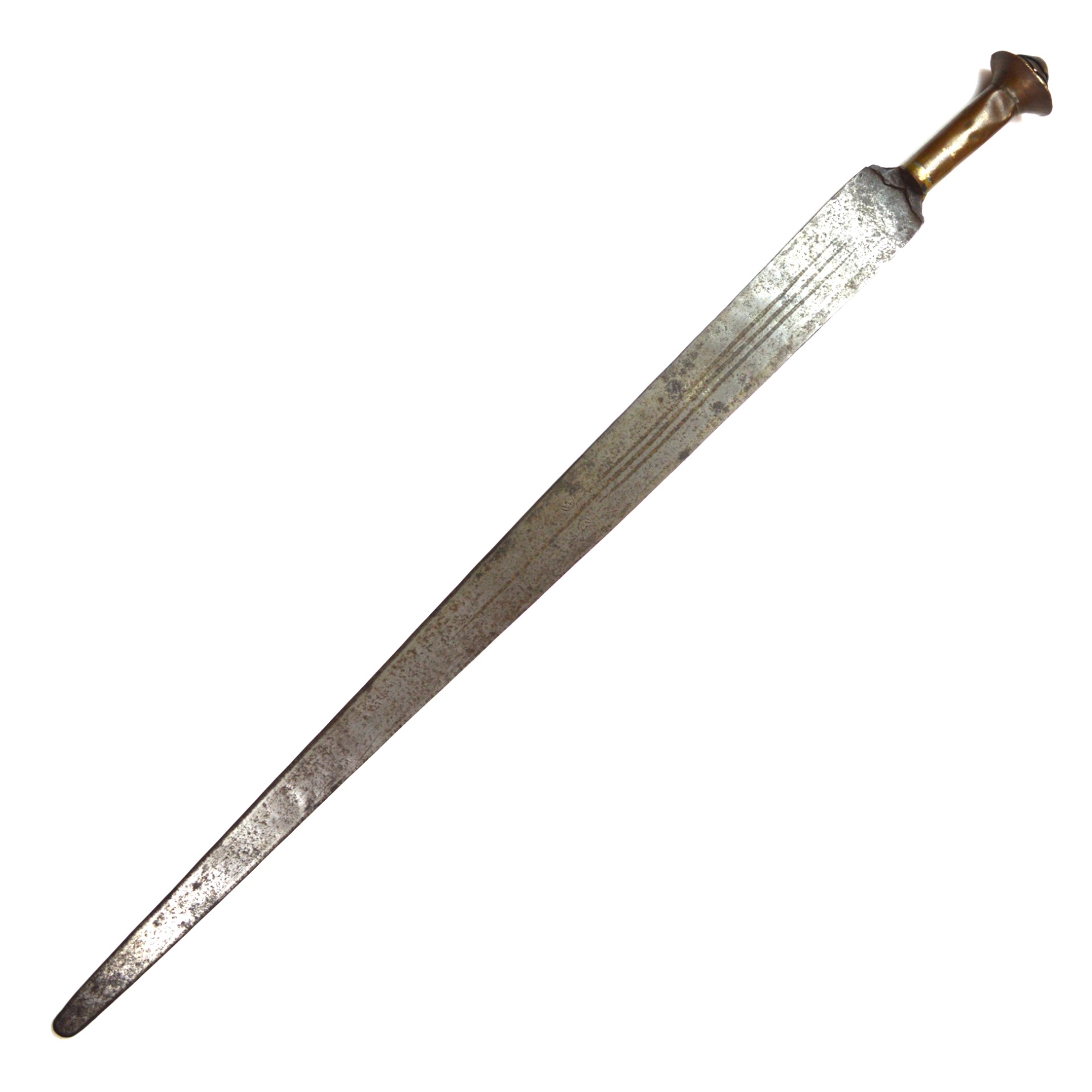
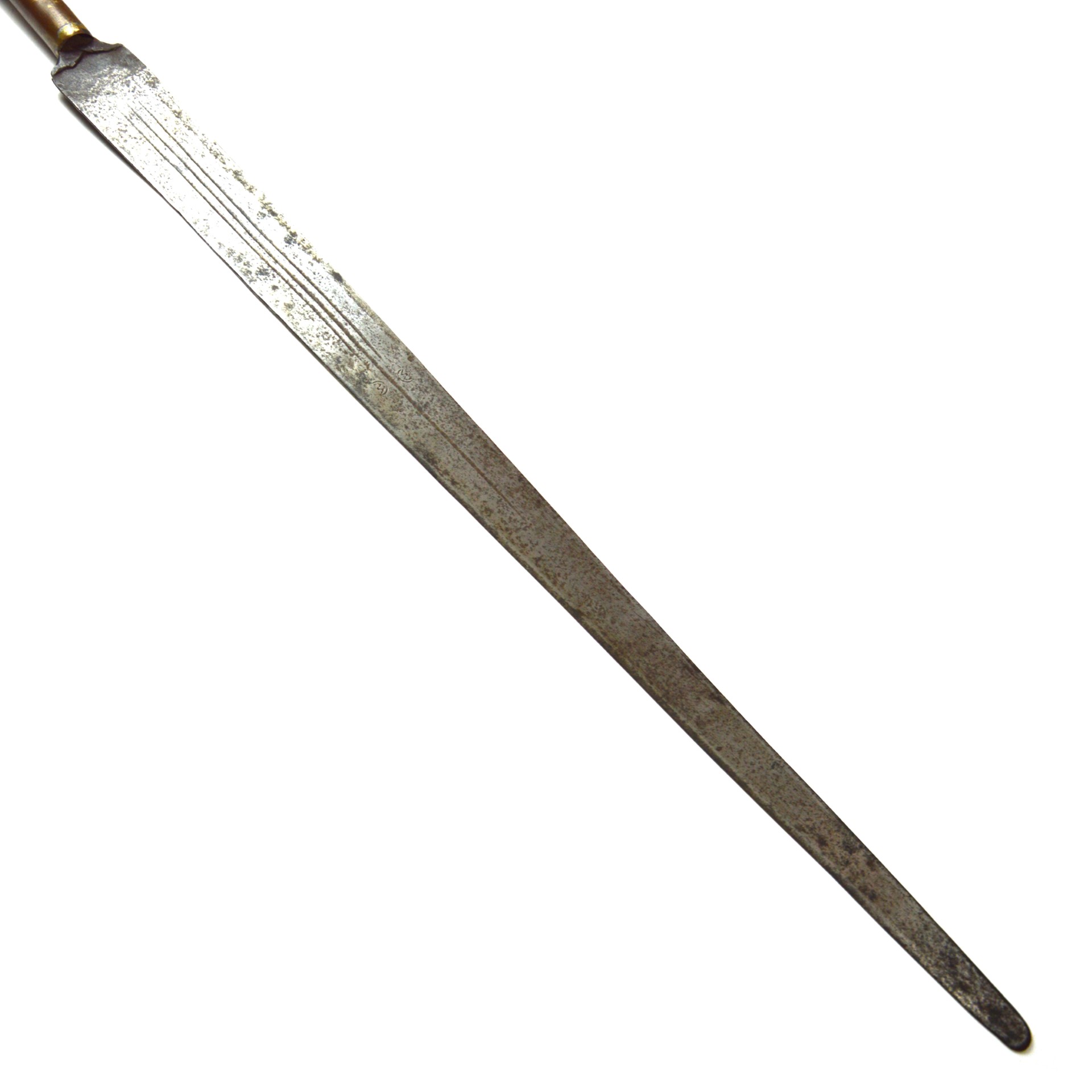
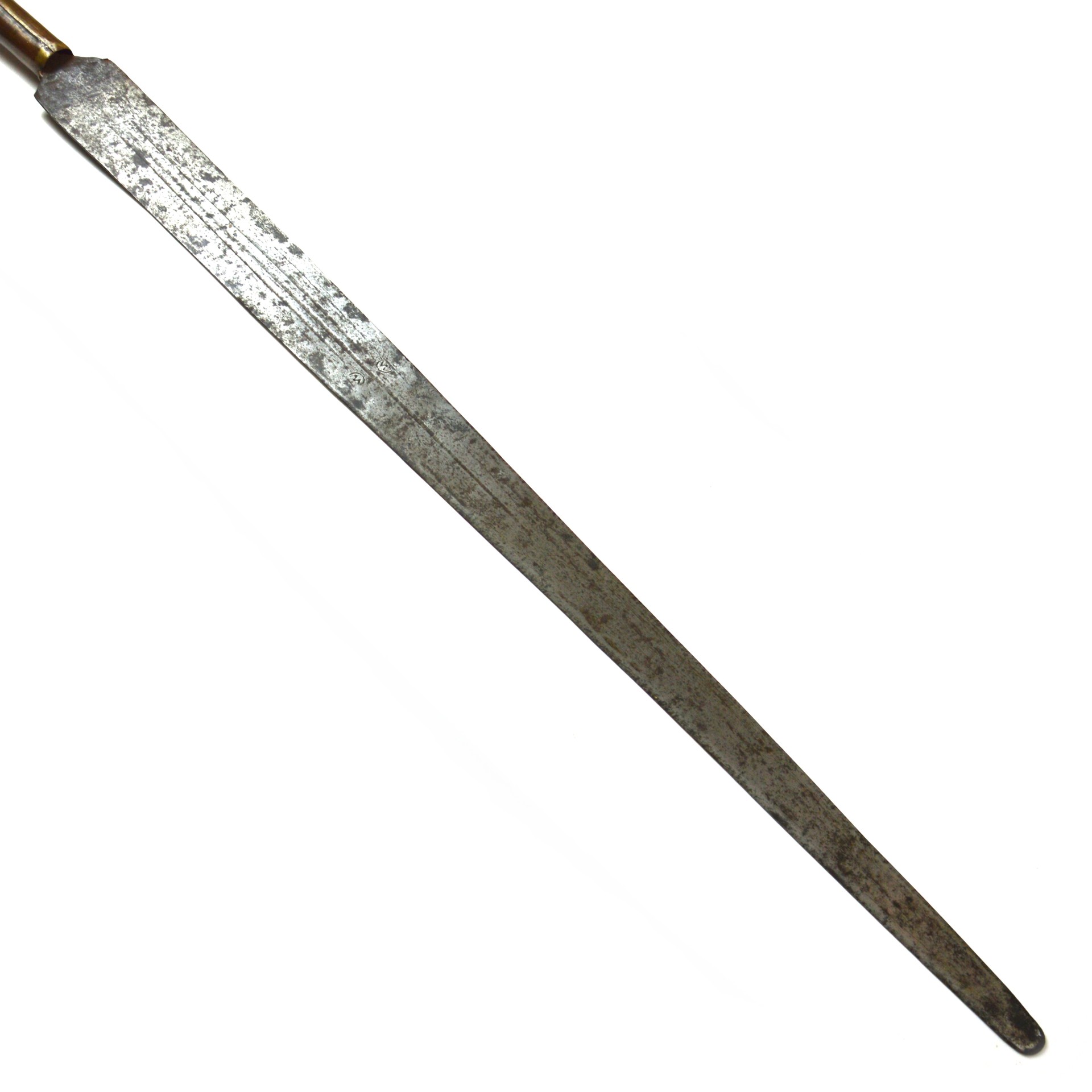
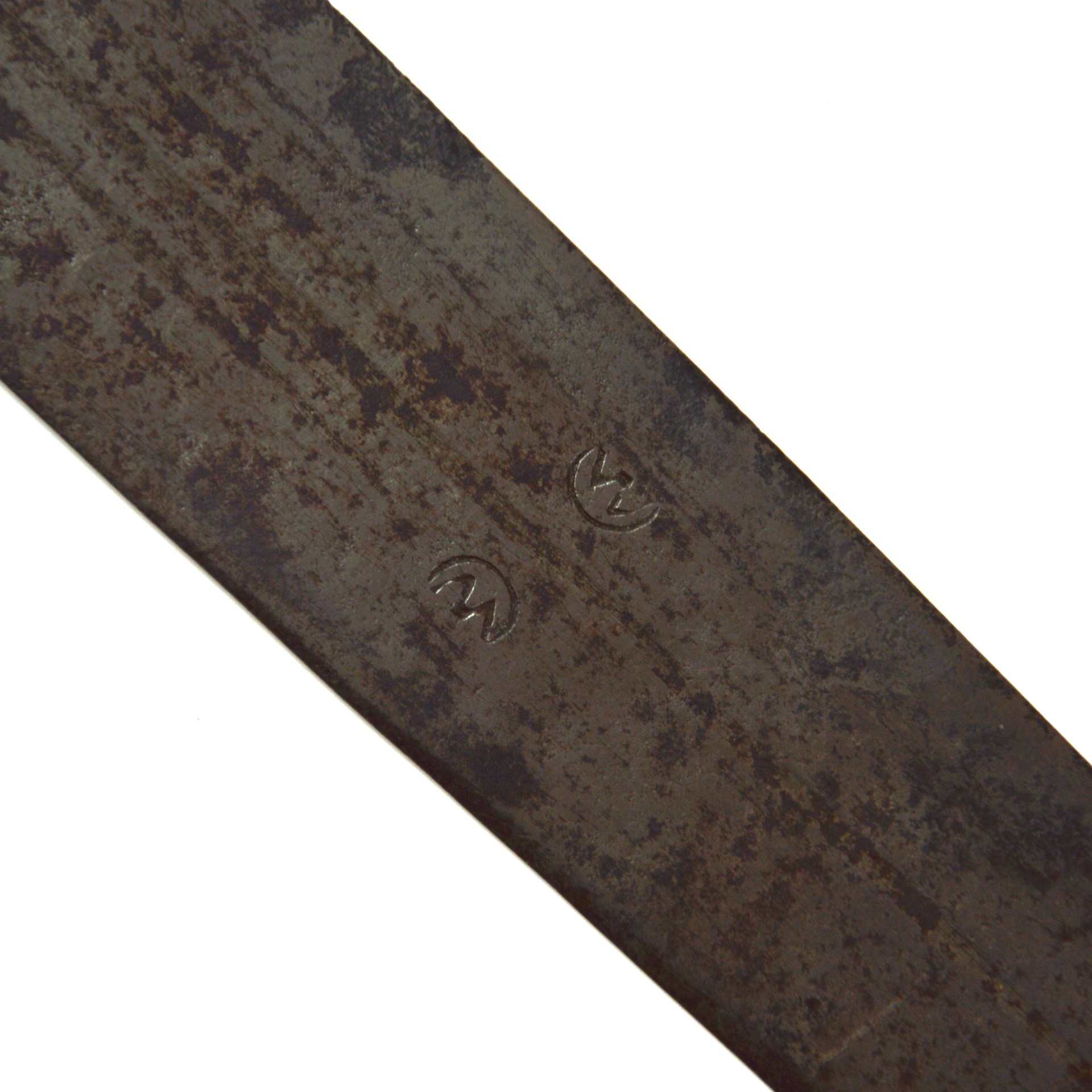
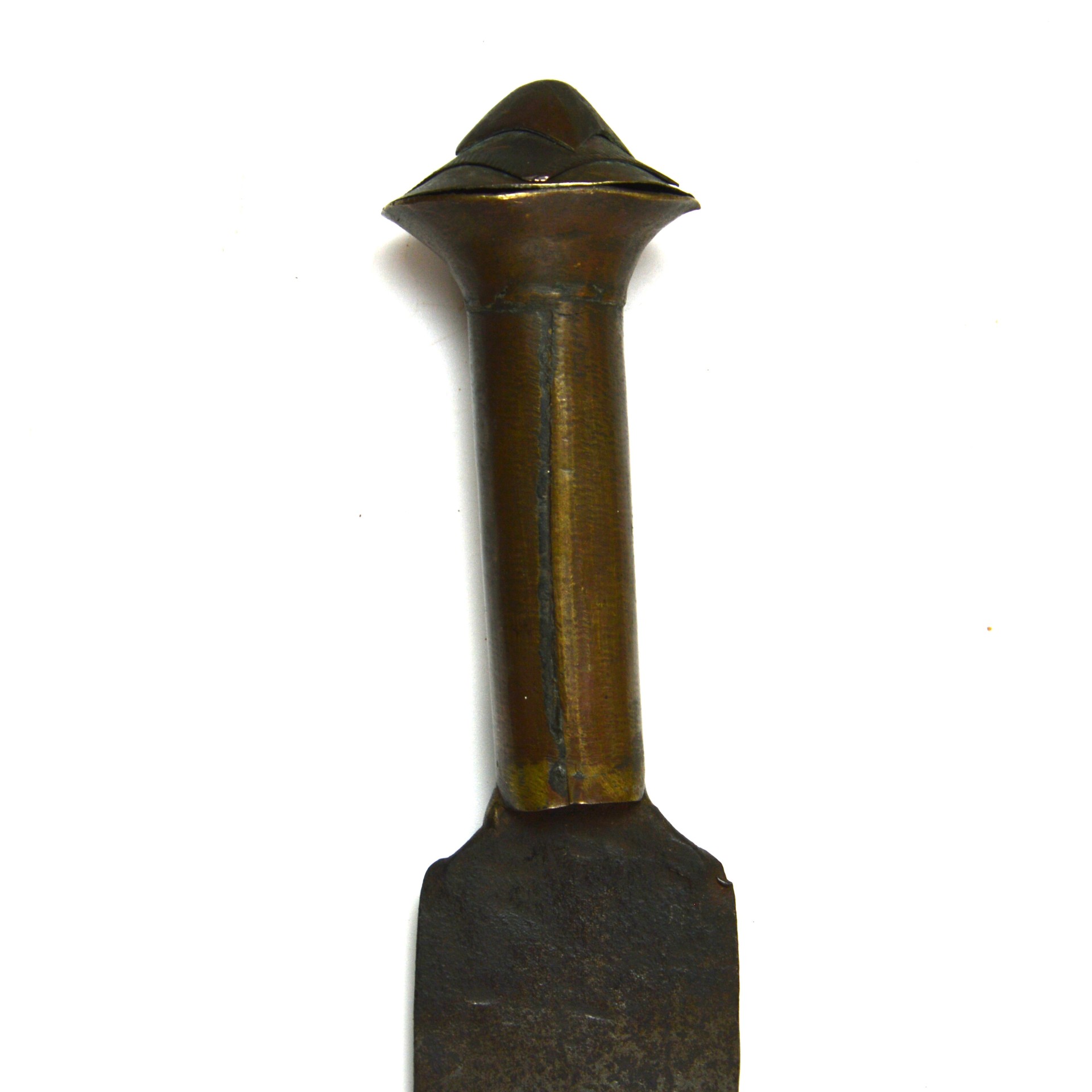
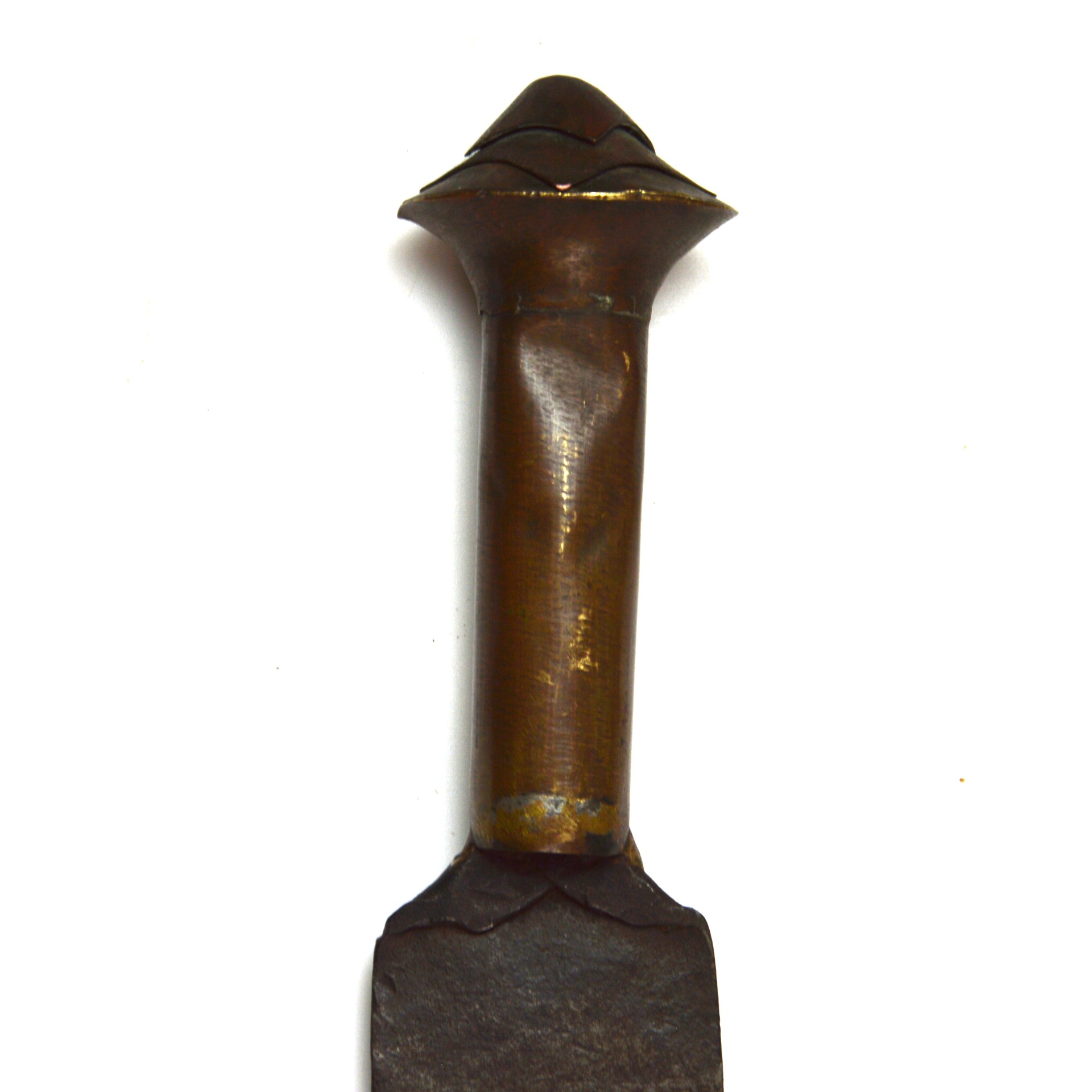
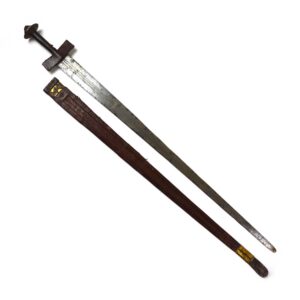
Antique Tuareg Takoba sword, a traditional edged weapon of the Saharan and Sahel regions, associated with the nomadic Tuareg, the Hausa, and the Fulani peoples of North and West Africa, presented here in a form lacking the typical crossguard. The Takoba sword is characterised by its long, straight, double-edged blade with typical crescent moon markings seen in Saharan and Sahel swords, often inspired or repurposed from earlier European or locally forged origins, mounted in a distinctive hilt which originally would have likely been covered in leather with decorative elements reflecting regional craftsmanship.
This example represents a variant without the conventional crossguard. The absence of the guard gives the piece a more simplified profile while retaining the core form and function of the takoba as both a weapon and a symbol of status within Tuareg society. Such swords were traditionally worn suspended from a baldric and carried by warriors and individuals of standing.
Takoba swords often utilised trade steel or repurposed blades—sometimes of European manufacture dating to earlier centuries—re-hilted and adapted locally. Hilts were typically clad in leather, sometimes with incised or tooled decoration, and included a decorative, rounded pommel.
Examples of takoba swords are collected within the fields of ethnographic arms and armour, African tribal artefacts, and edged weapon studies.
Dimensions
Approx. 88cm overall length
Approx. 74cm blade length
Condition
Good overall condition, with age-related wear consistent with use and environmental exposure. The blade shows patina and surface marks typical of age. The hilt covering exhibits wear and minor dents from handling and storage. Absence of a crossguard should be noted.


![Colonial American Troops 1610–1774 (3) [MAA383]](https://militaria.co.uk/wp-content/uploads/2021/11/maa383.jpg)