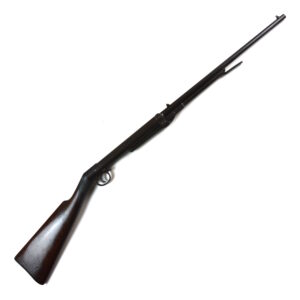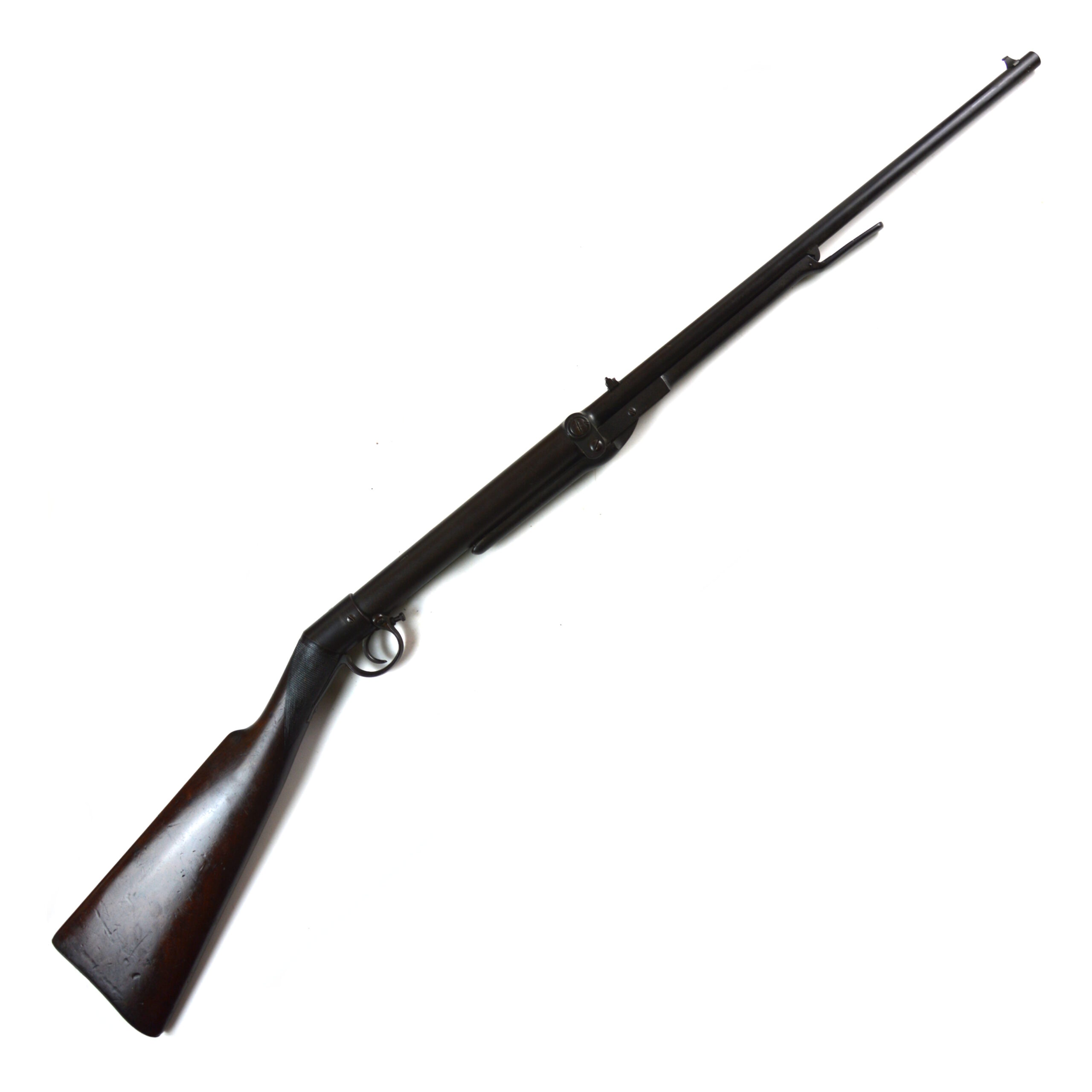
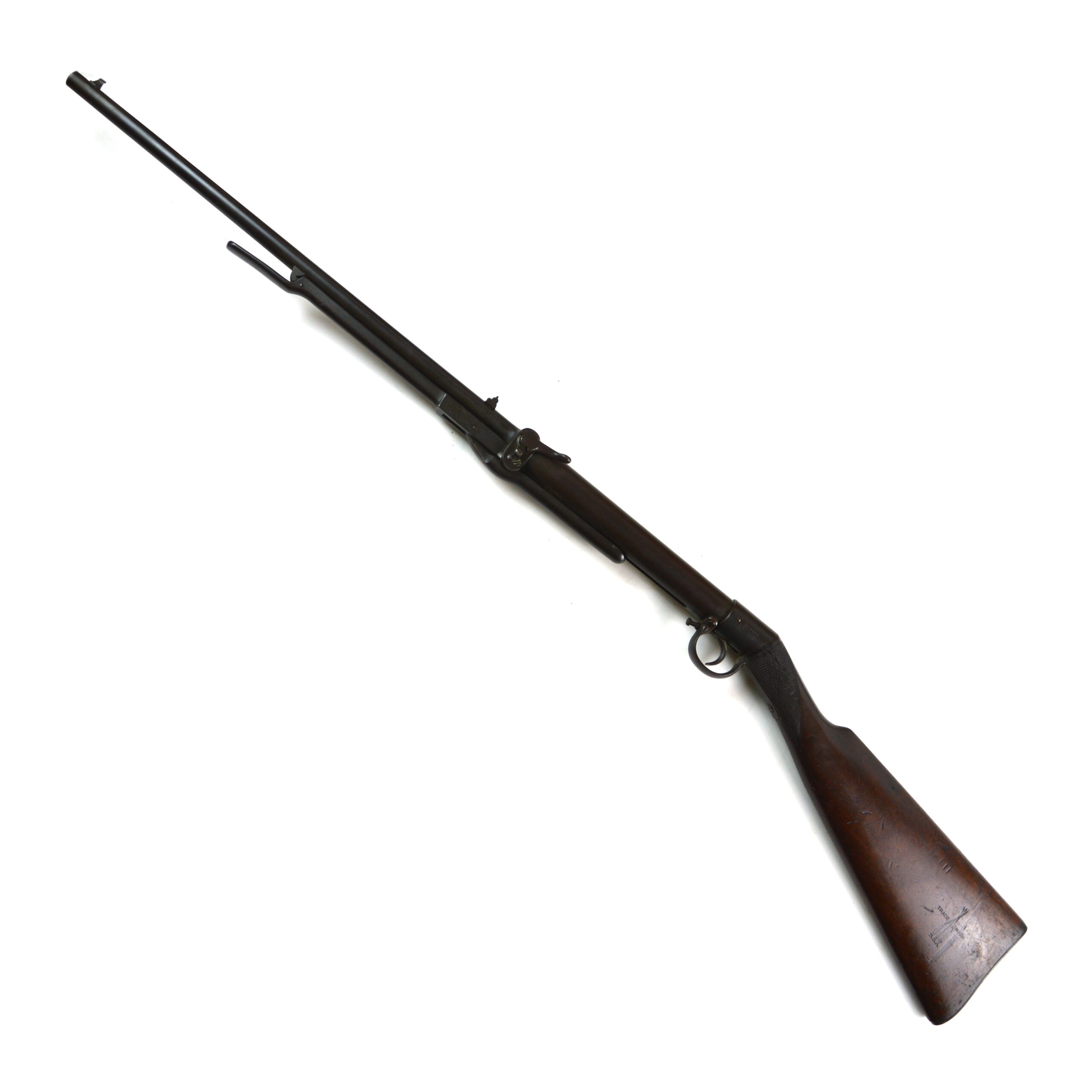
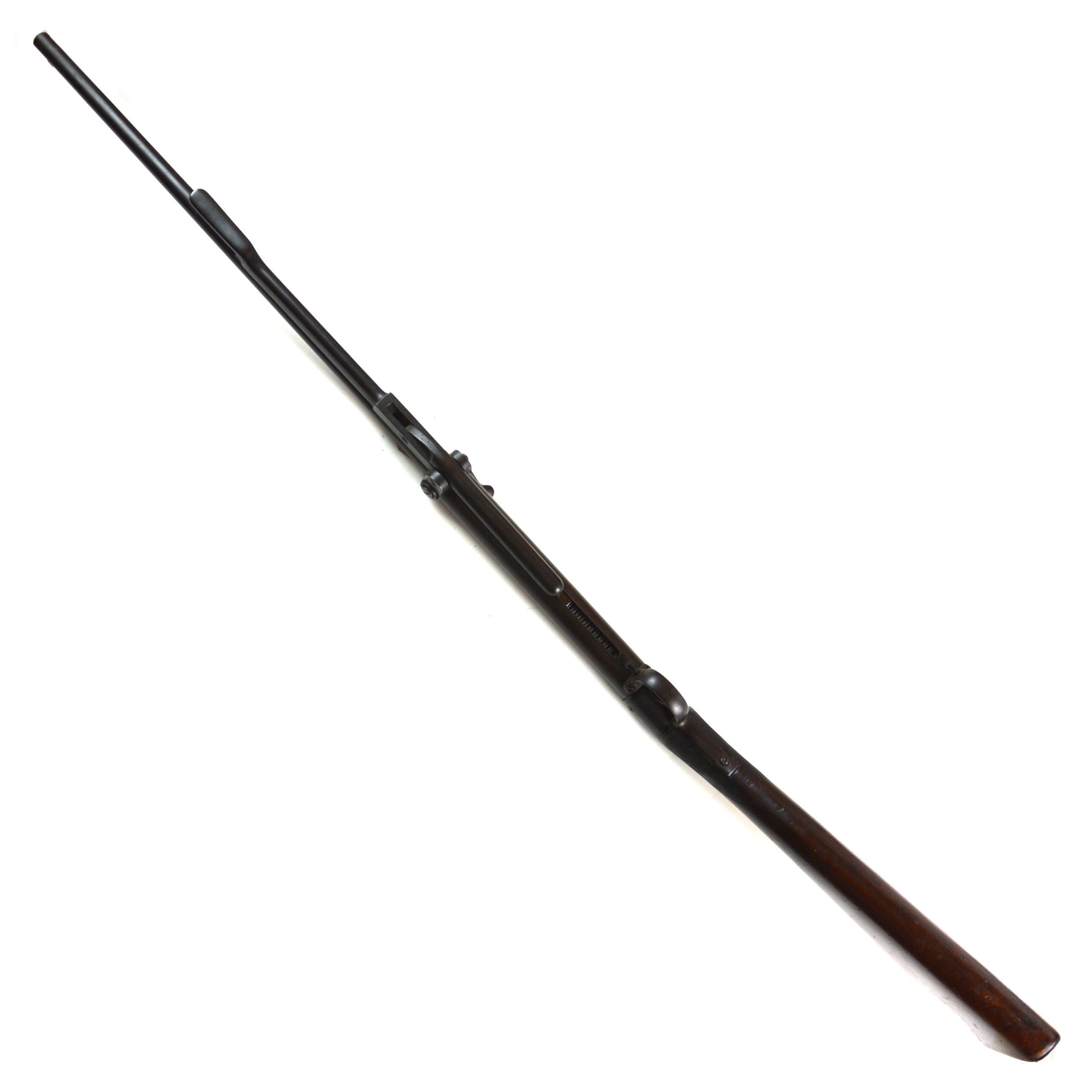
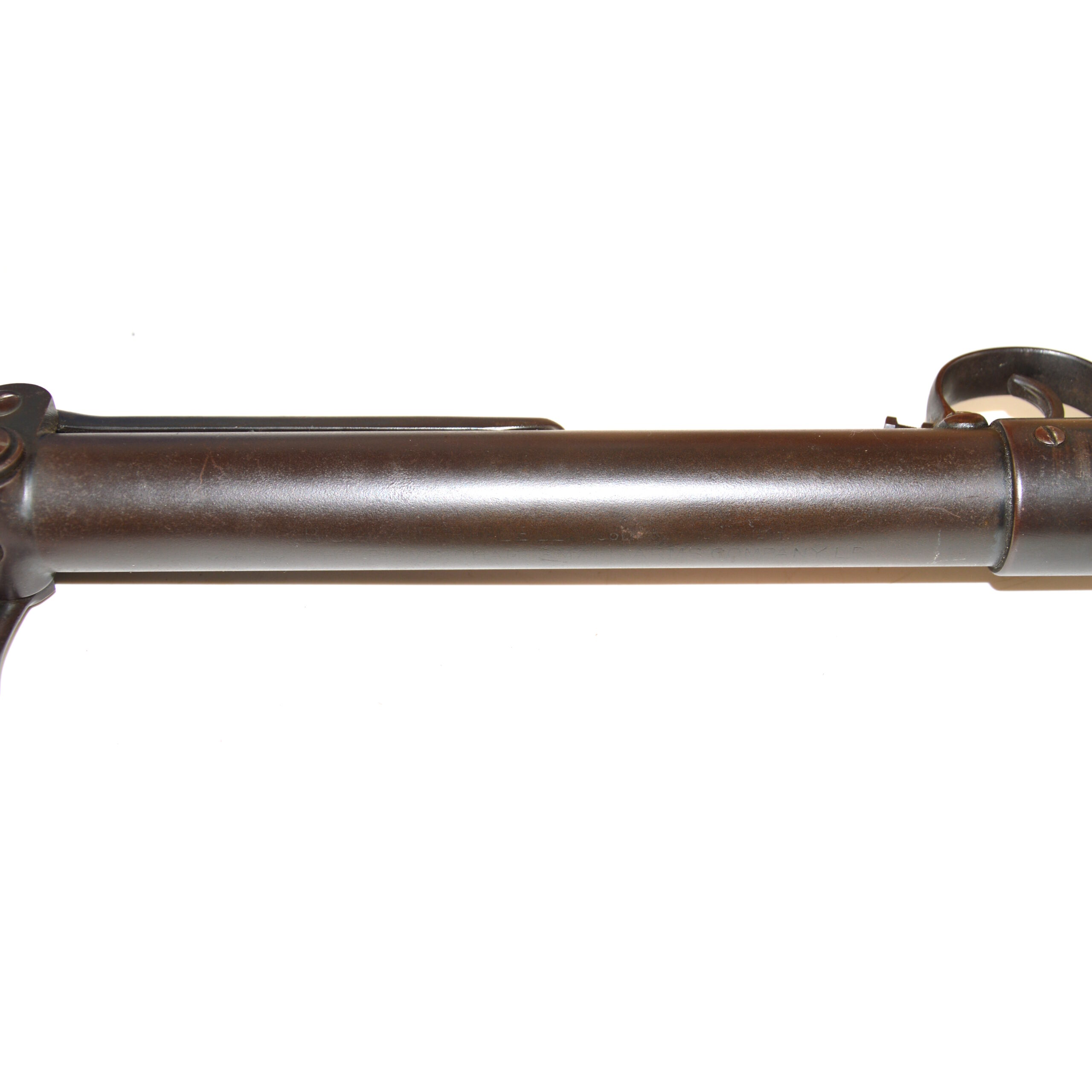
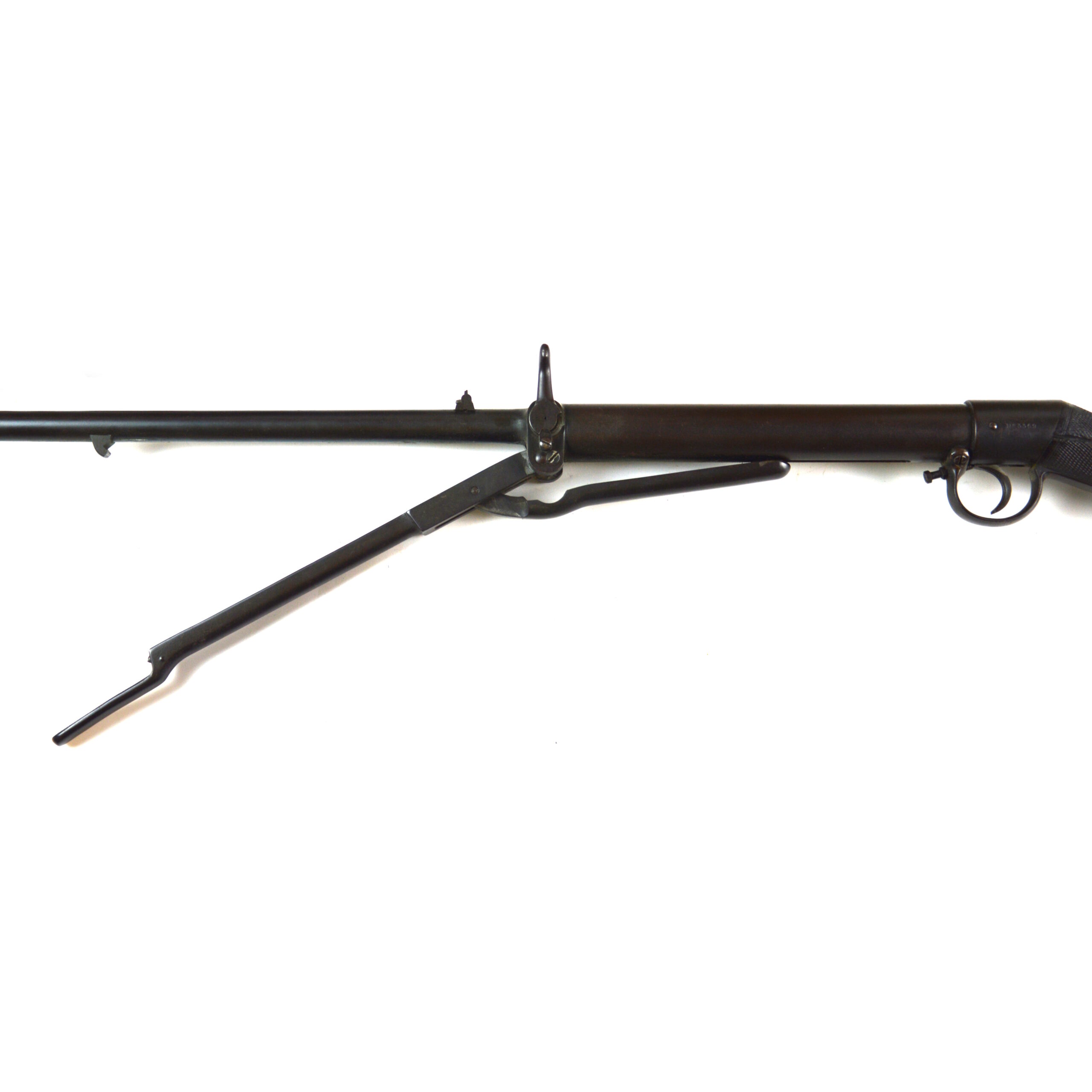
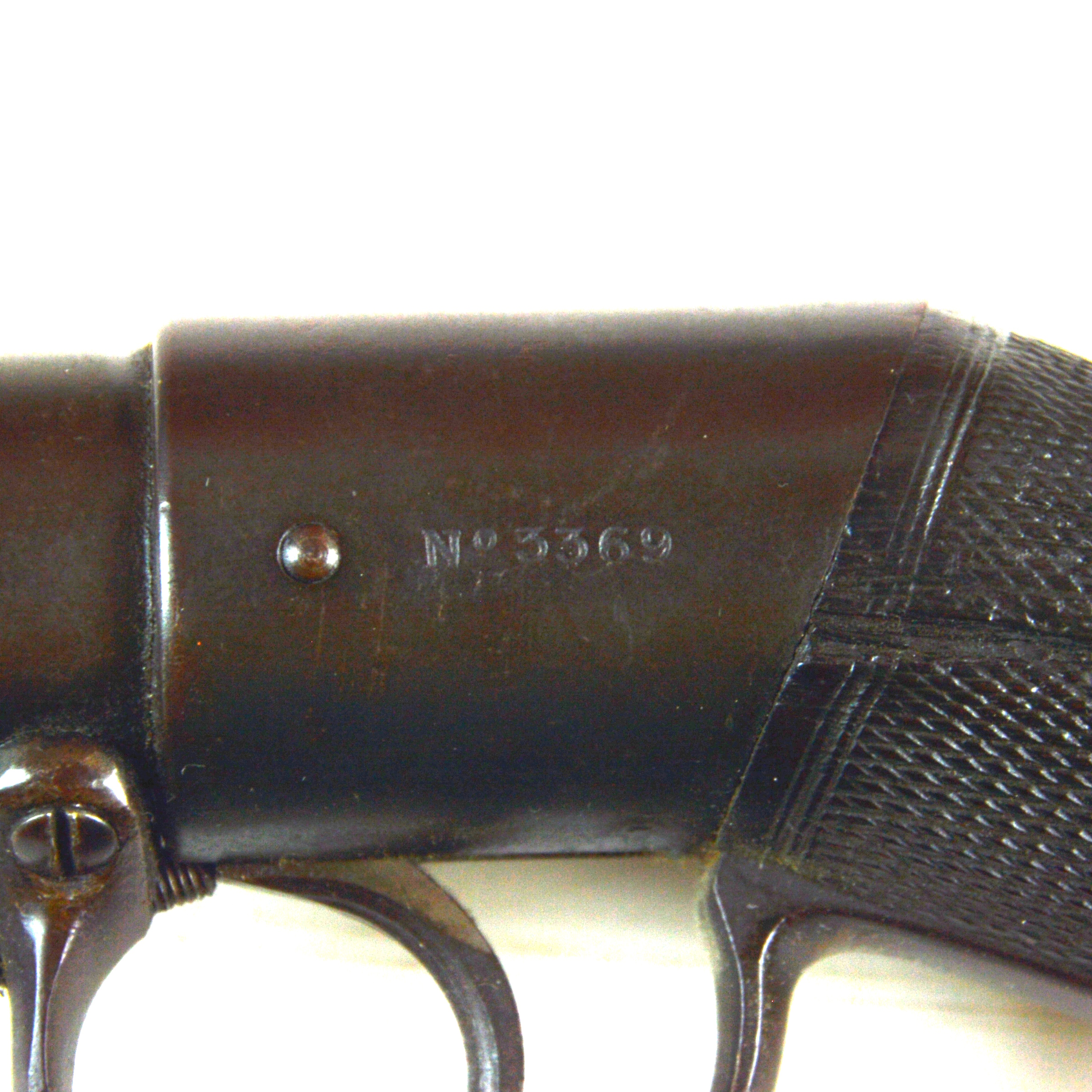
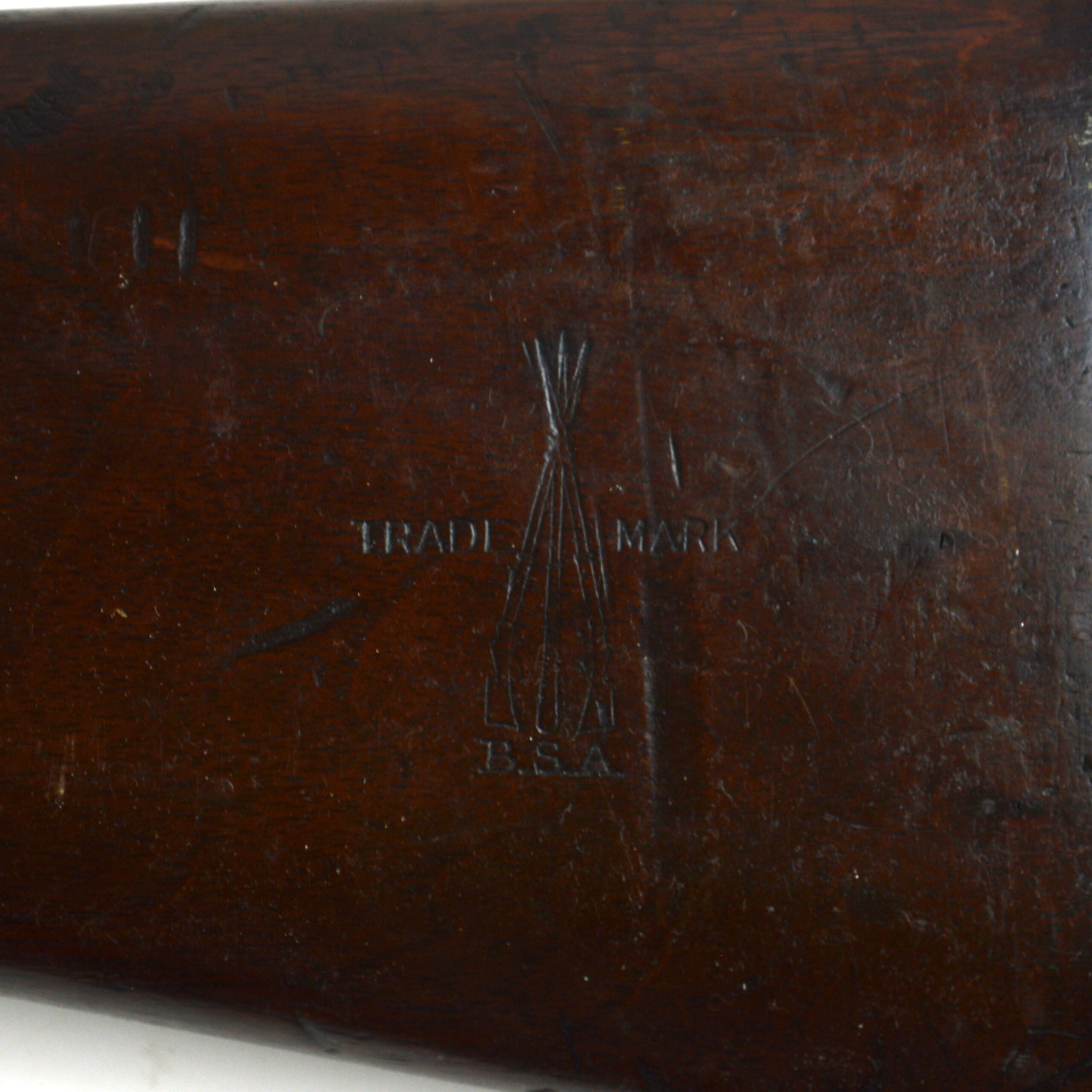
Early .177 BSA underlever air rifle, manufactured circa 1906, an original early 20th-century air weapon produced by BSA (Birmingham Small Arms Company). This pattern represents one of the earliest generations of commercially successful British air rifles and forms part of the pioneering period of modern airgun development.
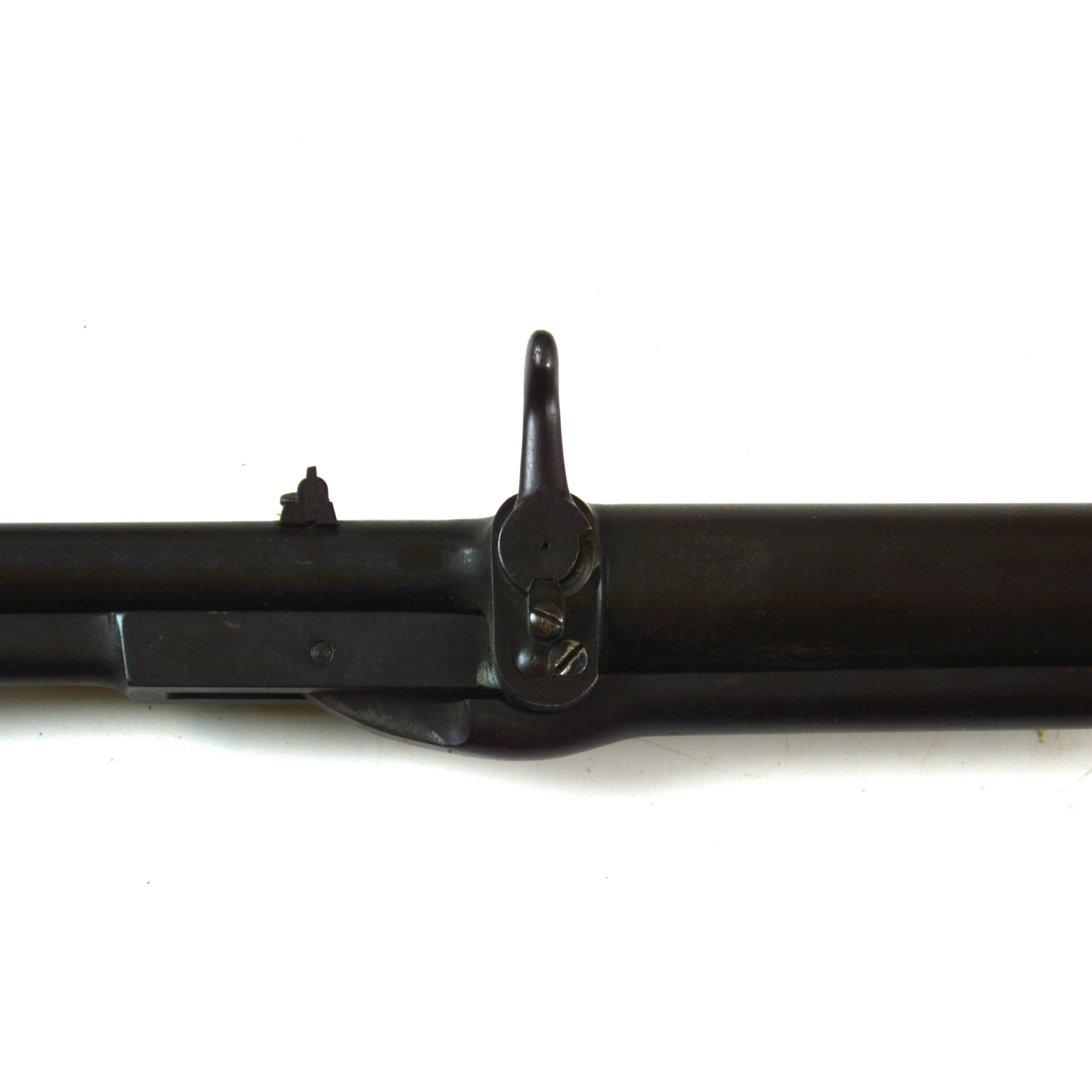
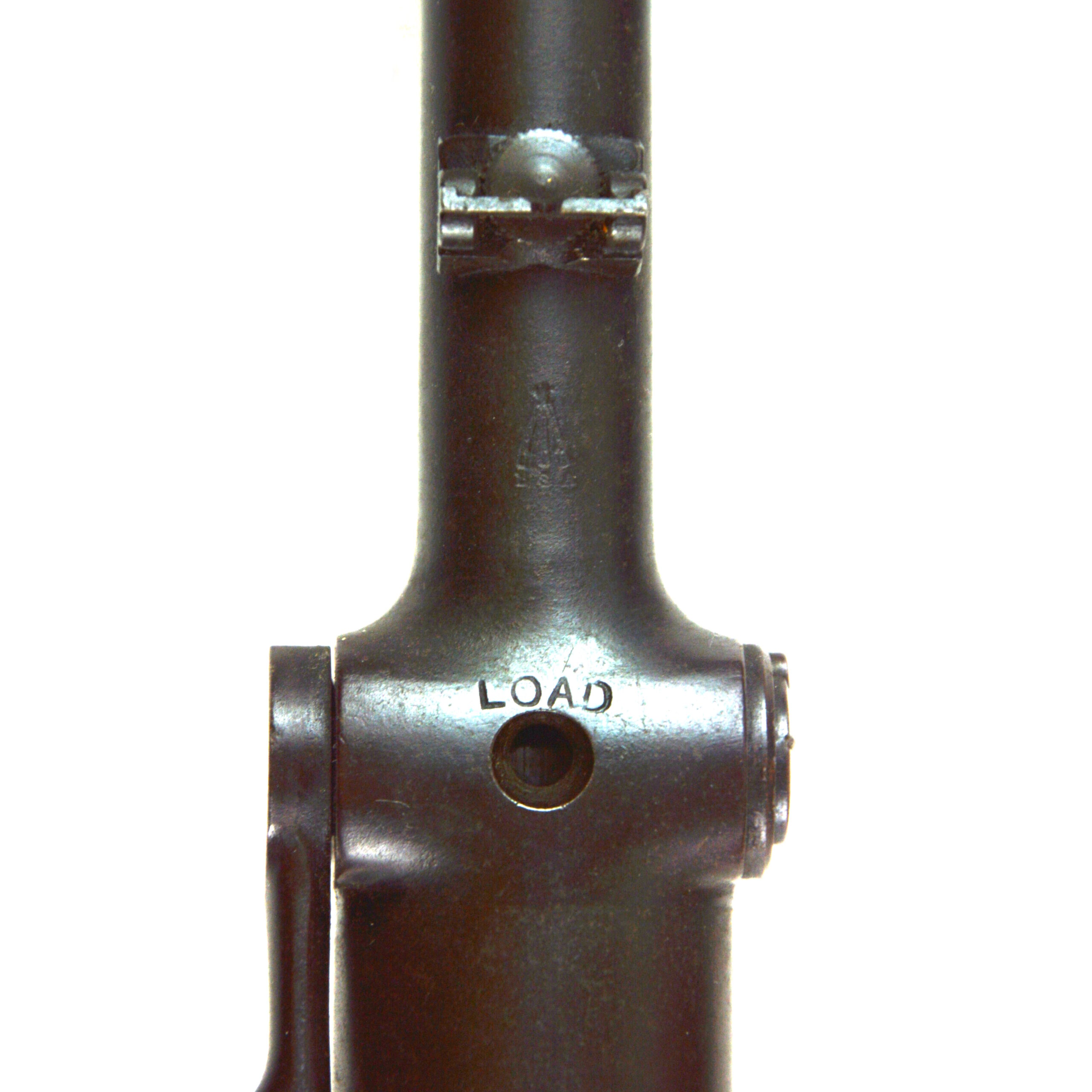
The rifle features a spring-powered underlever cocking system with a rifled .177 calibre barrel and loading tap arrangement characteristic of early BSA production. These early models were influenced by the Lincoln Jeffries patent system and established the layout that would shape many later British sporting air rifles. Construction combines a blued steel action with a wooden stock, reflecting the high manufacturing standards associated with Birmingham gunmaking of the Edwardian period.
Underlever air rifles of this era were designed for target shooting, small-scale sporting use, and marksmanship practice. BSA introduced its first underlever air rifles in the early 1900s, helping establish the foundation of the modern precision air rifle market. Early .177 examples remain particularly sought after for their historical importance and quality of manufacture.
Examples dating from around 1906 reflect the transition from the earliest BSA production into improved and refined patterns that followed in subsequent years. Surviving rifles from this period are widely collected for their engineering, period styling, and significance within British sporting history.
Manufactured in steel and wood with an underlever spring action, this example represents a significant piece of early British airgun development.
Specifications:
Calibre: .177 (4.5mm)
Action: Underlever, loading tap
Length: approx. 101cm (43 1/2 inches)
Barrel Length: approx. 49 cm (19.25 inches)
Condition
Good overall antique condition, with age-related wear and surface marks consistent with use and storage. Metal surfaces show patina and light handling wear. Wooden stock displays expected signs of age. Mechanism condition and functionality are functional although the bore condition is unknown.