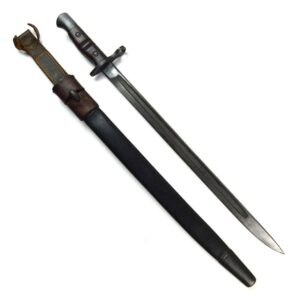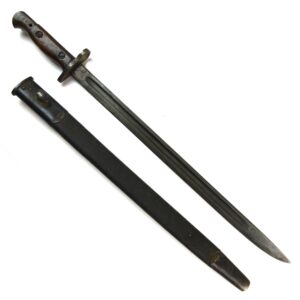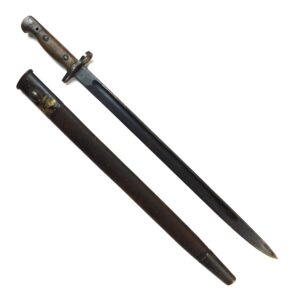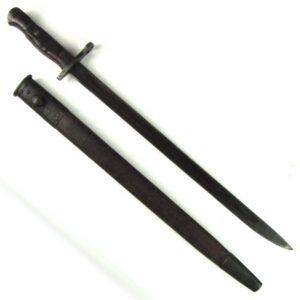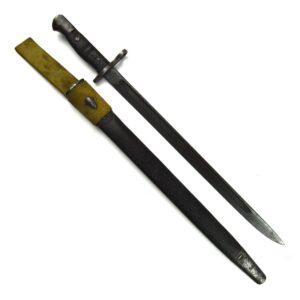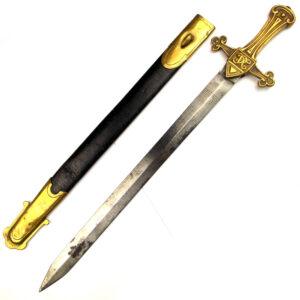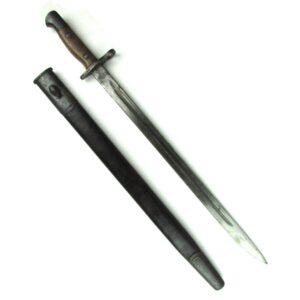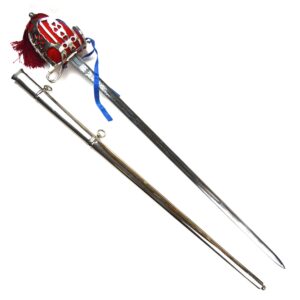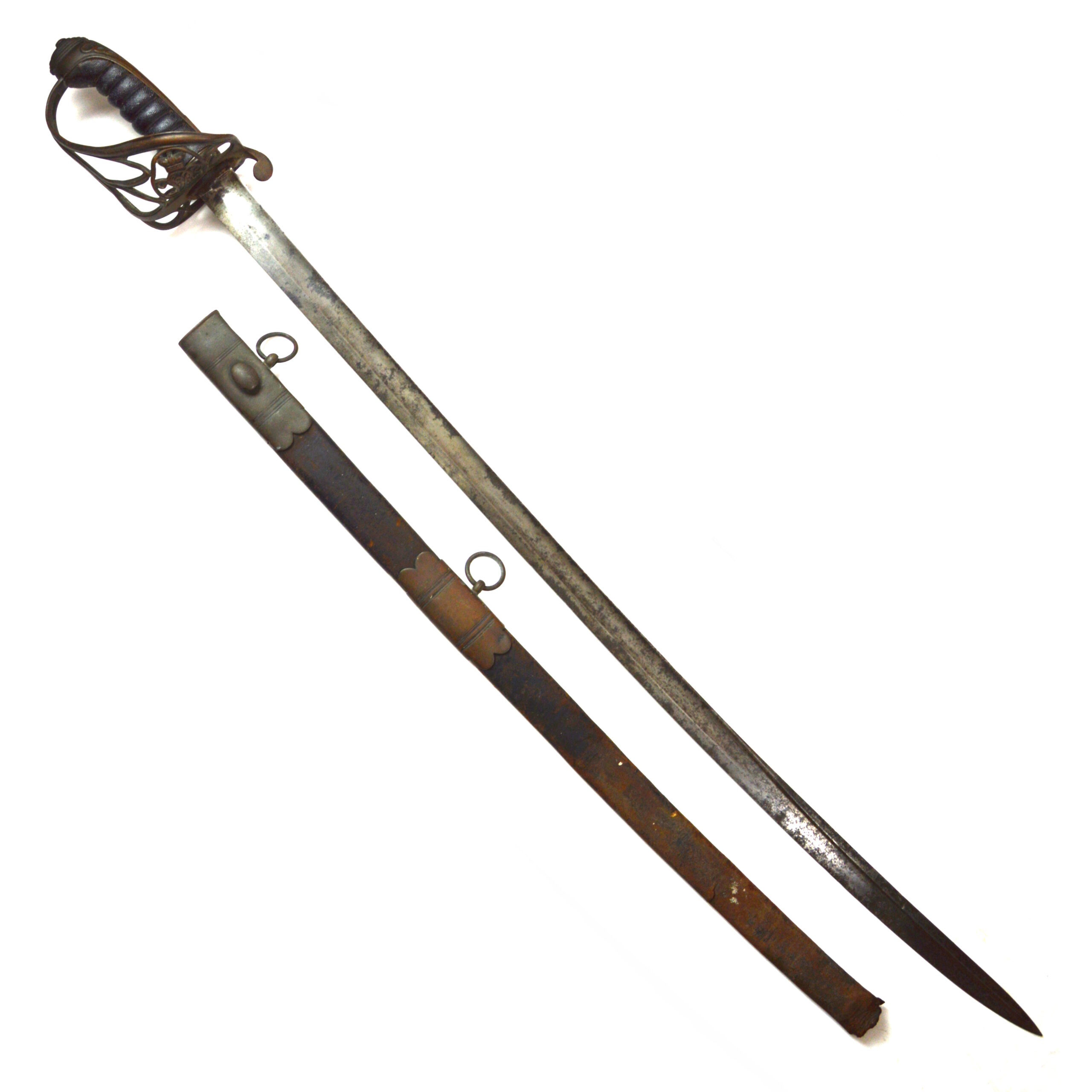
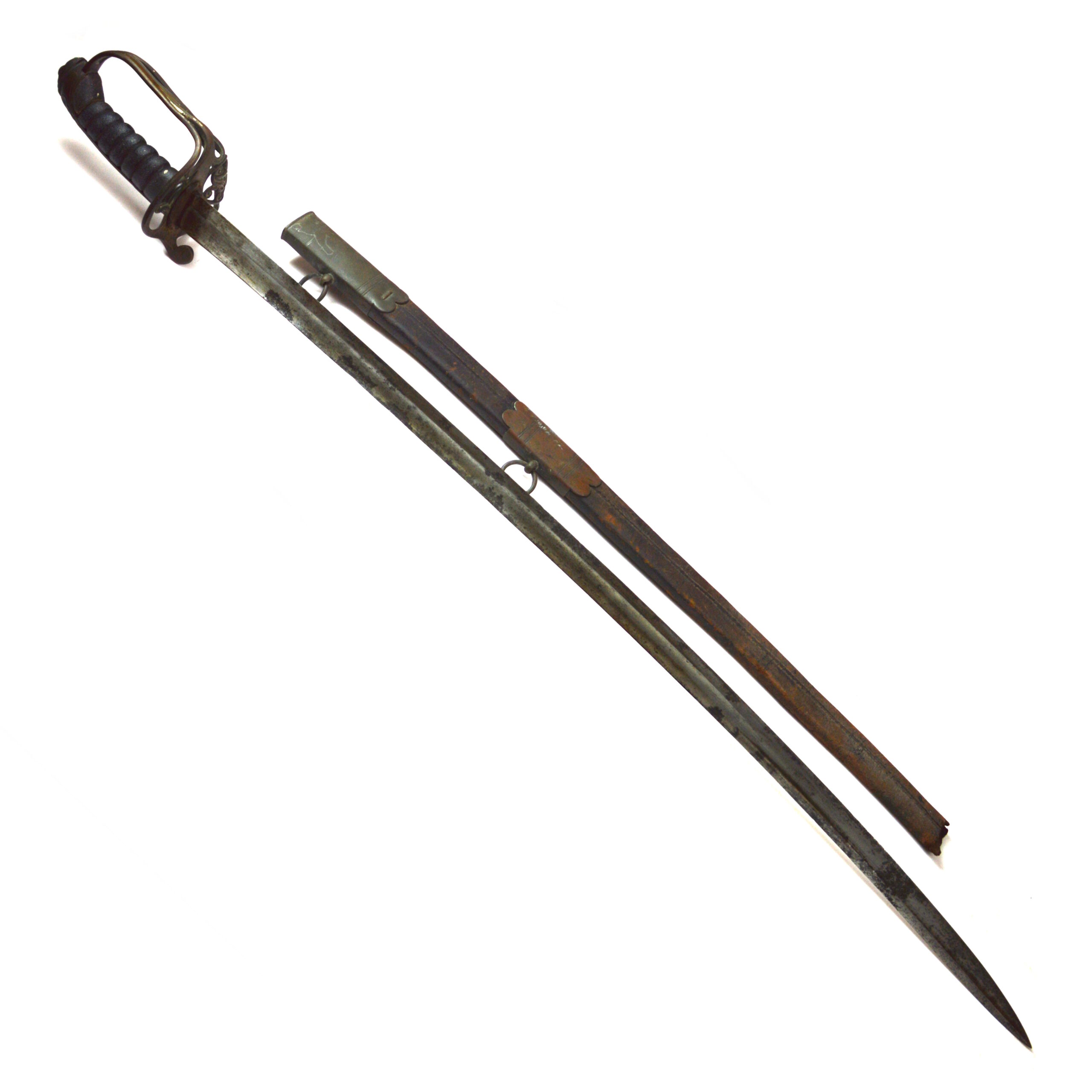
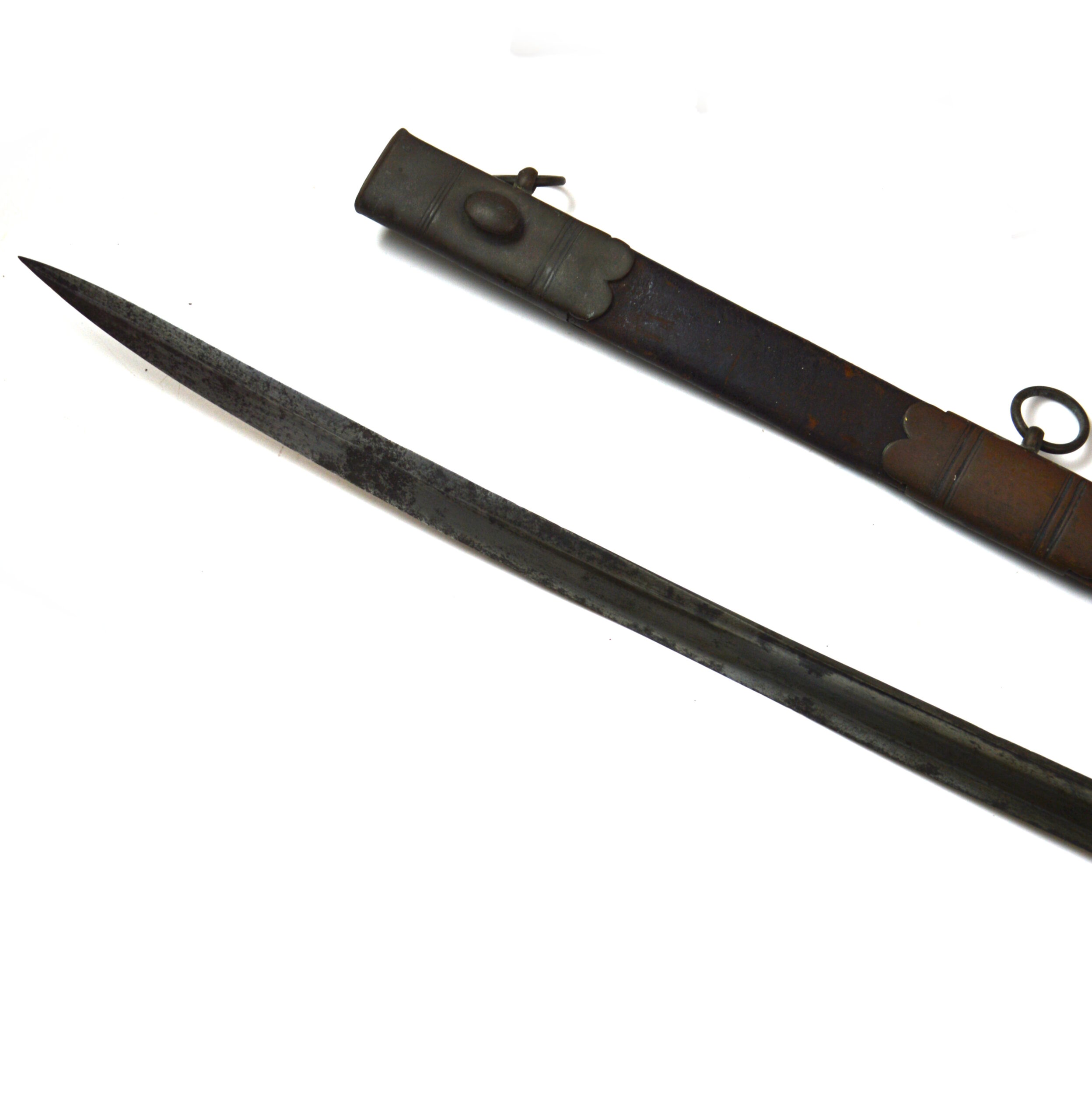
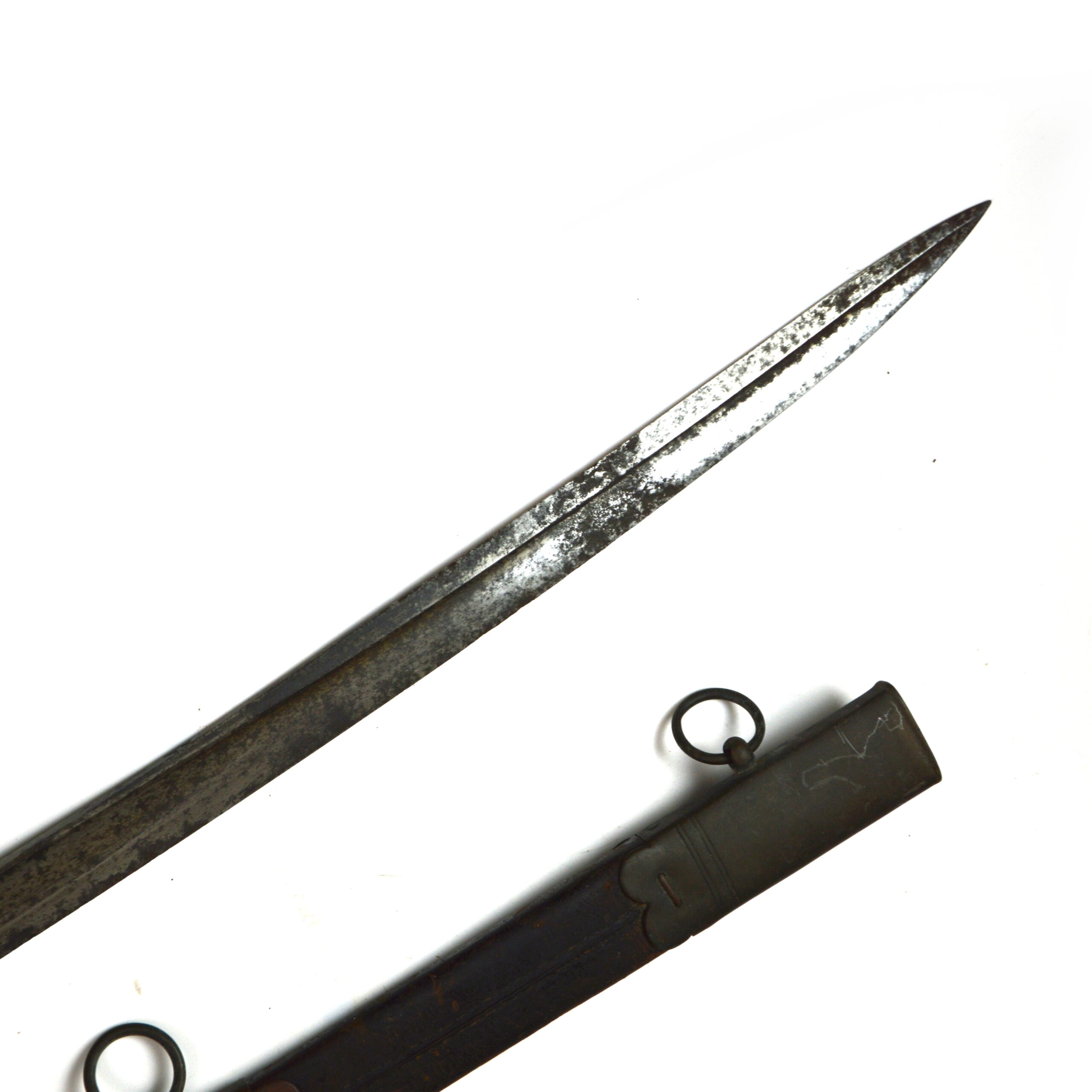
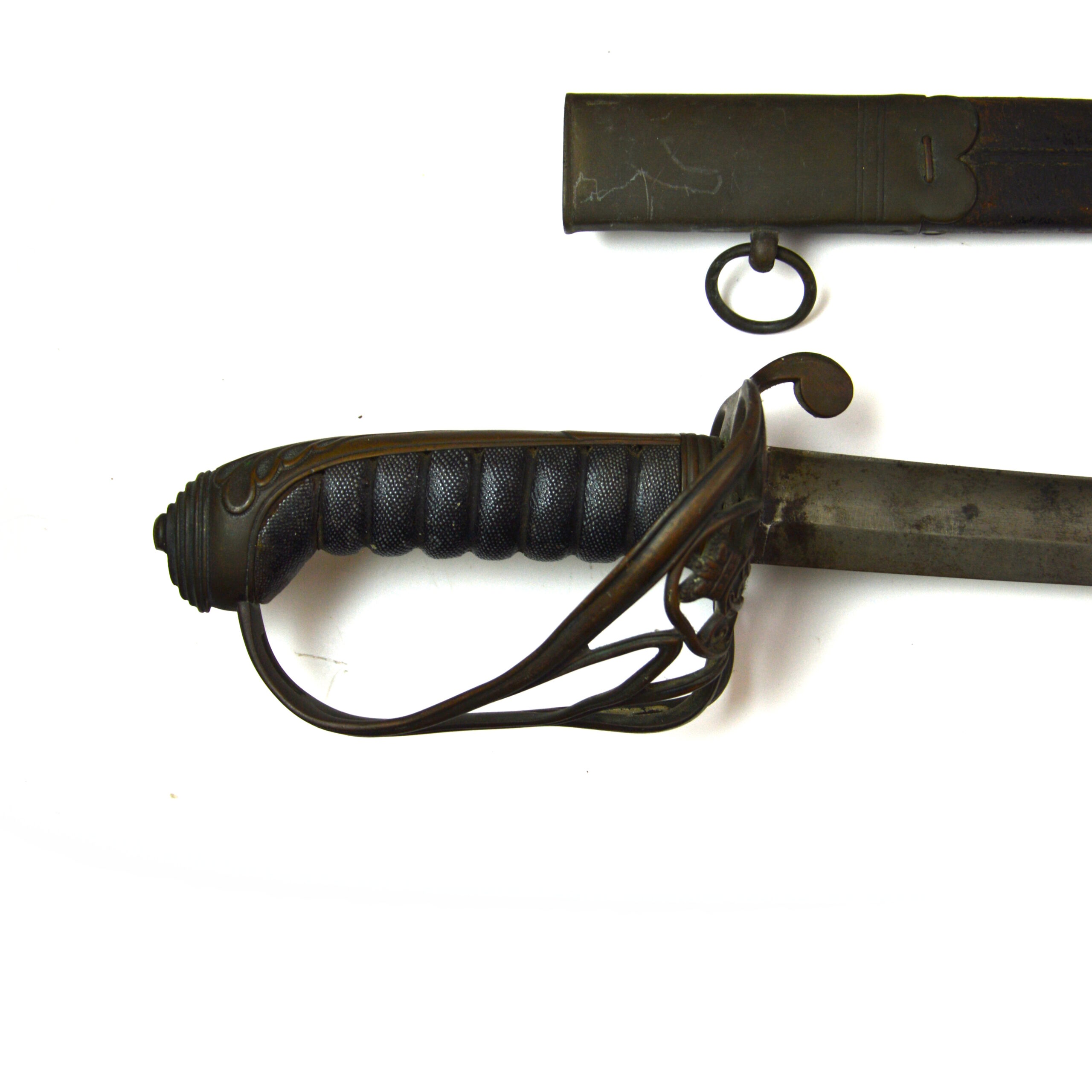
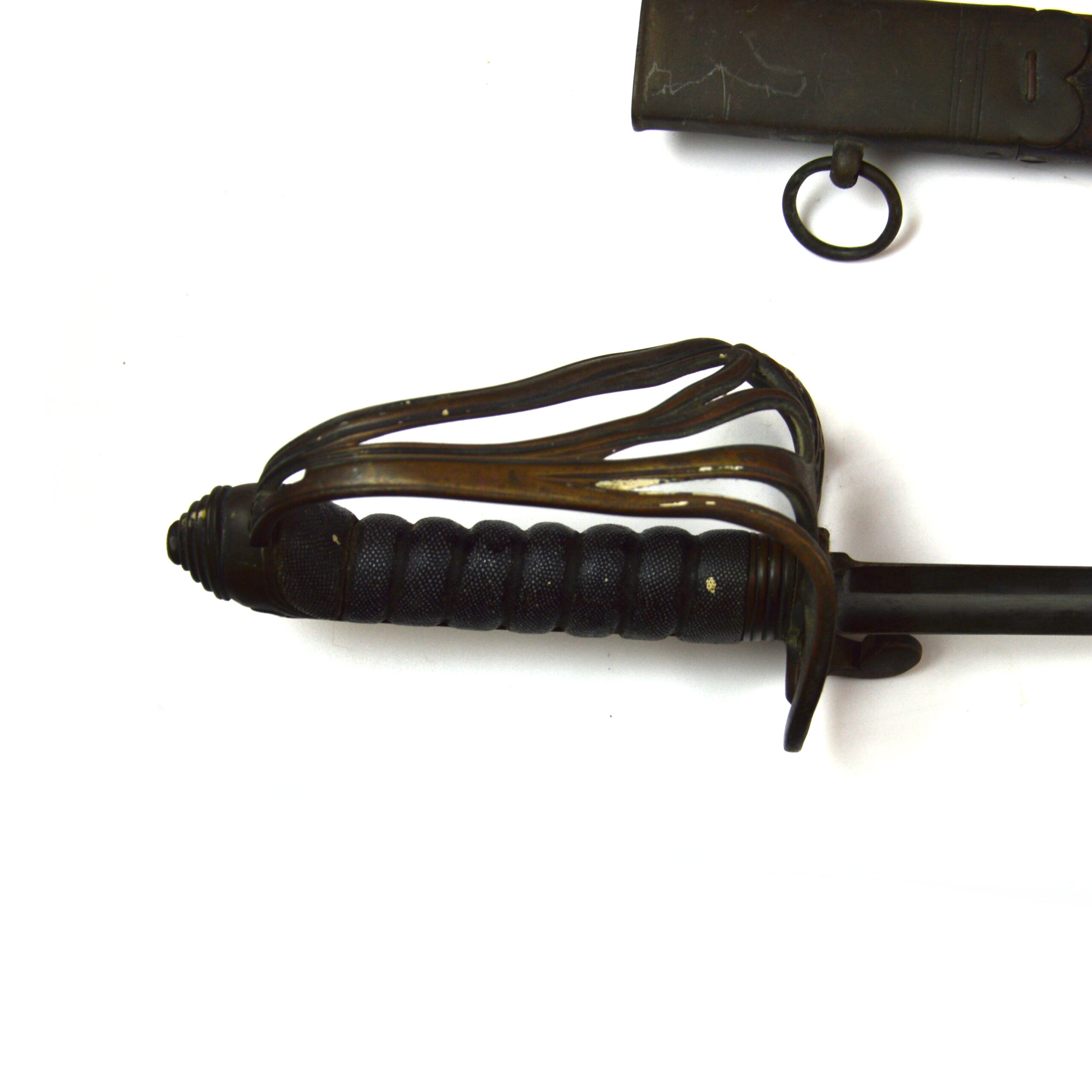
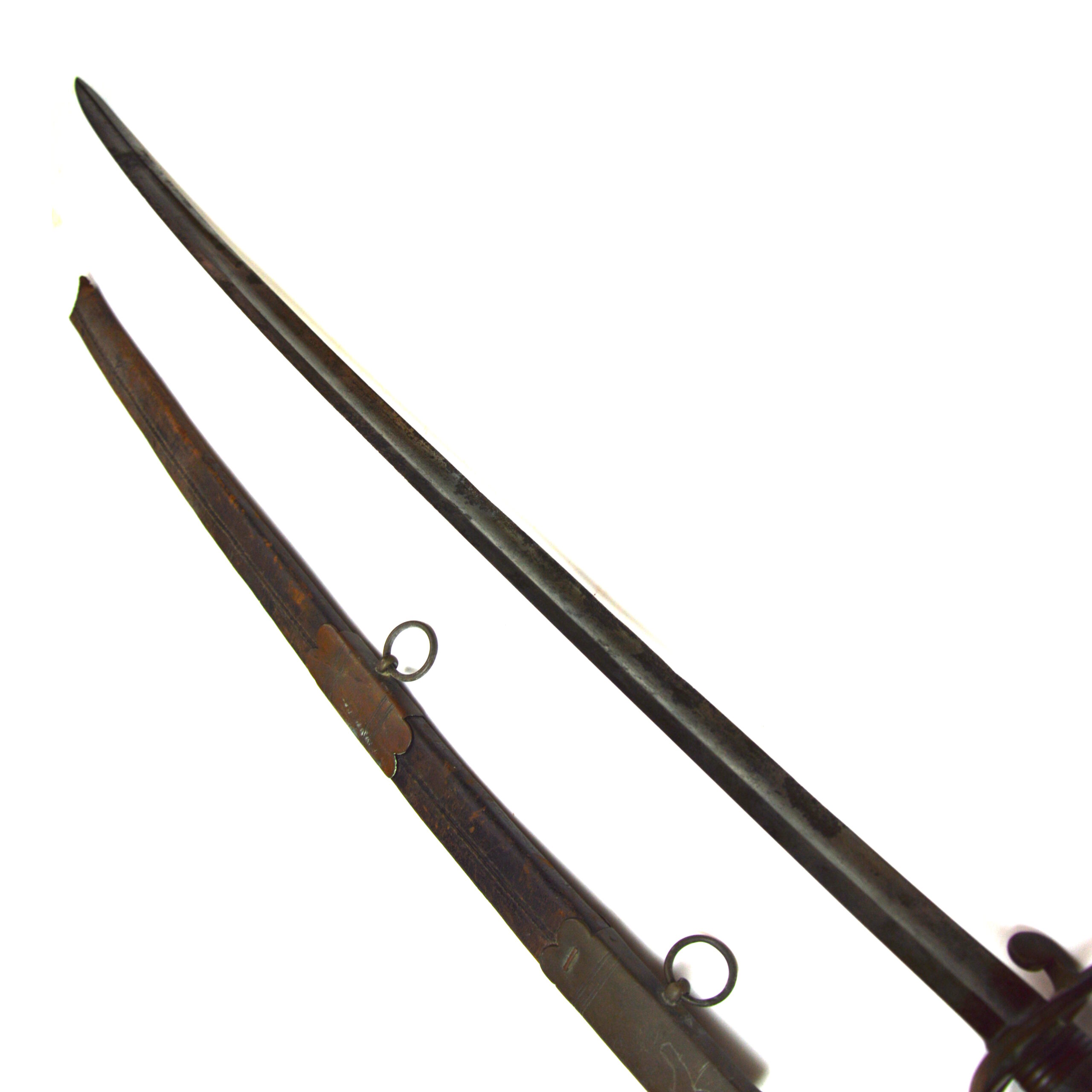
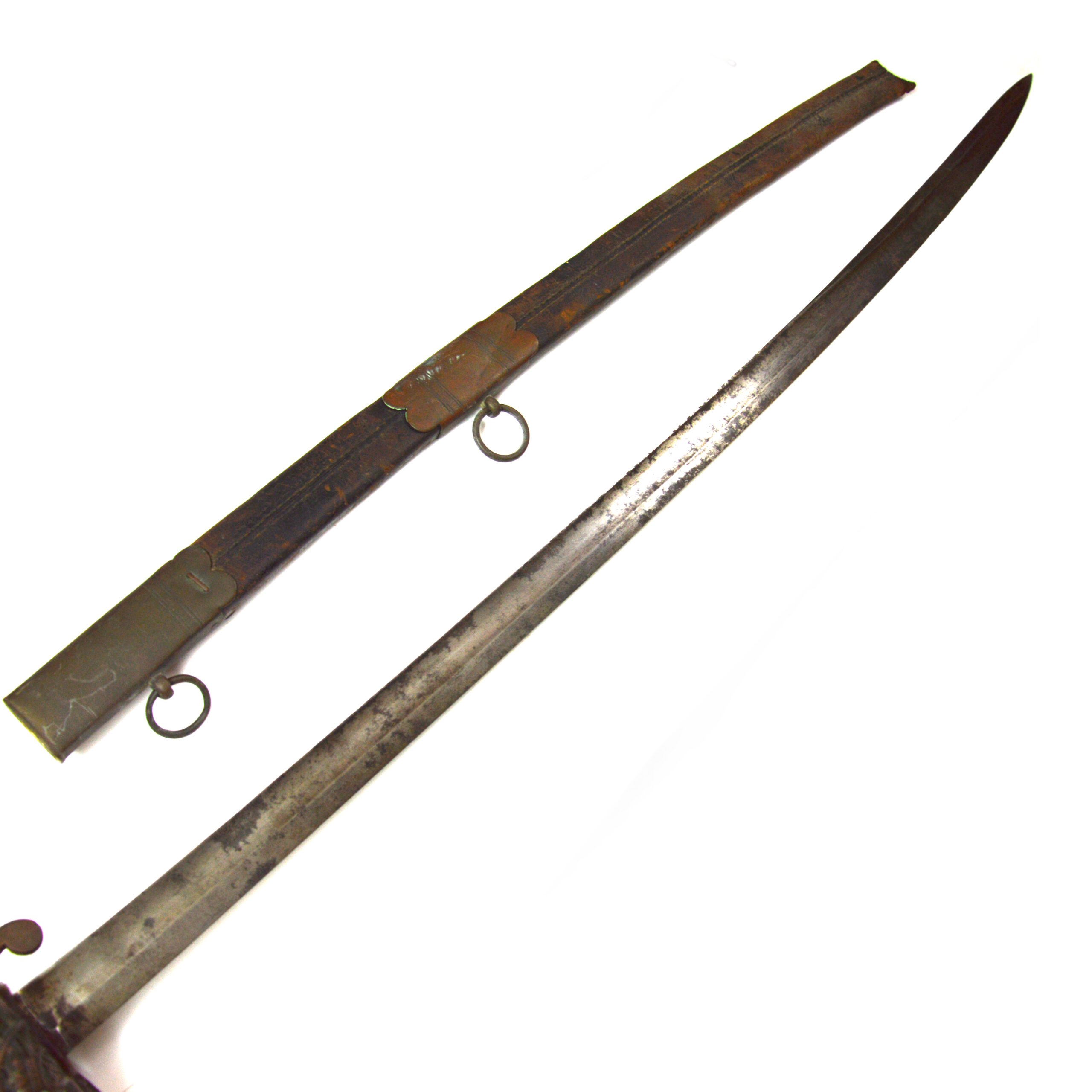
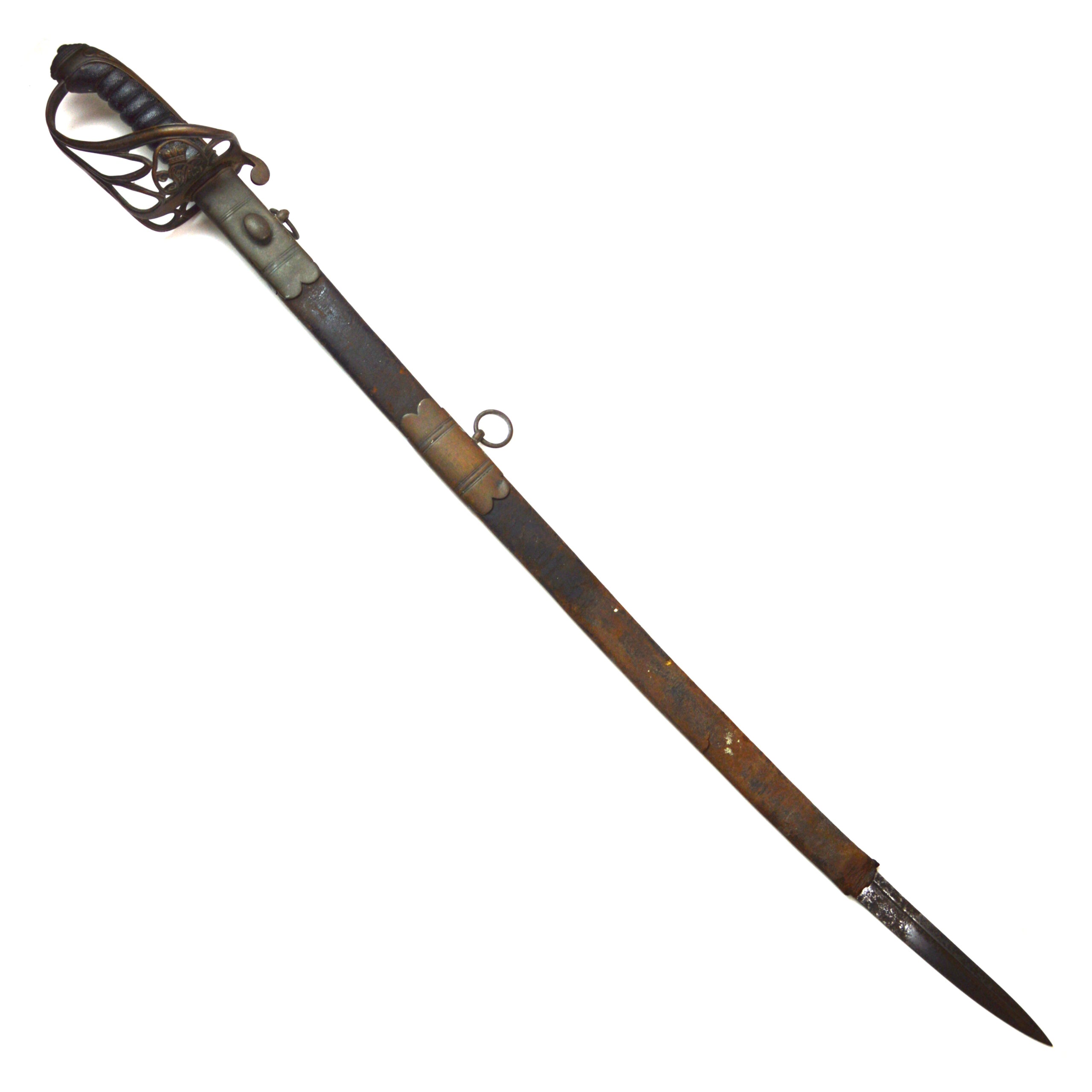
Victorian British 1845 Pattern Infantry Officer’s Sword, complete with scabbard, a classic example of mid-19th century British Army officer equipment, manufactured by Moseley. This regulation-pattern sword reflects the transition in British military design towards a more effective thrusting blade while retaining the decorative and symbolic elements expected of an officer’s weapon.
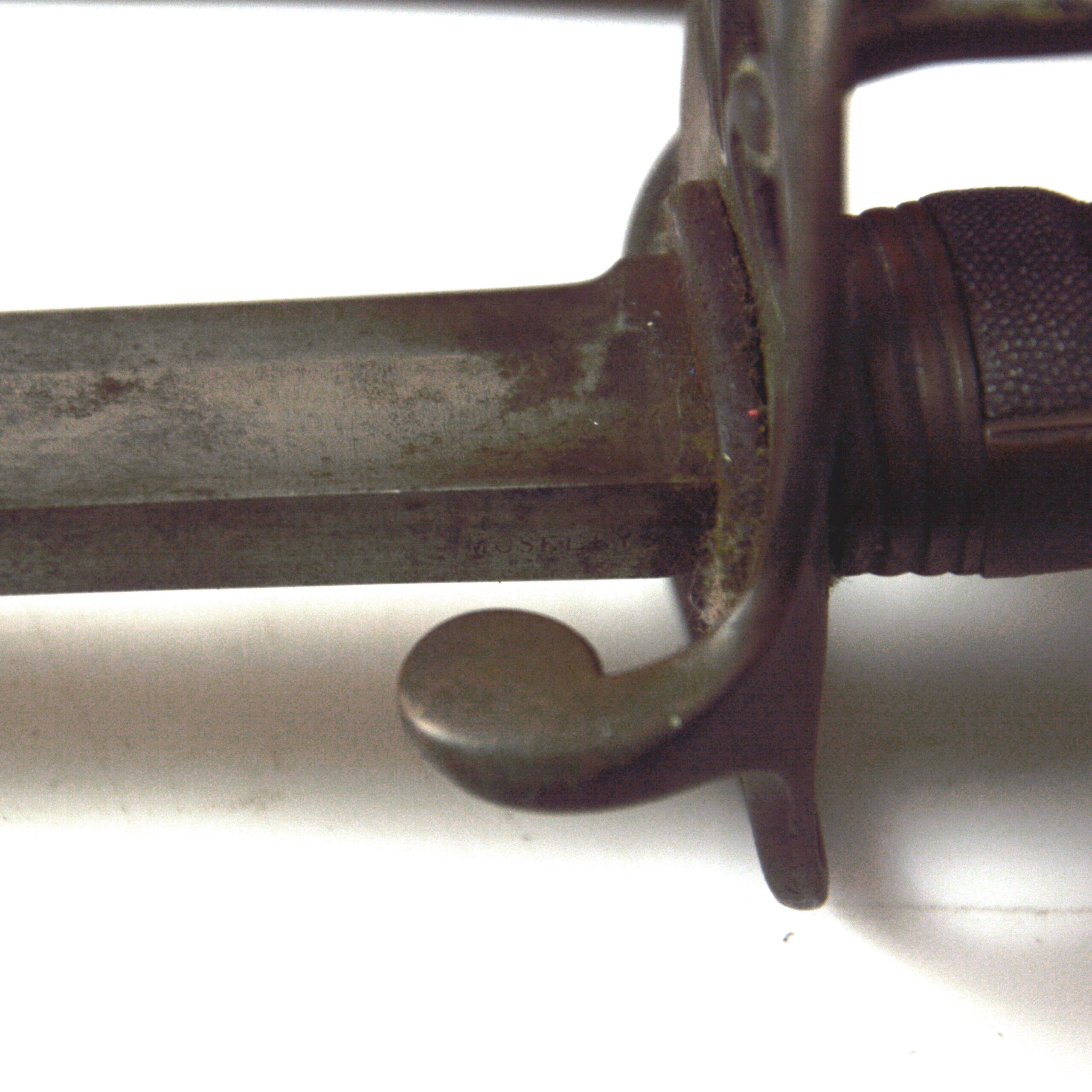
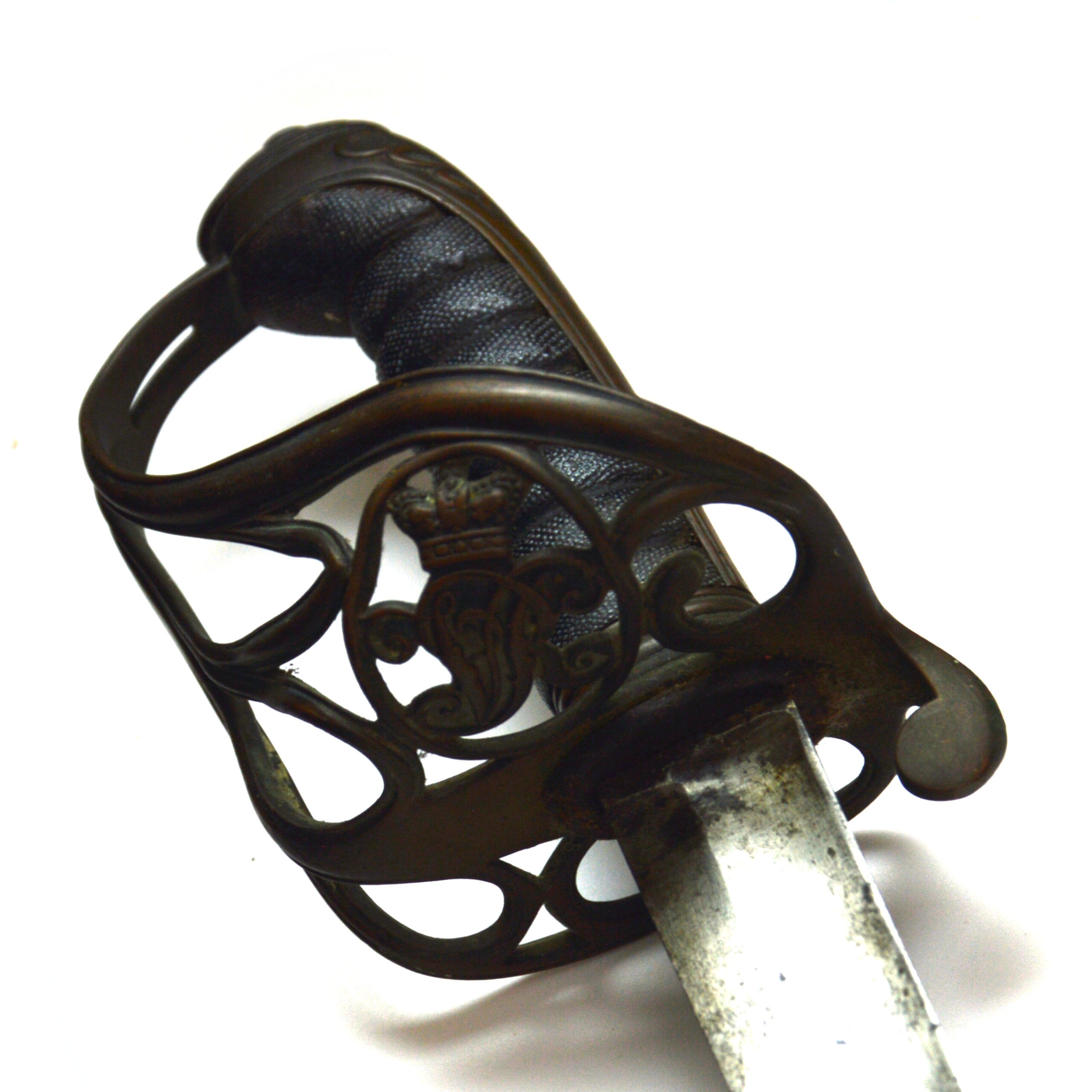
The sword features a slightly curved, single-fullered blade with the retailer’s or maker’s mark “Moseley” on the spine. The hilt is of the Gothic style, incorporating a pierced guard with a crowned royal cypher “VR”, denoting its manufacture during the reign of Queen Victoria, a shagreen grip, and an ornate pommel designed for balance and control. This pattern represents an important development in British sword design before the later 1895 and 1897 patterns.
Introduced in 1845, this pattern was widely carried by infantry officers during the Victorian era, including throughout campaigns of the mid to late 19th century, including during the Crimean War and the colonial campaigns of Africa and India. Examples from this period are associated with the reign of Queen Victoria and reflect the expanding role of the British Army during imperial service. The sword served both as a sidearm and a visible symbol of rank, authority, and regimental identity.
This example retains its accompanying scabbard of leather construction with brass mounts, providing both protection for the blade and completeness for display. As a matched set, it offers an authentic representation of an officer’s service sword from the Victorian period.
Manufactured using traditional materials and techniques, swords by Moseley are recognised within collecting circles for their quality and historical relevance. Pieces of this type are sought after within British militaria collecting, particularly among those specialising in Victorian-era equipment, infantry officer swords, and edged weapons.
Dimensions
Approx. 98cm overall length
Approx. 82.5cm blade length
Condition
Poor condition, with noticeable pitting on the blade and distortion to the handguard hilt as well as lacking the binding on the shagreen grips. Other expected age-related wear, surface marks, and signs of service use are present. The scabbard is broken off towards where the chape would’ve been, with expected wear consistent with age.