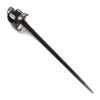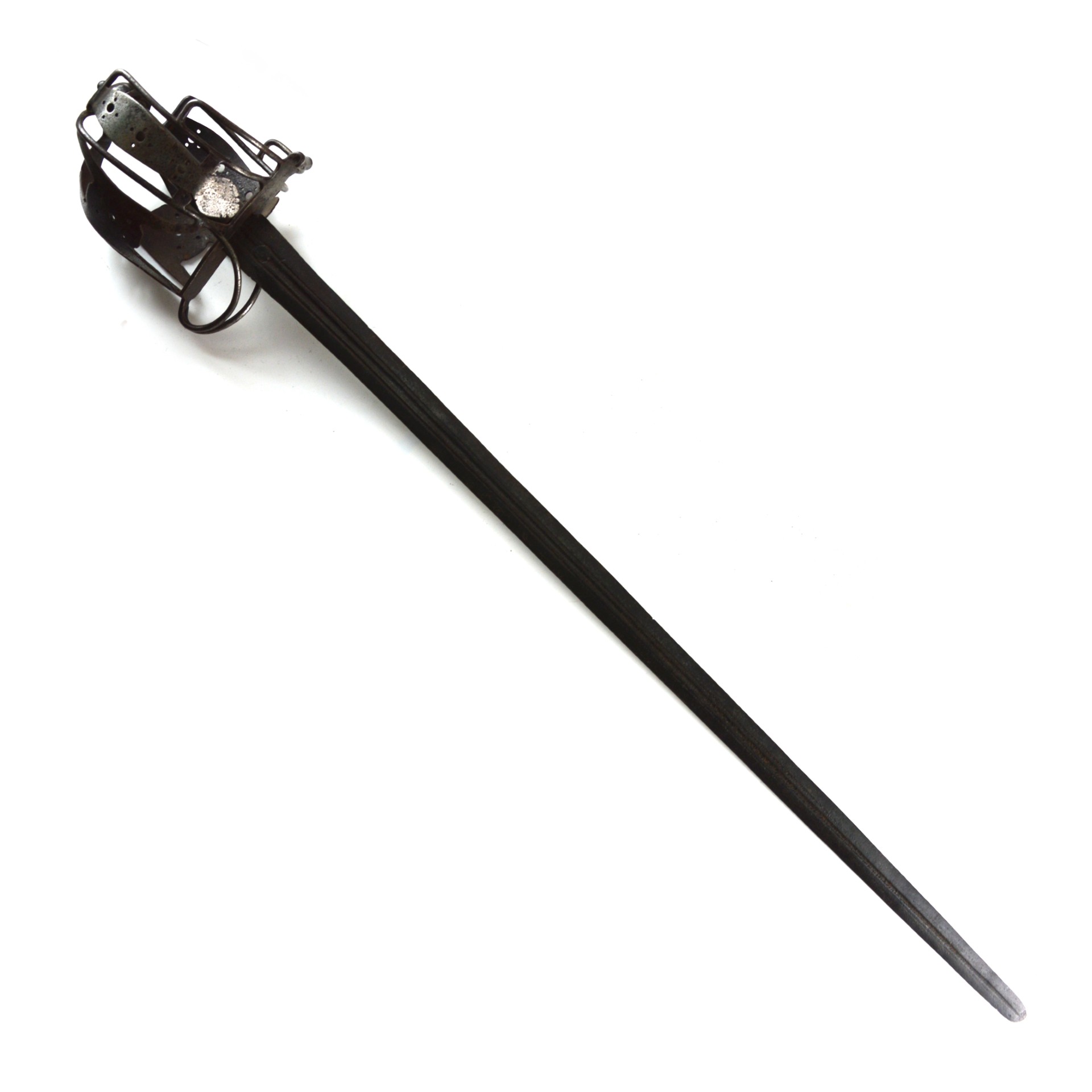
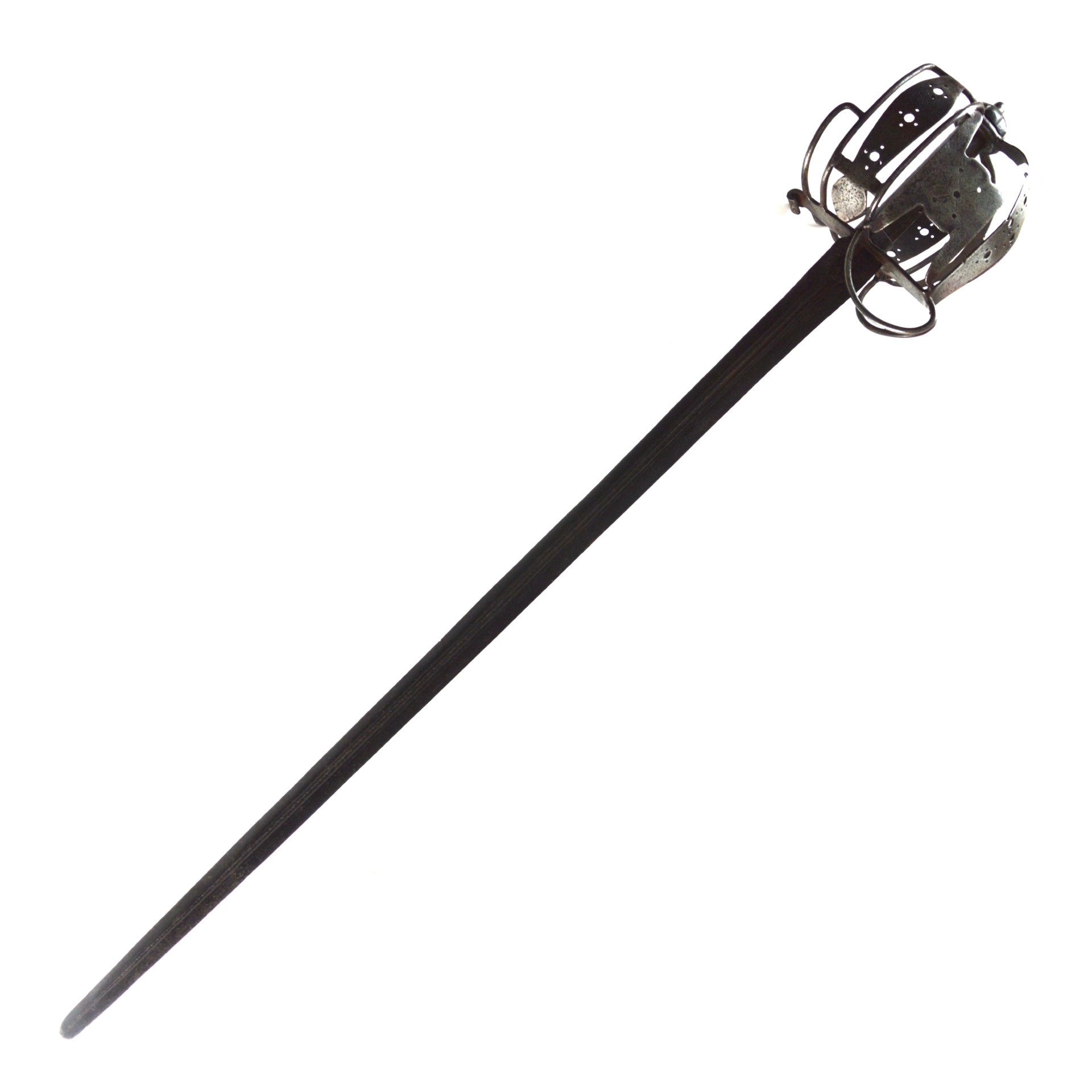
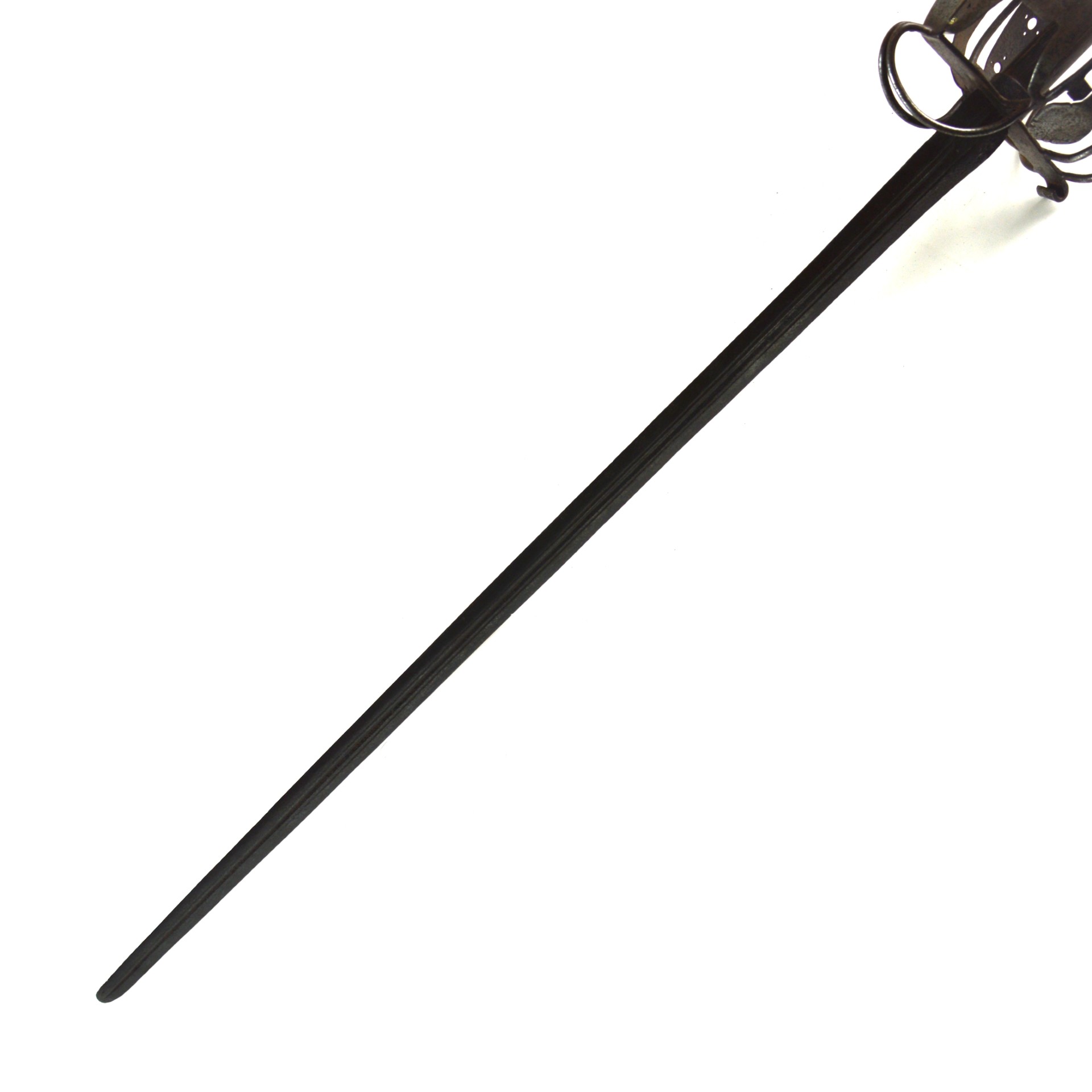
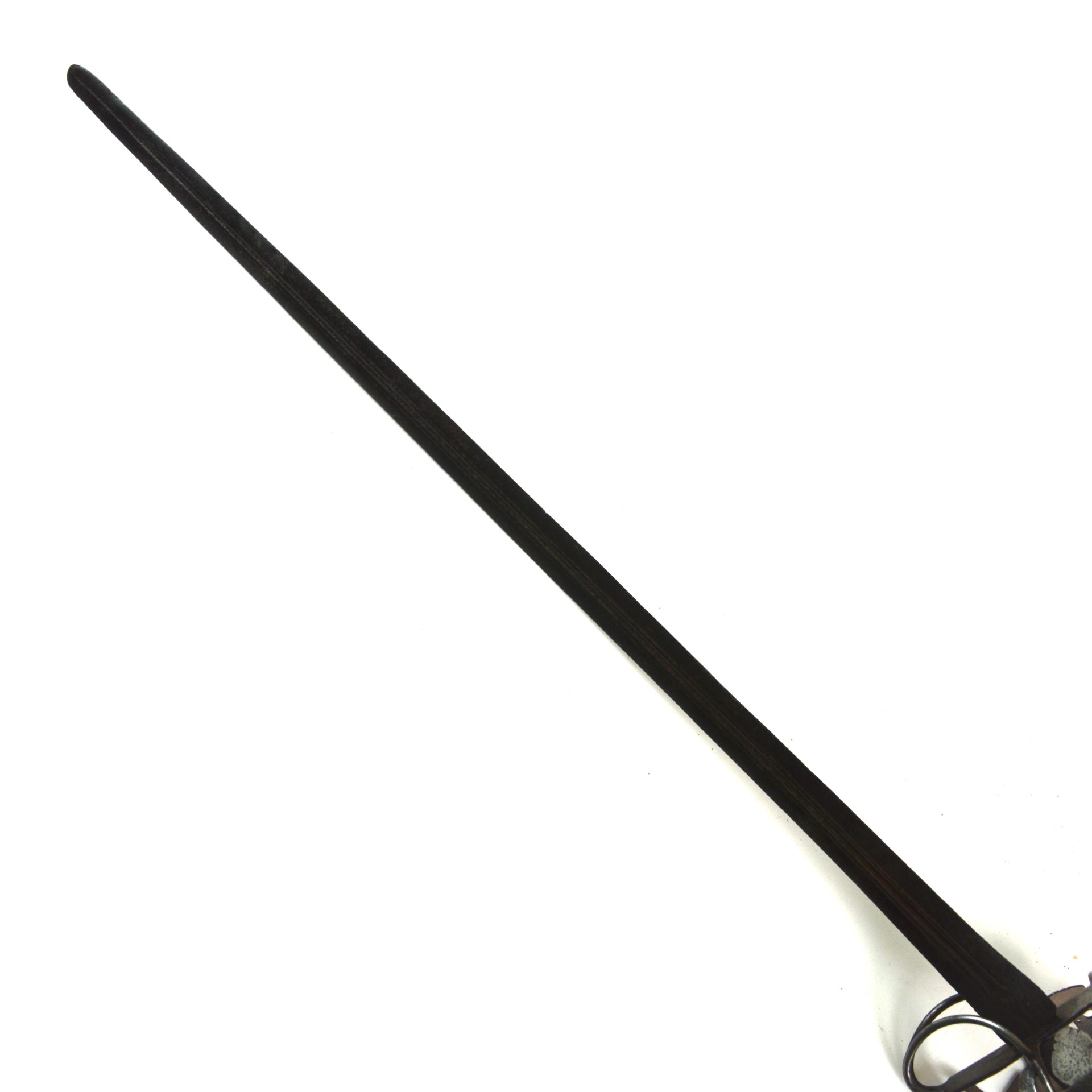
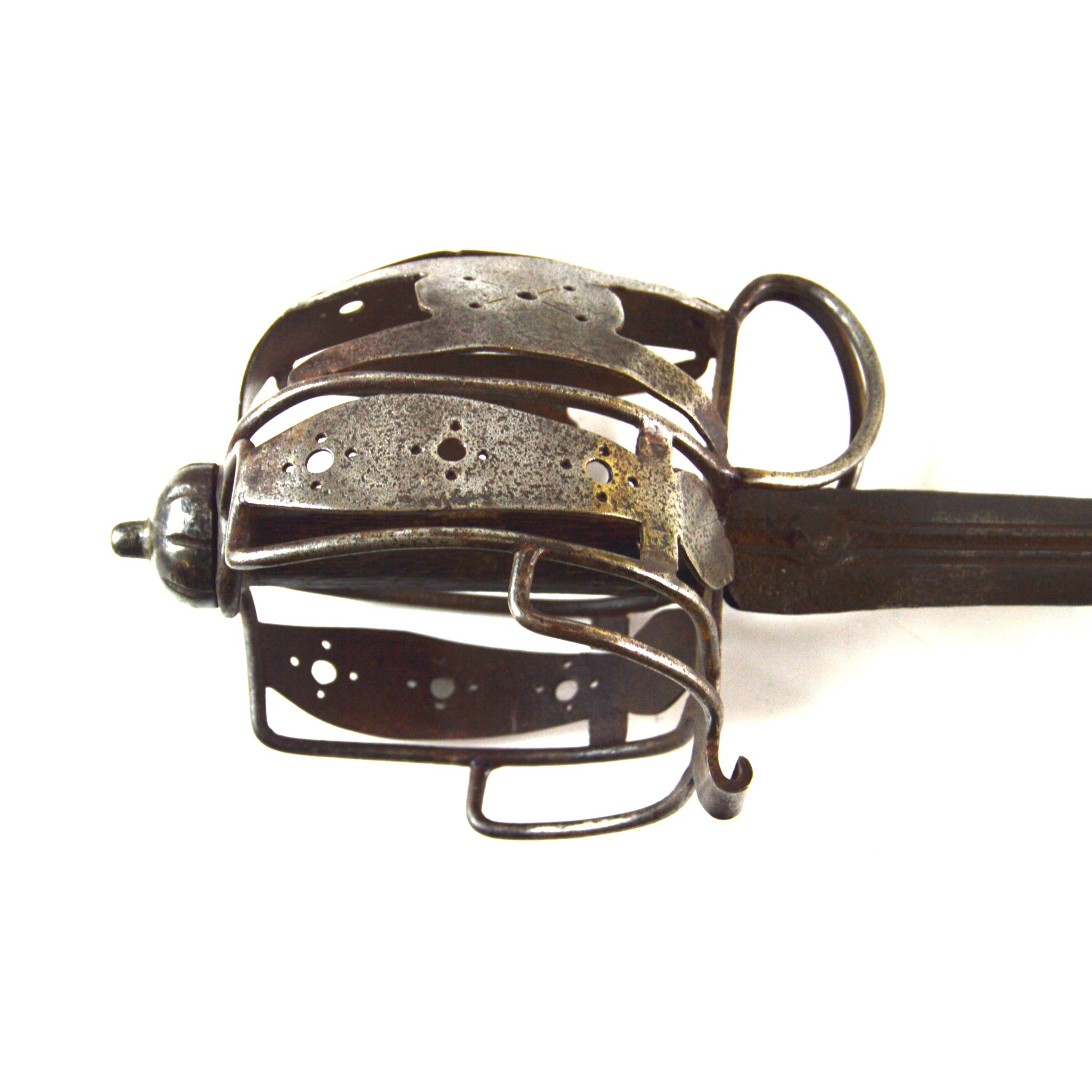
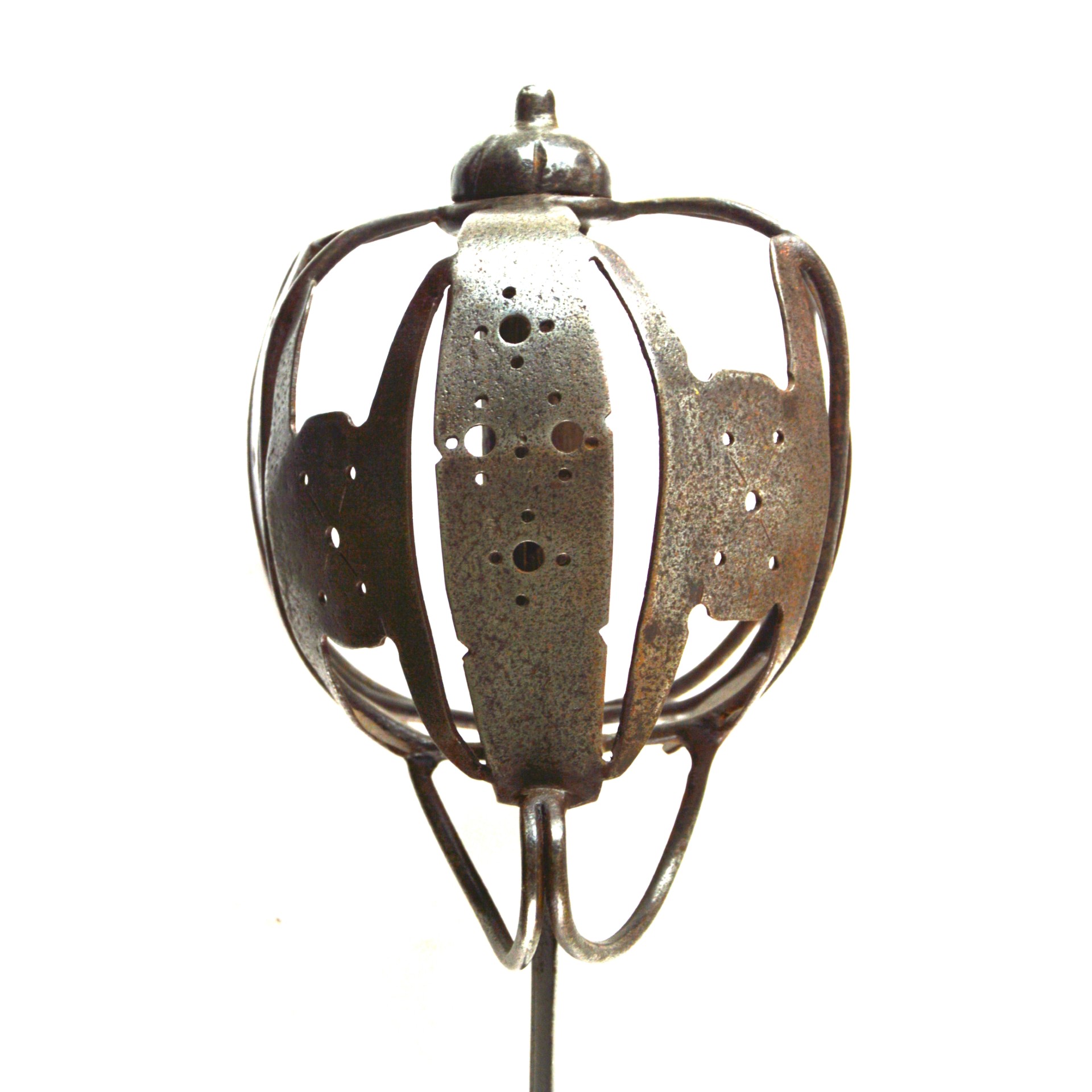
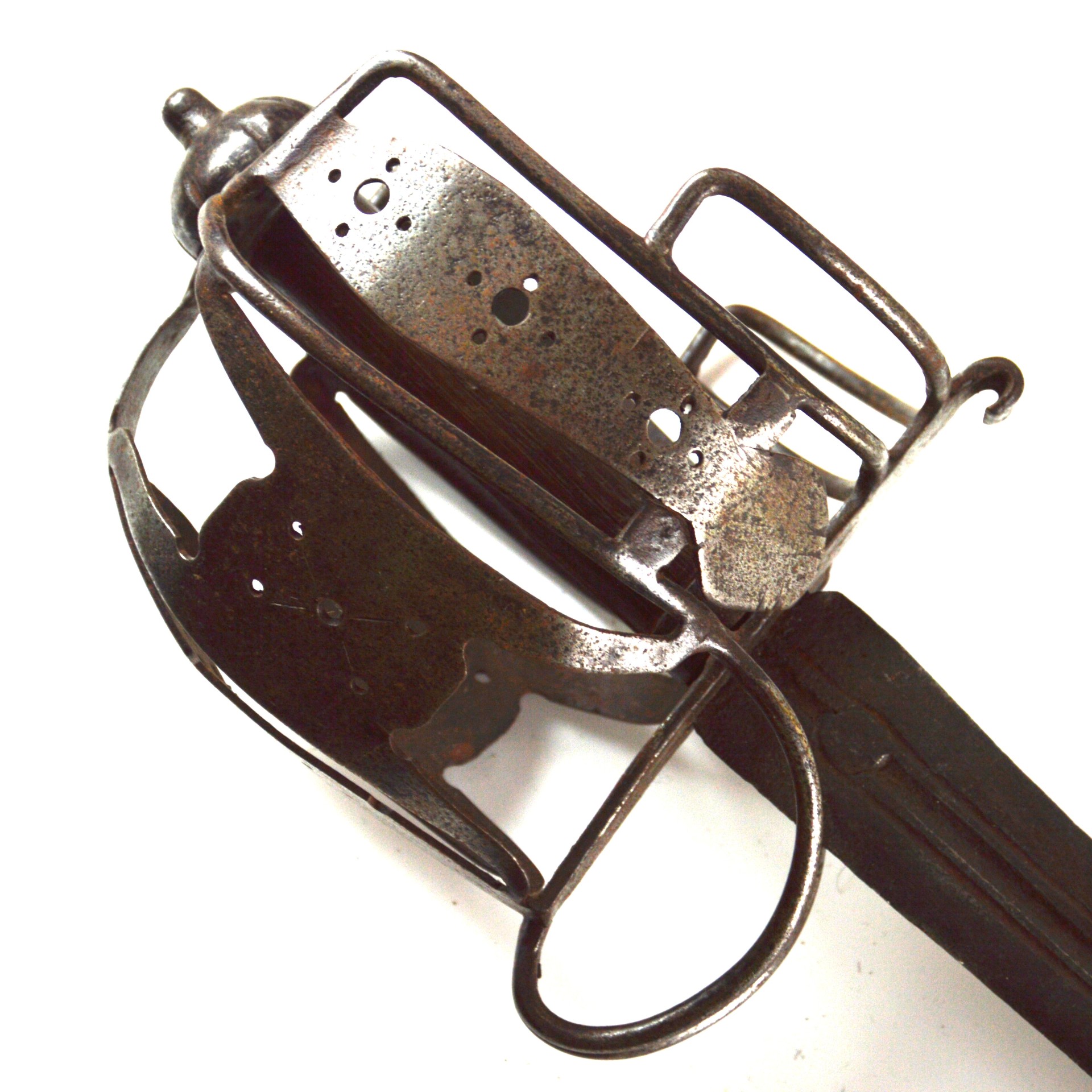
Scottish Jacobite-era basket-hilted mortuary broadsword, likely assembled in the Victorian era from Scottish broadsword components dating from the 16th to early 18th centuries. Swords of this type are closely associated with the turbulent political and military conflicts of the Jacobite era, representing one of the most iconic forms of Highland and Lowland Scottish weaponry.
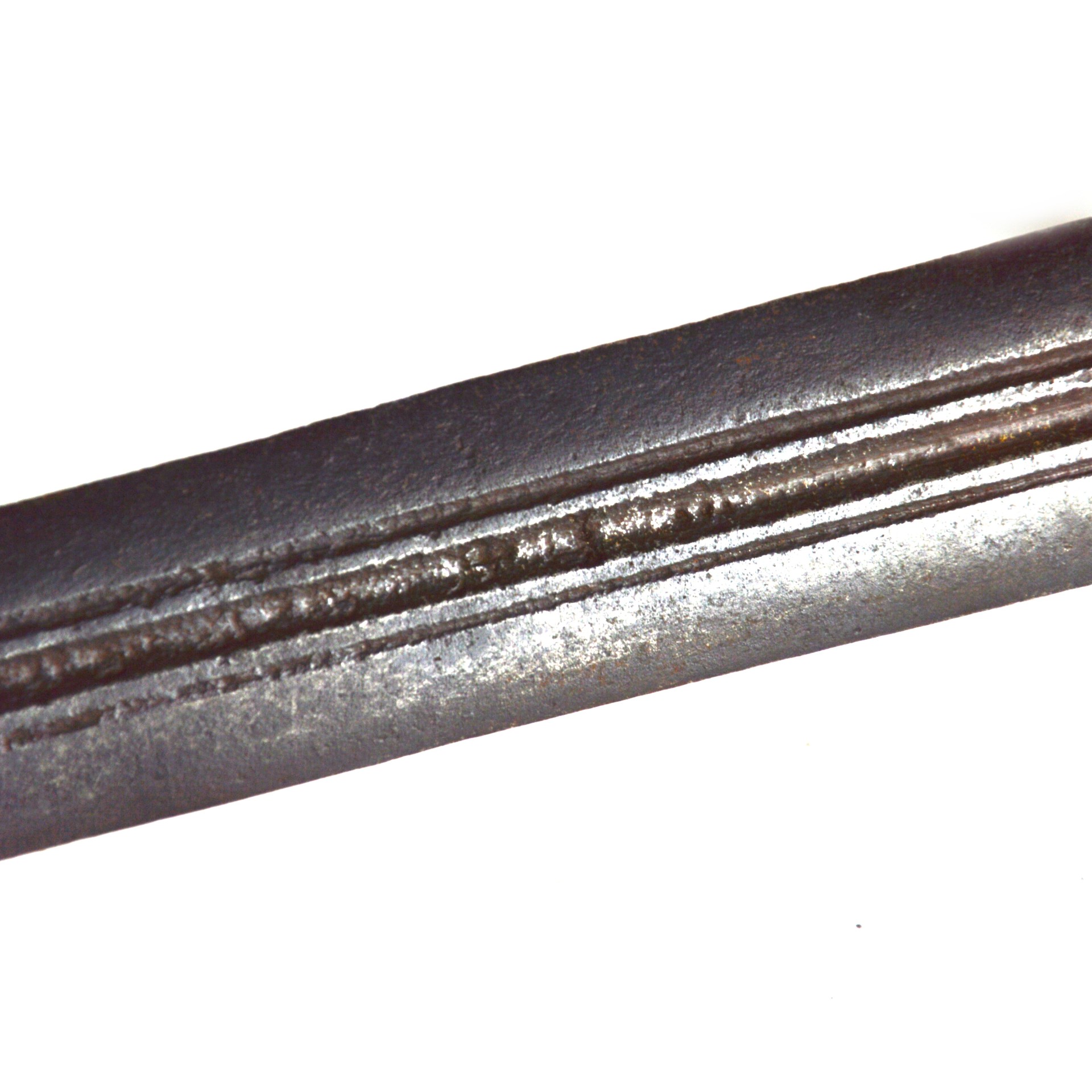
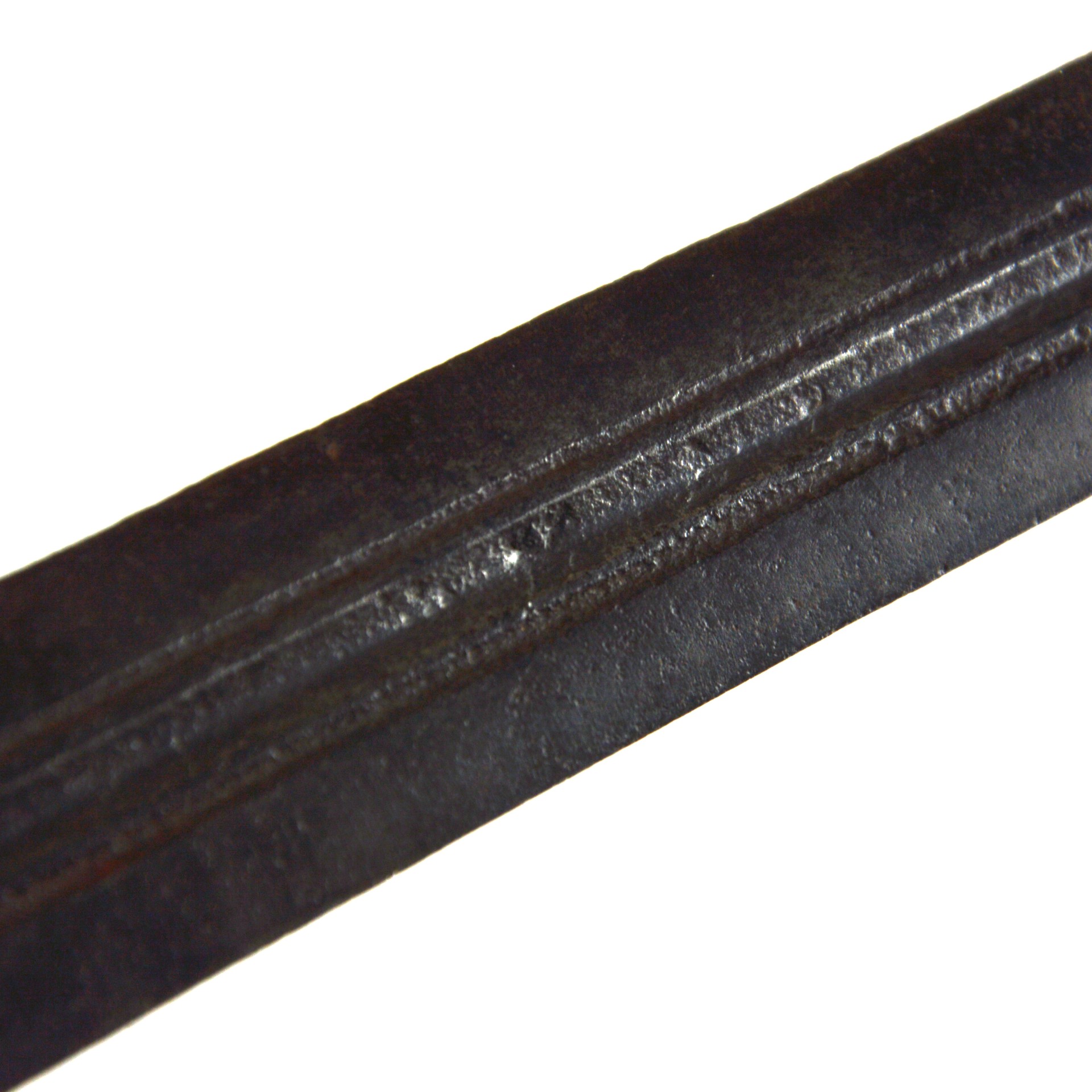
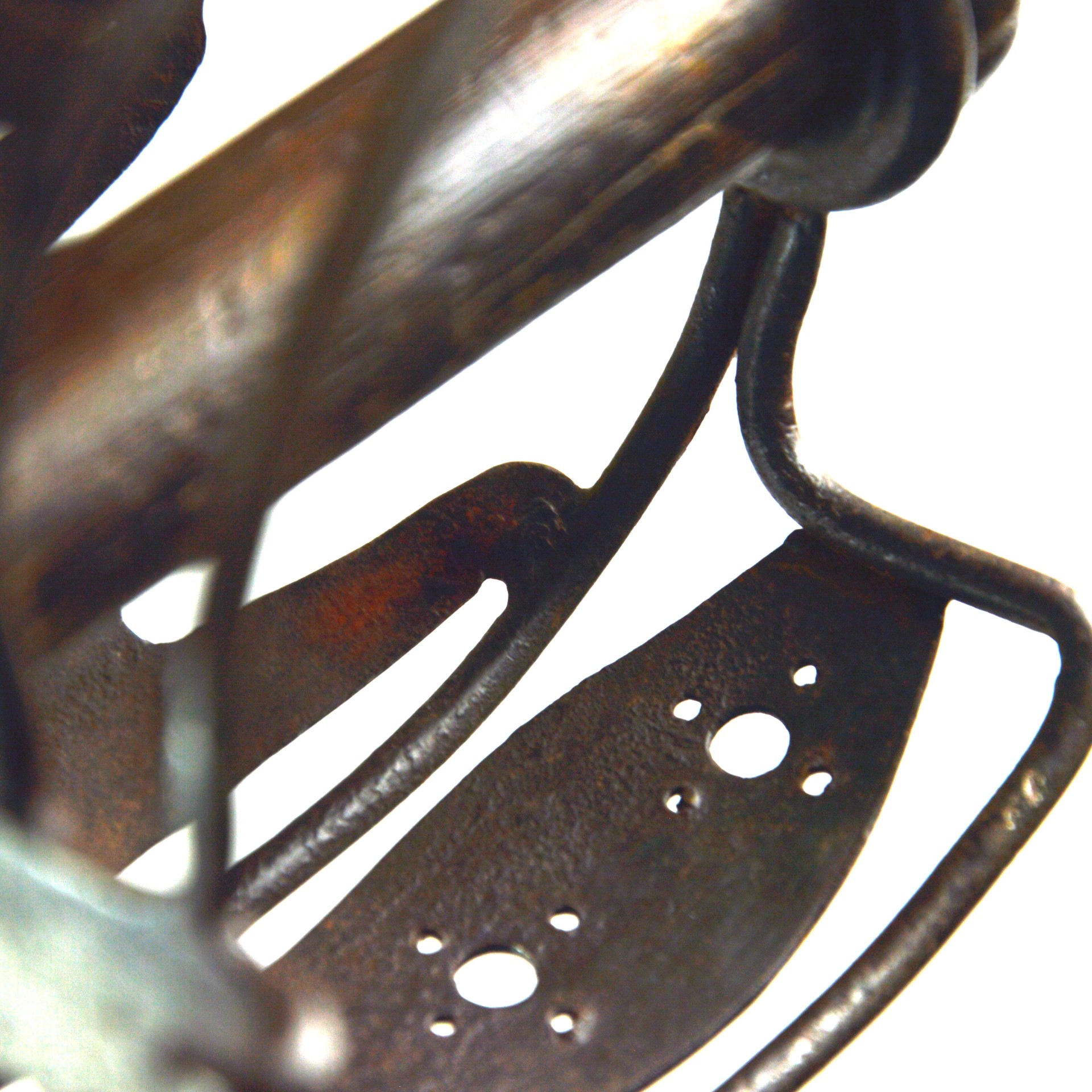
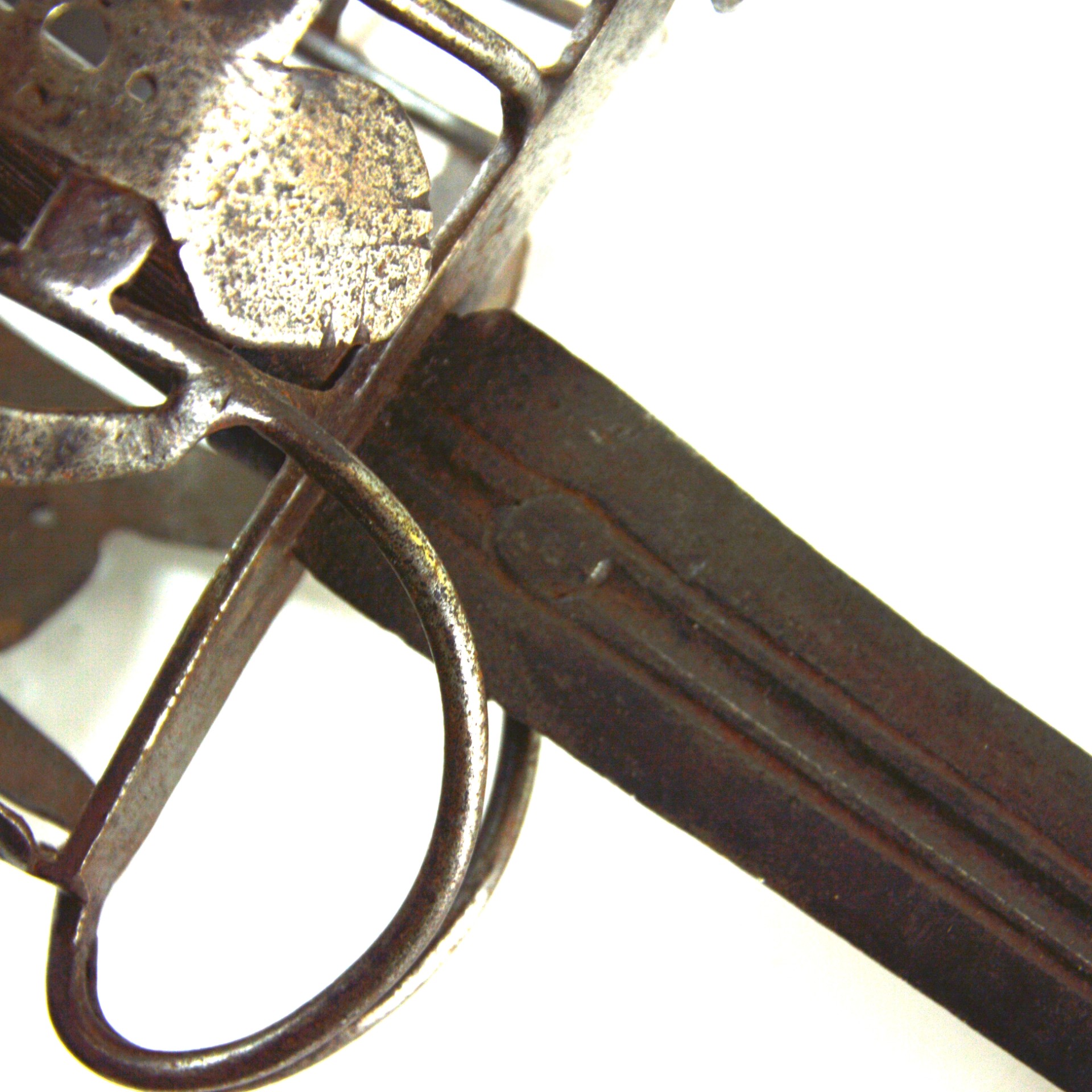
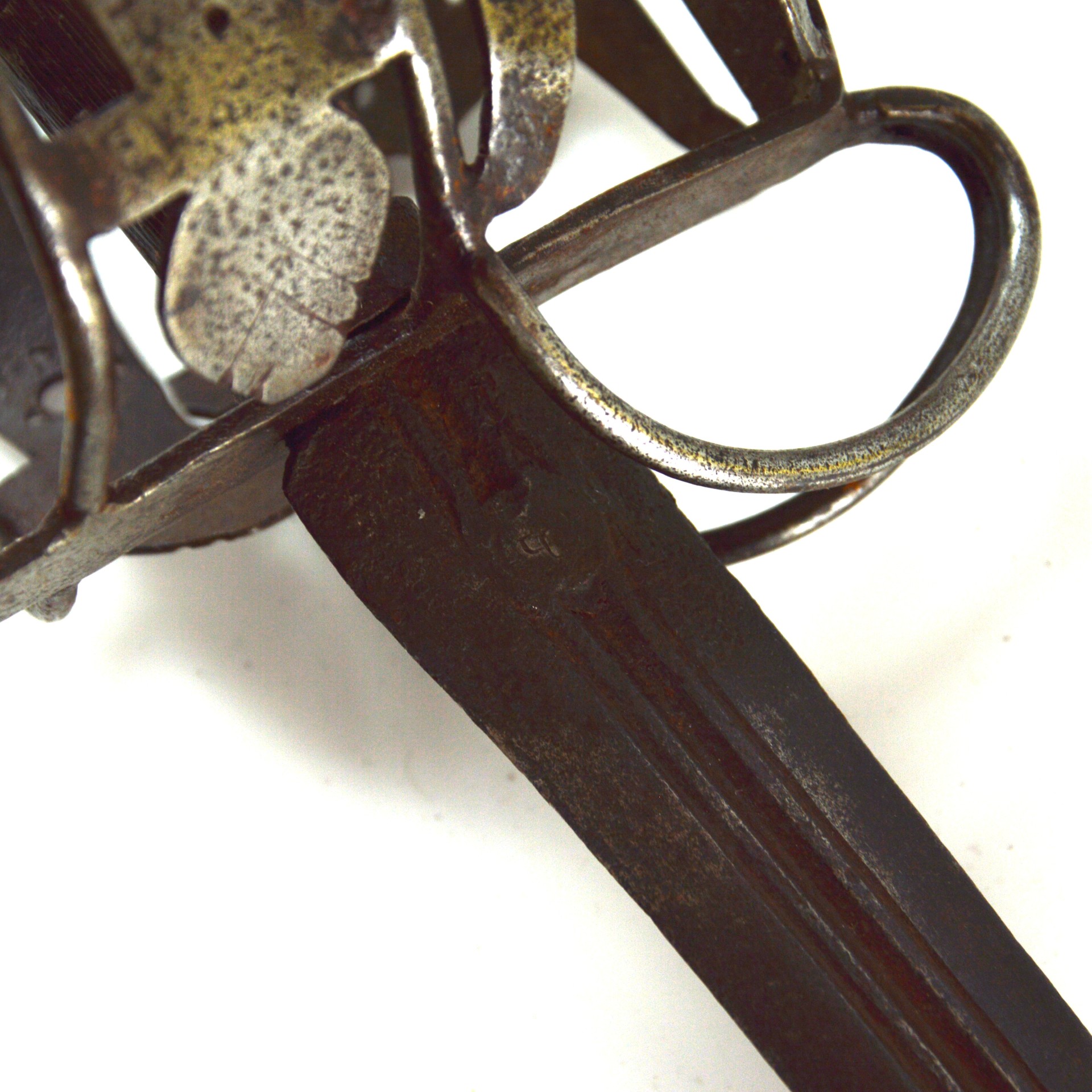
The sword features a robust iron basket hilt designed to provide extensive protection to the hand during combat, enclosing the grip within a framework of bars and pierced panels characteristic of Scottish basket-hilt construction. The blade is likely significantly older, double-edged with a shallow fuller flanked by narrow fullers on either side. This blade was originally intended for both cutting and thrusting, reflecting the practical requirements of close-quarters combat during the period. The blade does seem to be marked; however, most of it seems to be indistinct.
This style of basket-hilted sword was carried by Scottish soldiers, clansmen, officers, and gentlemen during a time of significant political unrest, including the various Jacobite uprisings that sought the restoration of the House of Stuart to the British throne. Their distinctive design evolved from earlier military swords and became one of the defining weapons of Scottish martial culture.
Manufactured in iron and steel with a basket hilt, wooden grip core, and double-edged blade, this sword is a fine representation of Scottish military and cultural history. Although likely assembled long after the period of manufacture, it still makes an ideal wall hanger or stand-in for a period example.
Dimensions
Approx. 92cm overall length
Approx. 77cm blade length
Condition
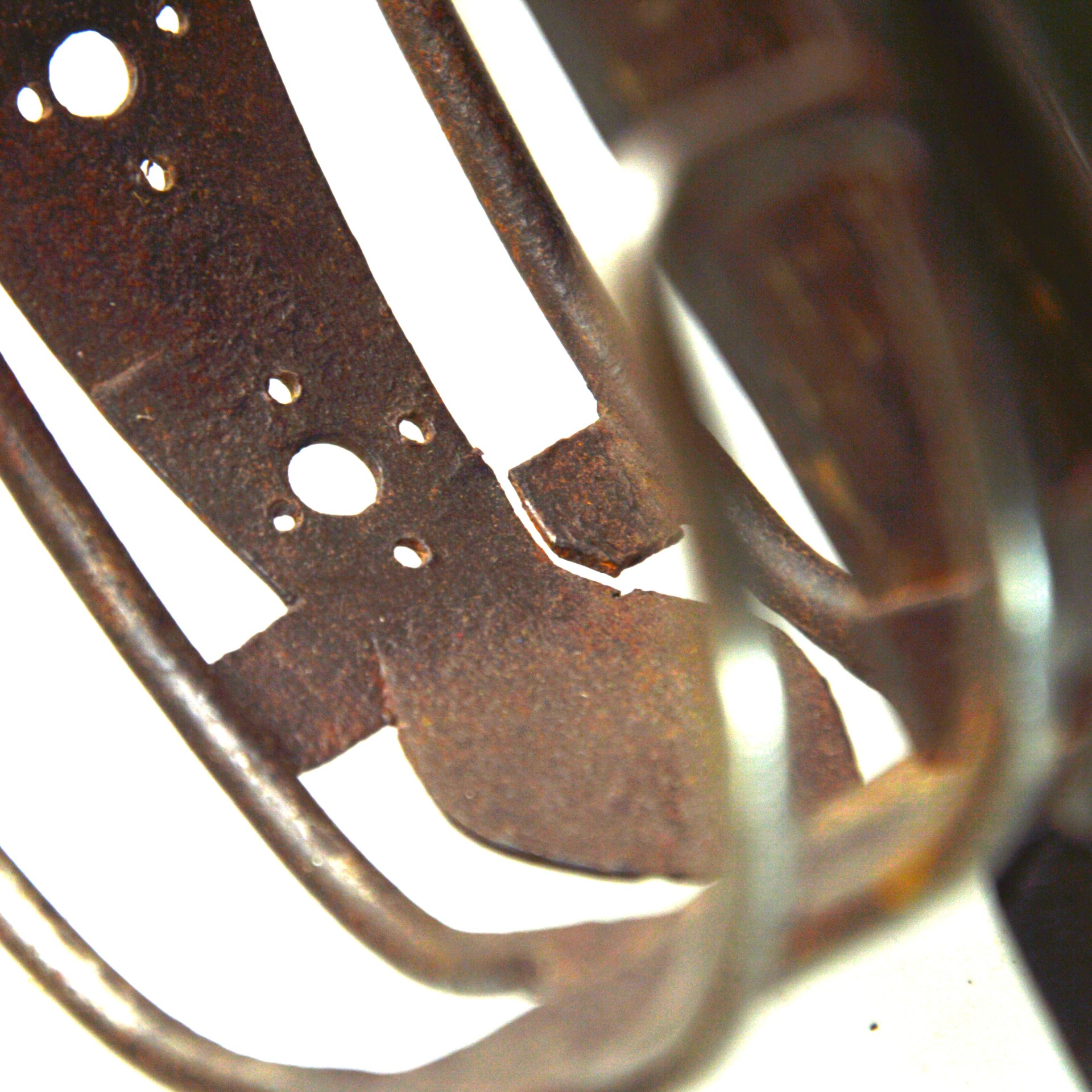
Good overall antique condition for its age, with wear and age-related patina consistent with late 16th to early 18th-century manufacture. The hilt and blade display expected signs of age, use, and storage, including a break between one of the panels in the basket hilt as well as a break which has been tack welded in the modern period. Surface oxidation, pitting, and historical wear are present.